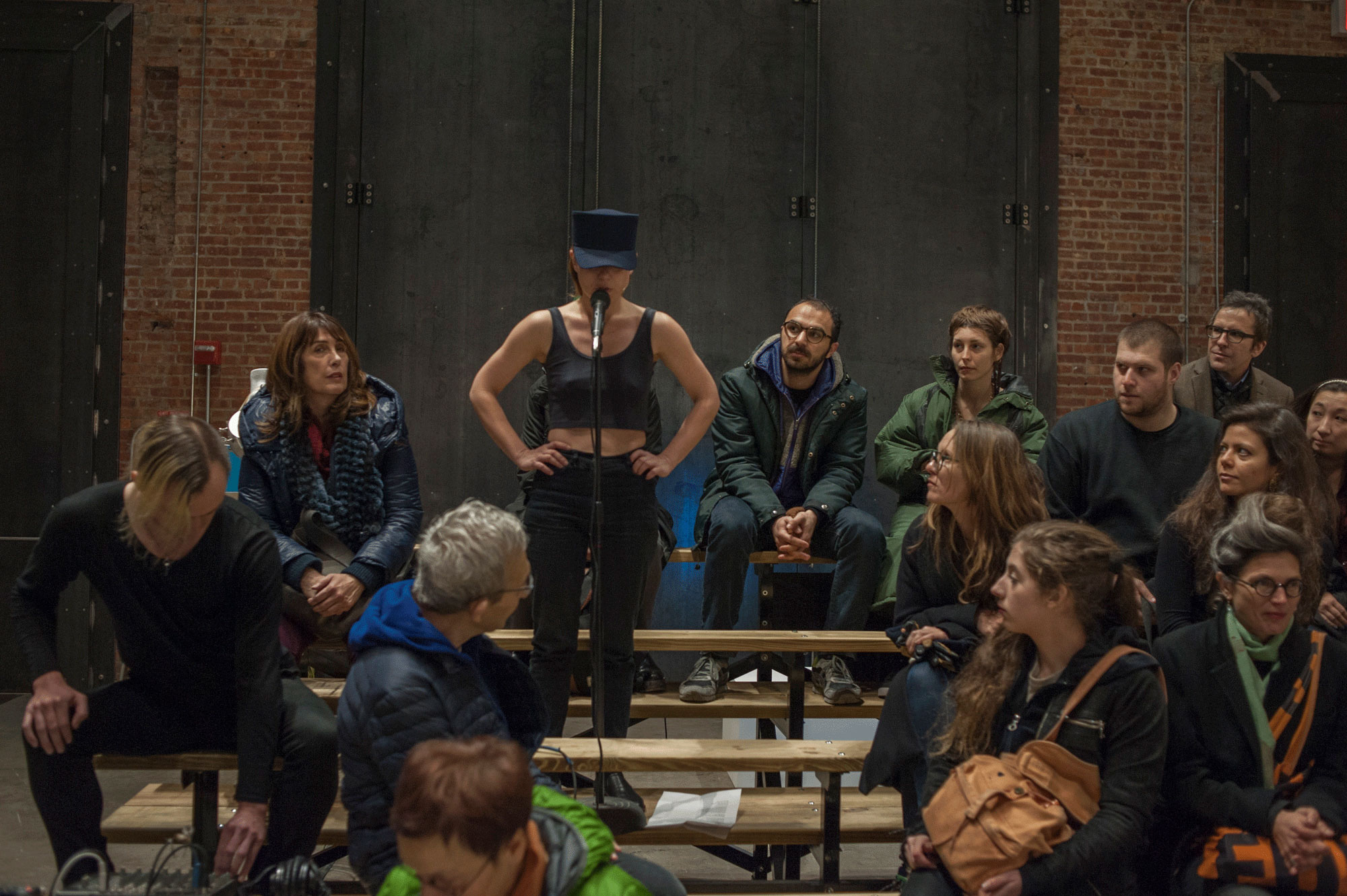
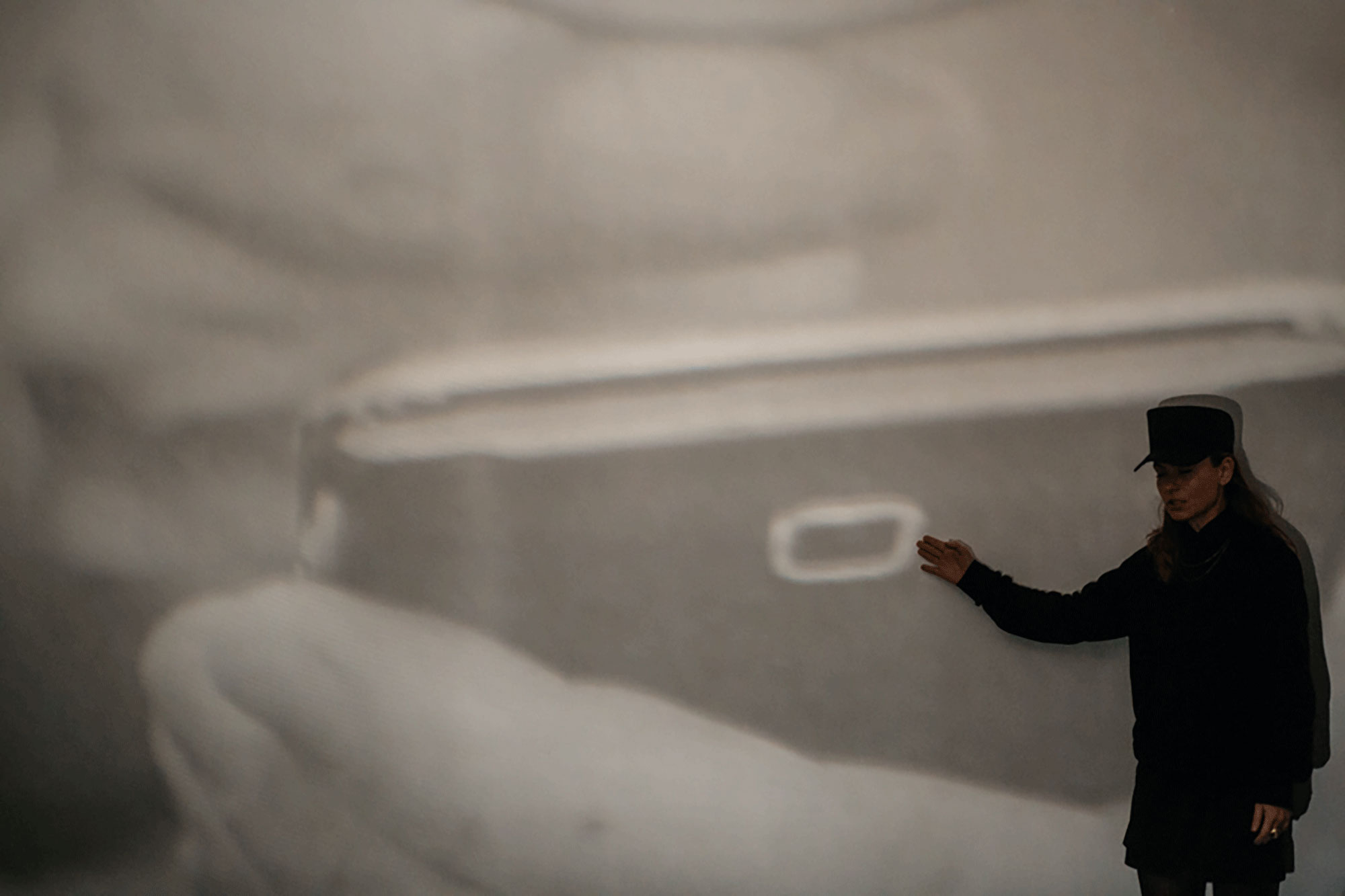
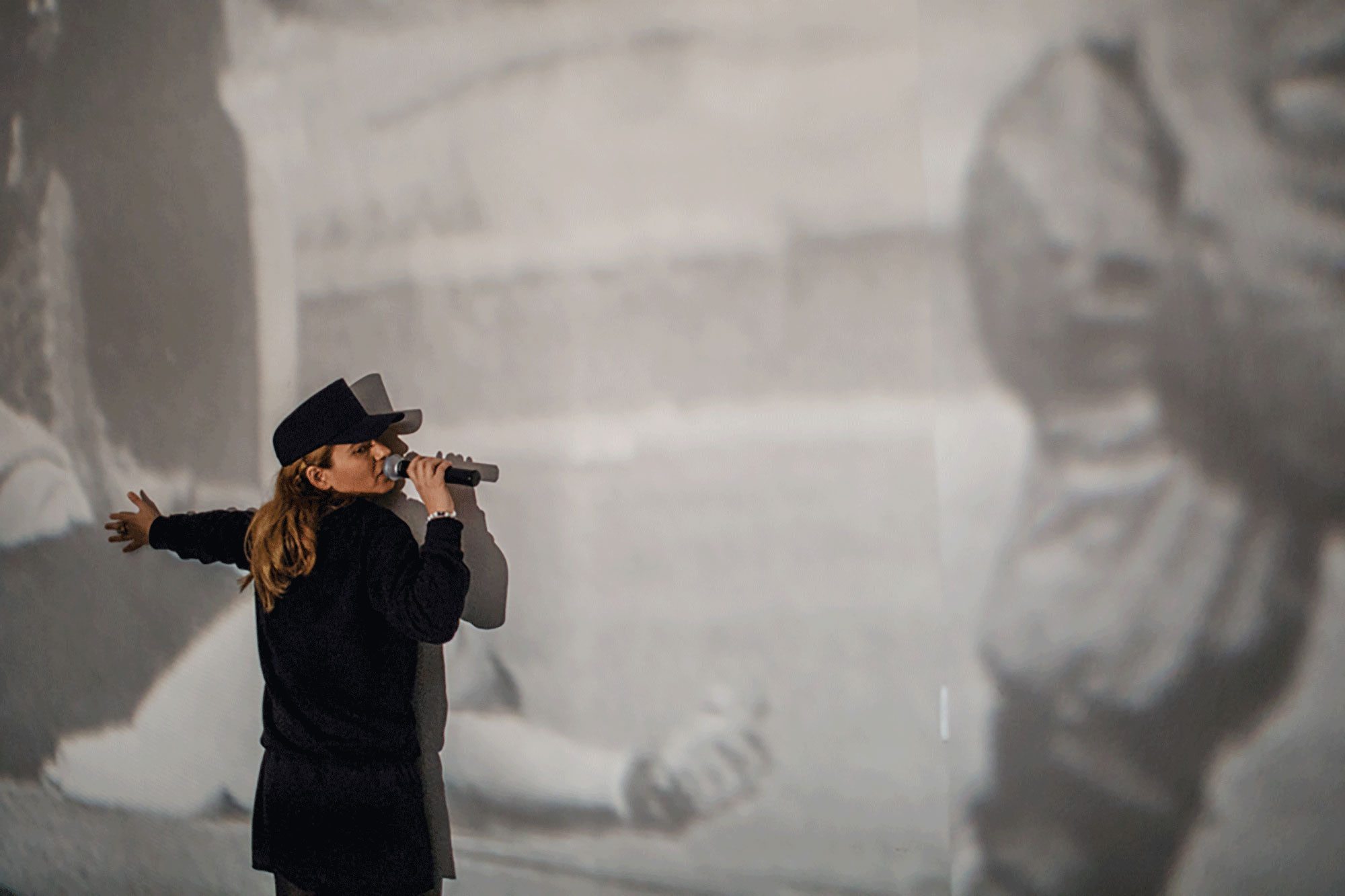
Perfomance

  • ×
  • ×
  • ×
  • ×
  • ×
  • ×

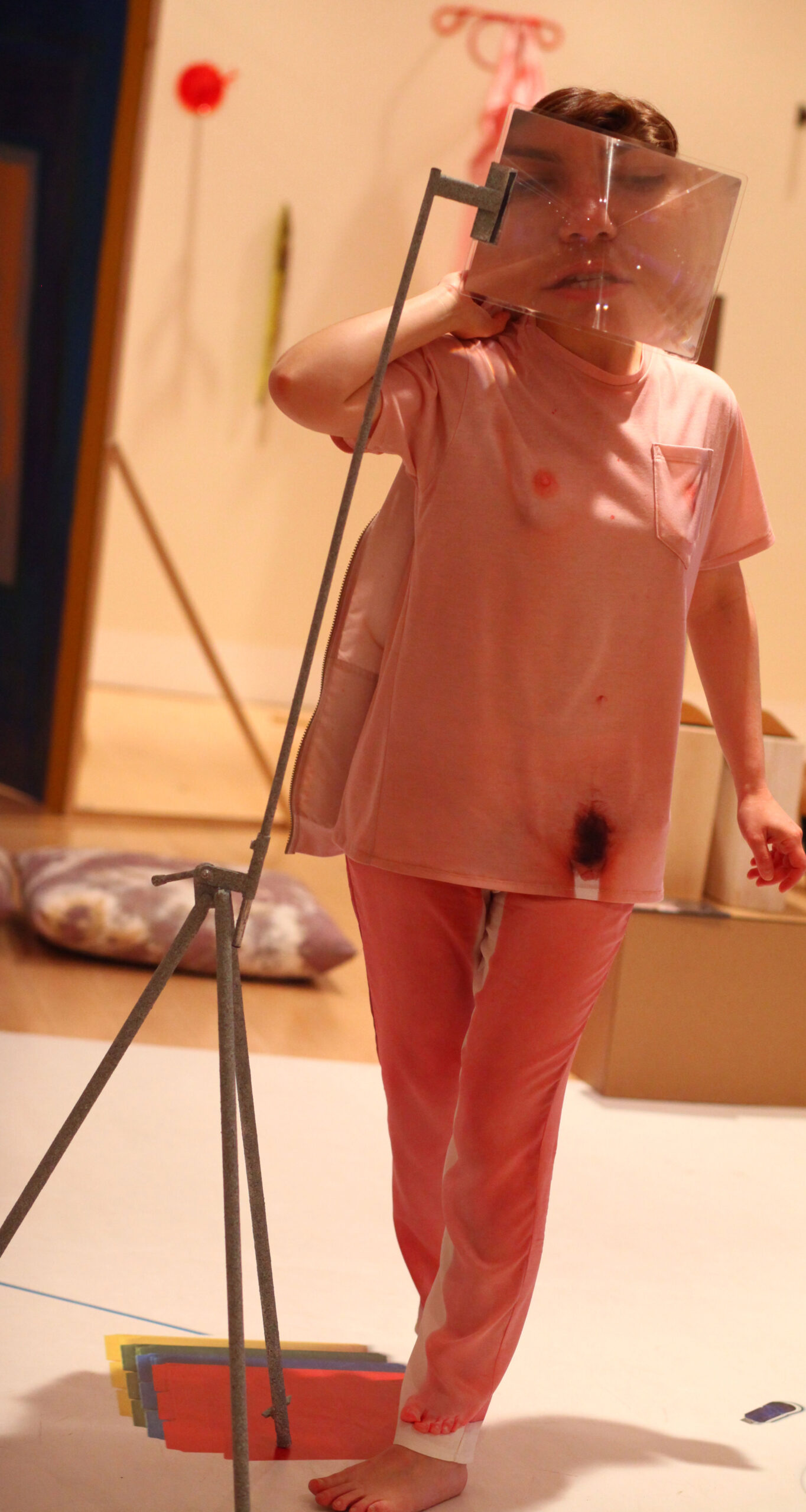
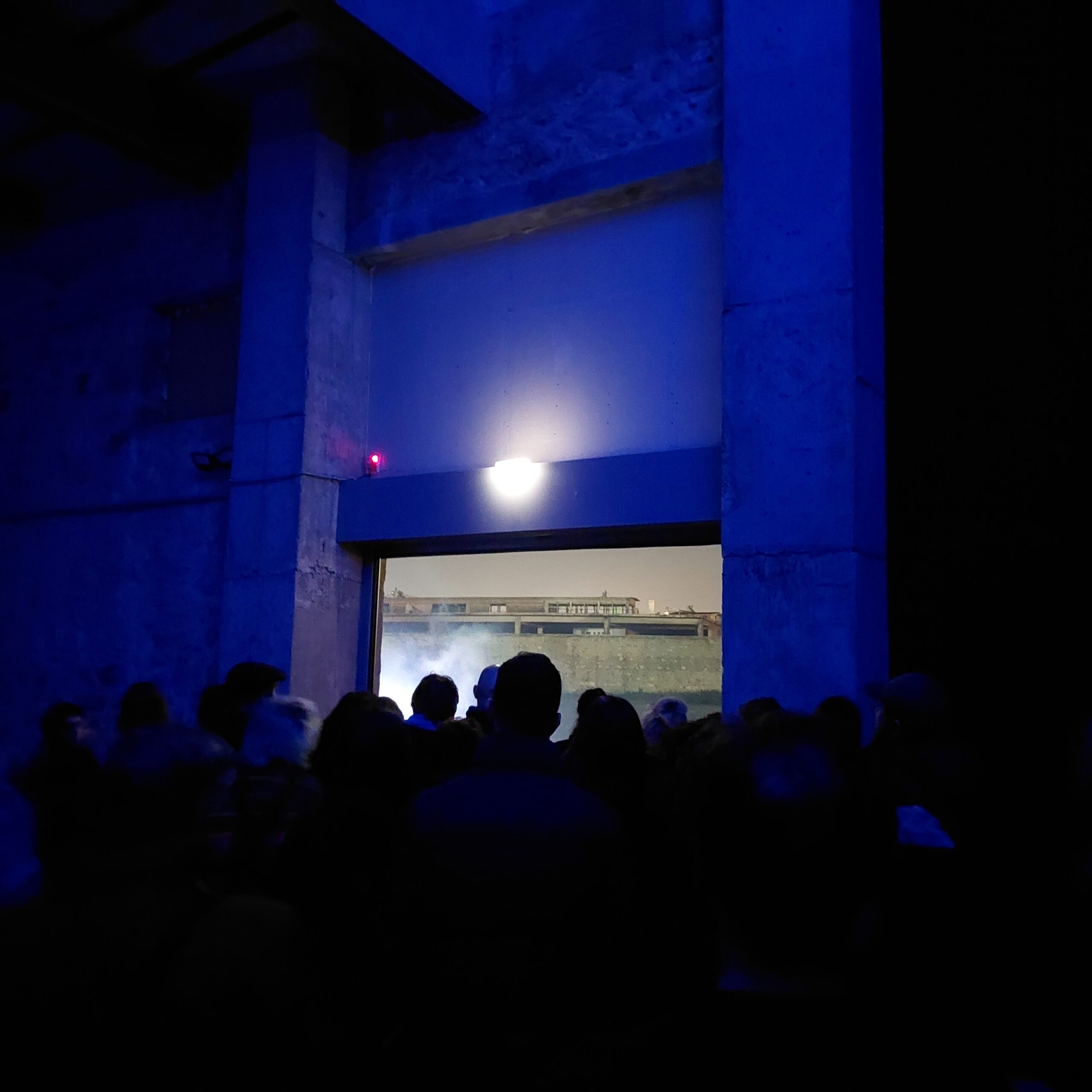
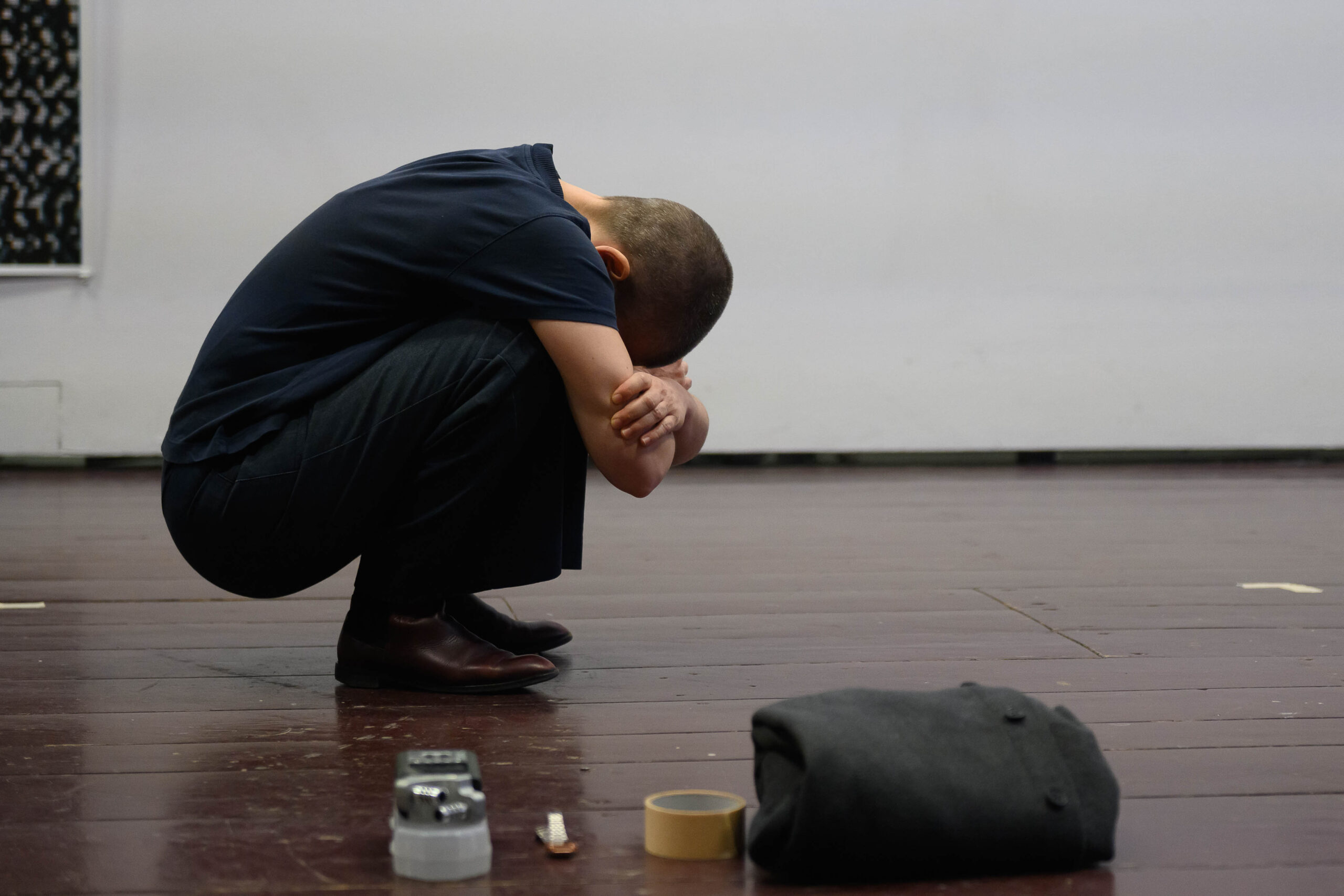
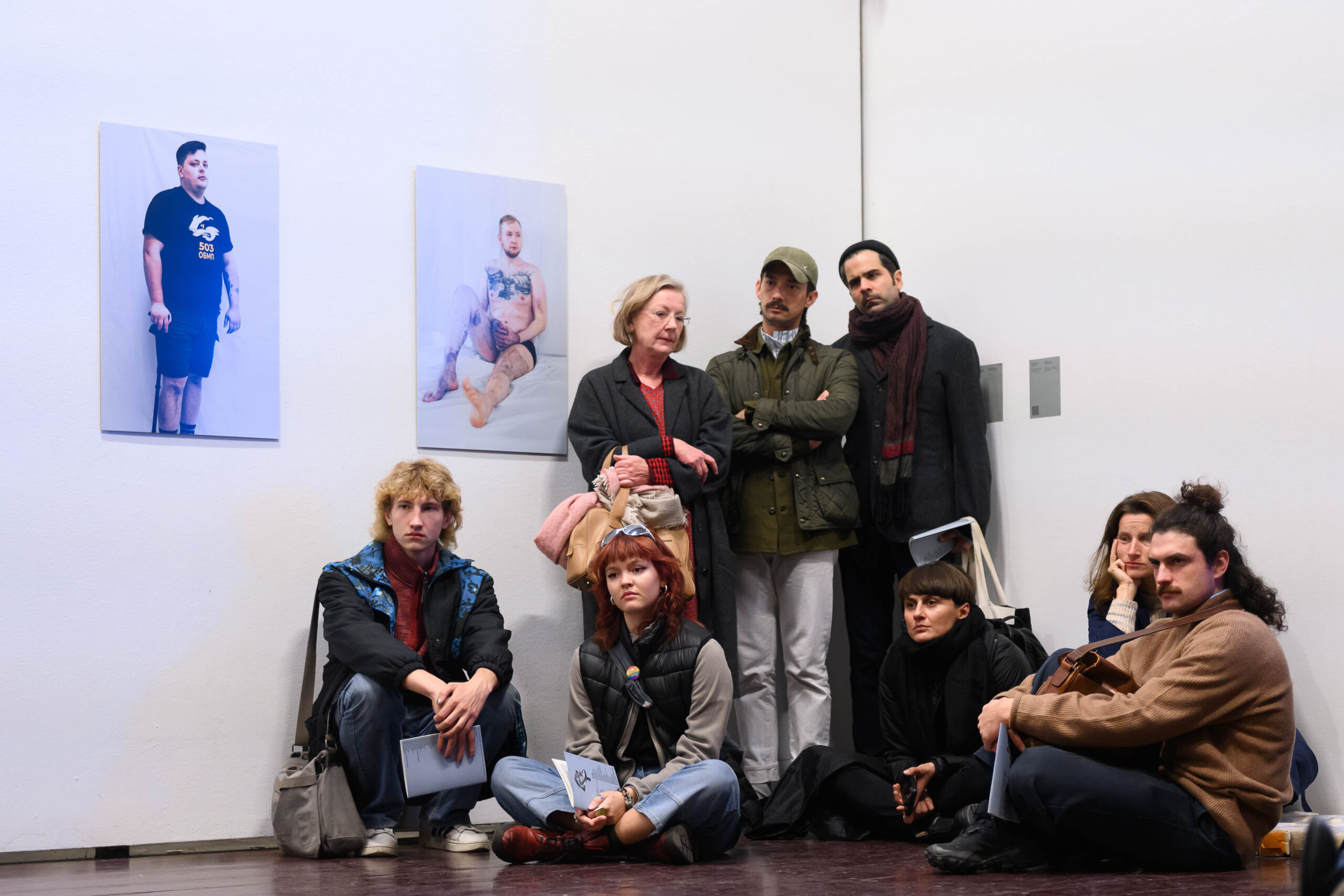
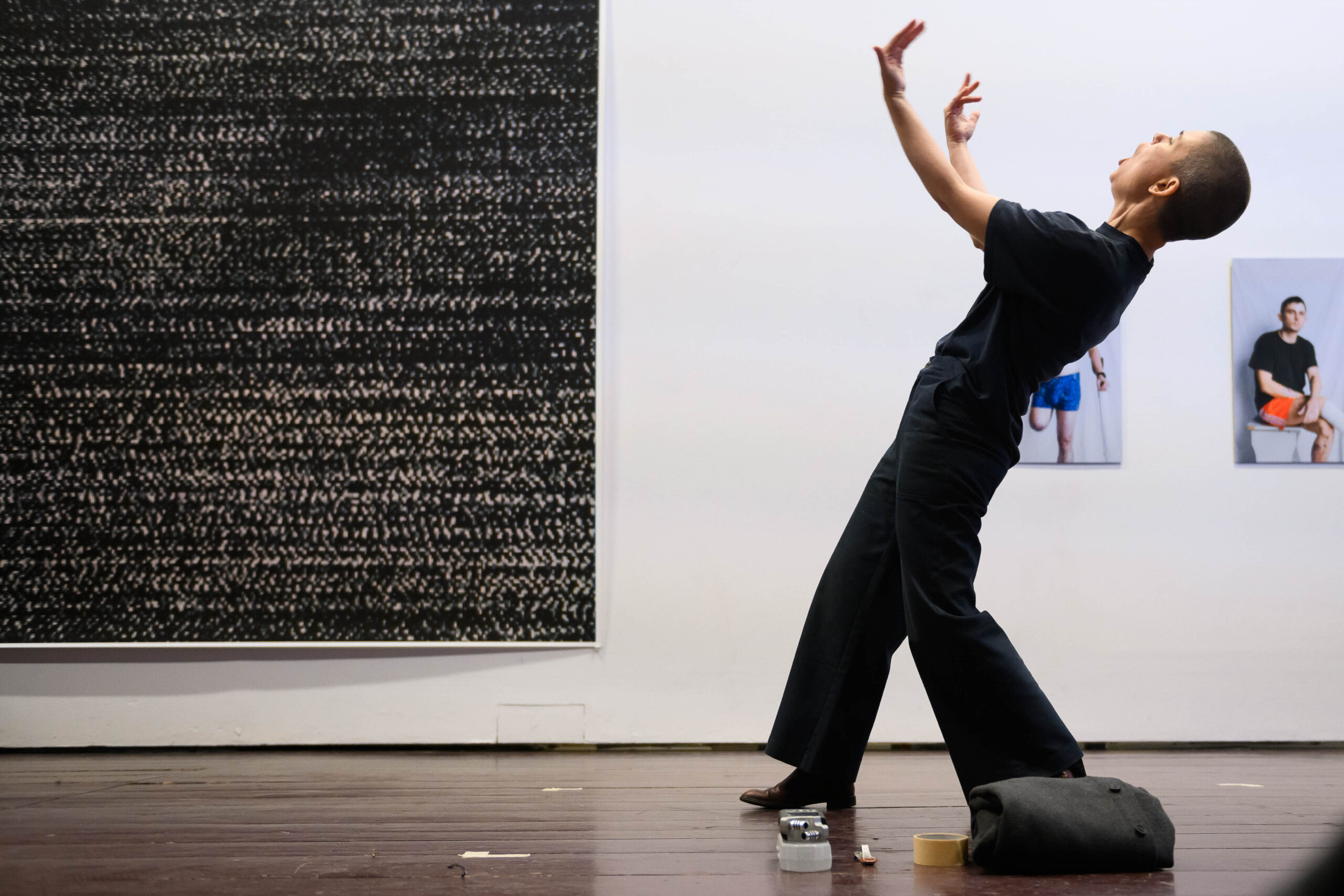
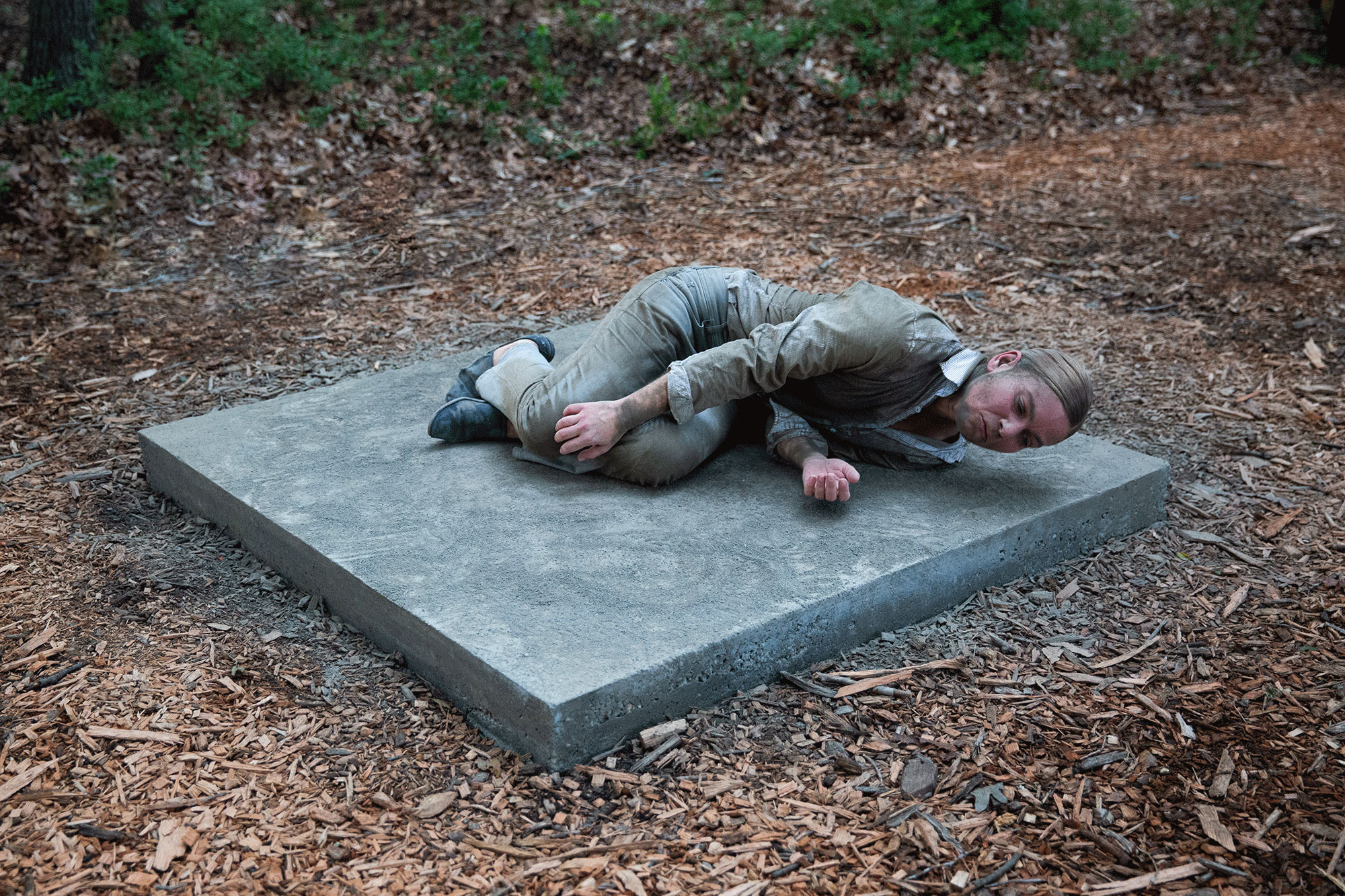
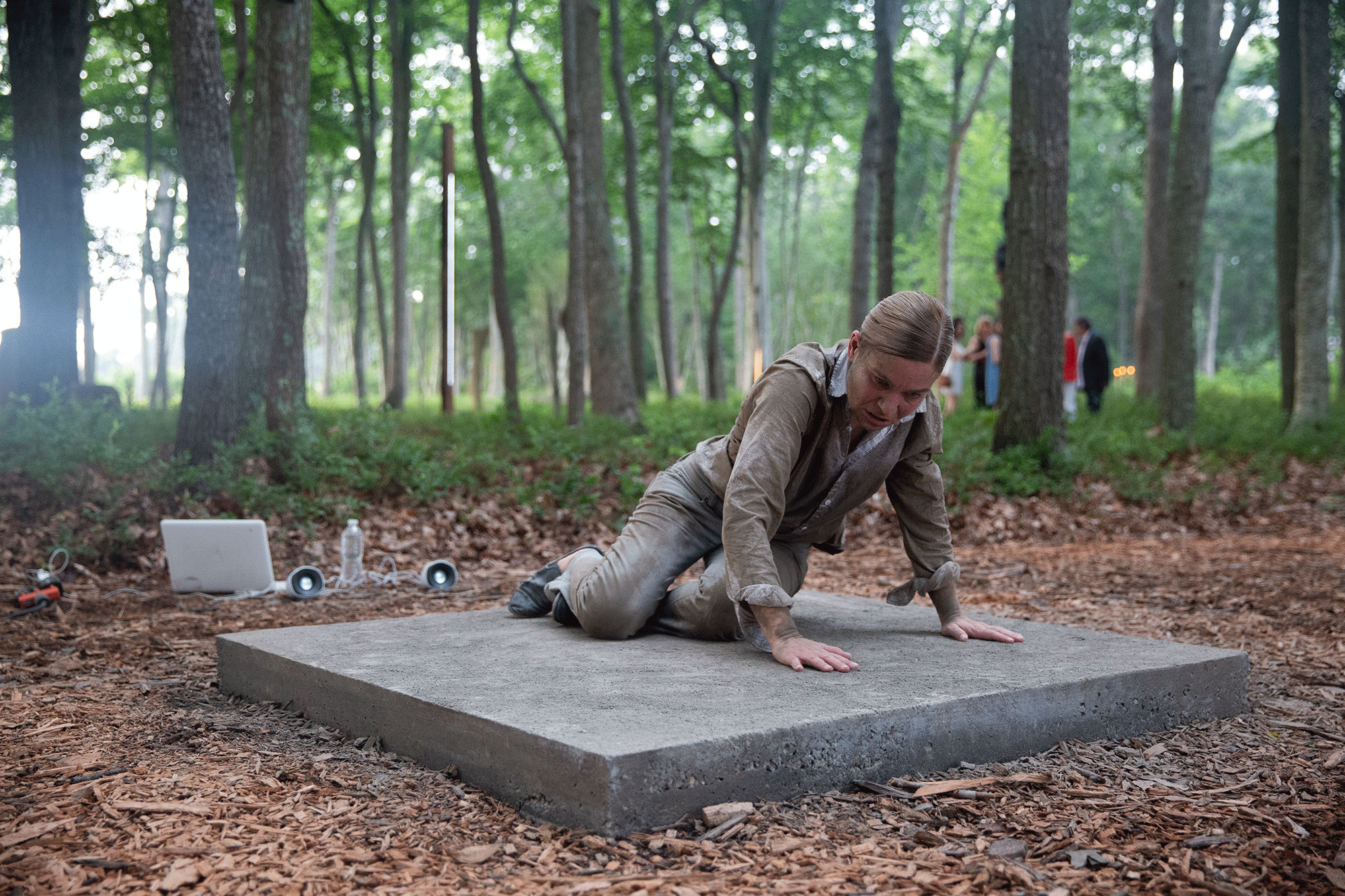
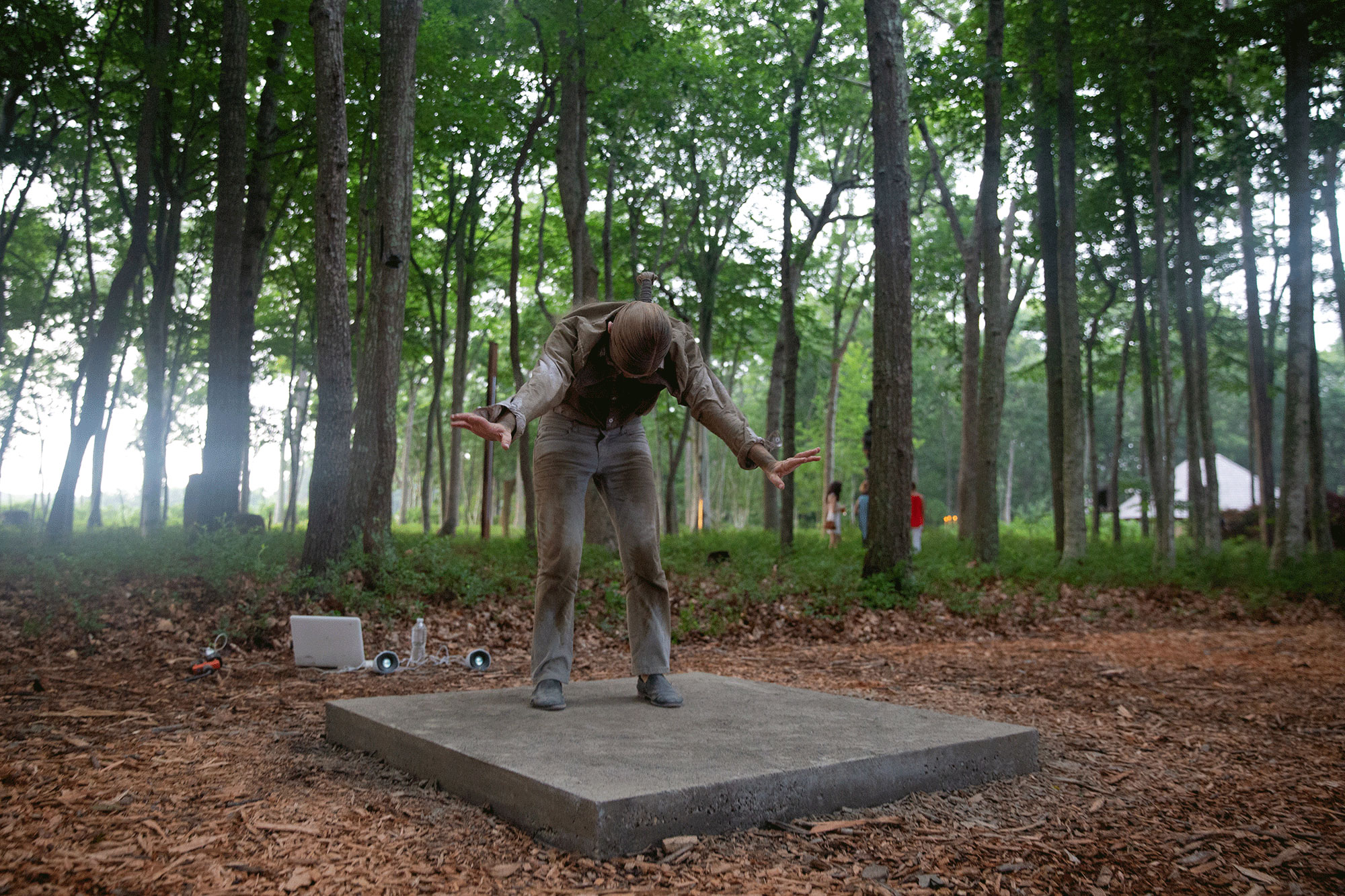
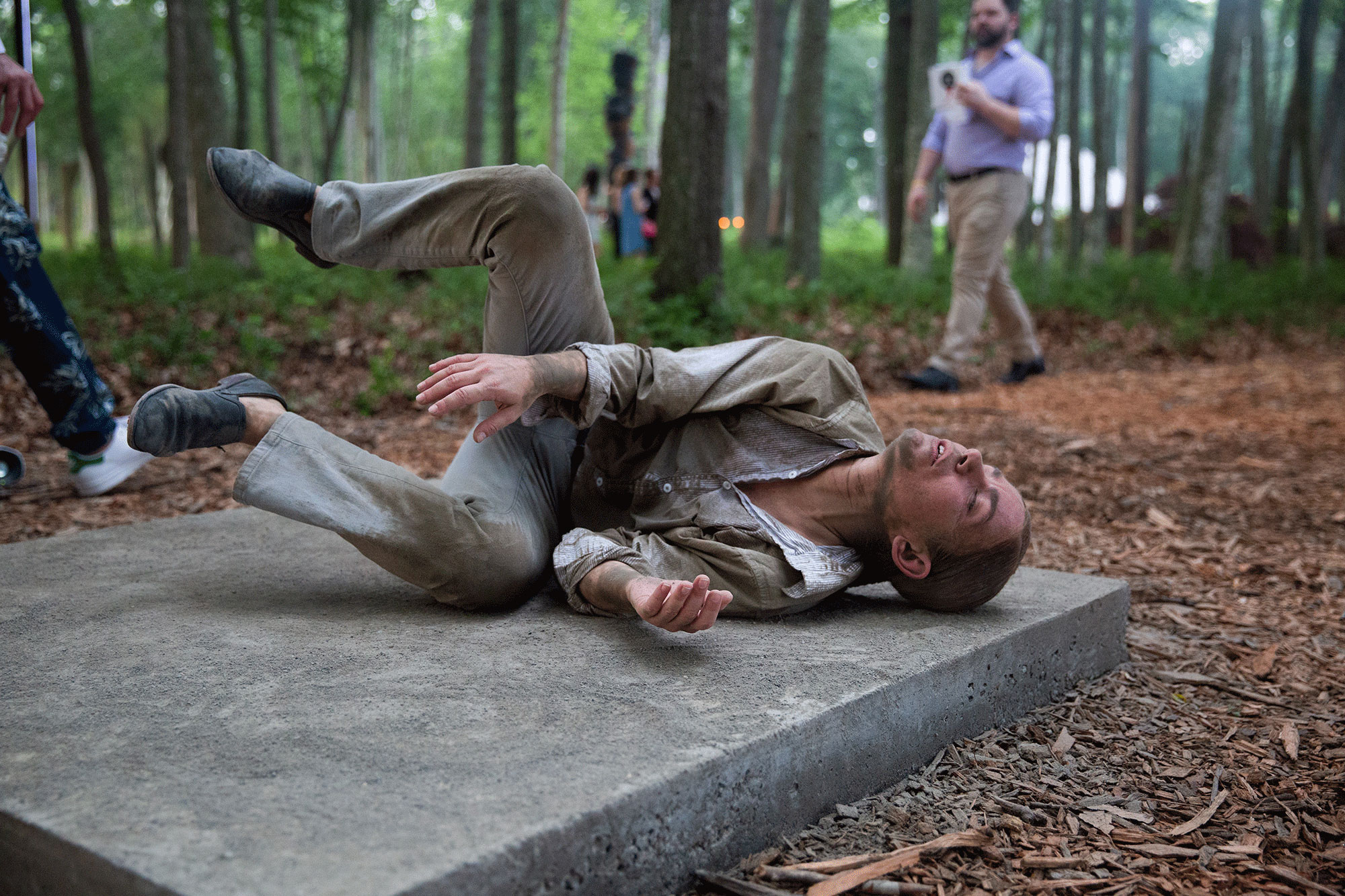
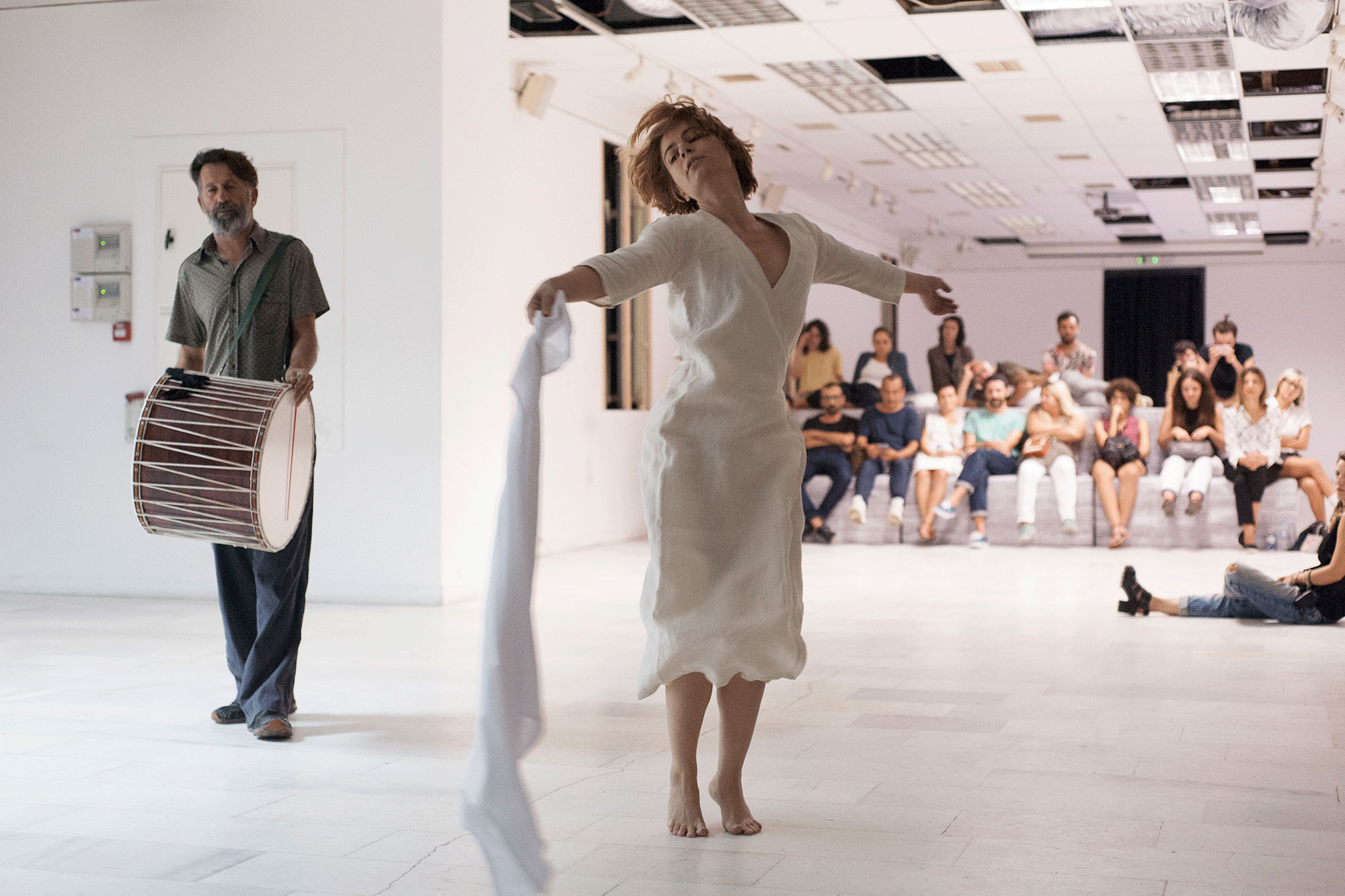
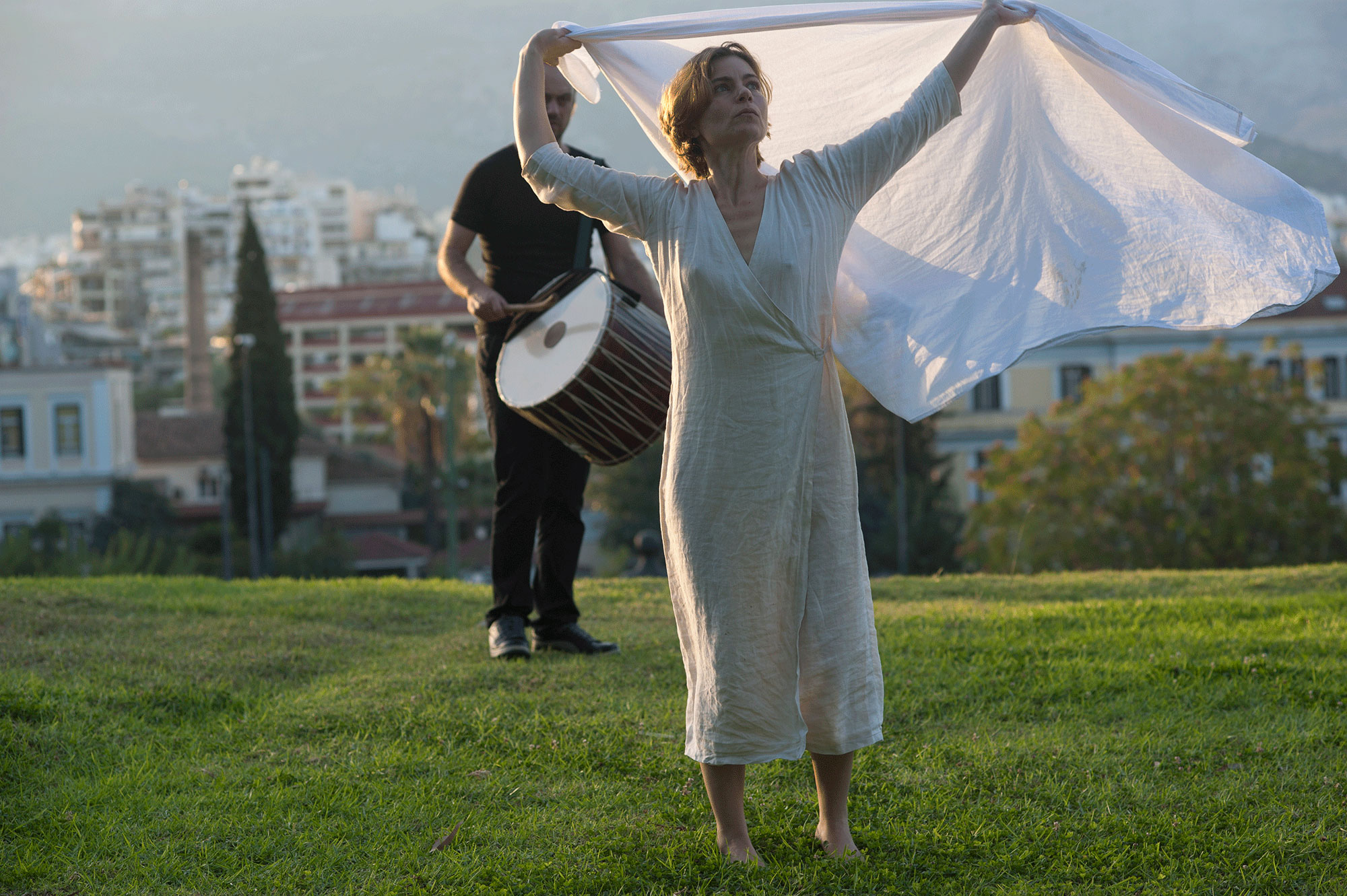
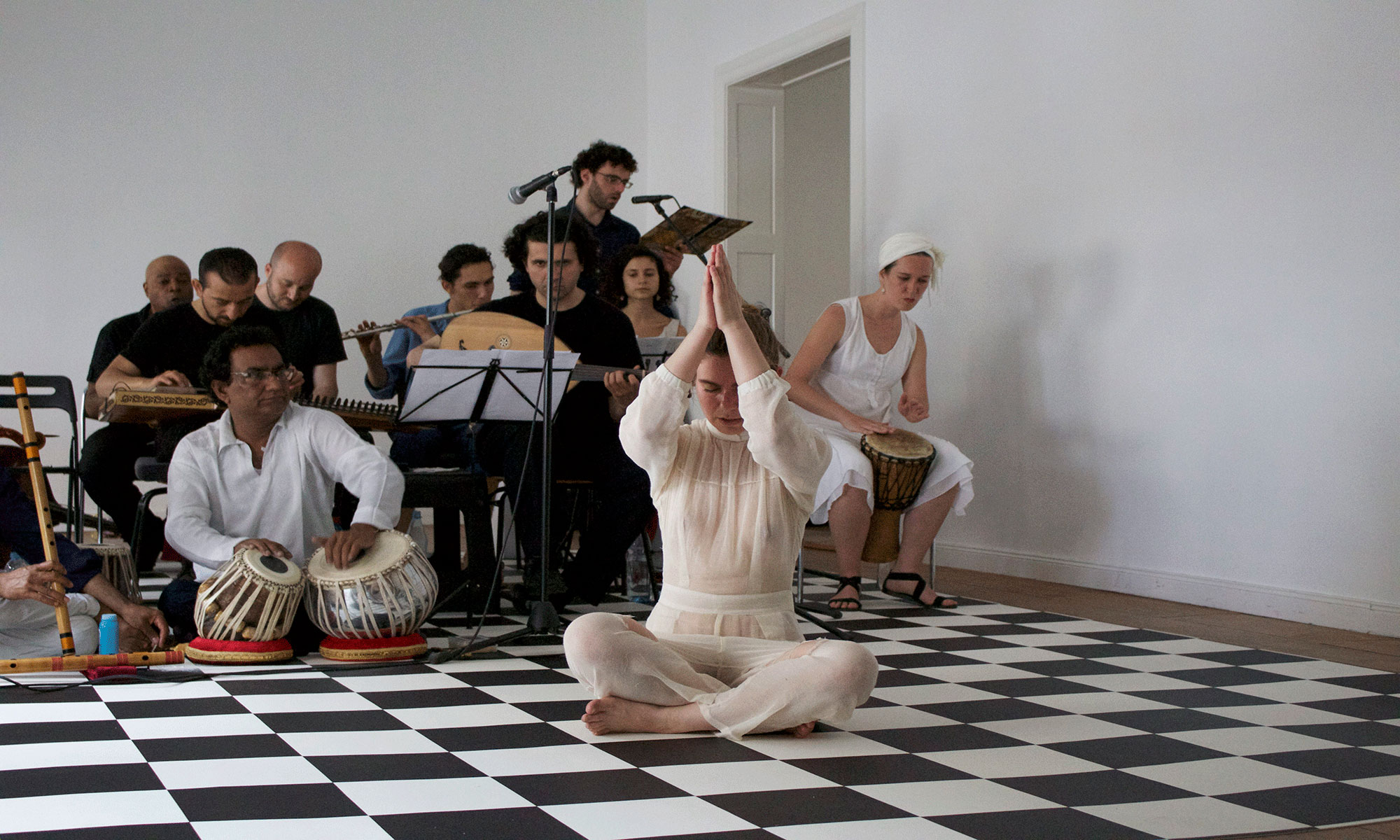
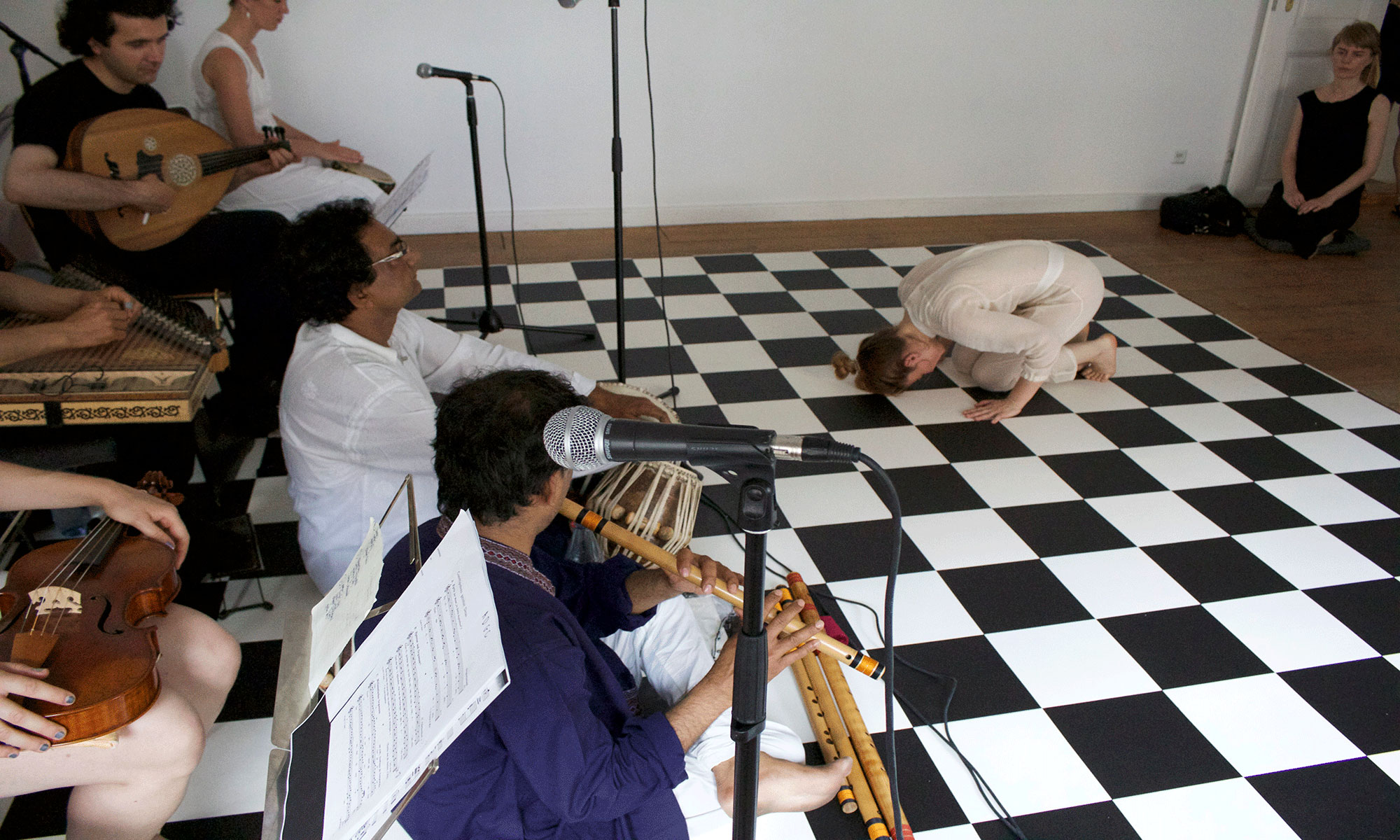
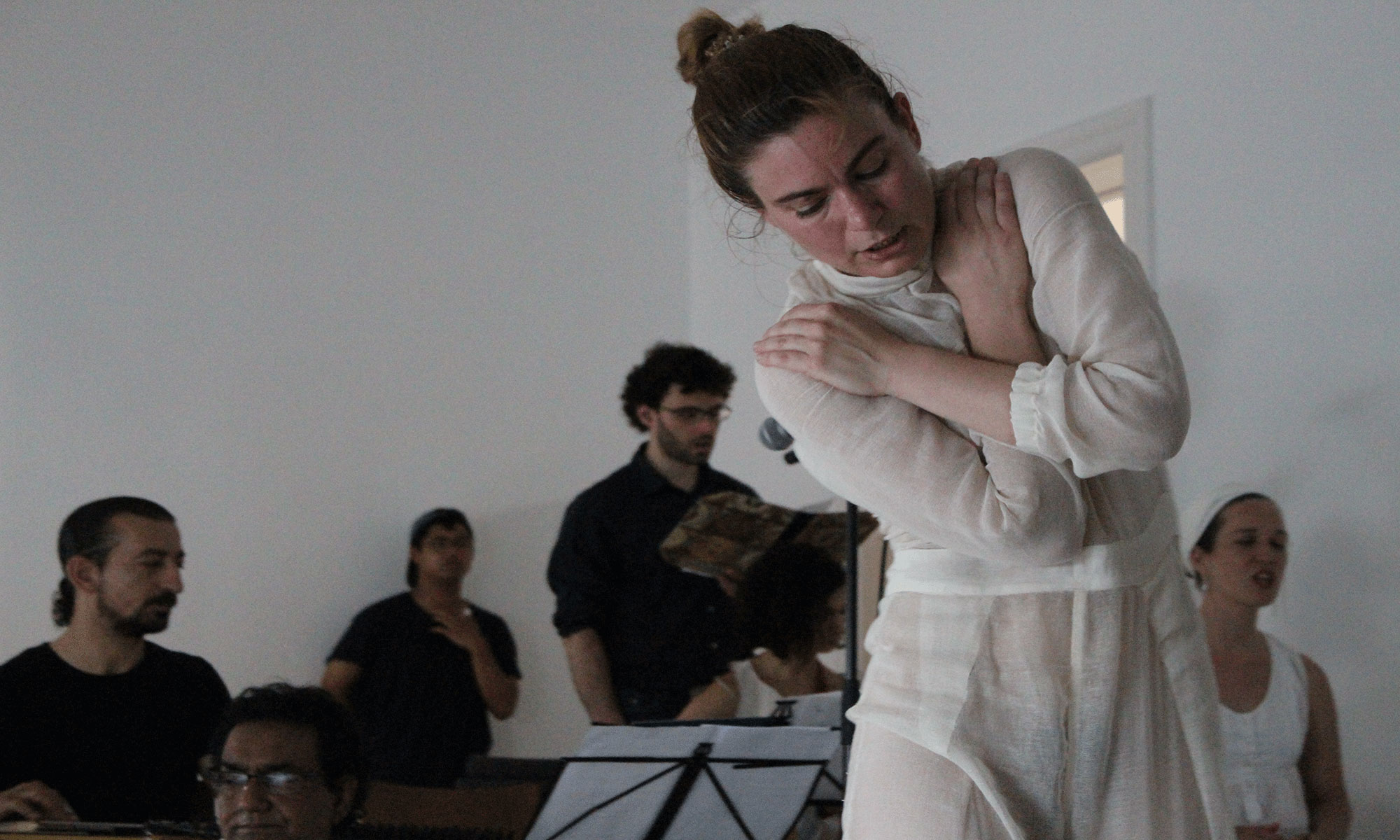
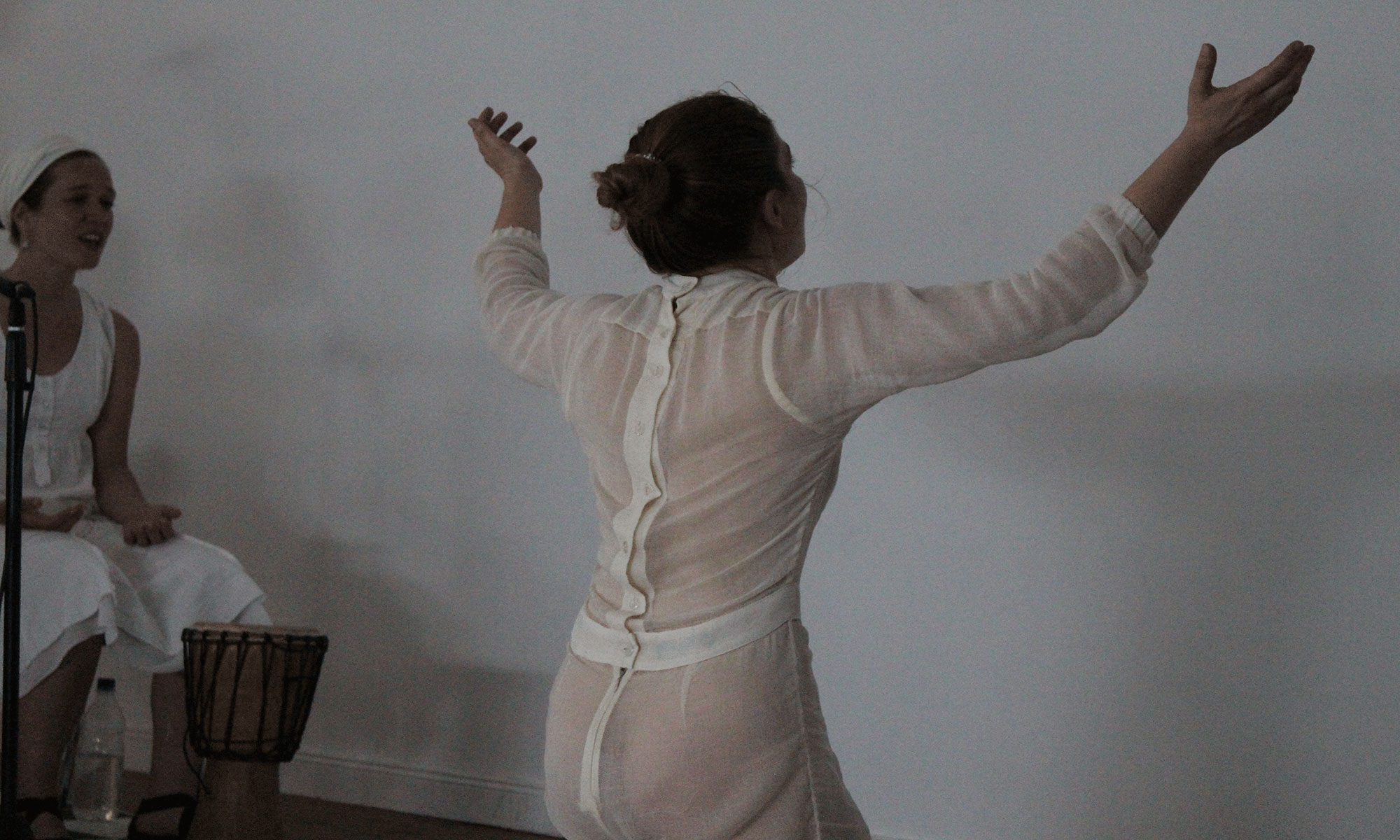
Gone, Gone Beyond

at Centre Pompidou, Paris (15/01/2026 - 31/01/2026)
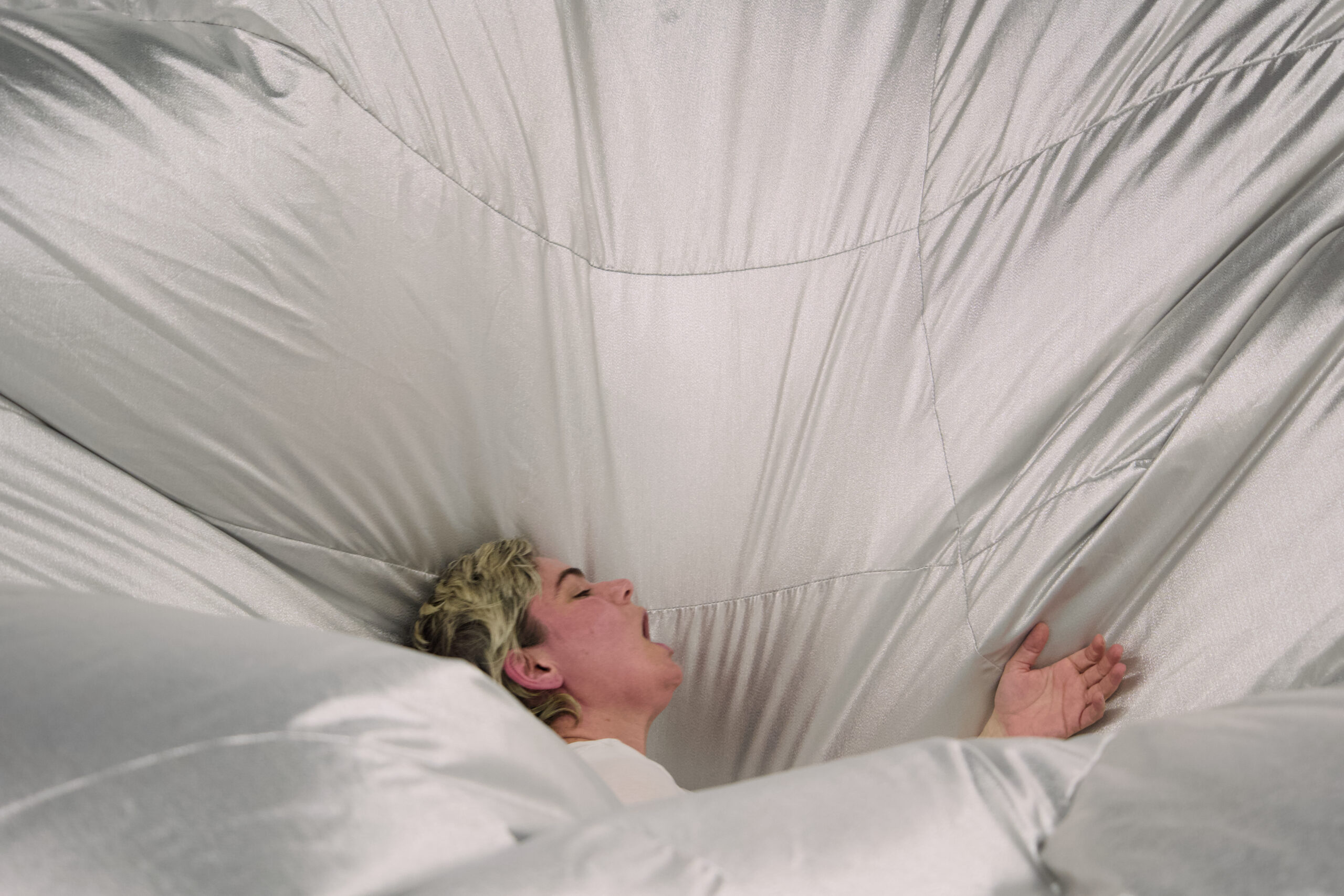

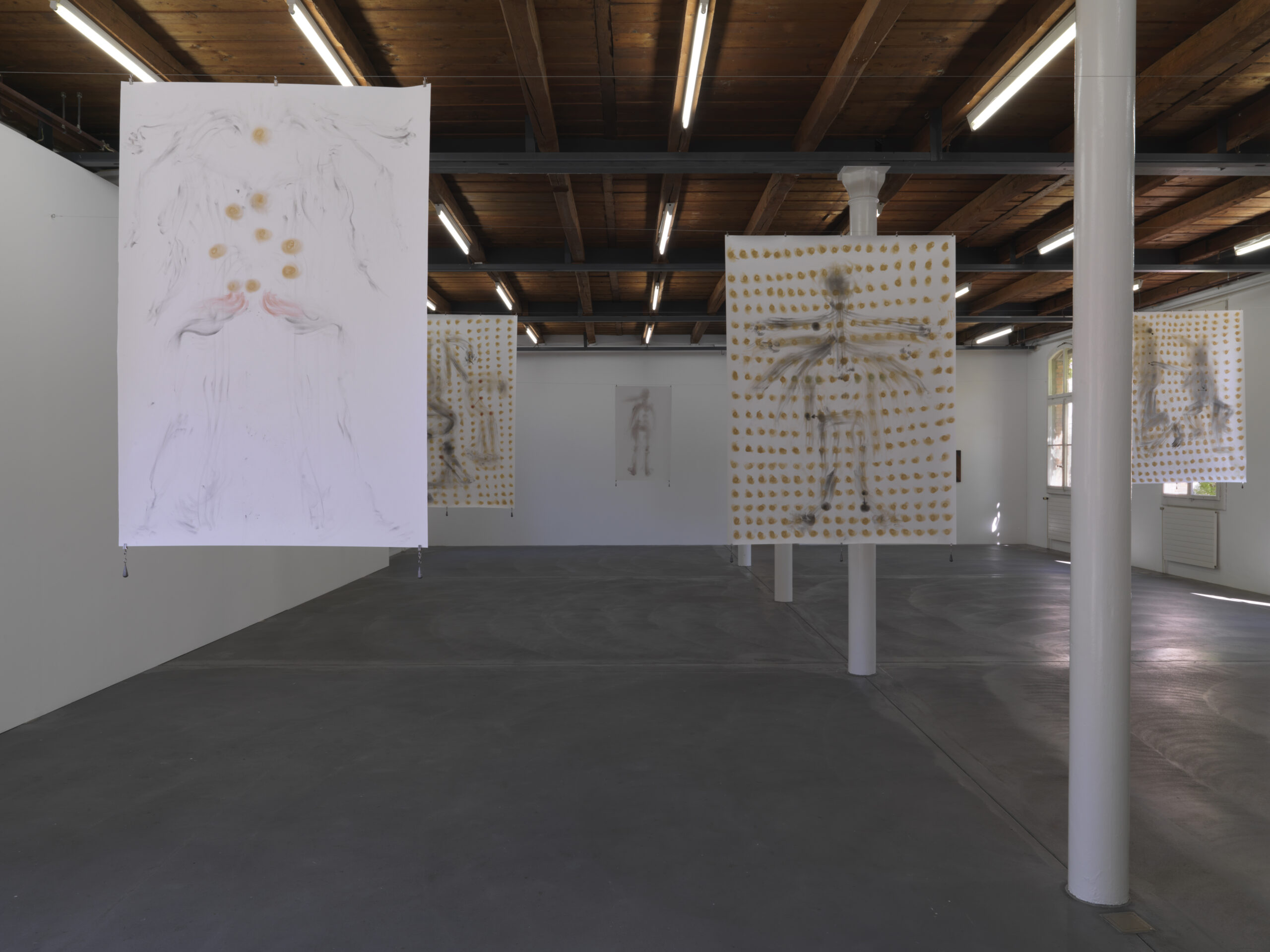
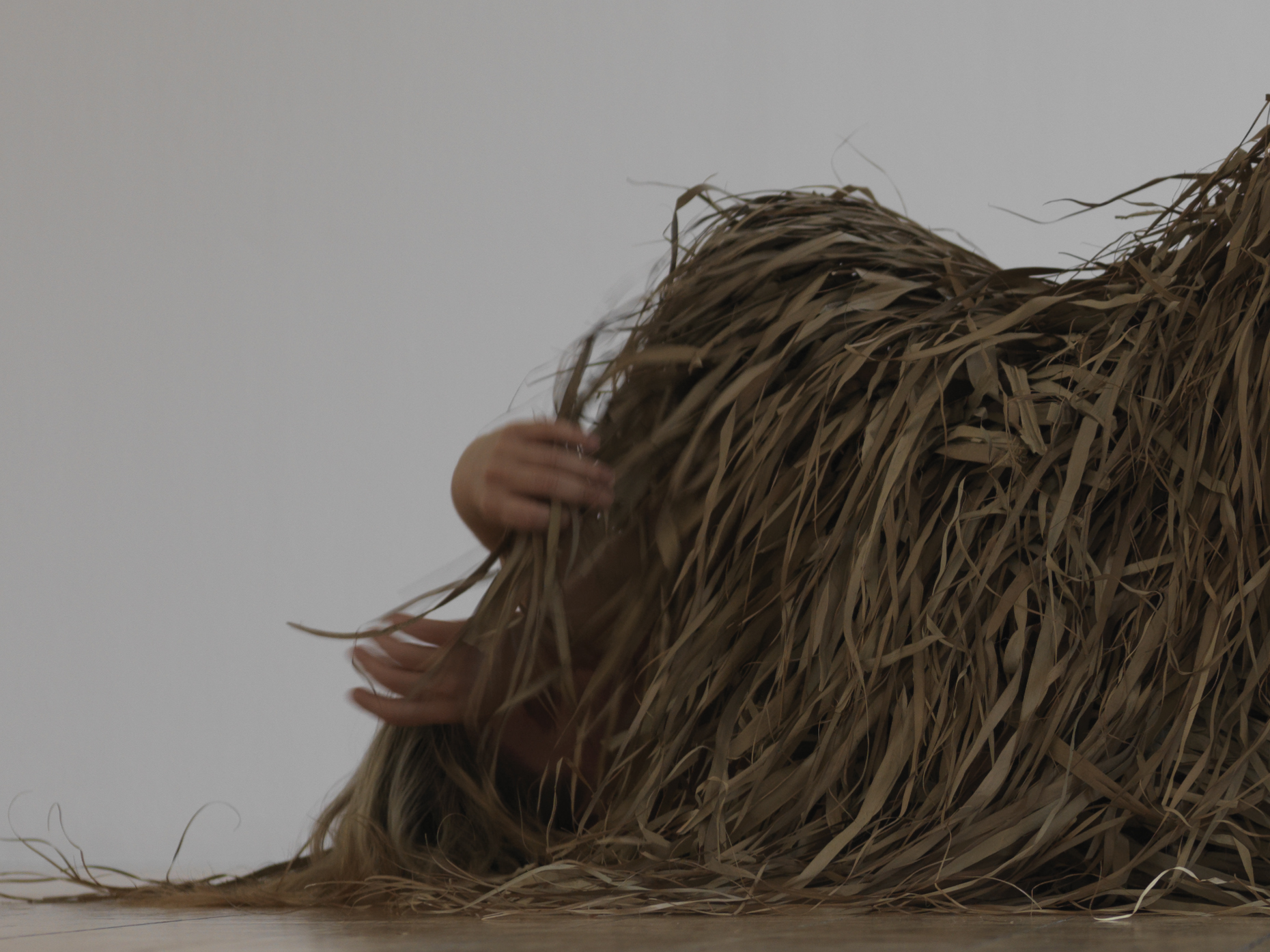
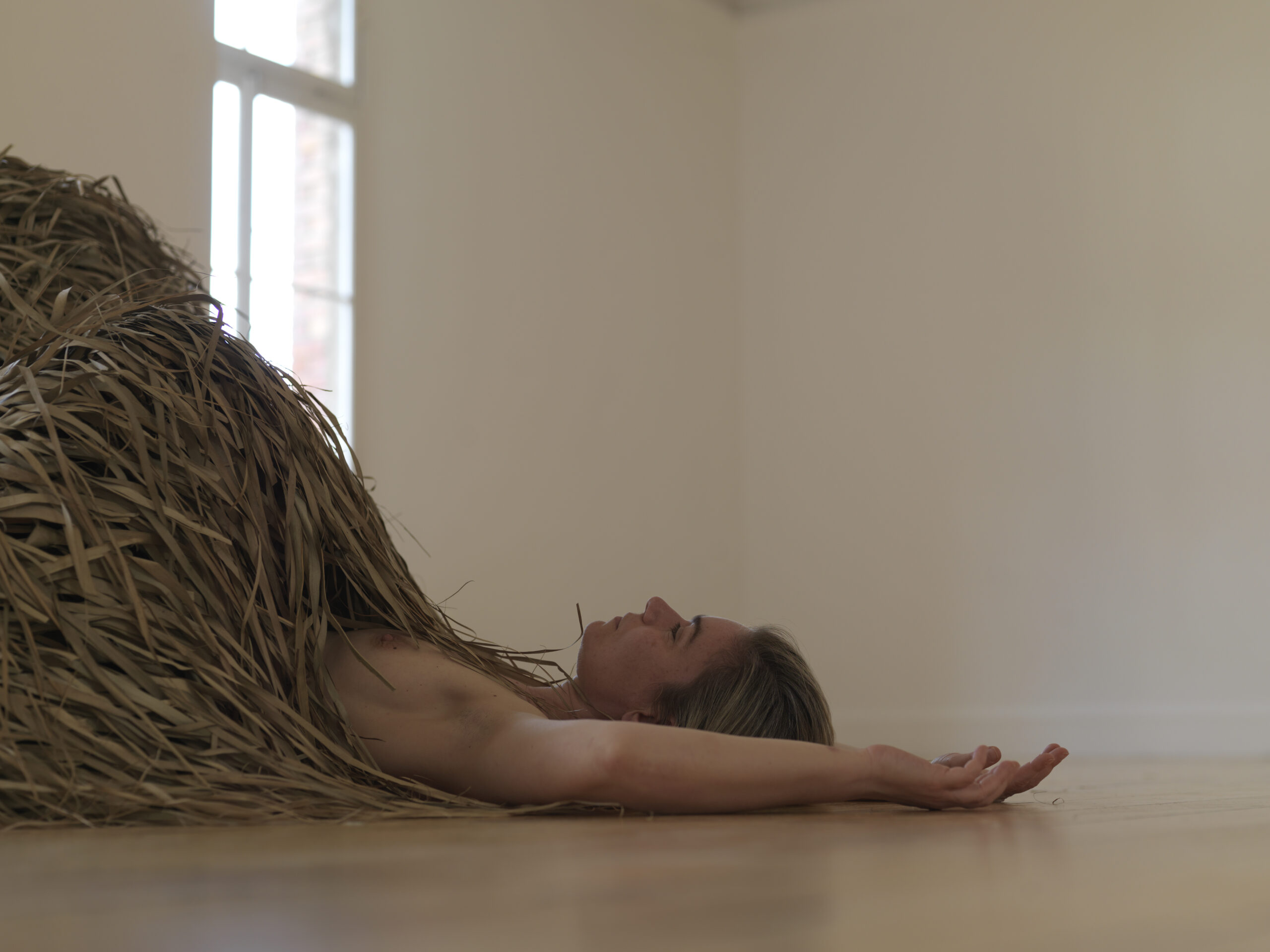
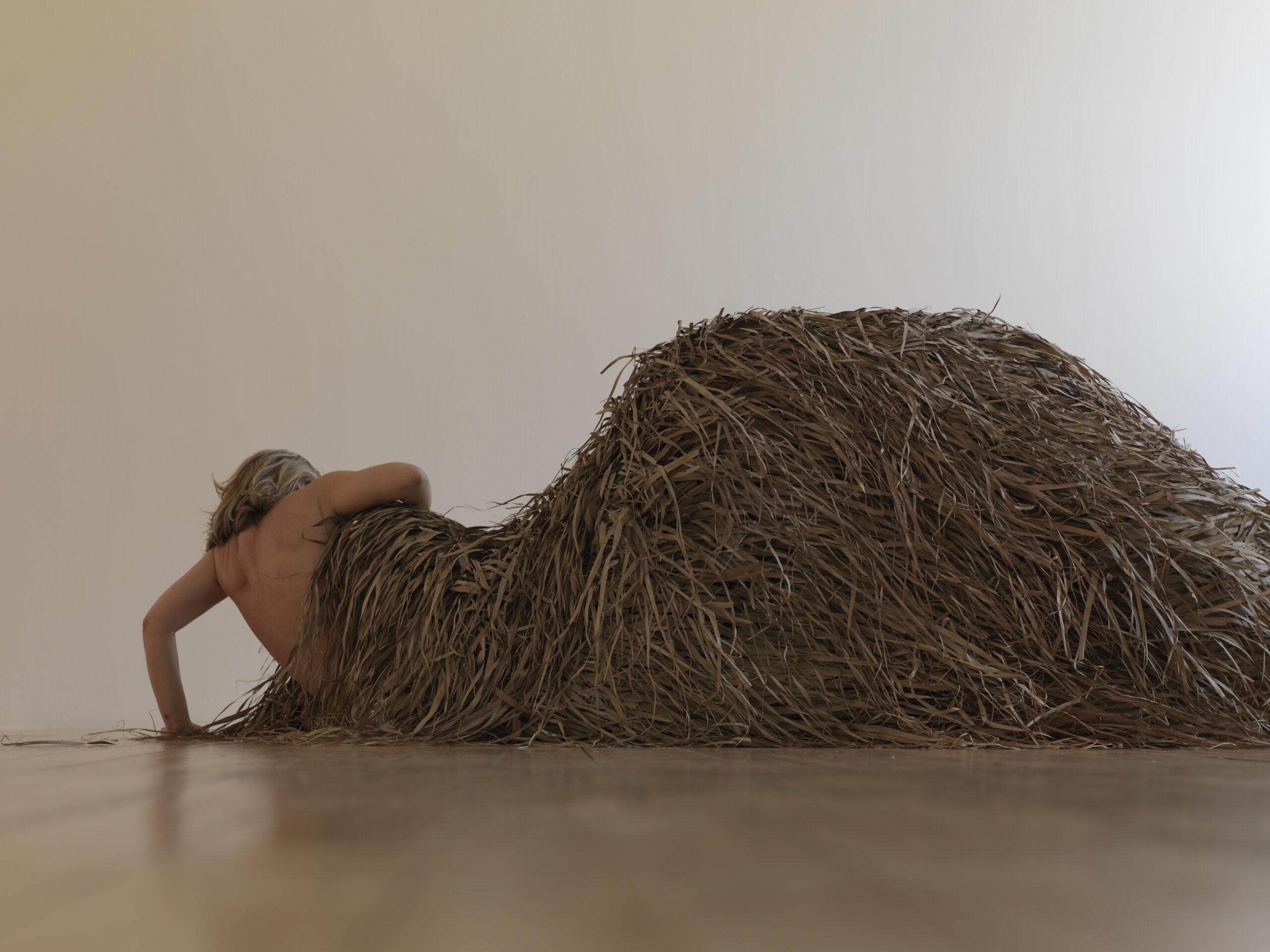
Georgia Sagri presents Gone, Gone Beyond as part of Drawing Performances, a program organized by Centre Pompidou in collaboration with Drawing Lab Paris, in dialogue with the exhibition “Drawings Without Limits” at the Grand Palais (16/12/2025 - 25/03/2026).


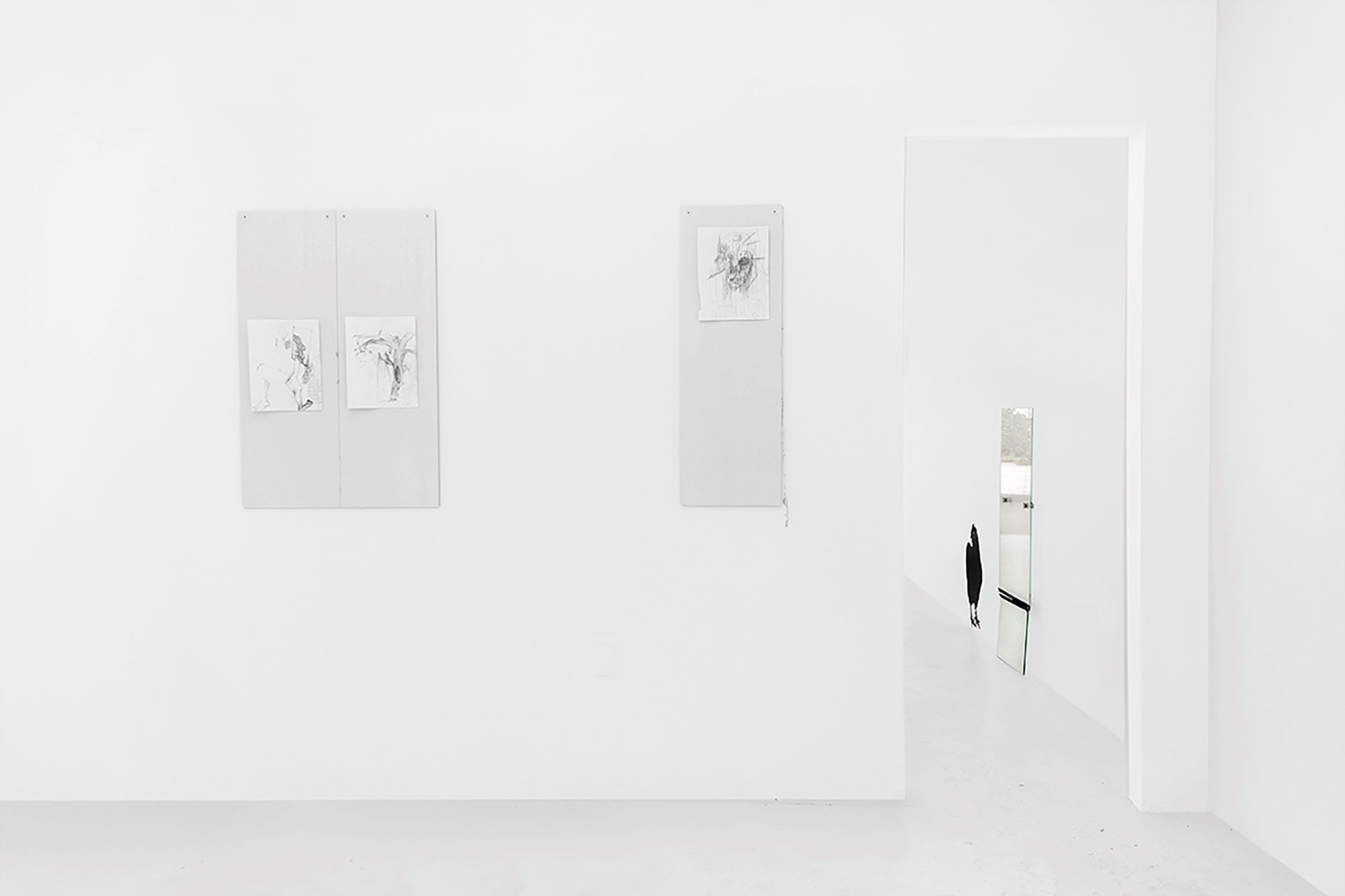
Opening the program, Sagri explores the body’s capacity for transformation, where drawing precedes performance, functioning as a space where gestures take shape and emotions are inscribed.


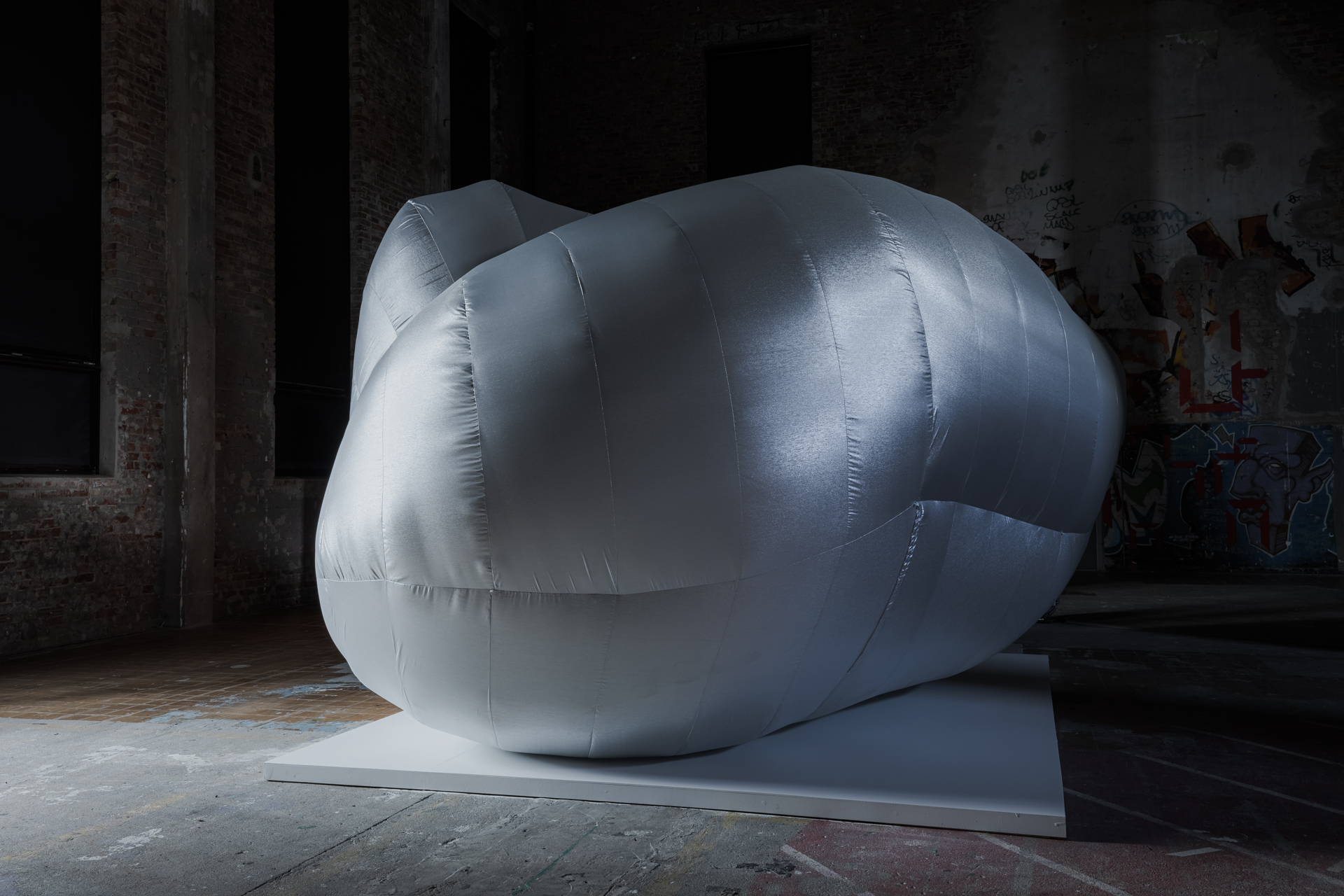
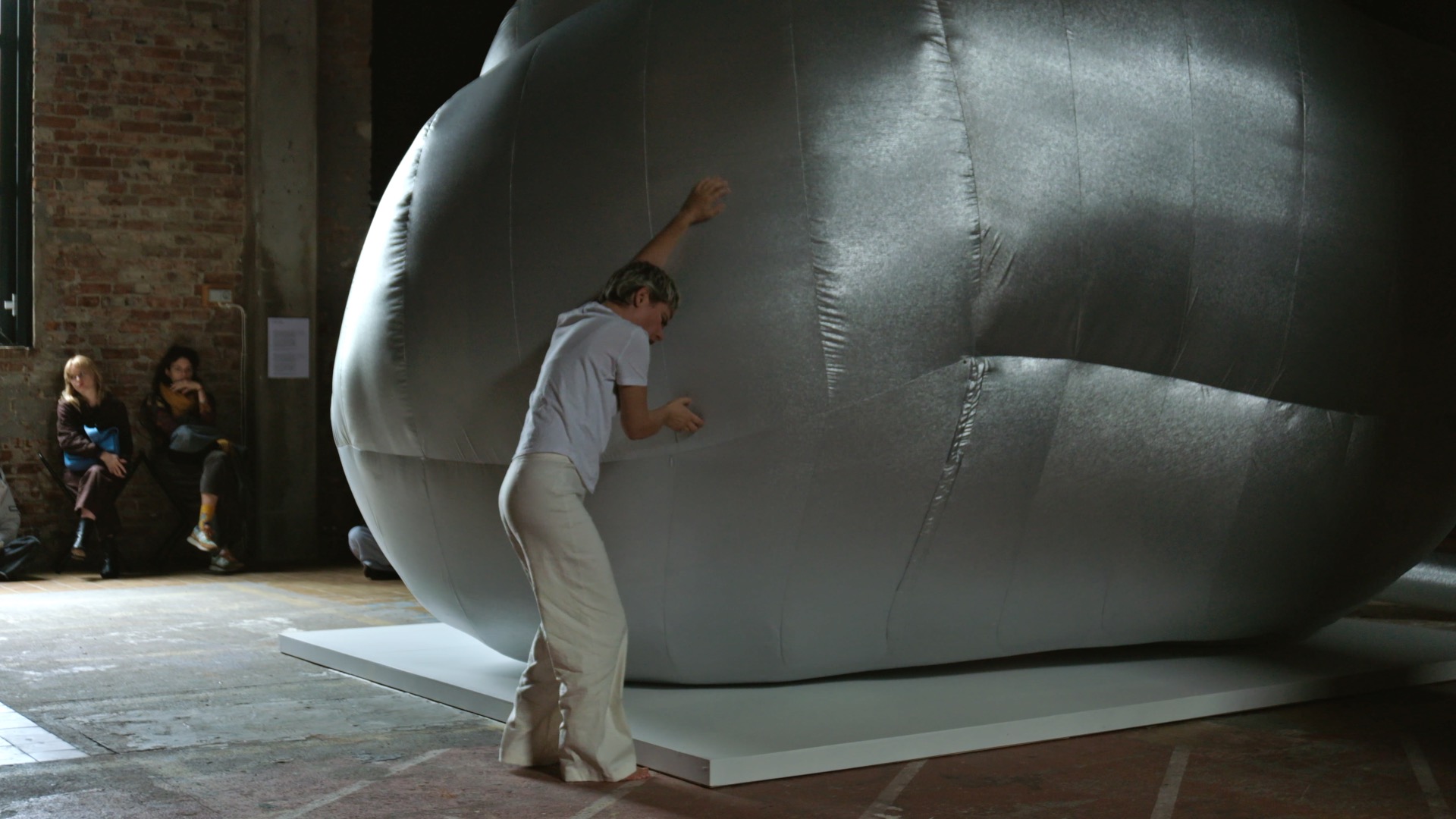
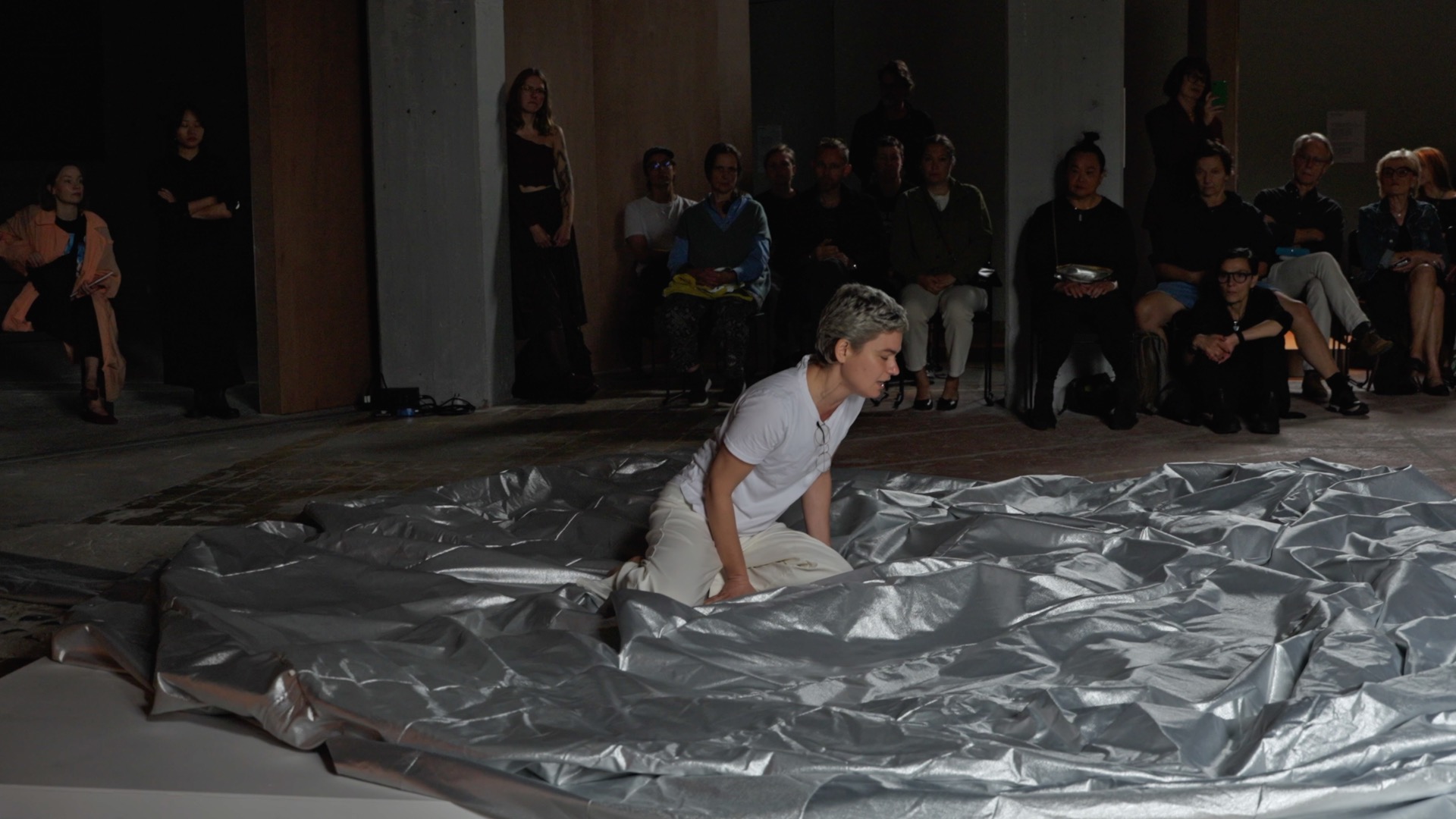
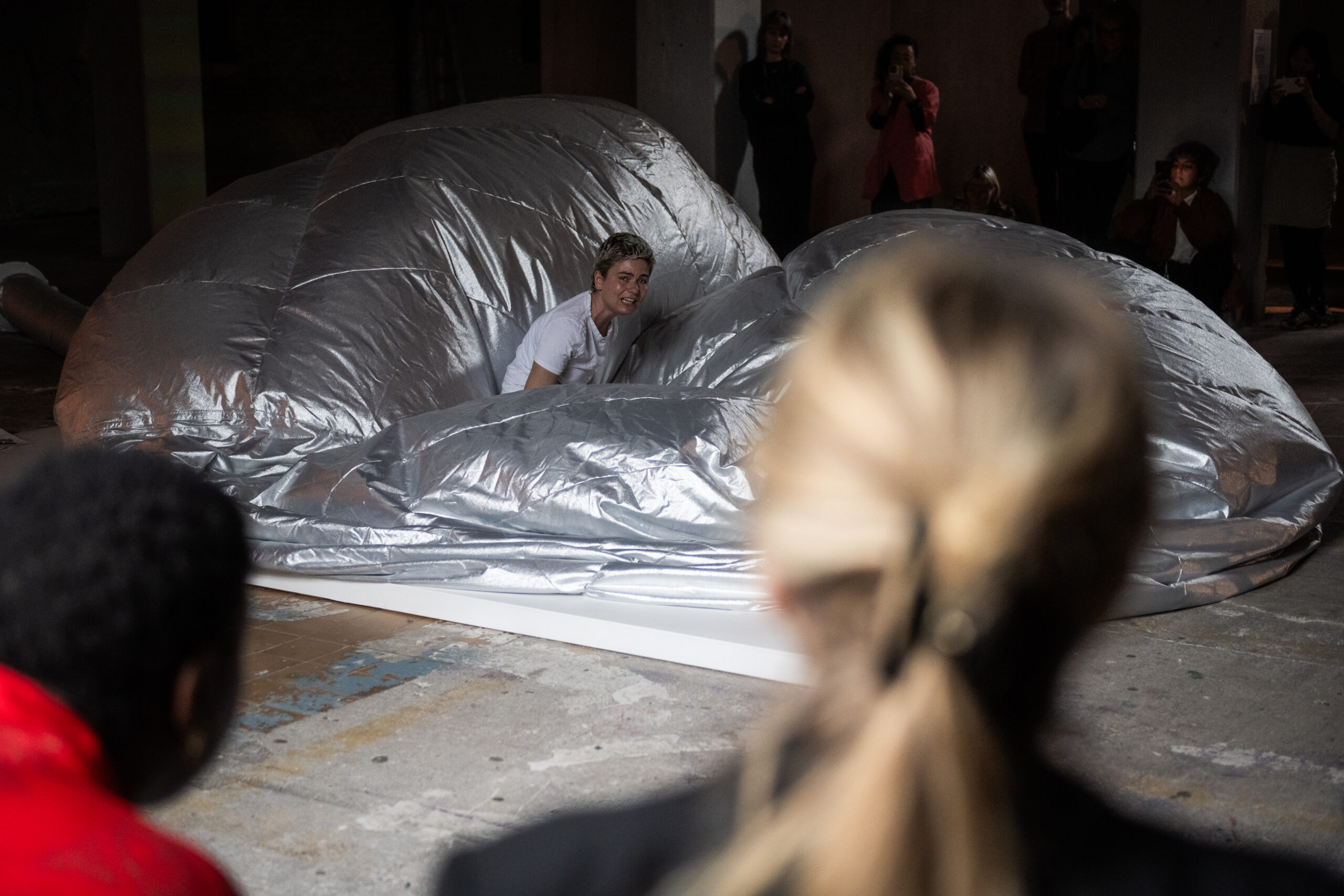
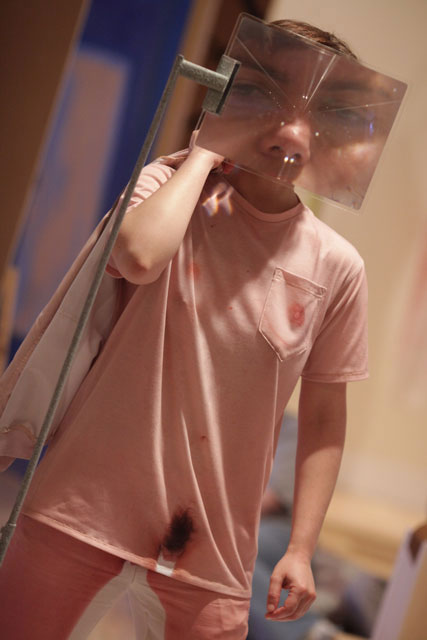
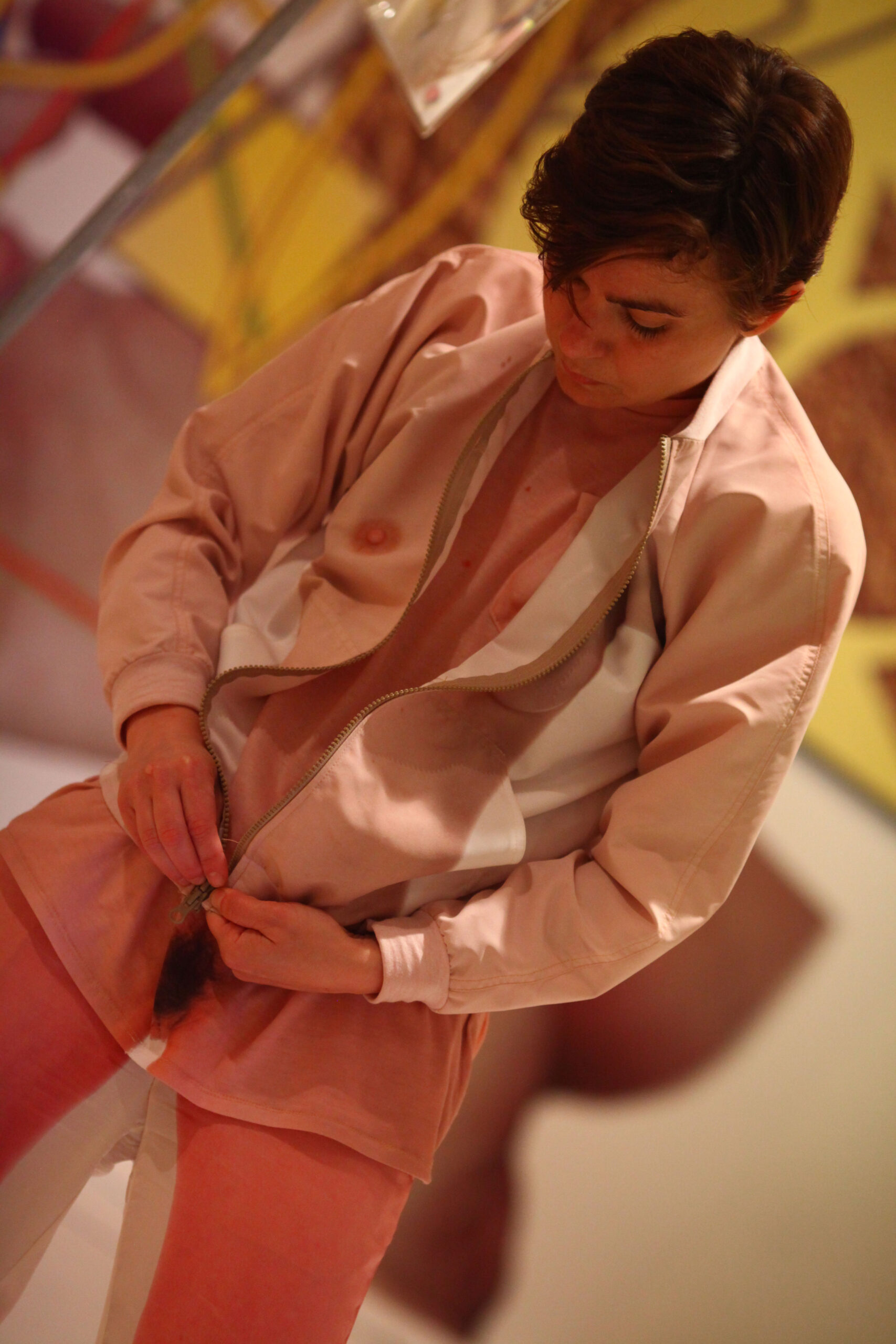
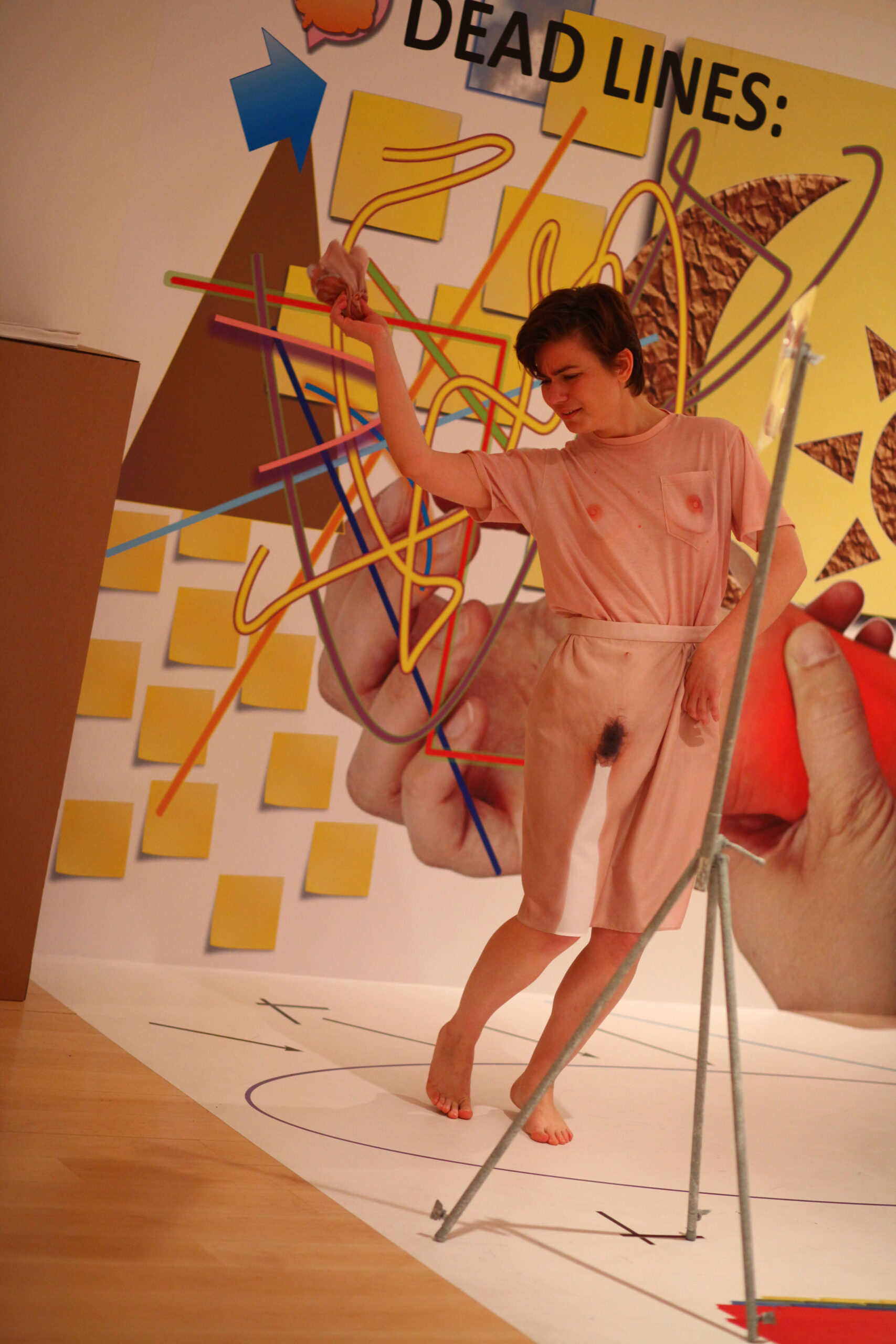
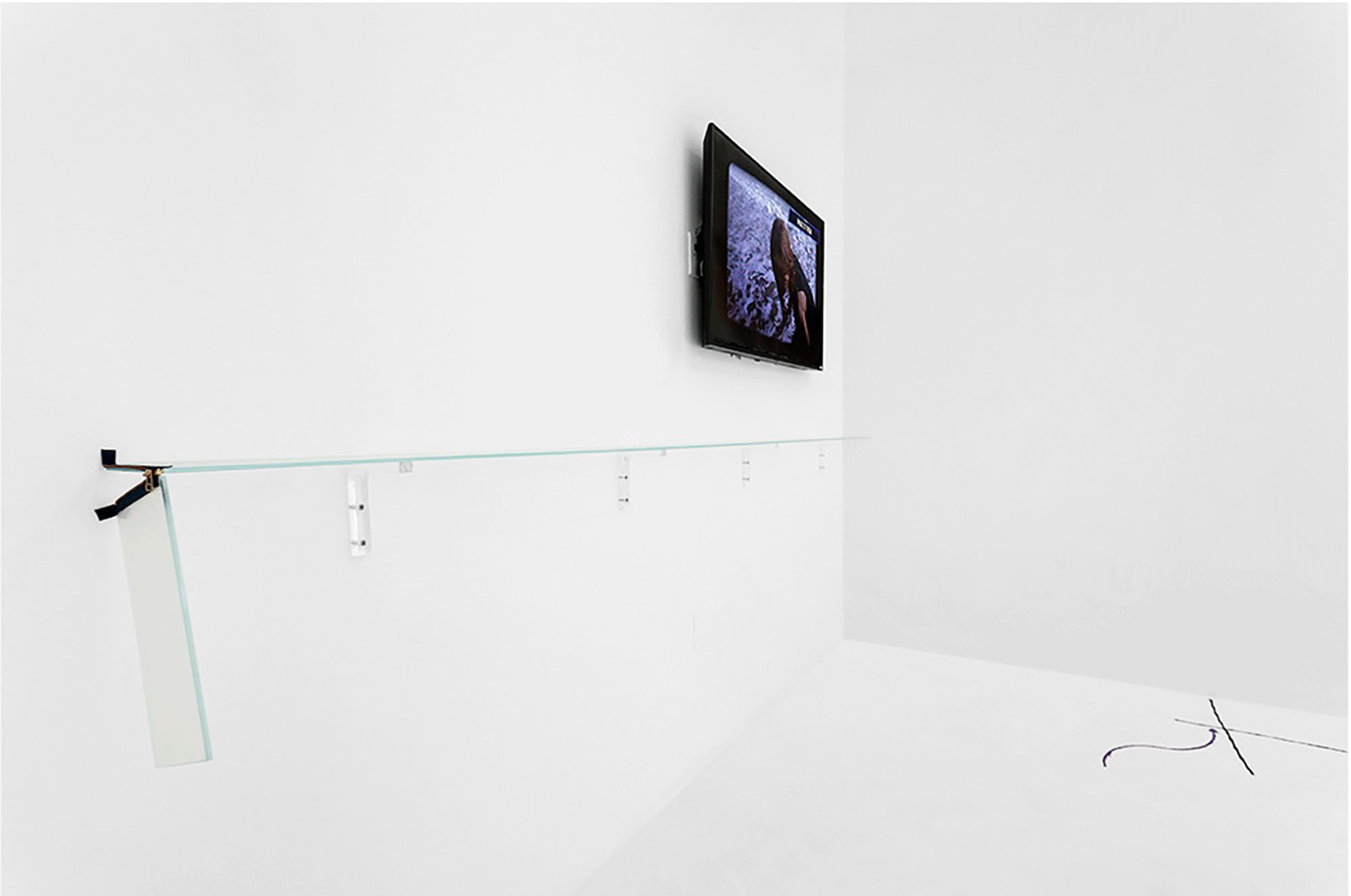
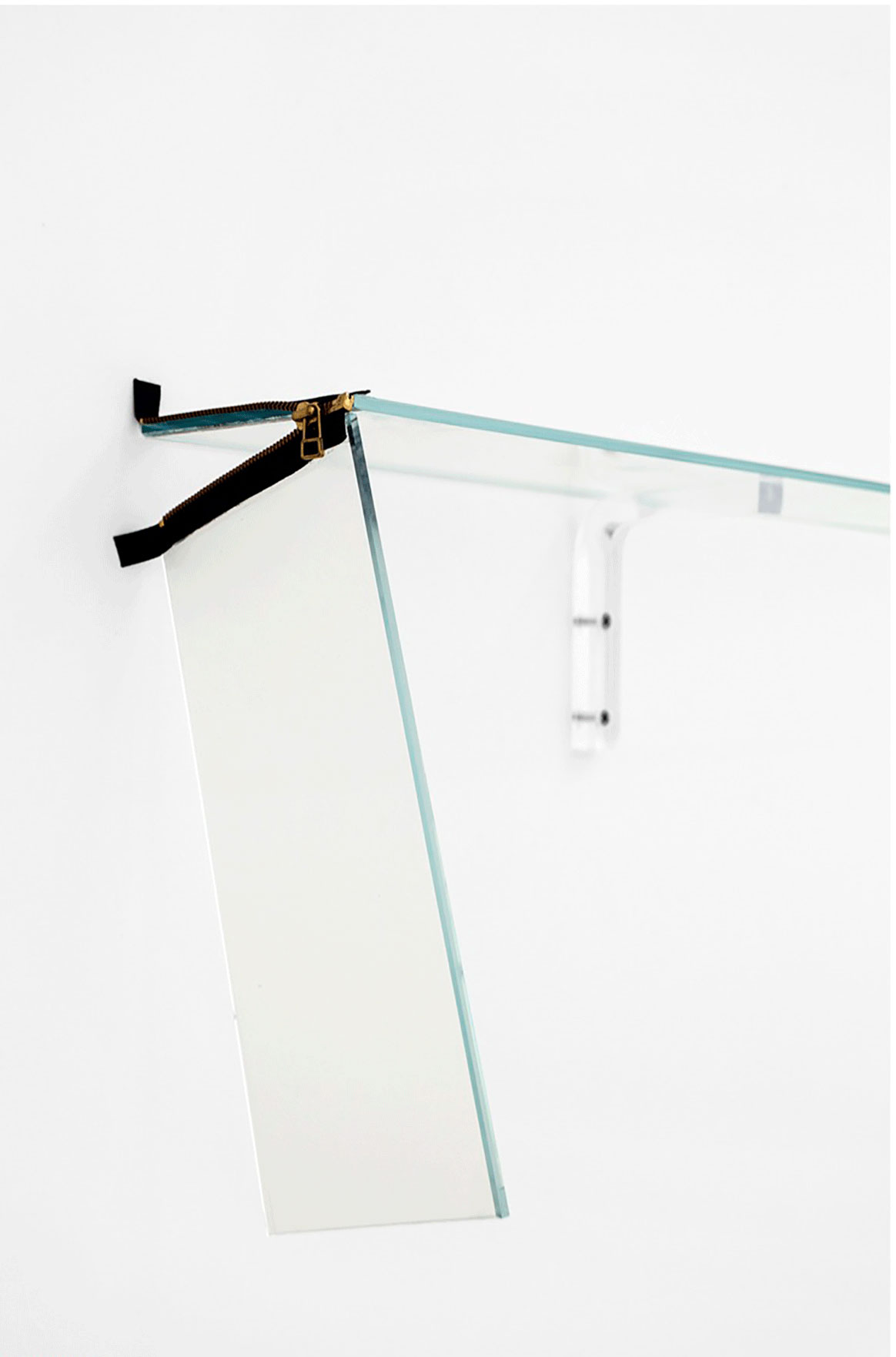
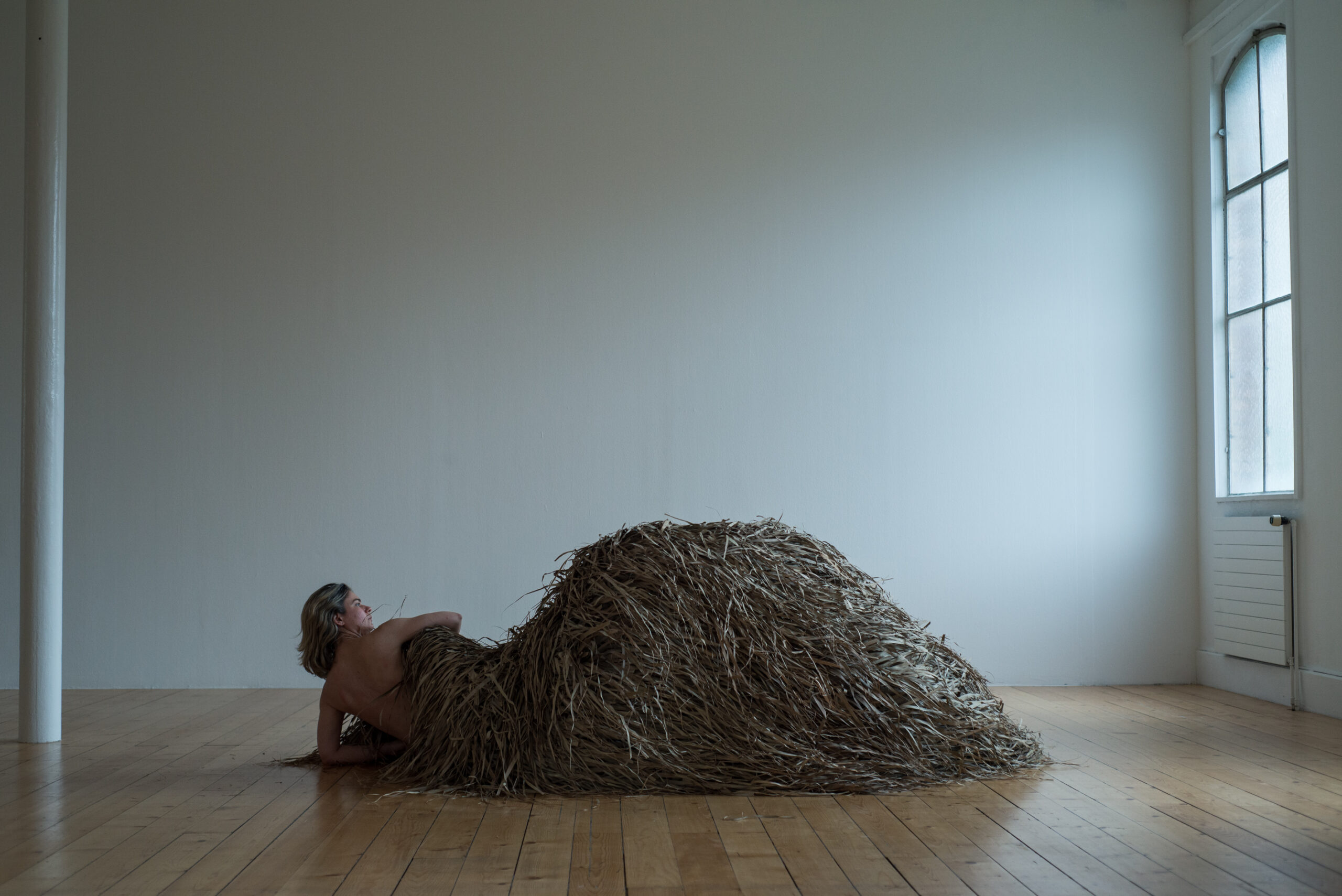
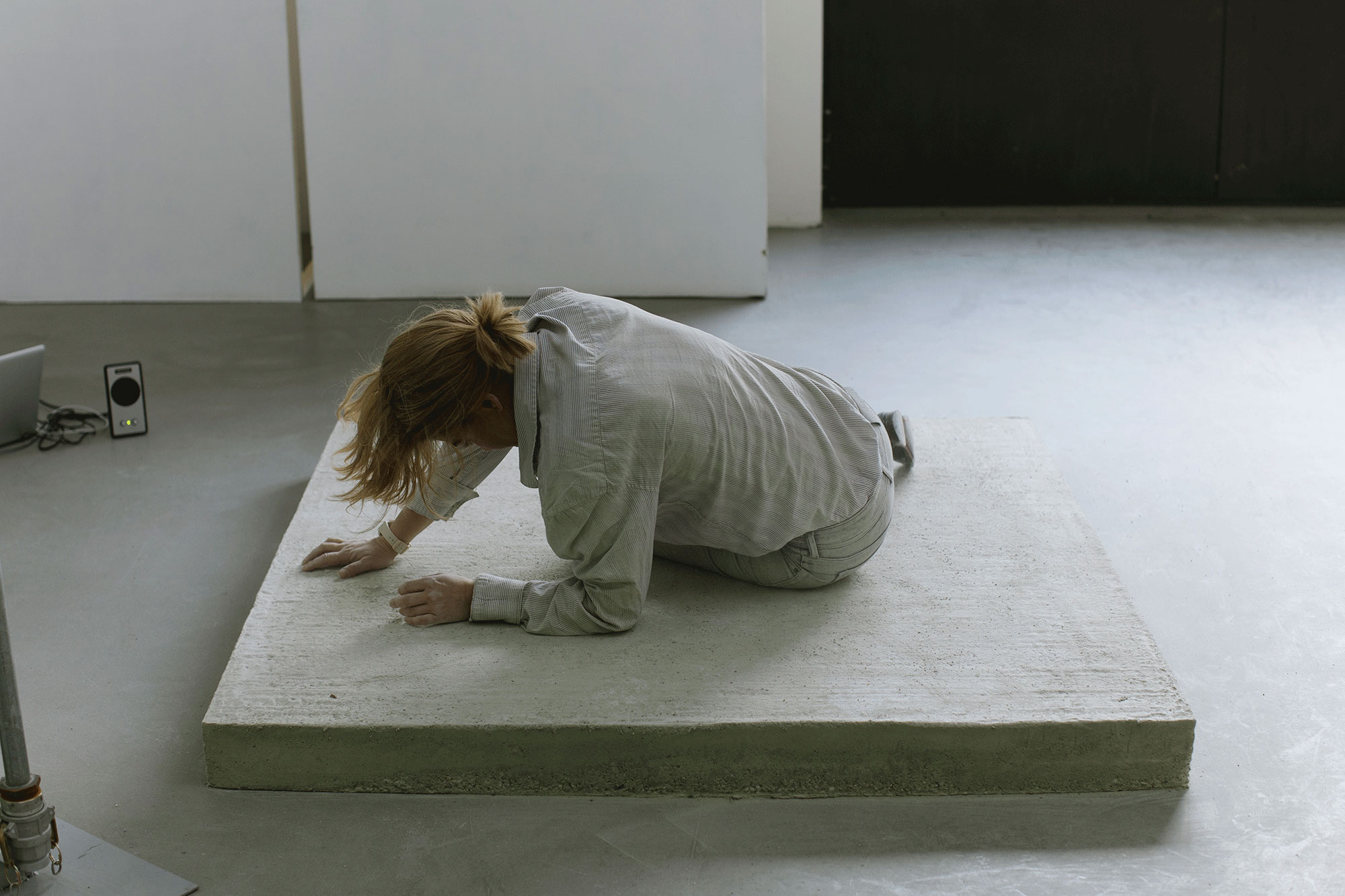
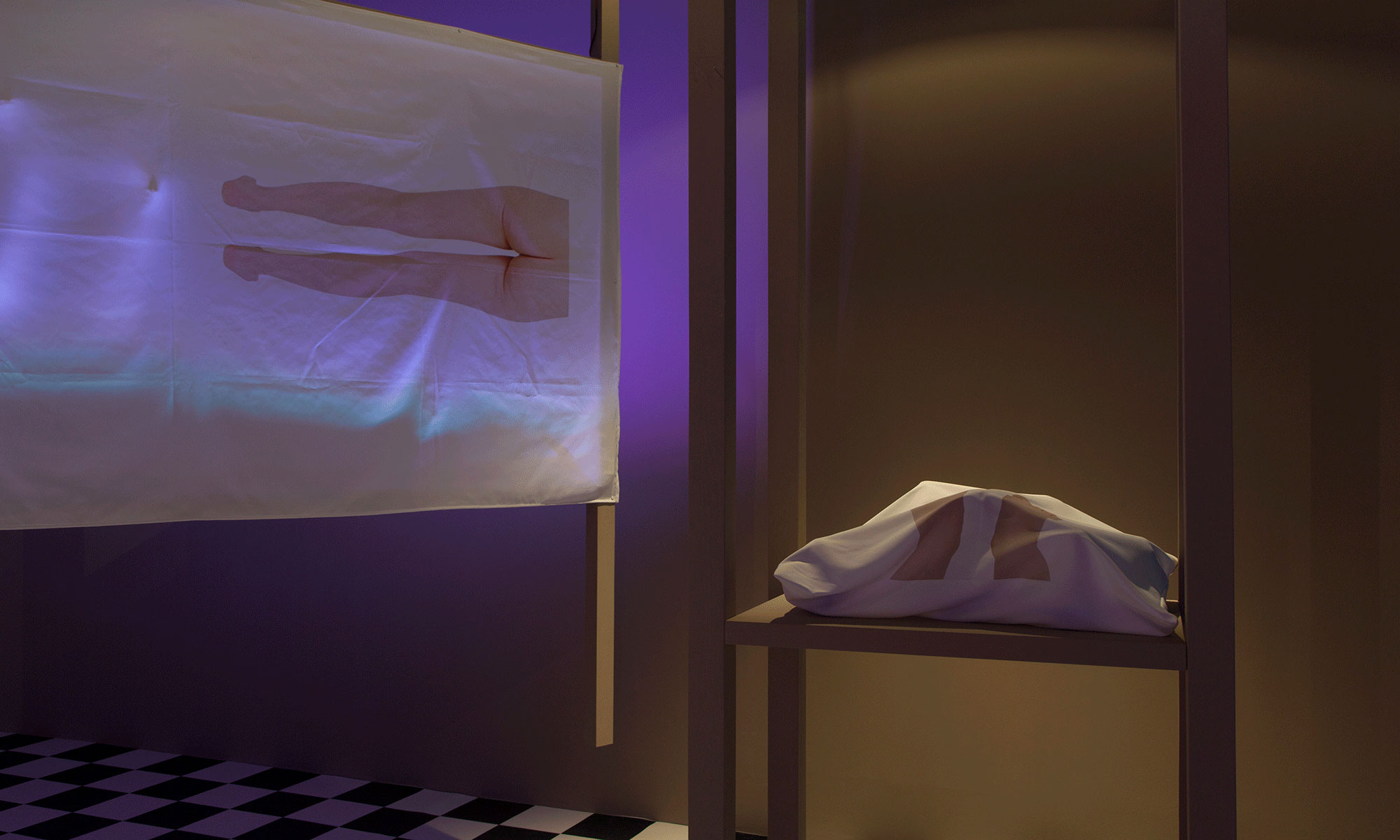
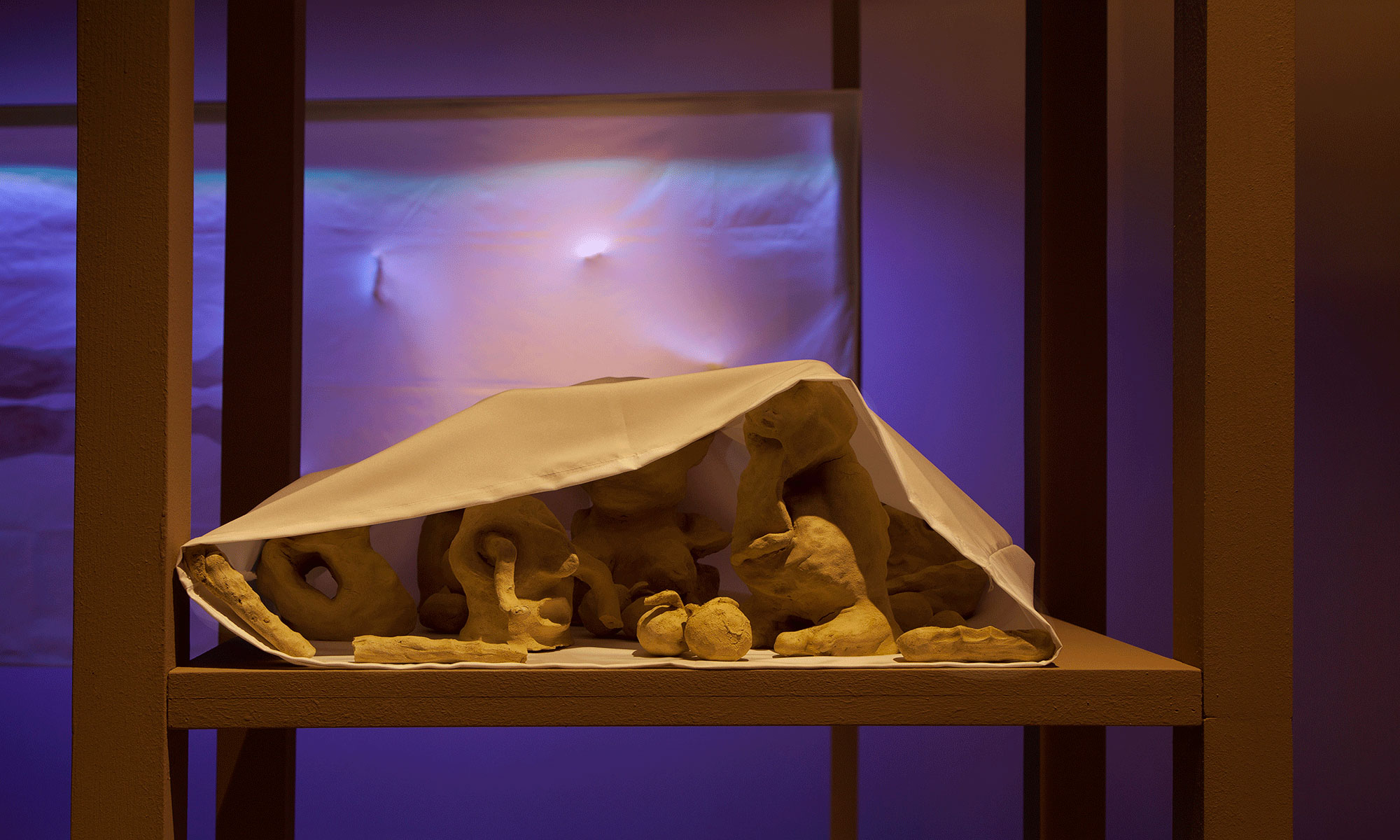
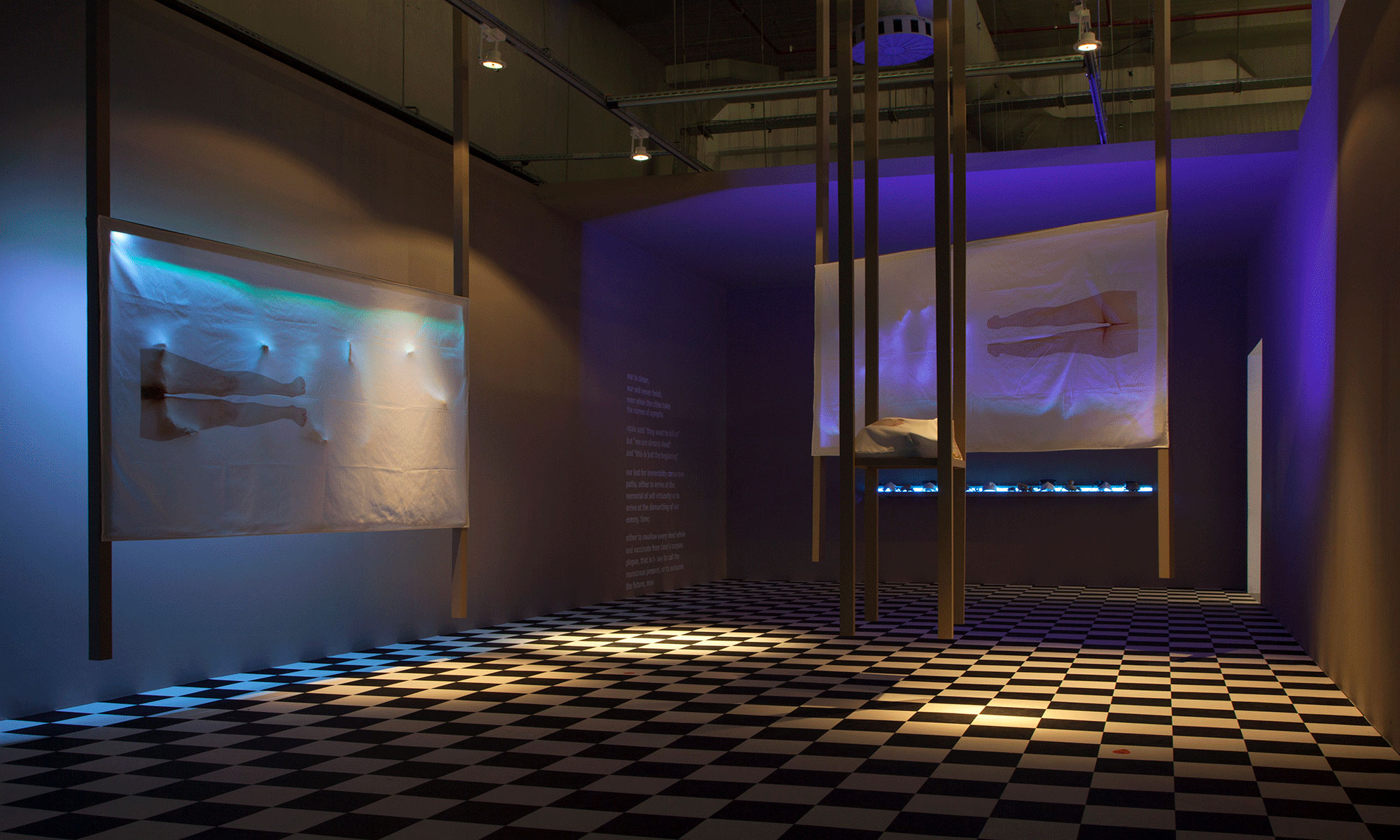
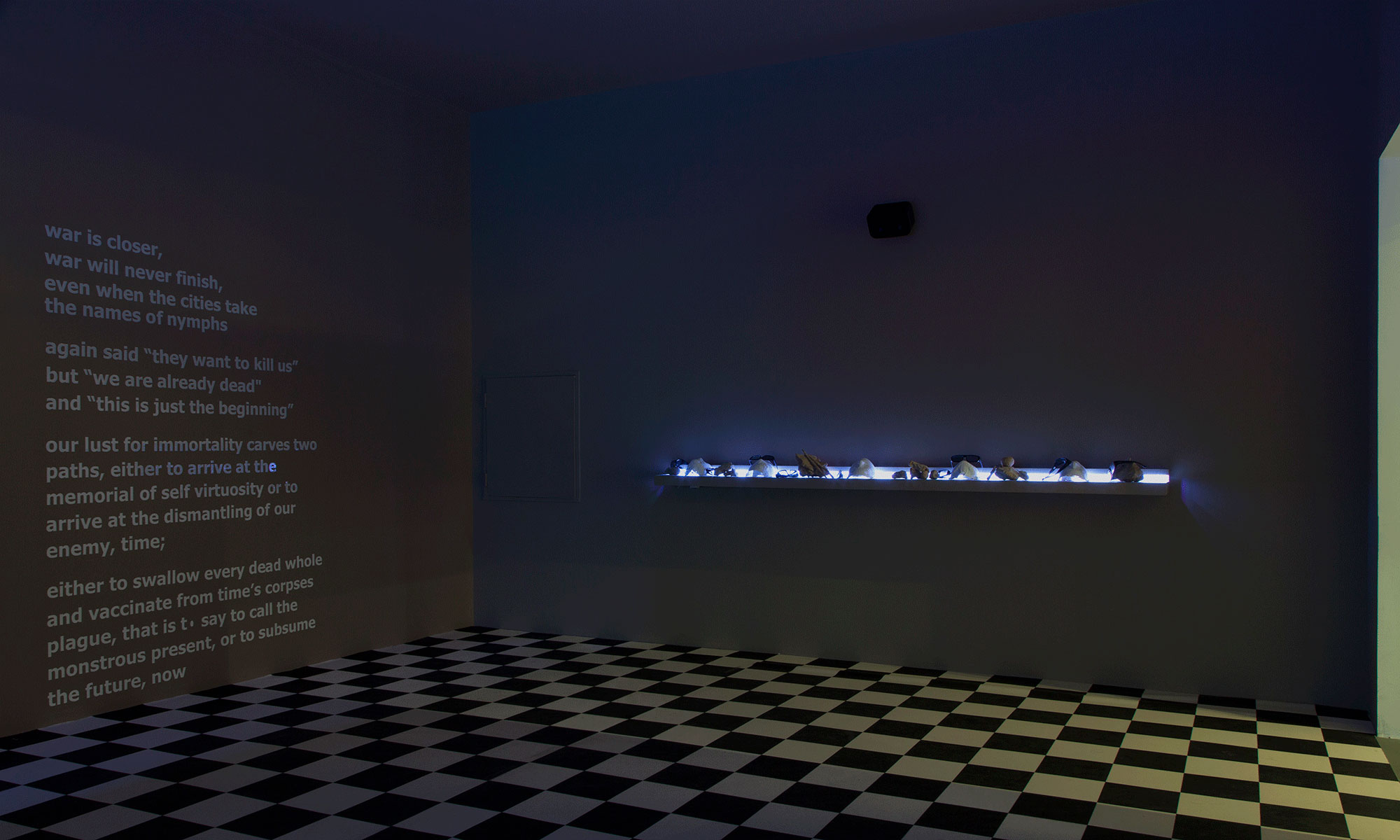
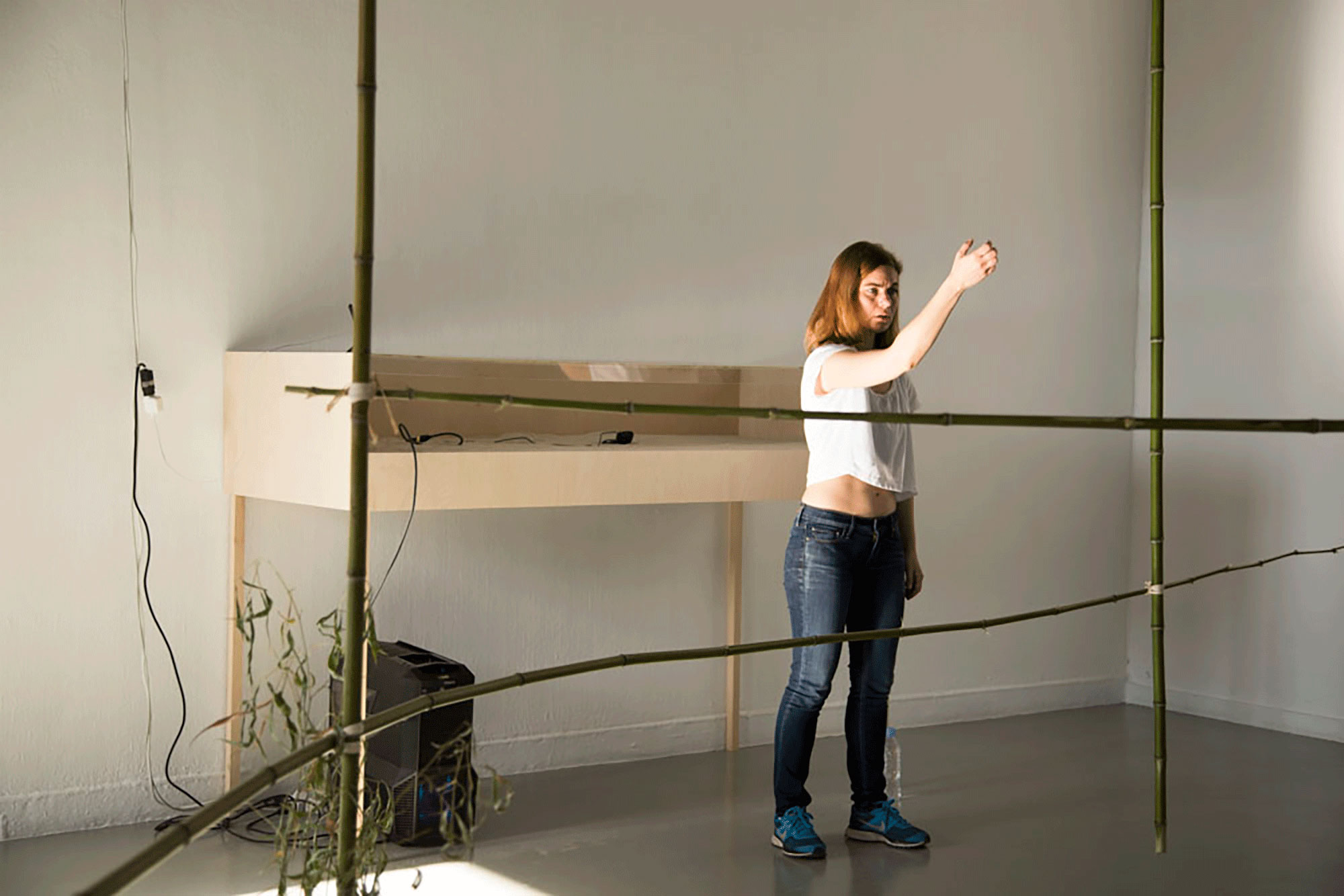
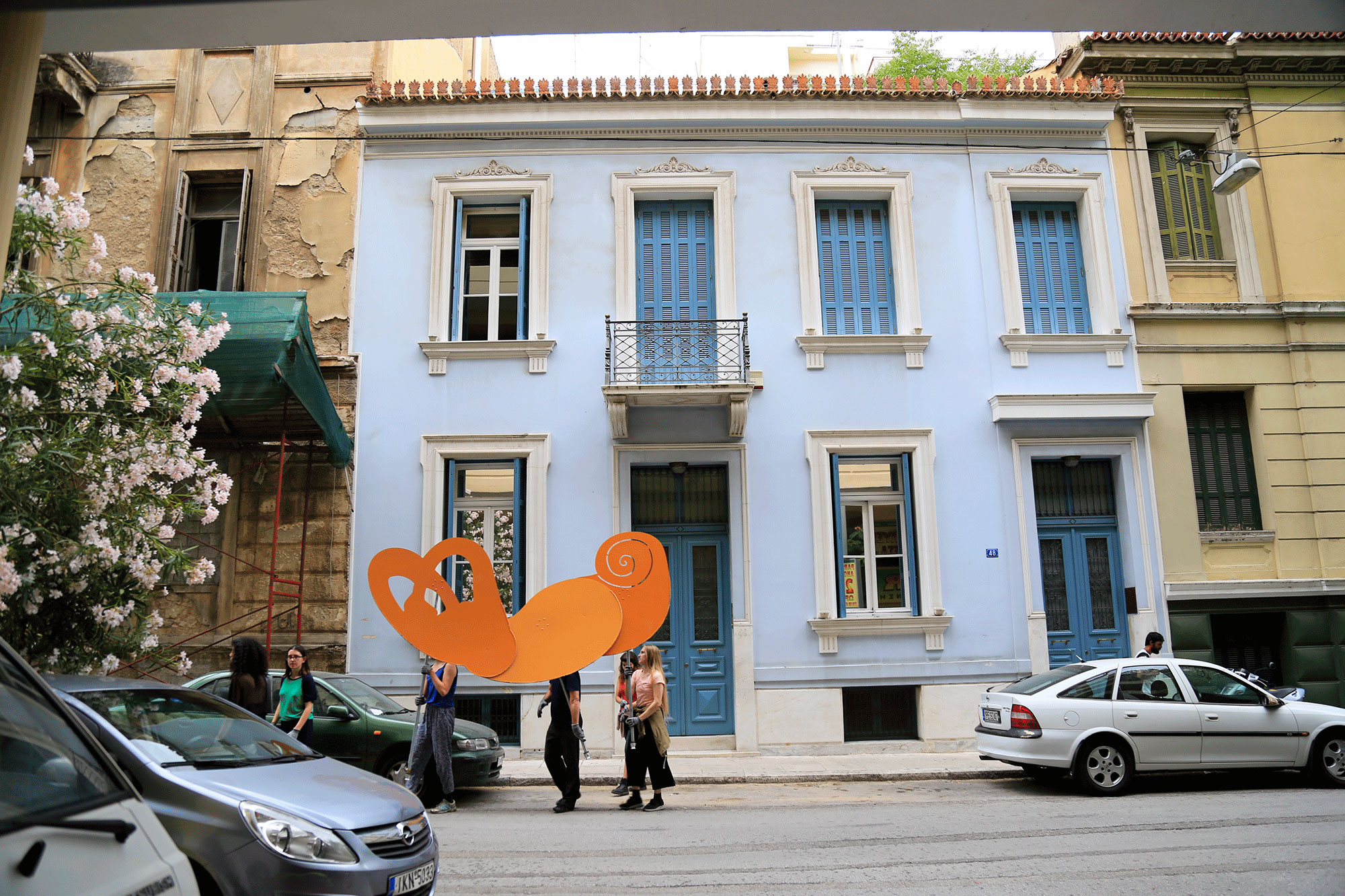
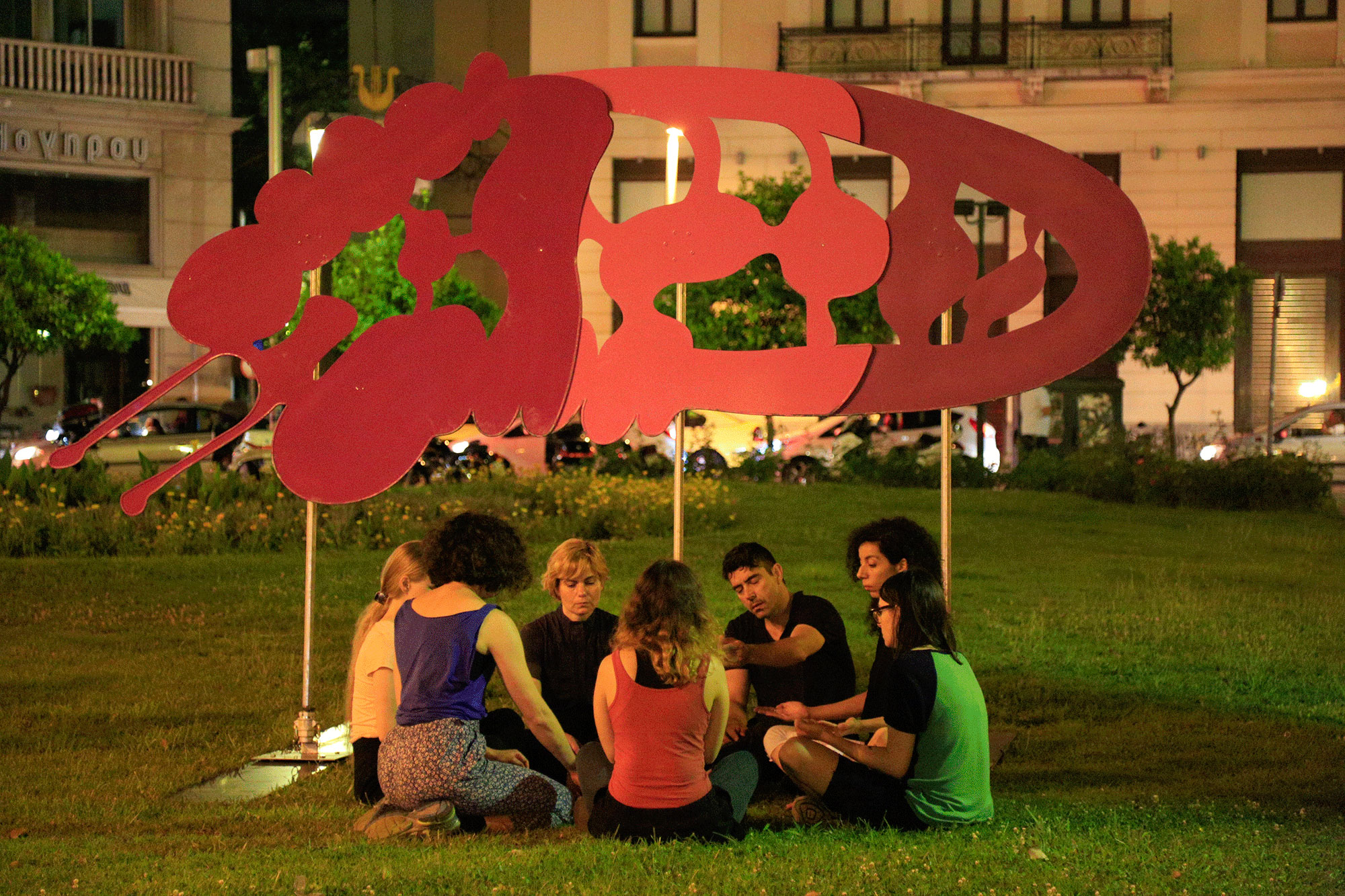
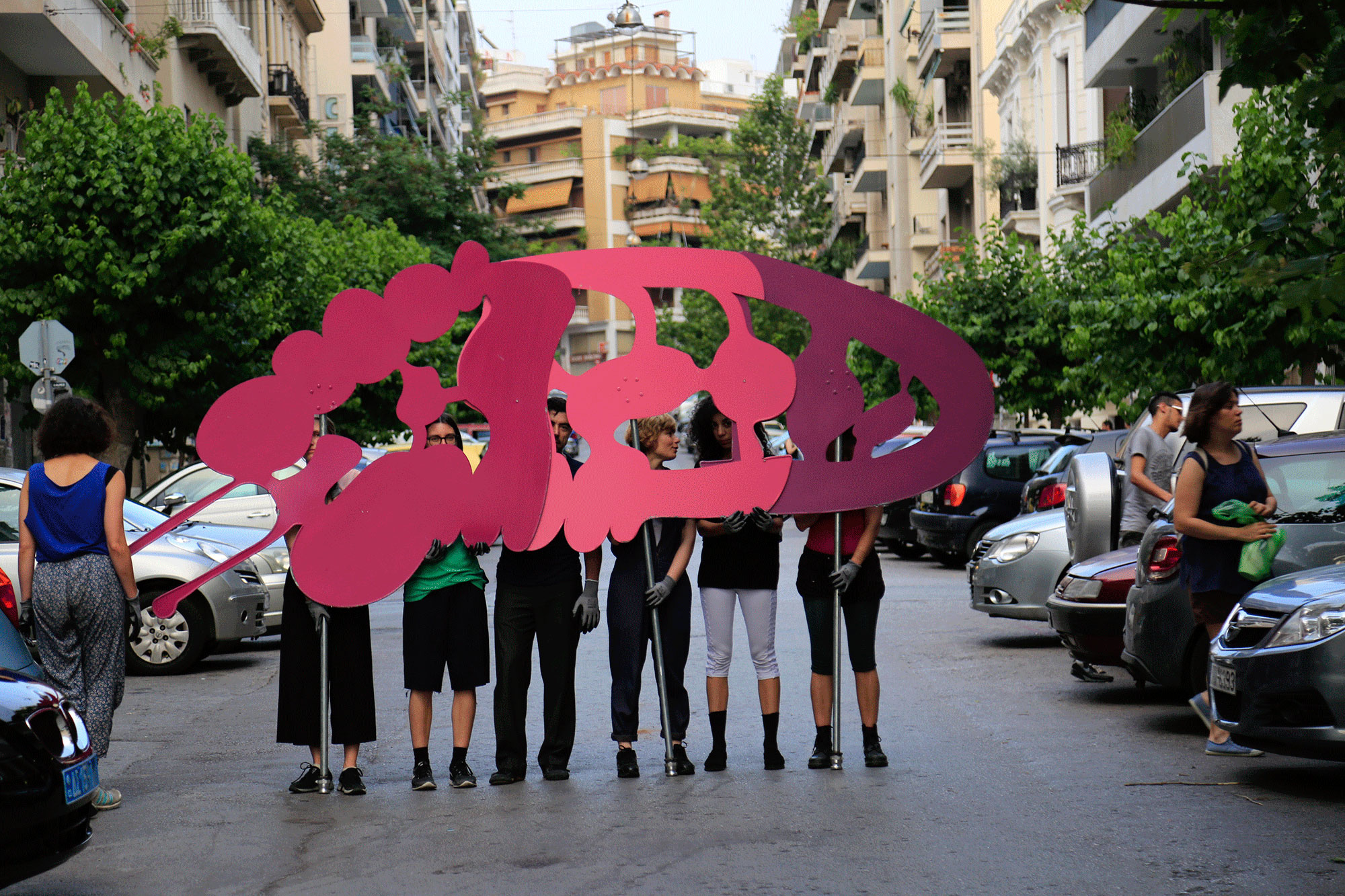
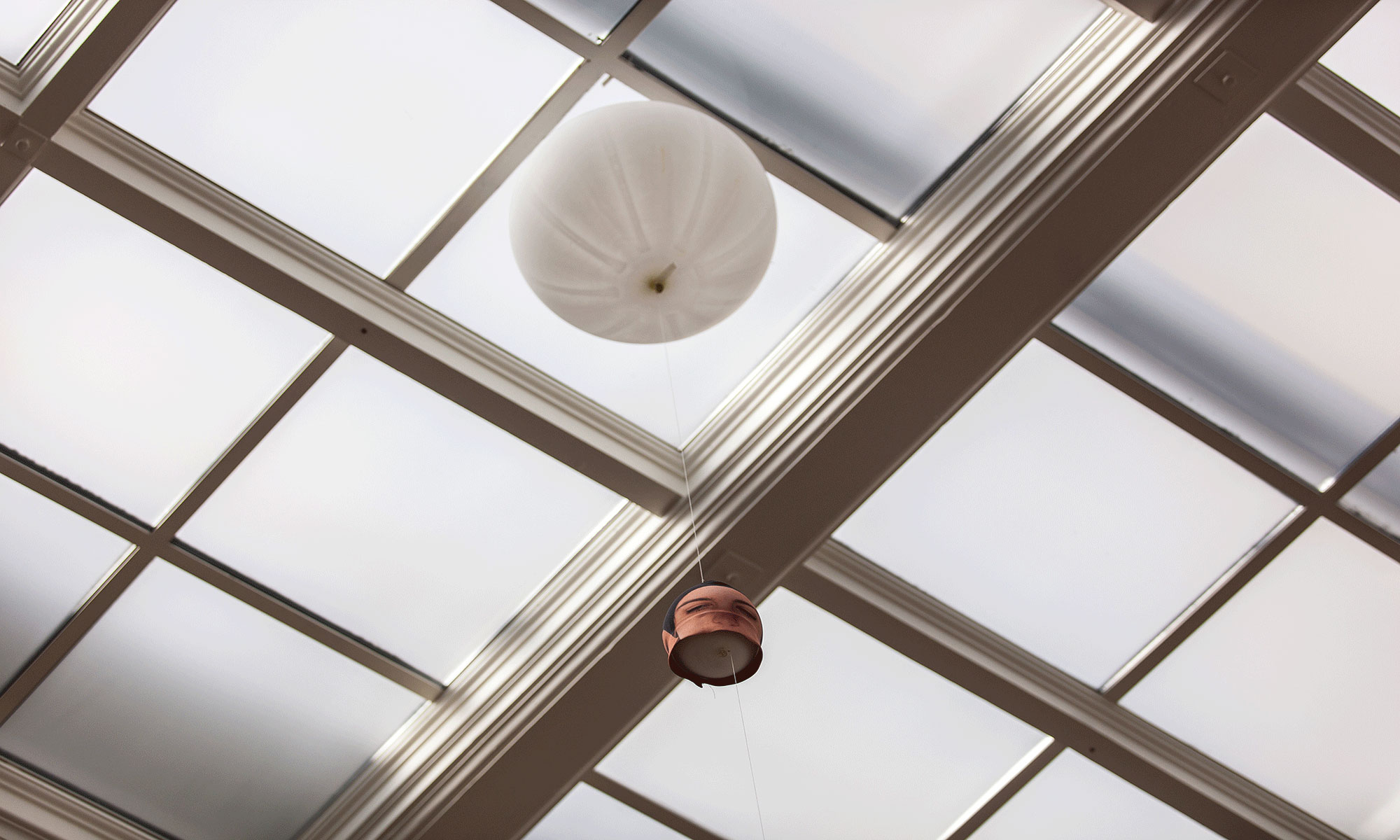
Georgia Sagri’s practice unfolds as an investigation into breath – the invisible yet material force that binds us. Her new work, comprising a sculpture and a performance, offers two parallel strategies for engaging the self, each reflecting on the shifting nature of the “I”. The project was conceived by the artist after encountering one of Greece’s most important contemporary poets, Katerina Anghelaki-Rooke, who composed her final work in a time of deep personal grief. In the performance, Sagri stages a dialogue with the self, asking how identity can be reassembled when coherence falters — how we pause and acknowledge sorrow, and take the next step towards connection.


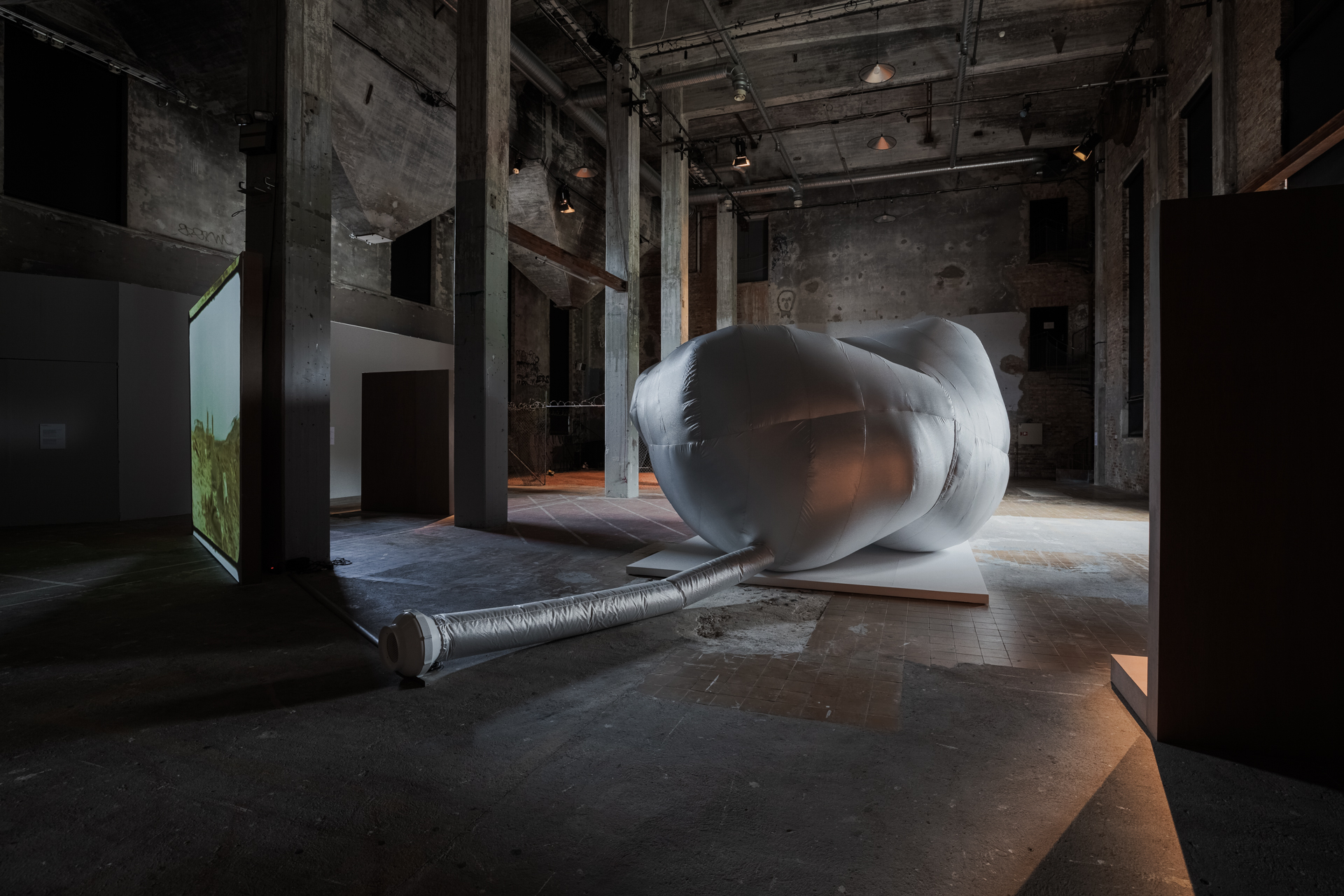
The work examines how we perceive, fragment, and recompose ourselves in moments of rupture. The pressure-device sculpture functions like a living organism, and as it inhales and exhales the materiality of air, often dismissed as immaterial, becomes tactile and audible. Sculpture and performance share a single membrane: both in constant motion, both vanishing and returning. Together, they propose a coexistence of the visible and the invisible. Sagri’s work gives disappearance a form and presence a face, composing the self after the vanishing ego — gone, gone beyond — in the very moment of its healing.


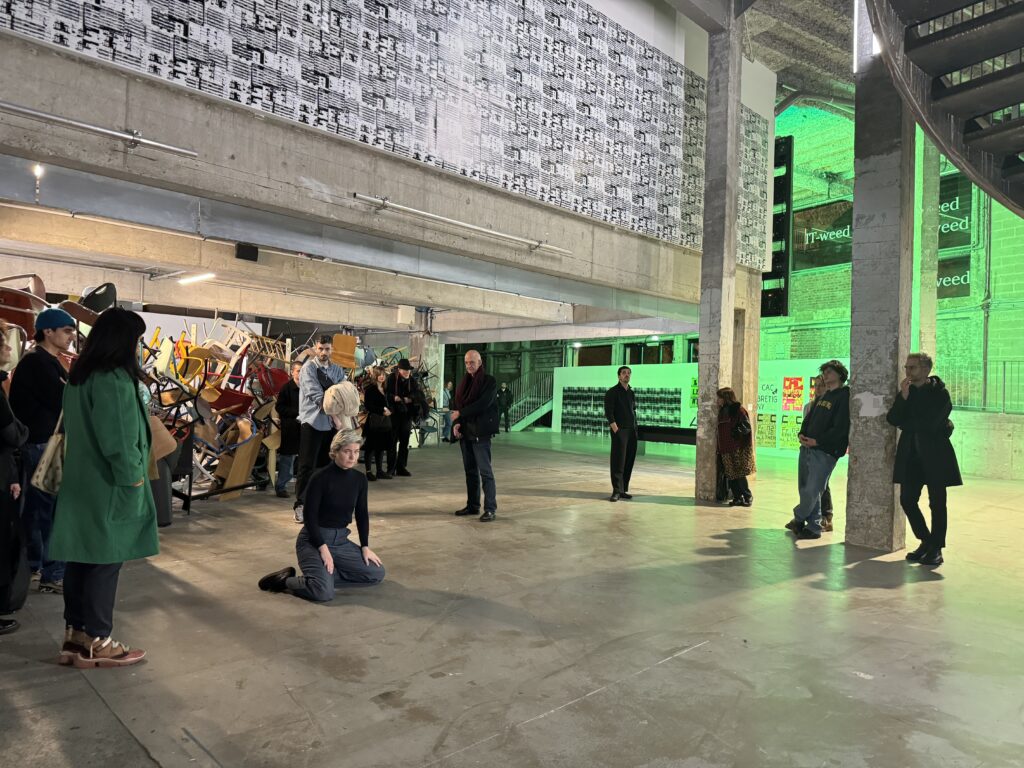
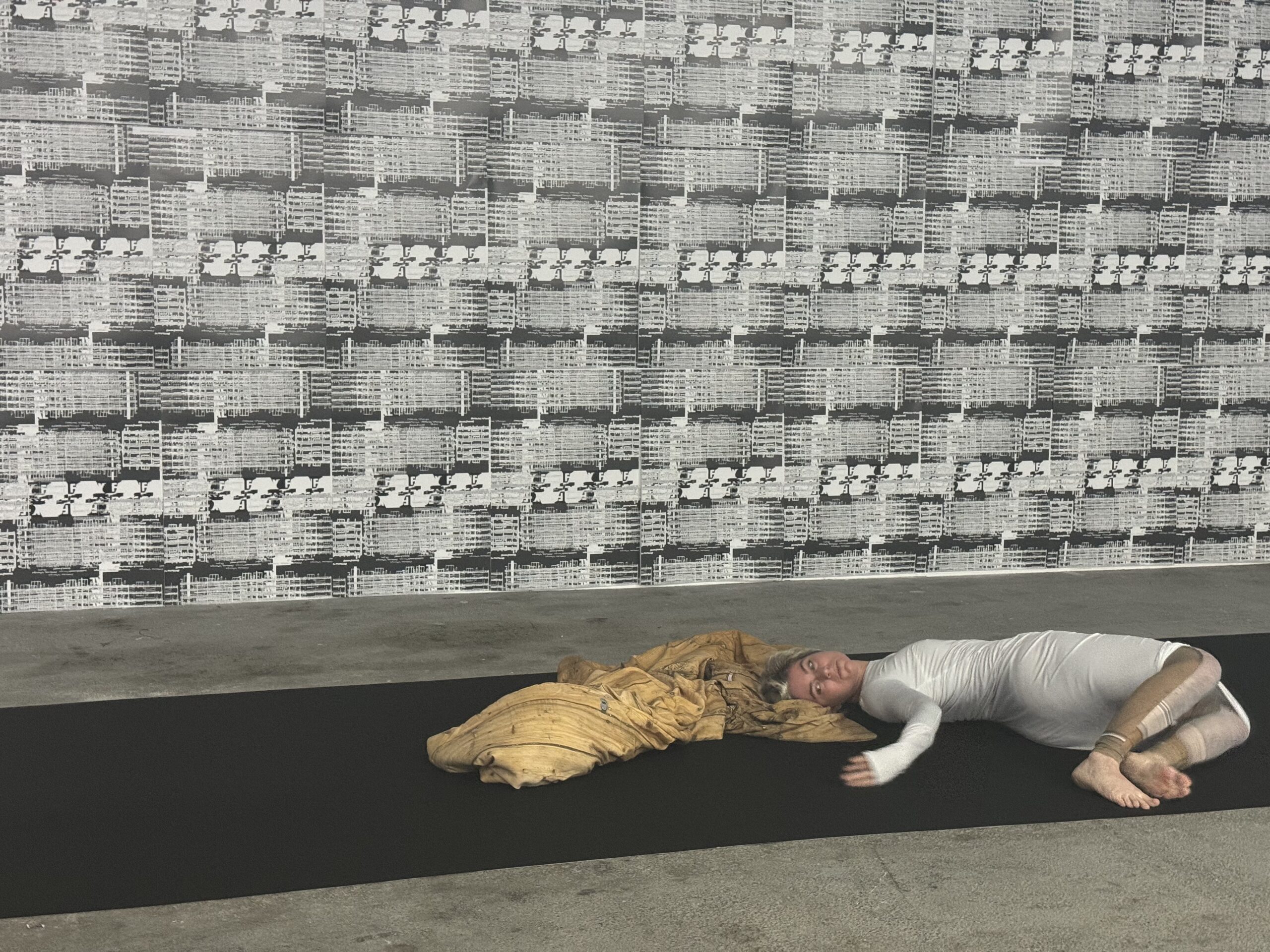
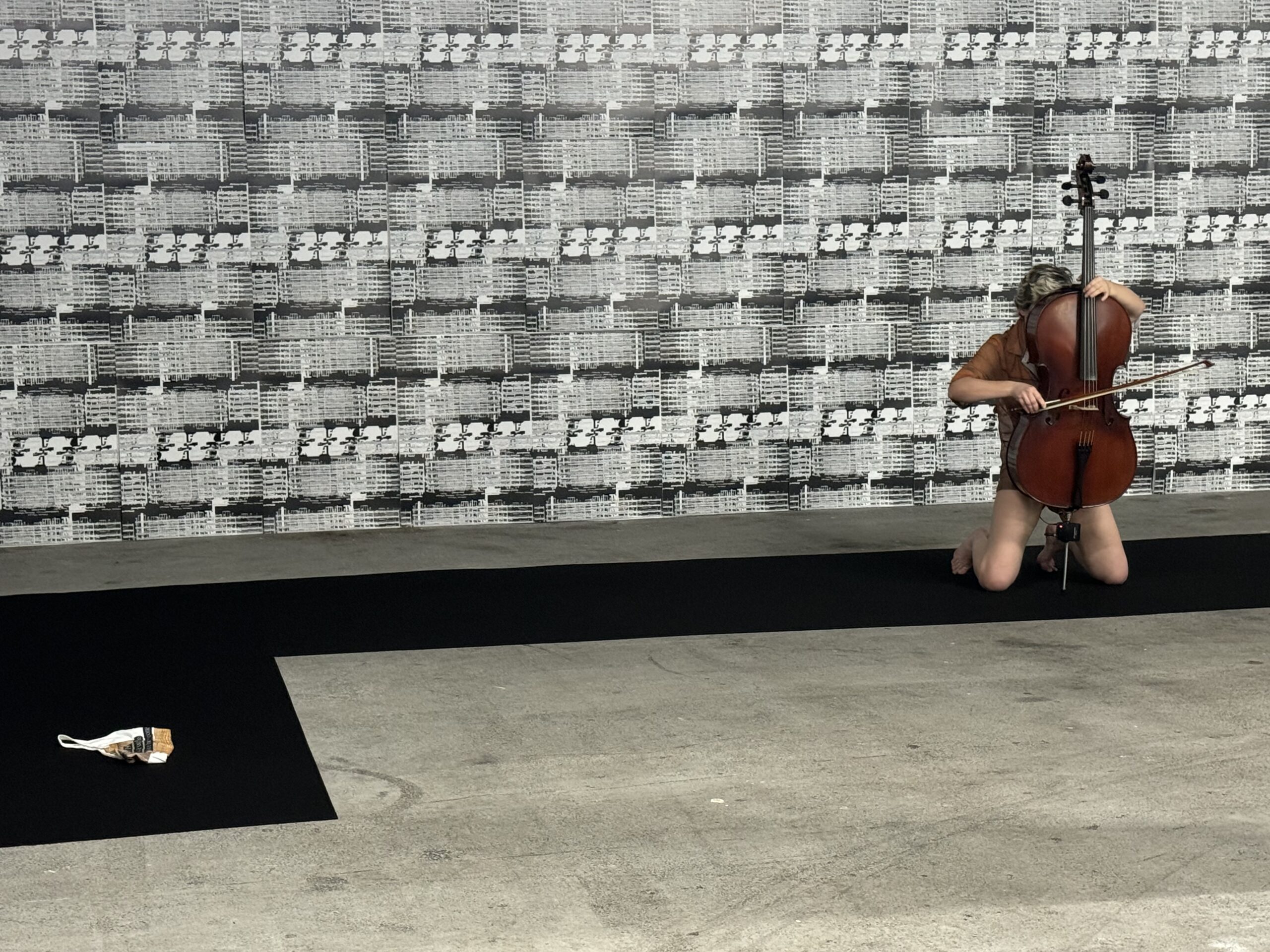
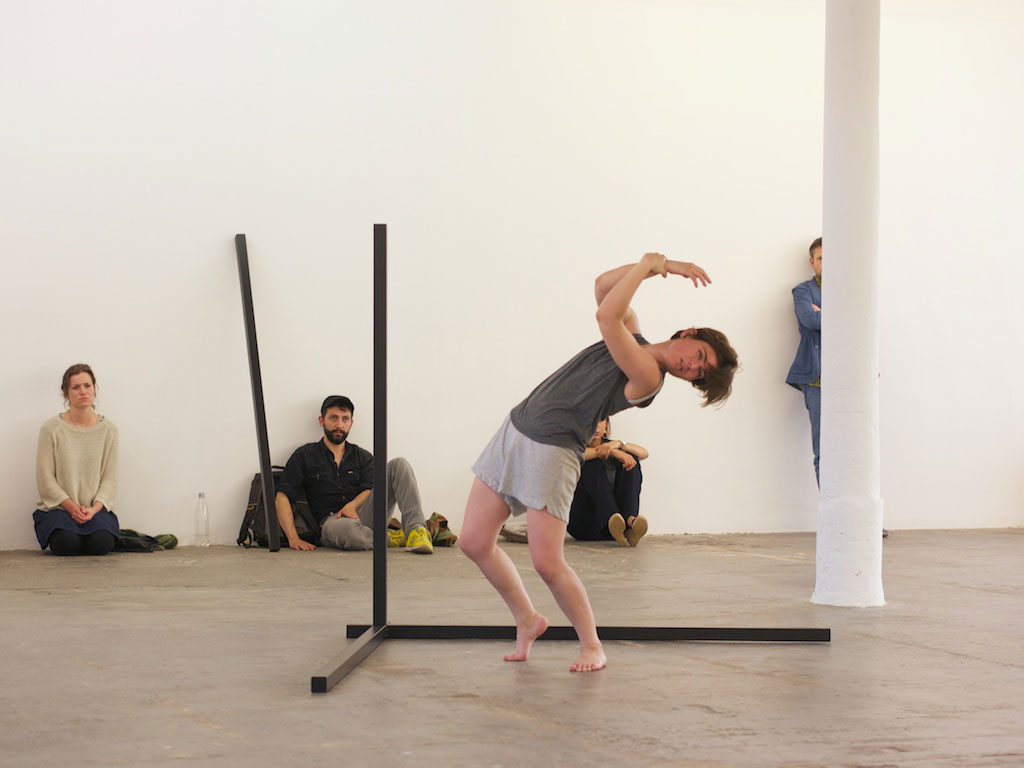
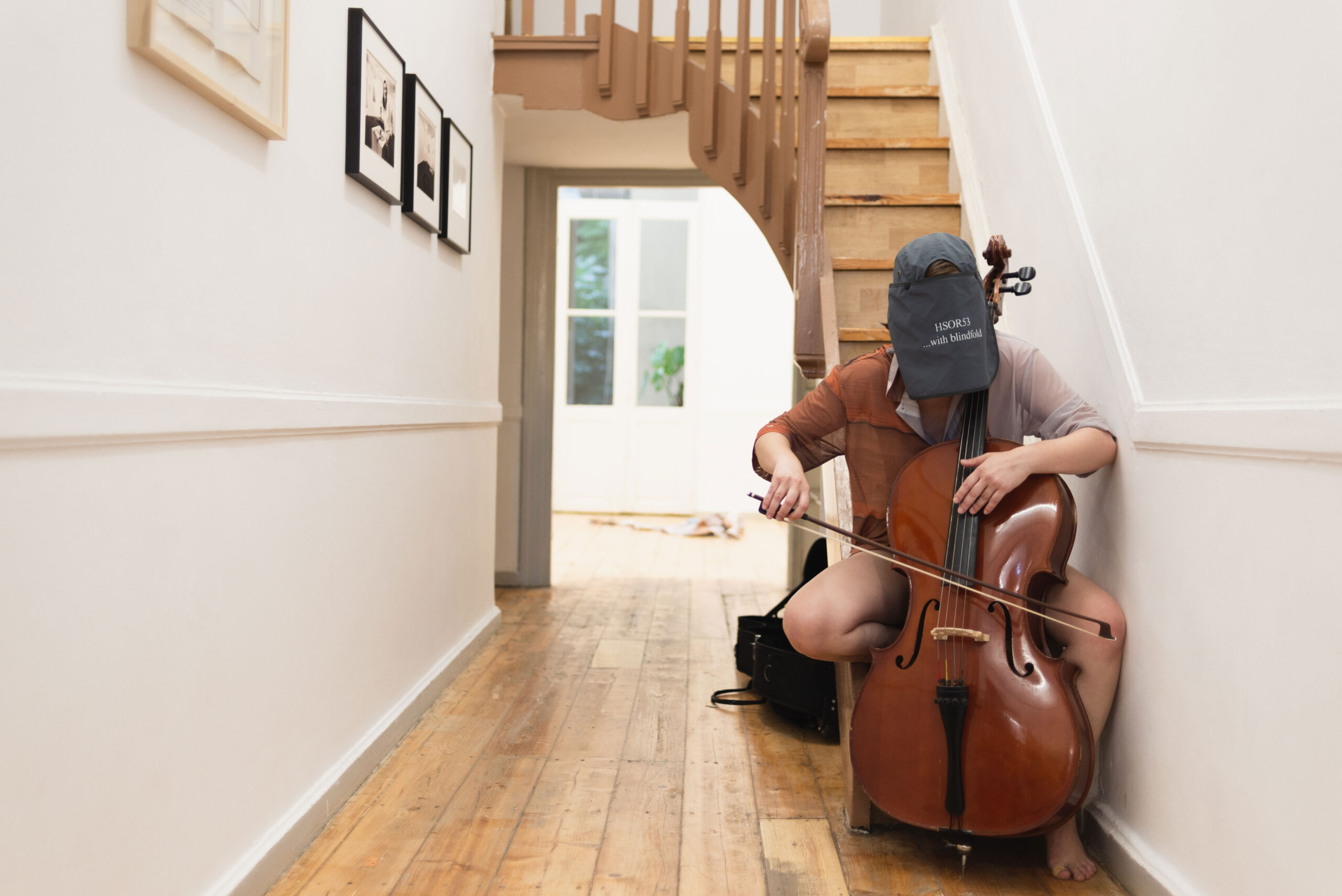
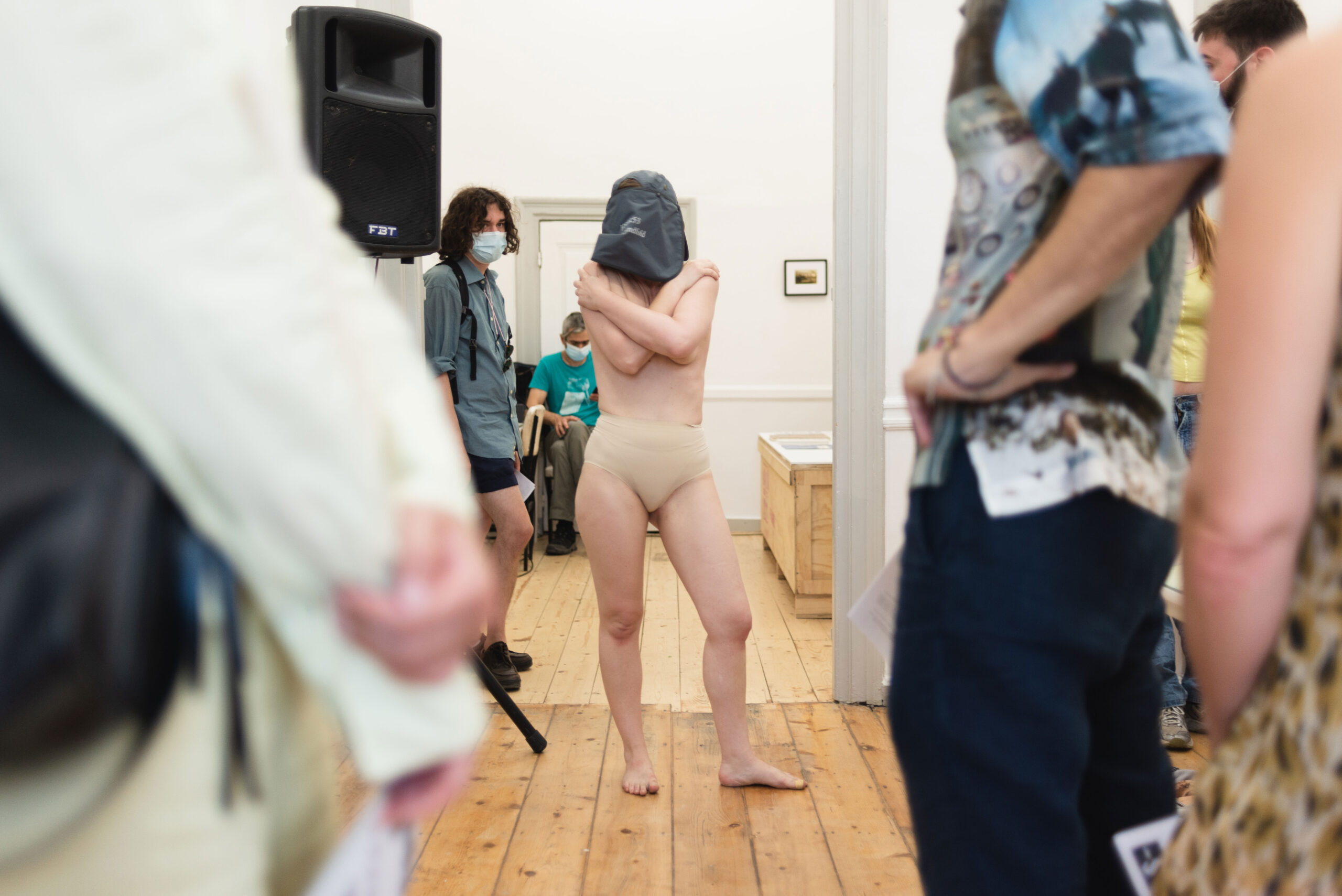
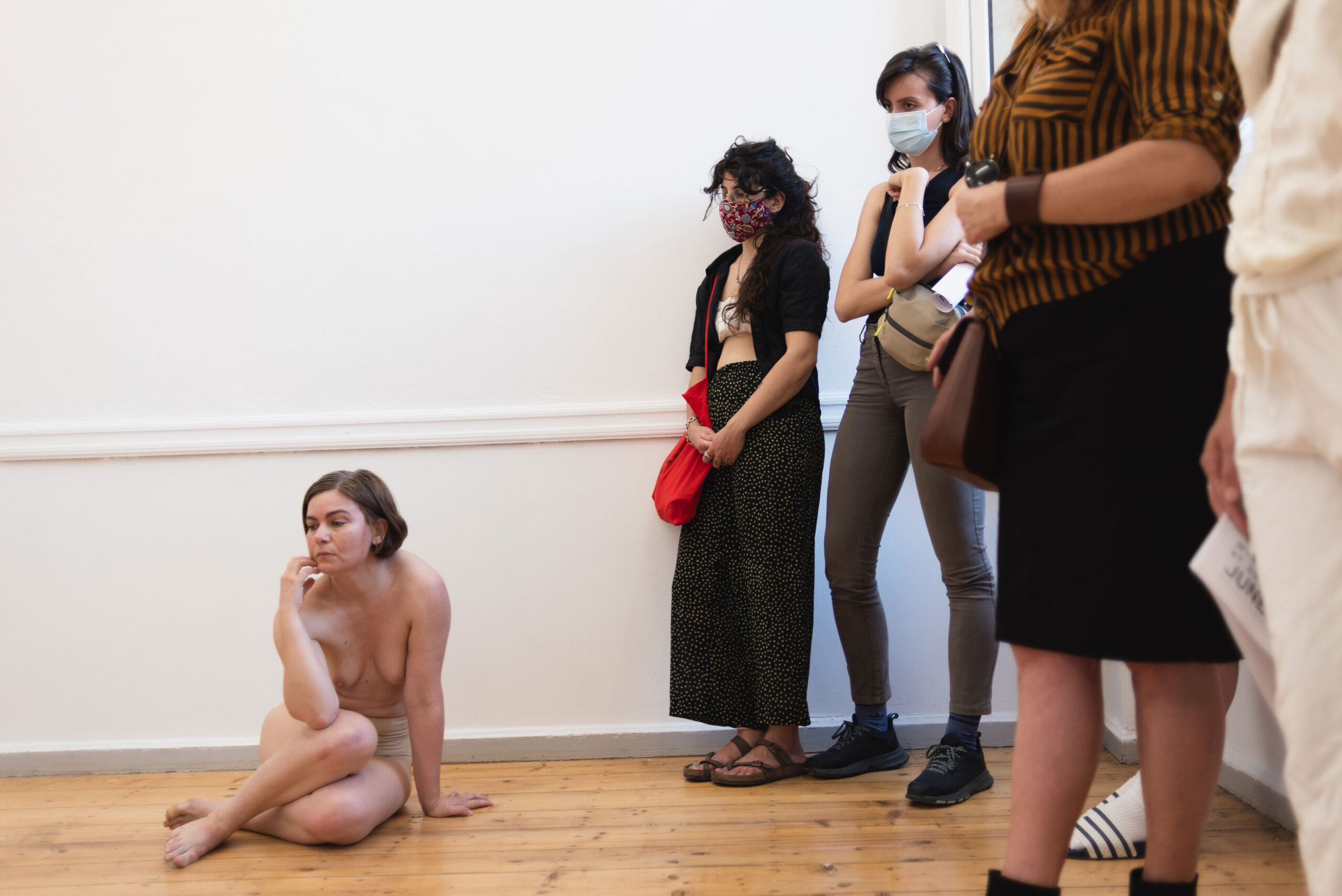
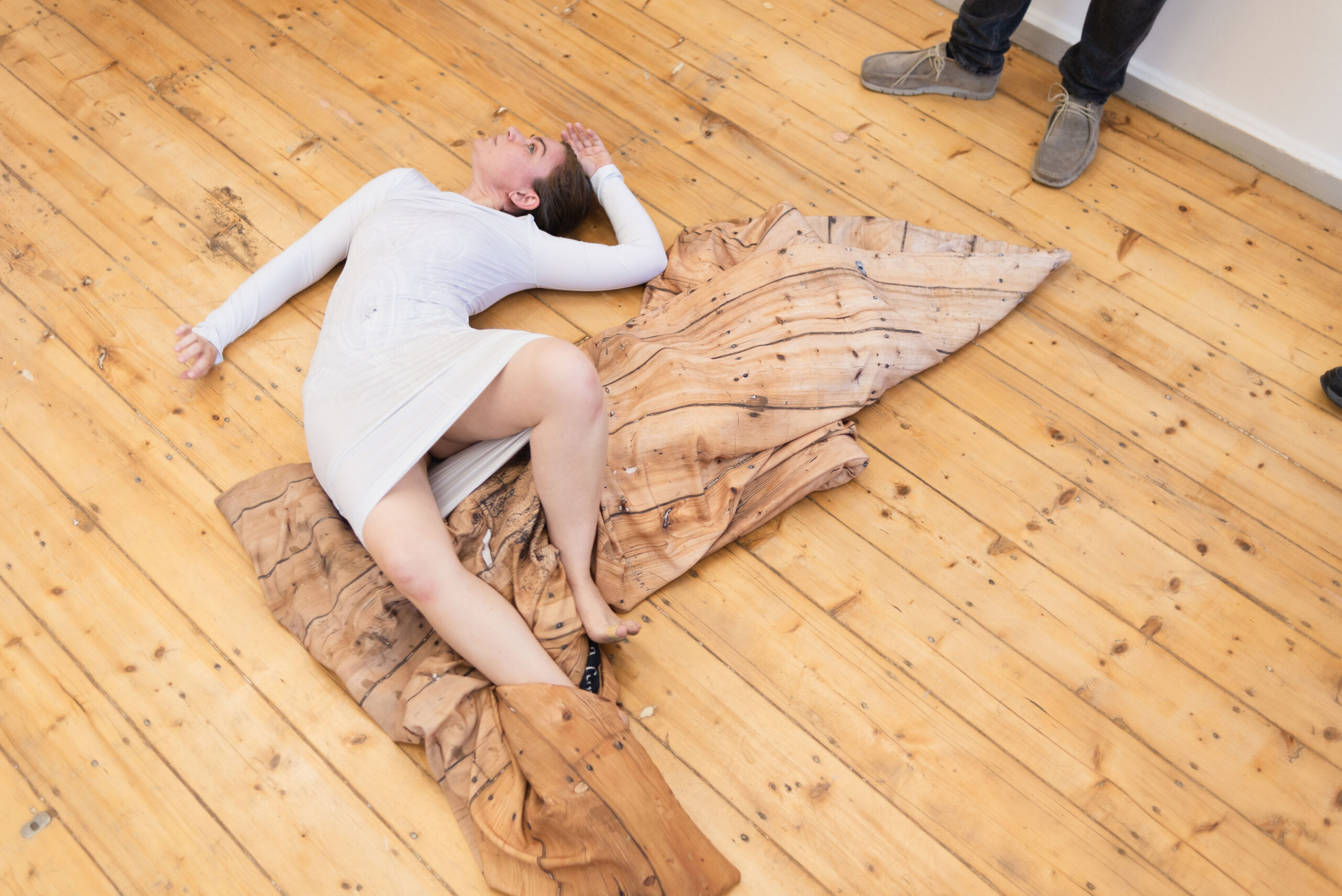
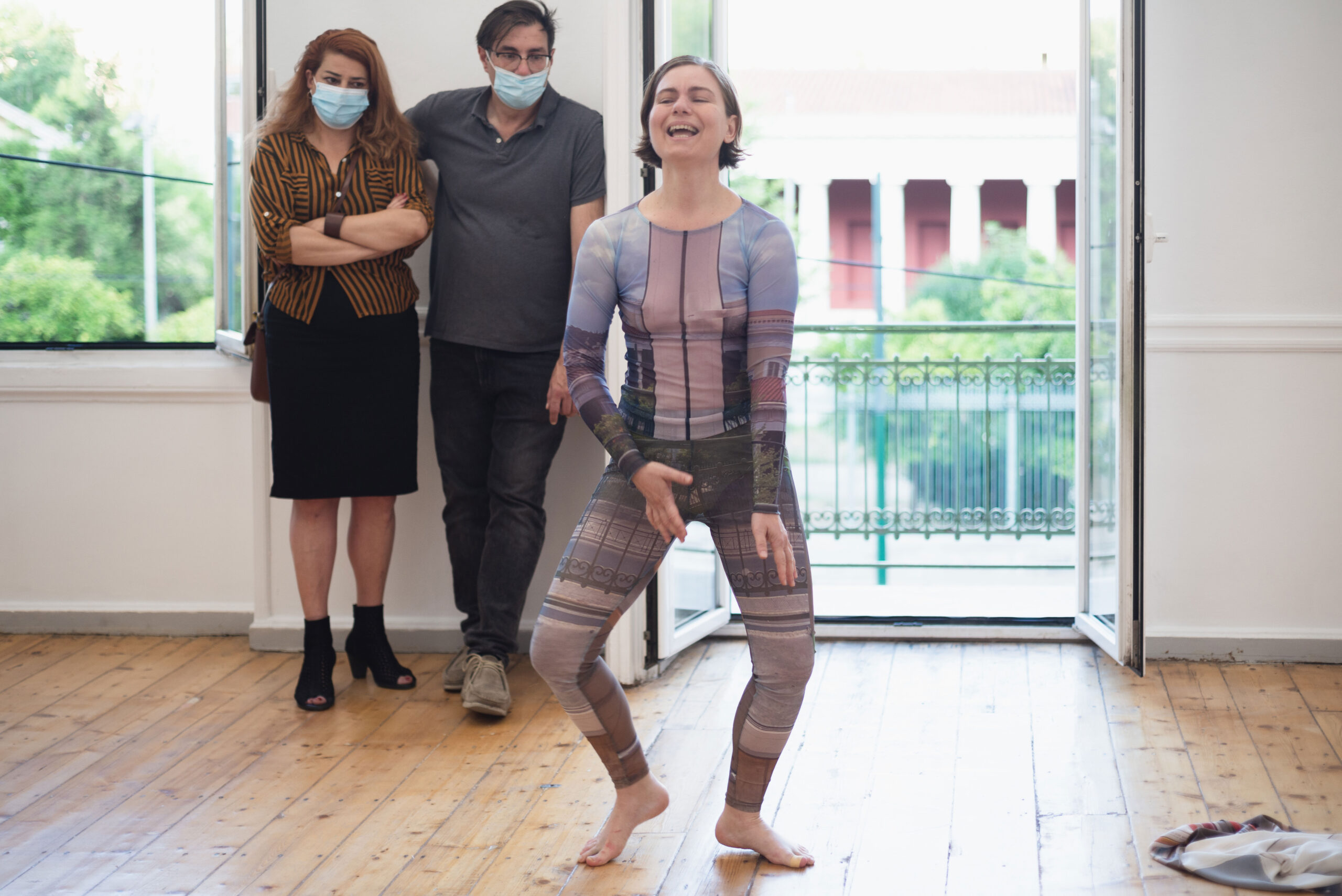
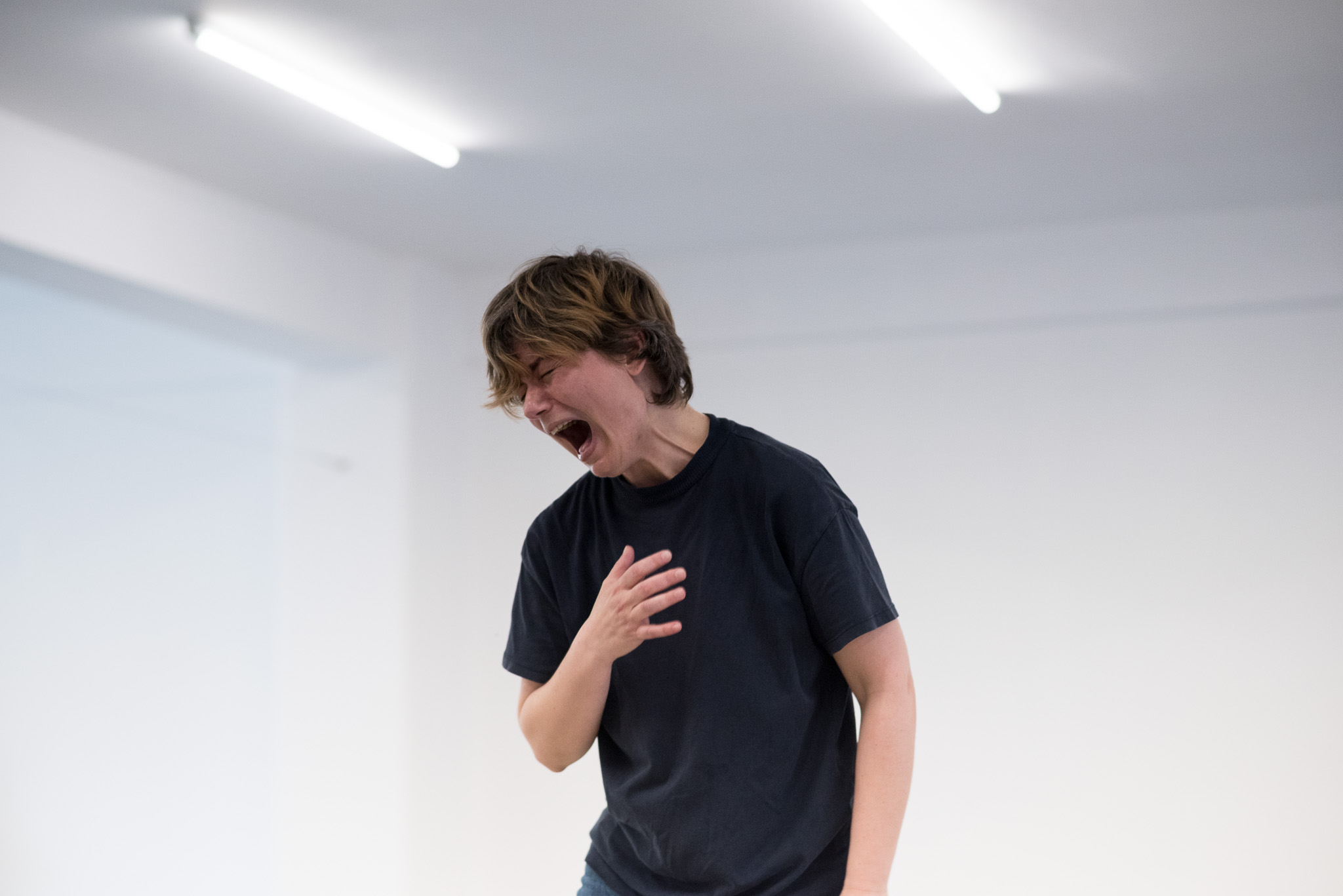
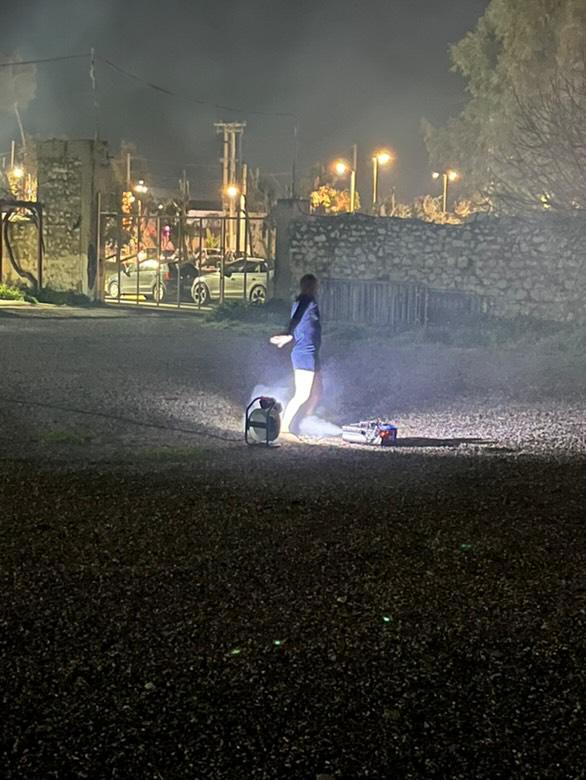
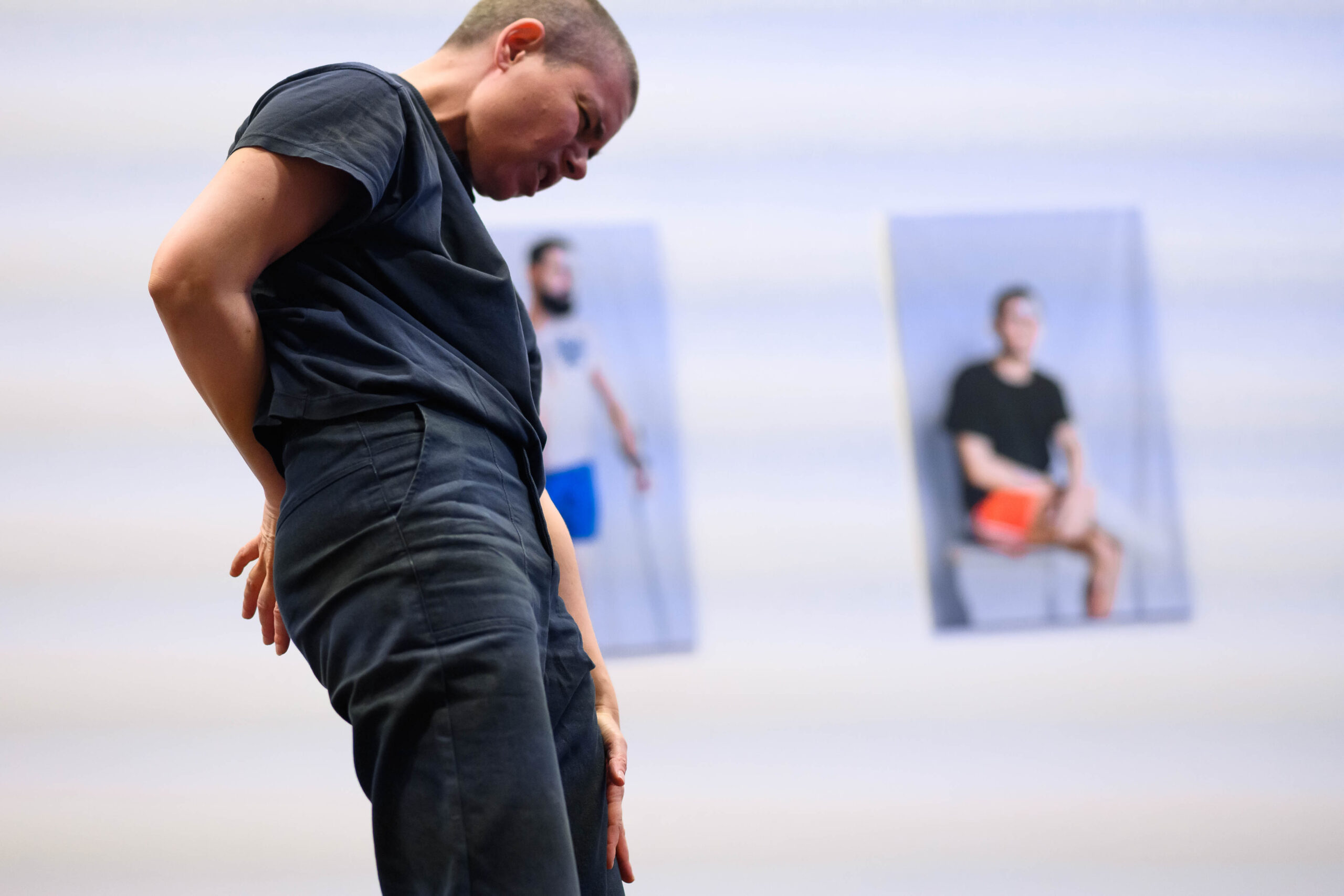
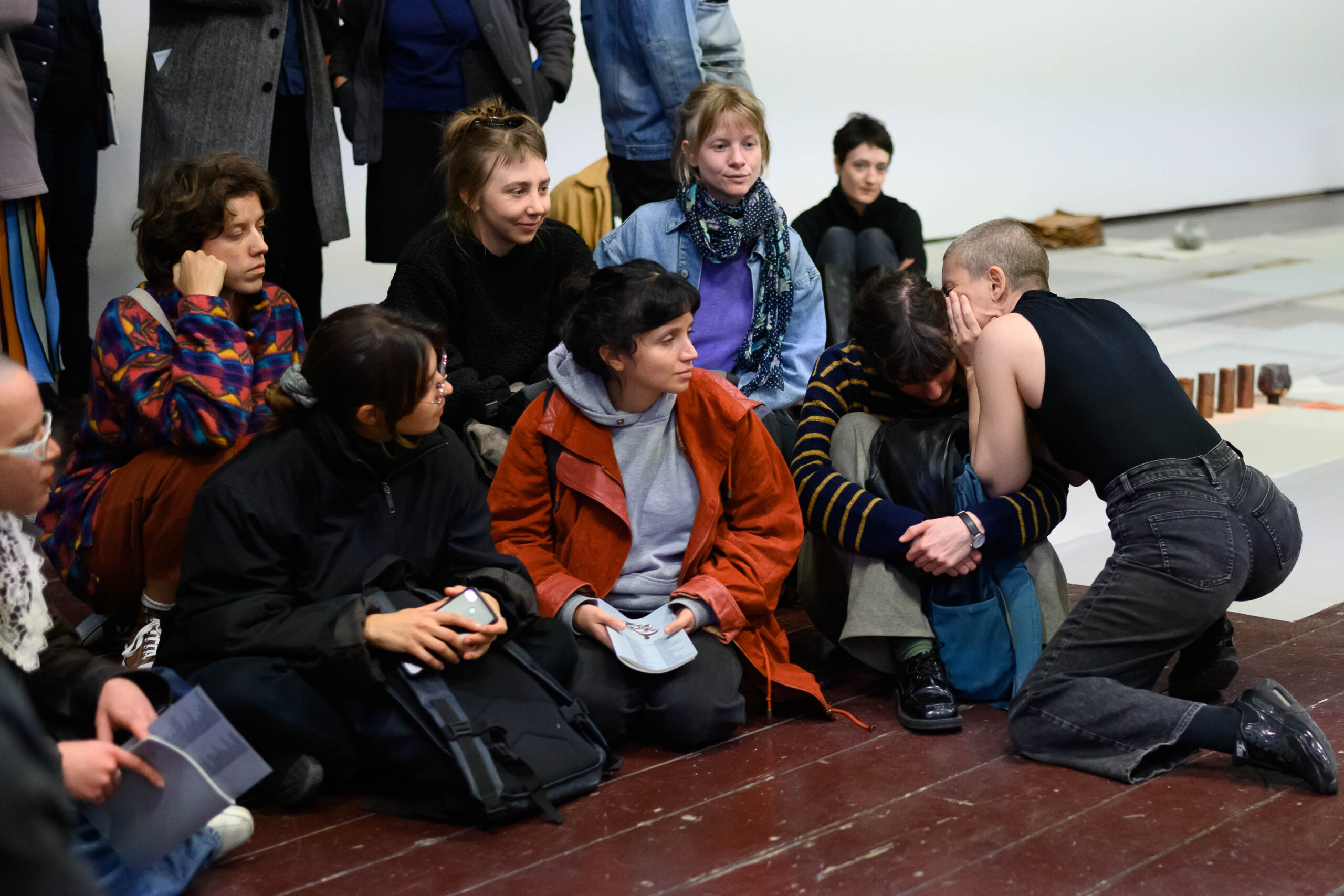
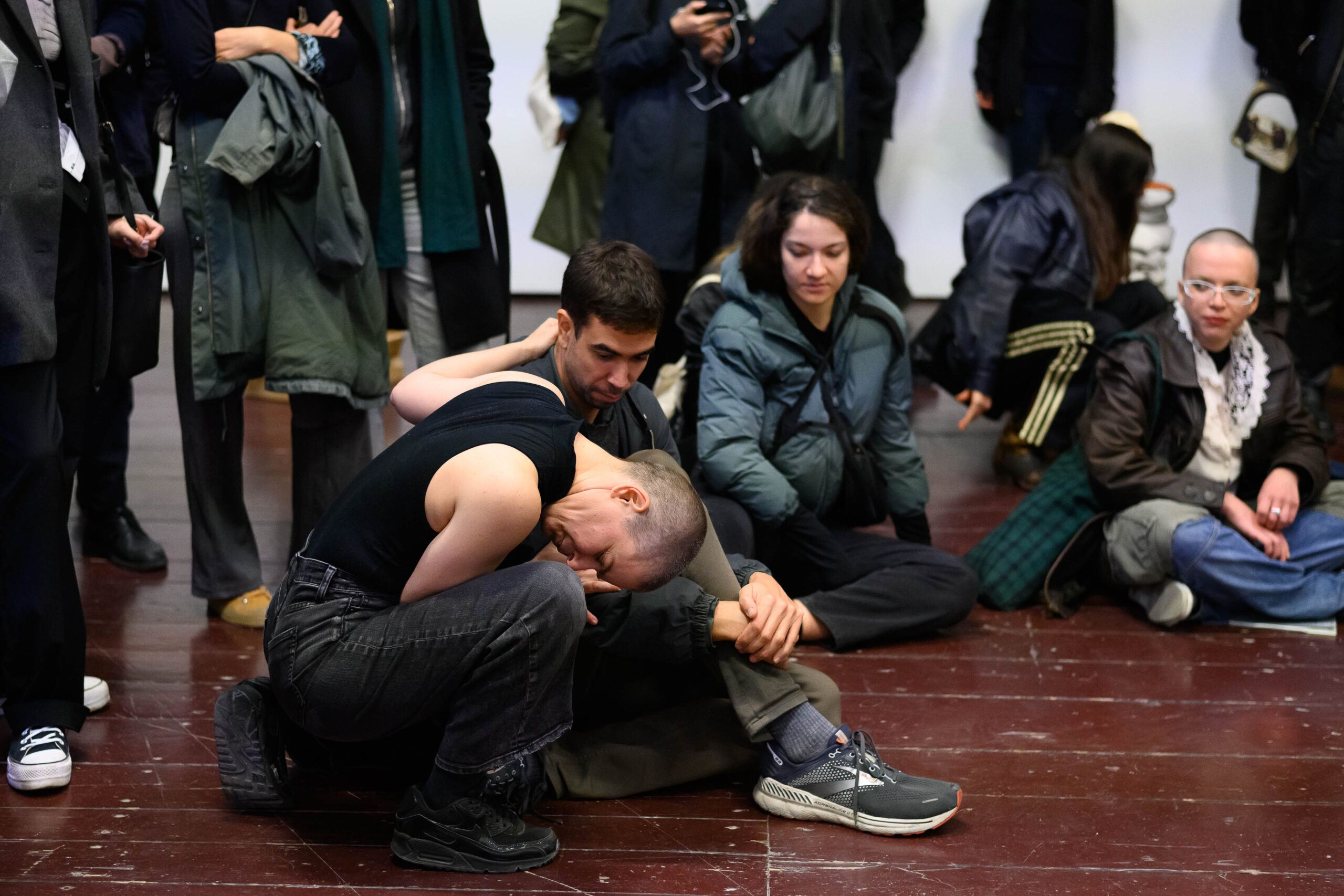
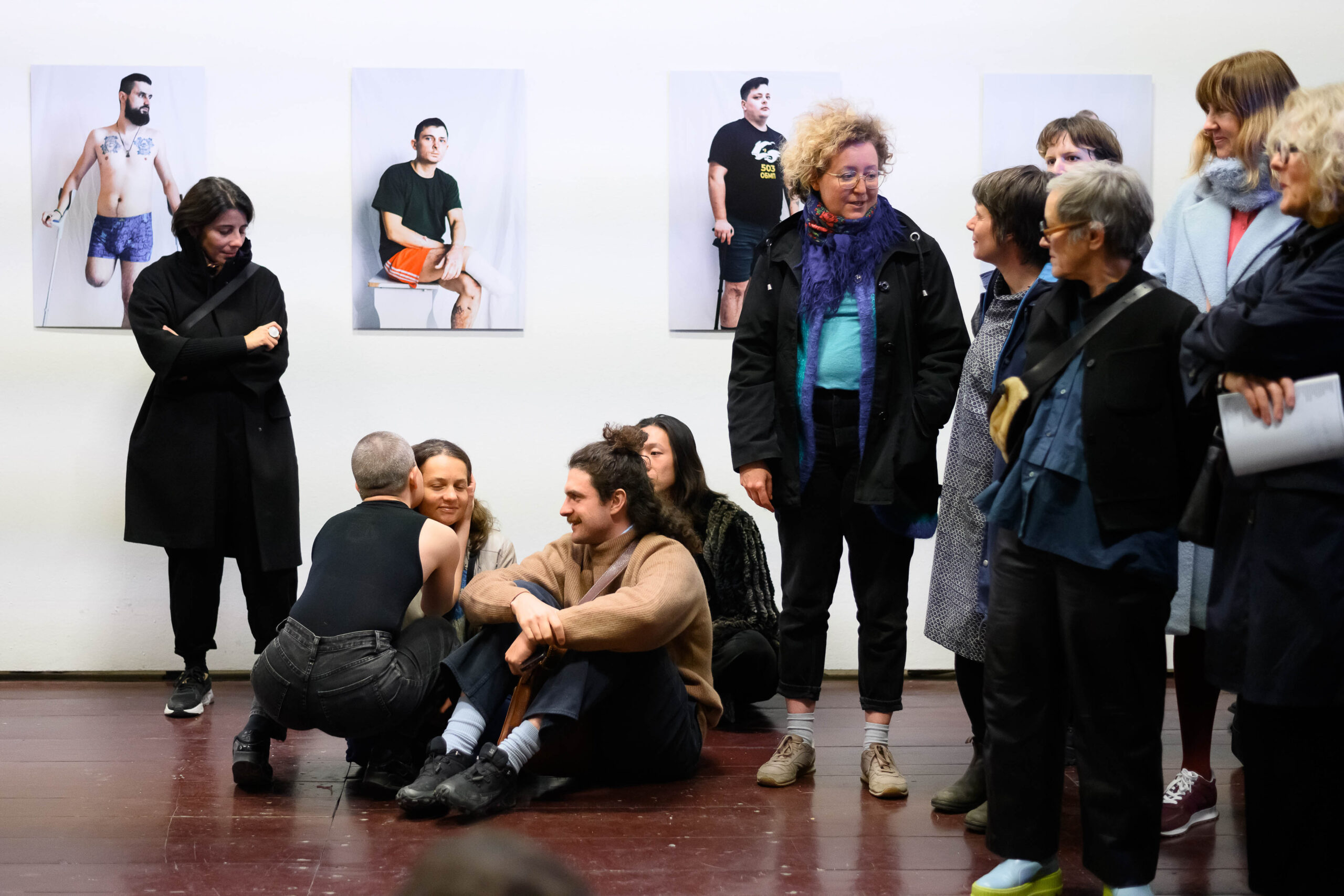
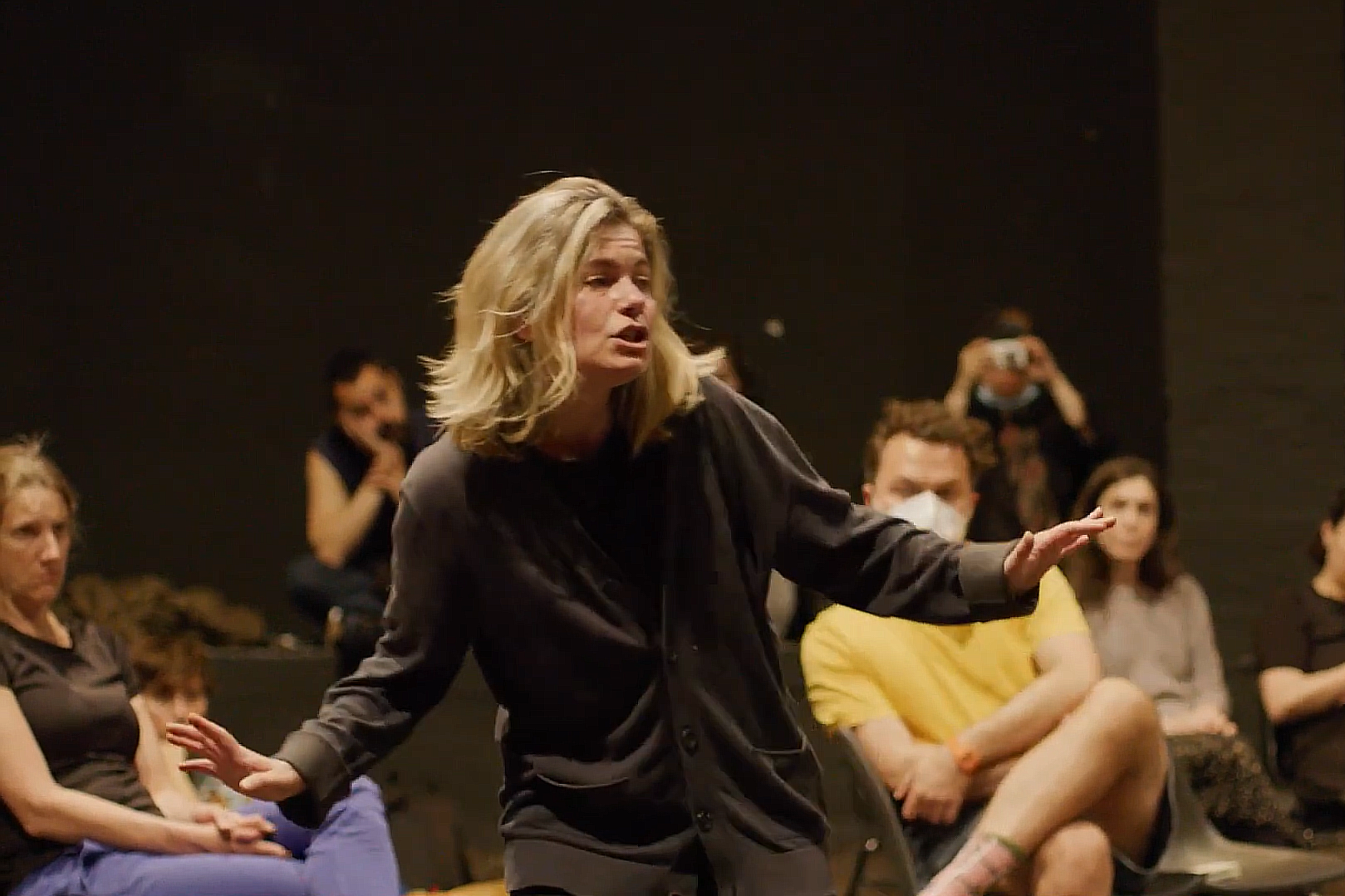
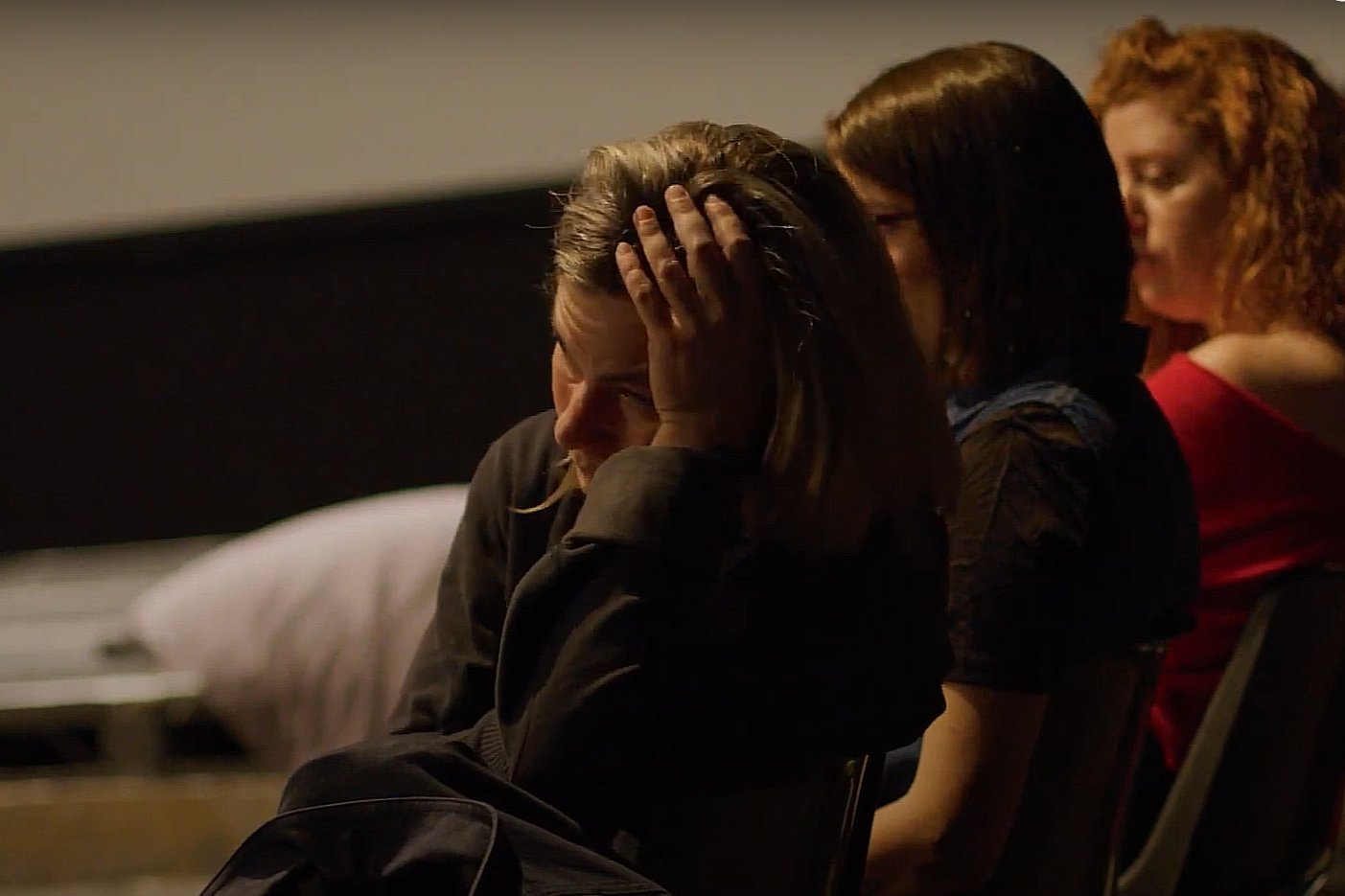
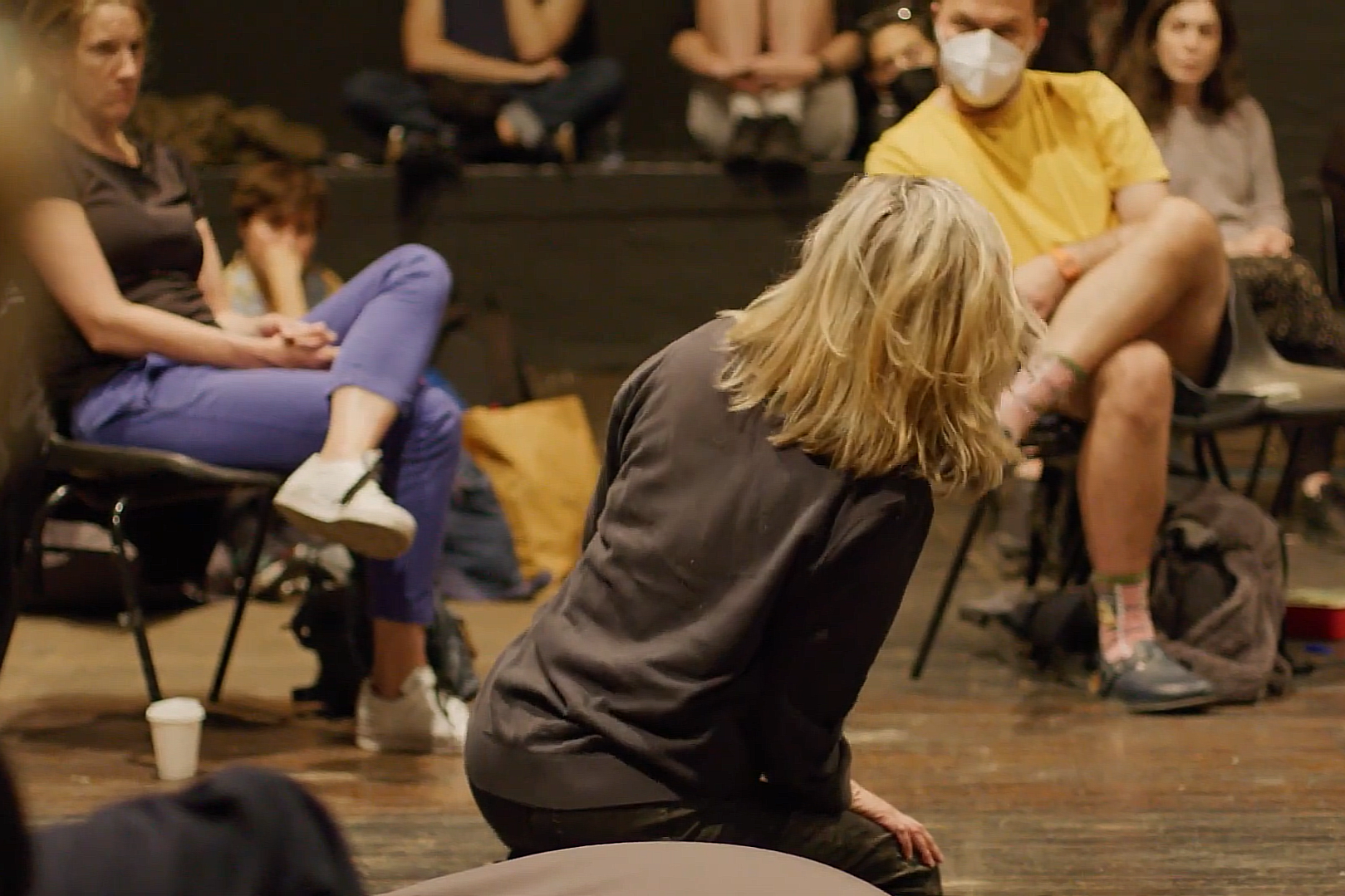
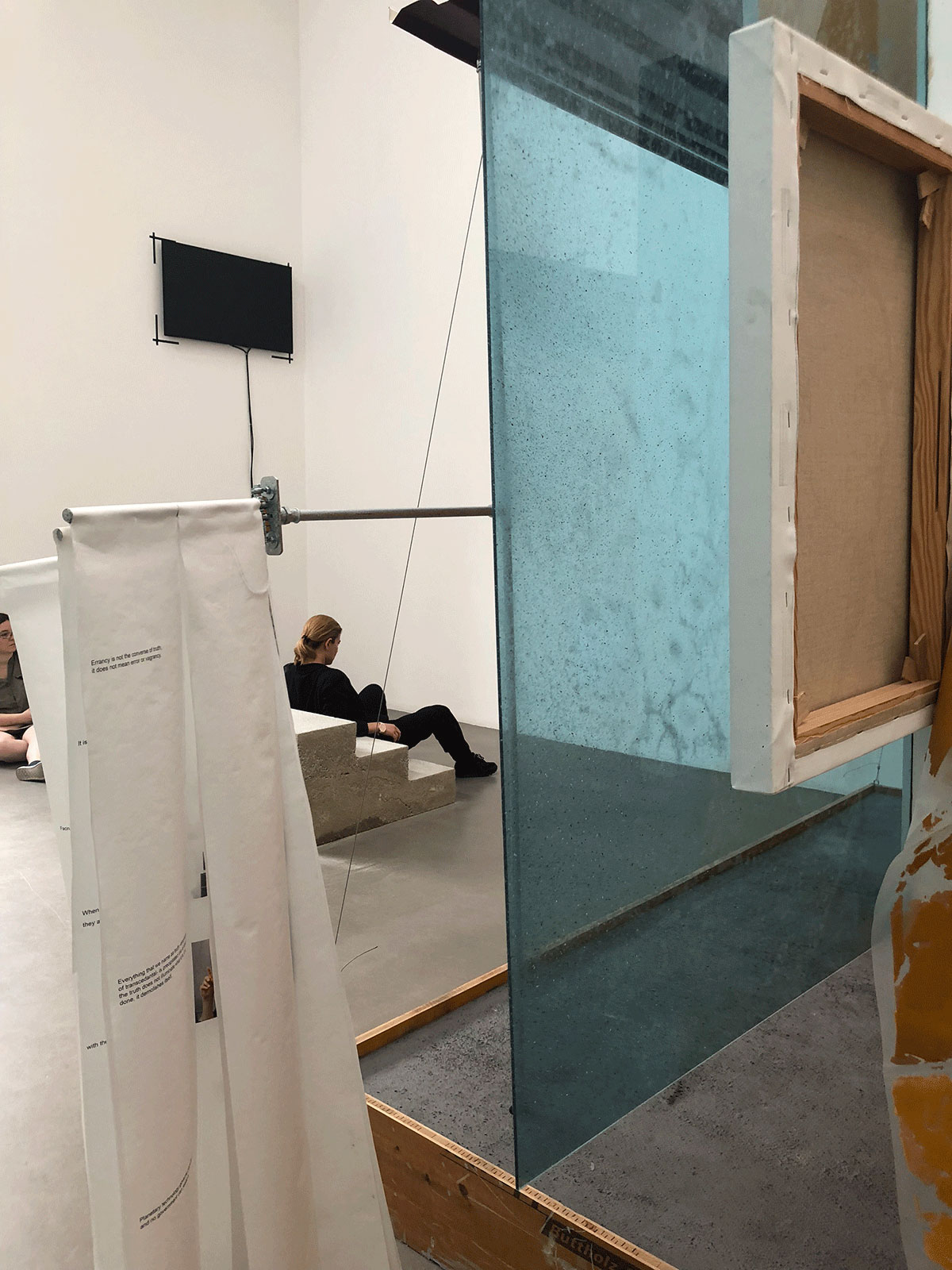
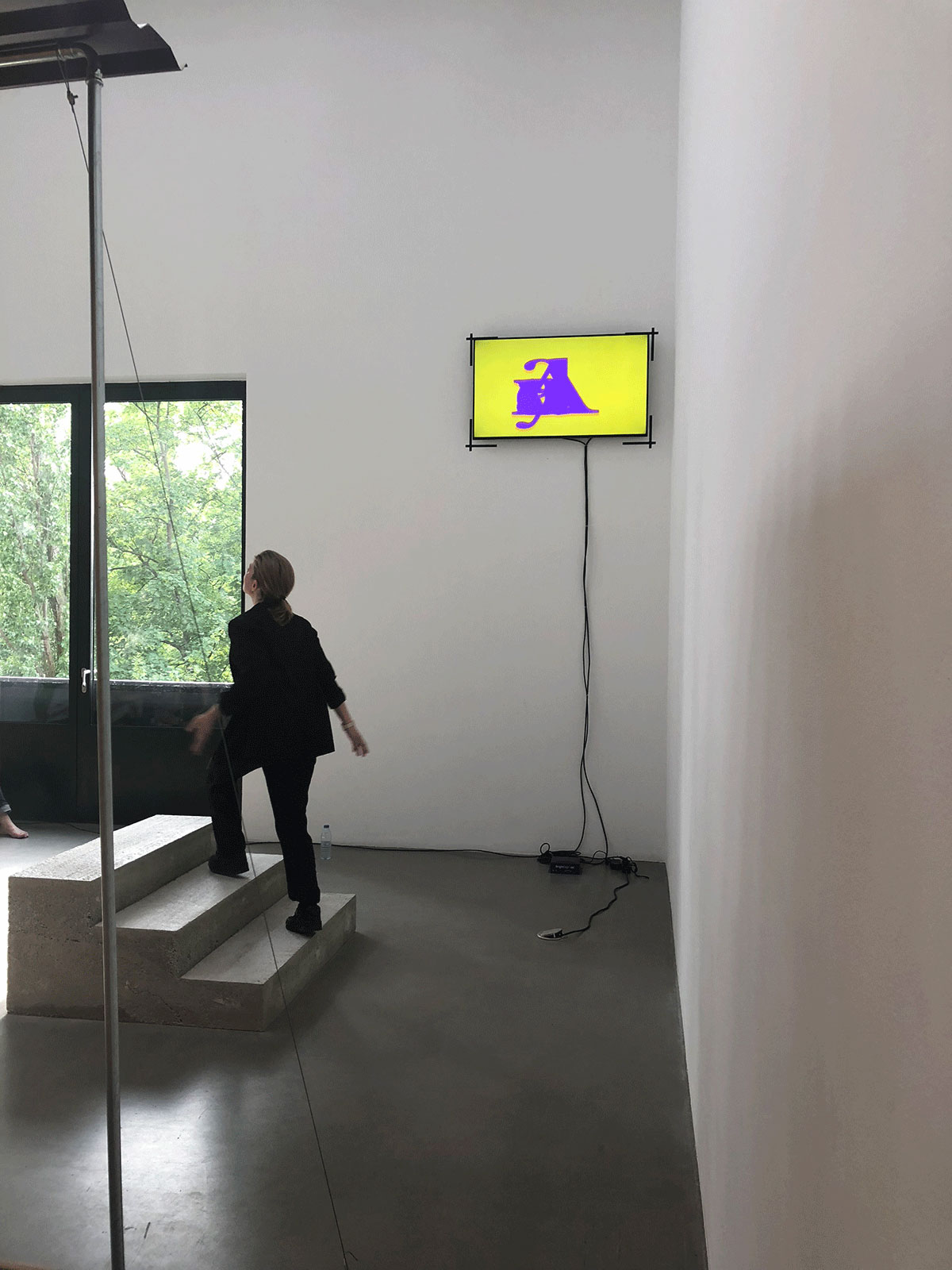
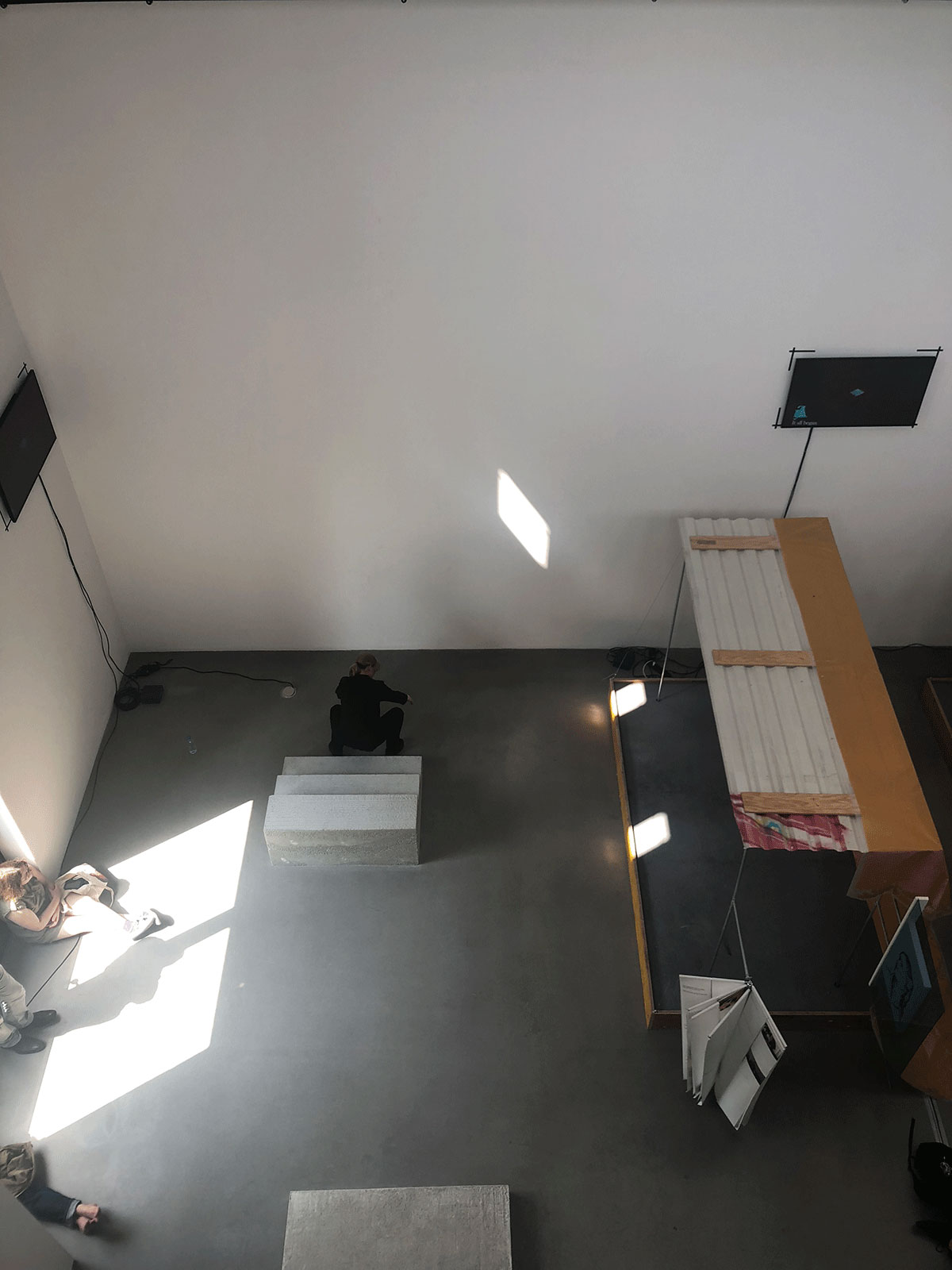
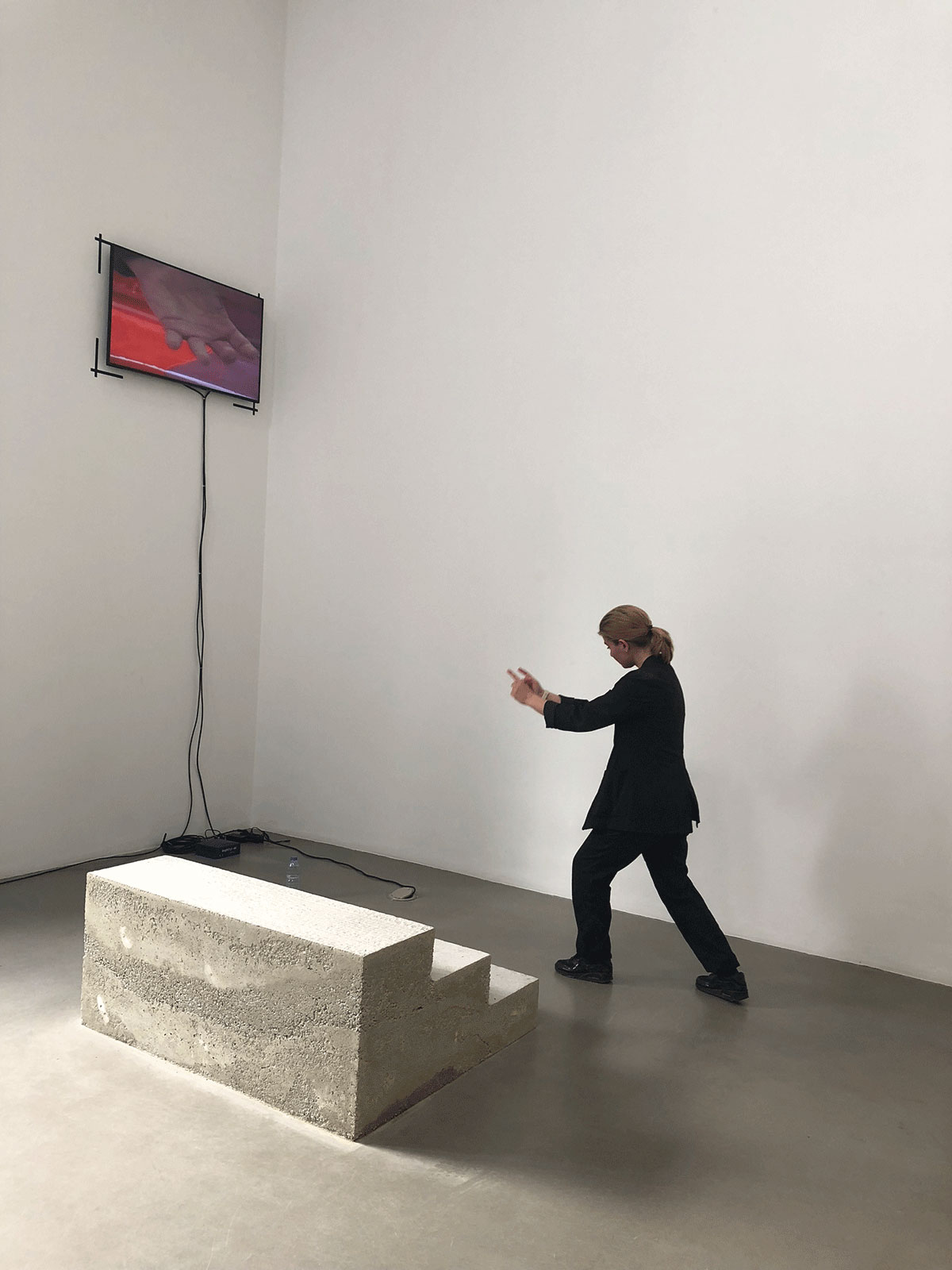
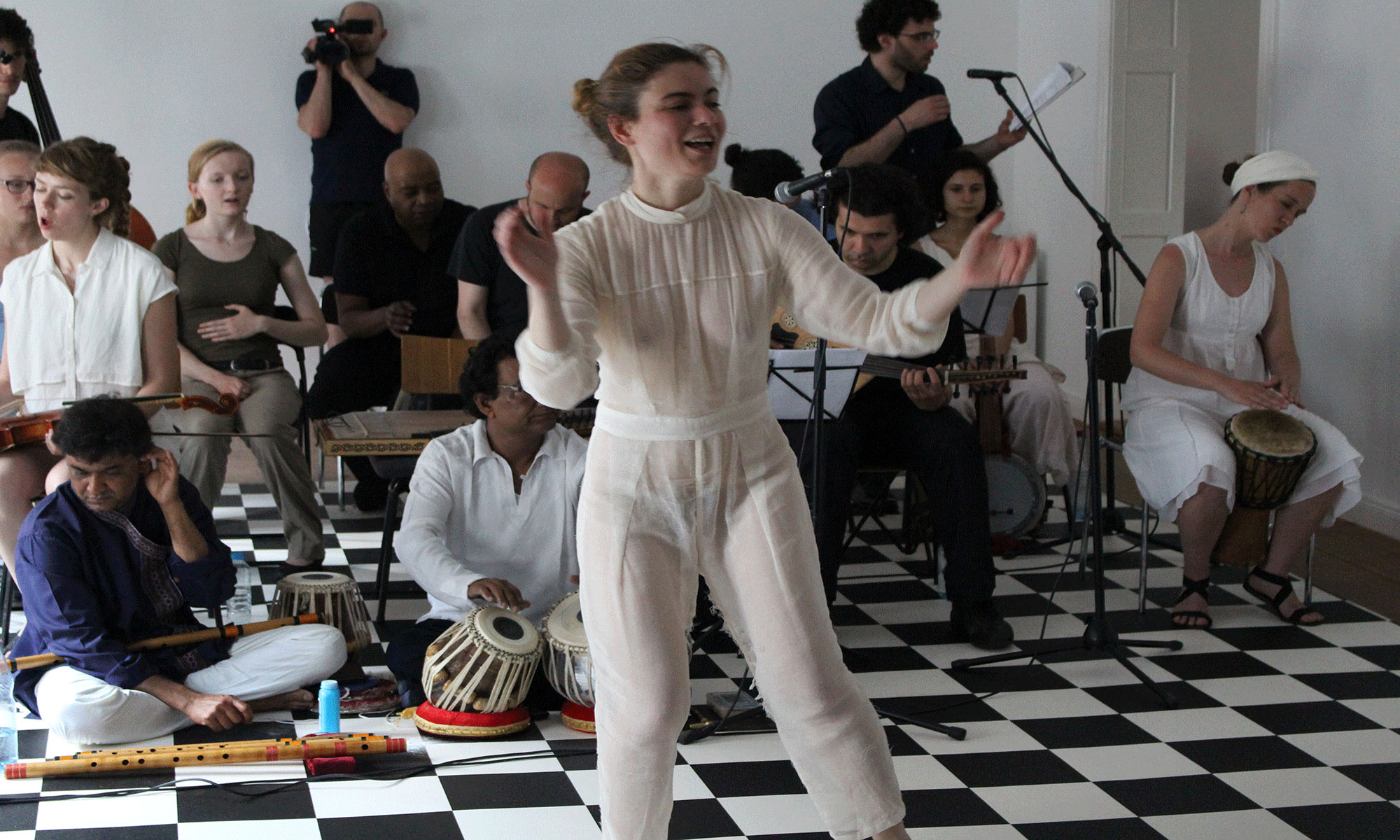
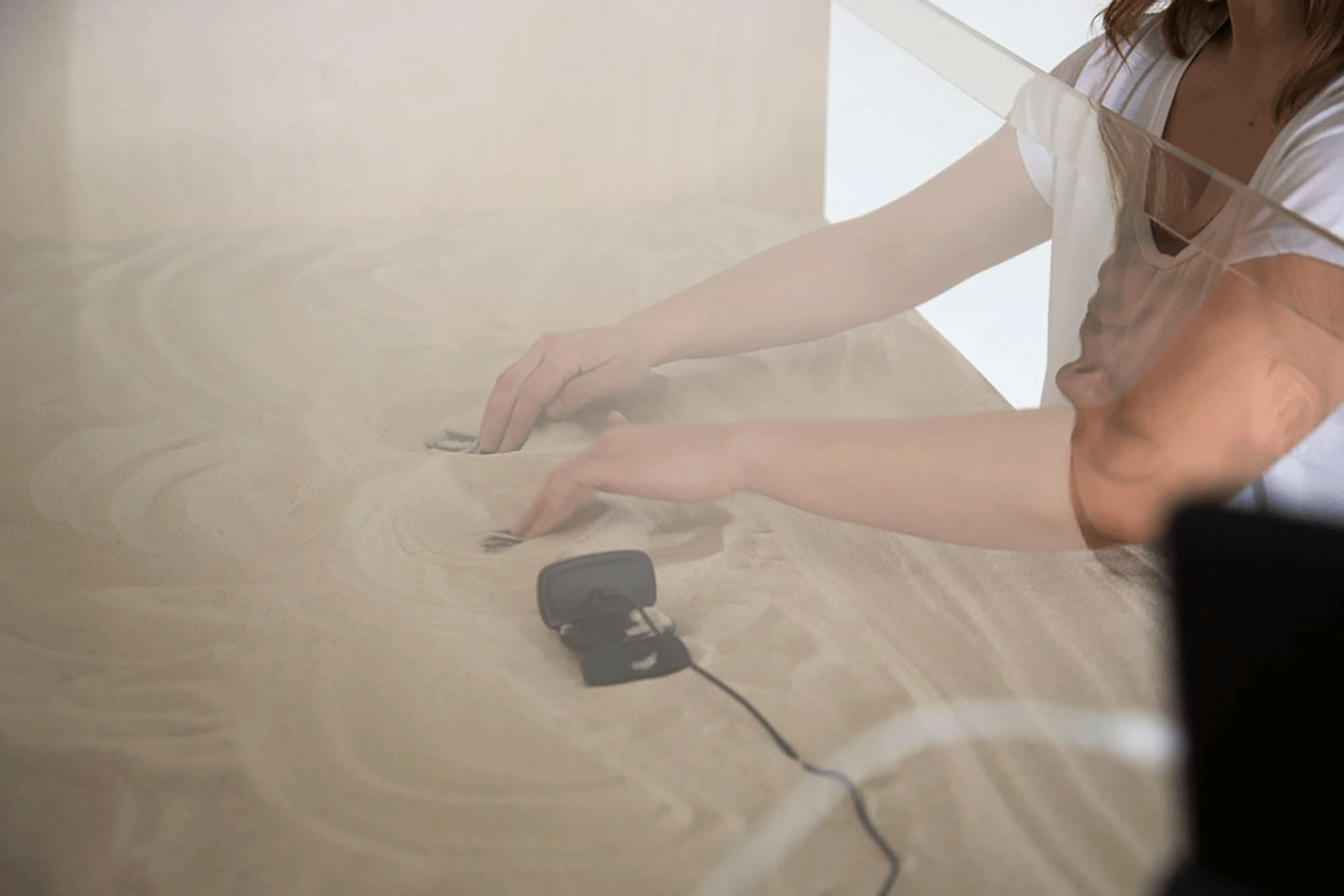
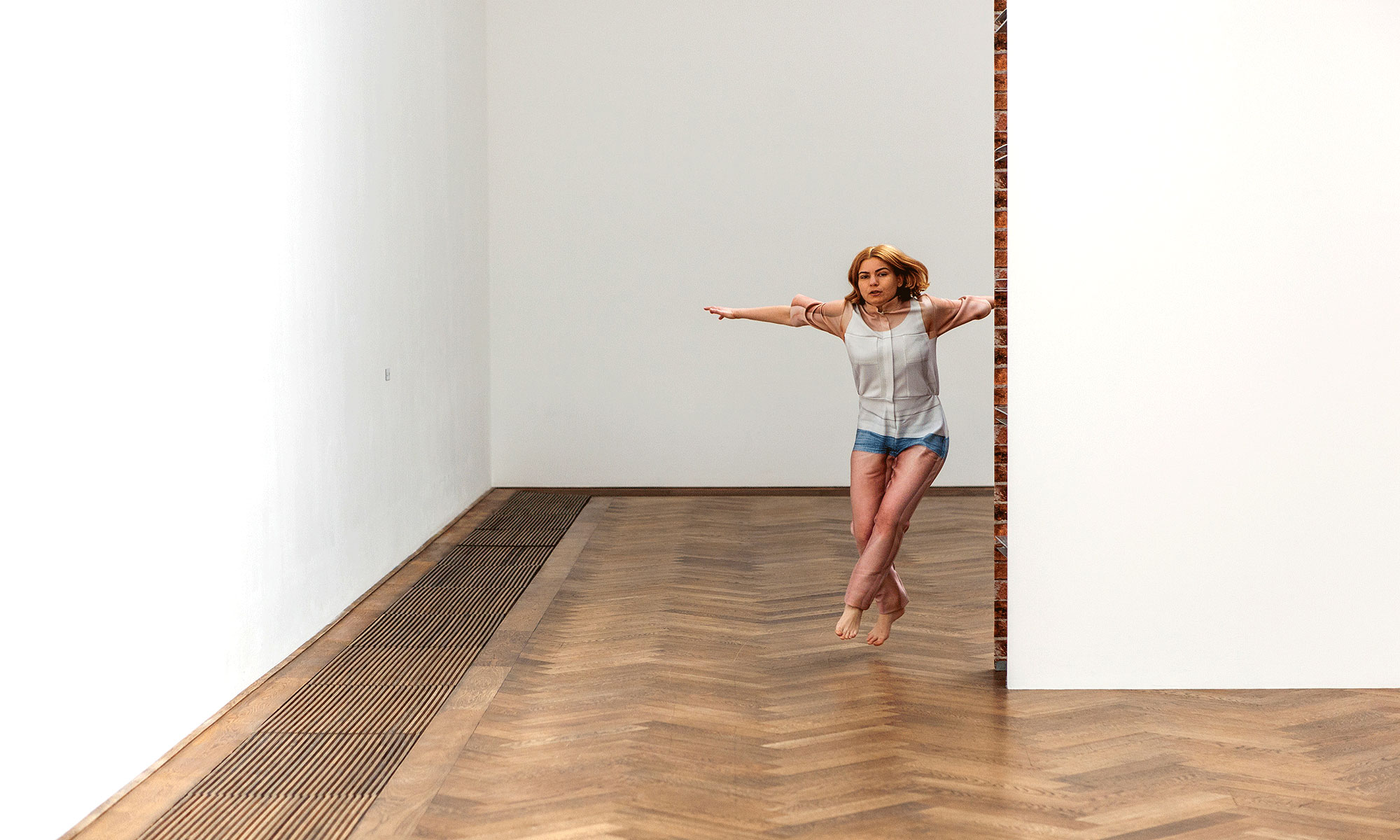
The performance took place on January 15th, 2026 at Drawing Lab Paris.

Georgia Sagri, Gone, Gone Beyond, 2026, performance, 30m, Centre Pompidou x Drawing Lab, Paris

GIBCA #13 a hand that is all our hands combined

at Gothenburg , Sweden (20/09 - 30/10/25)
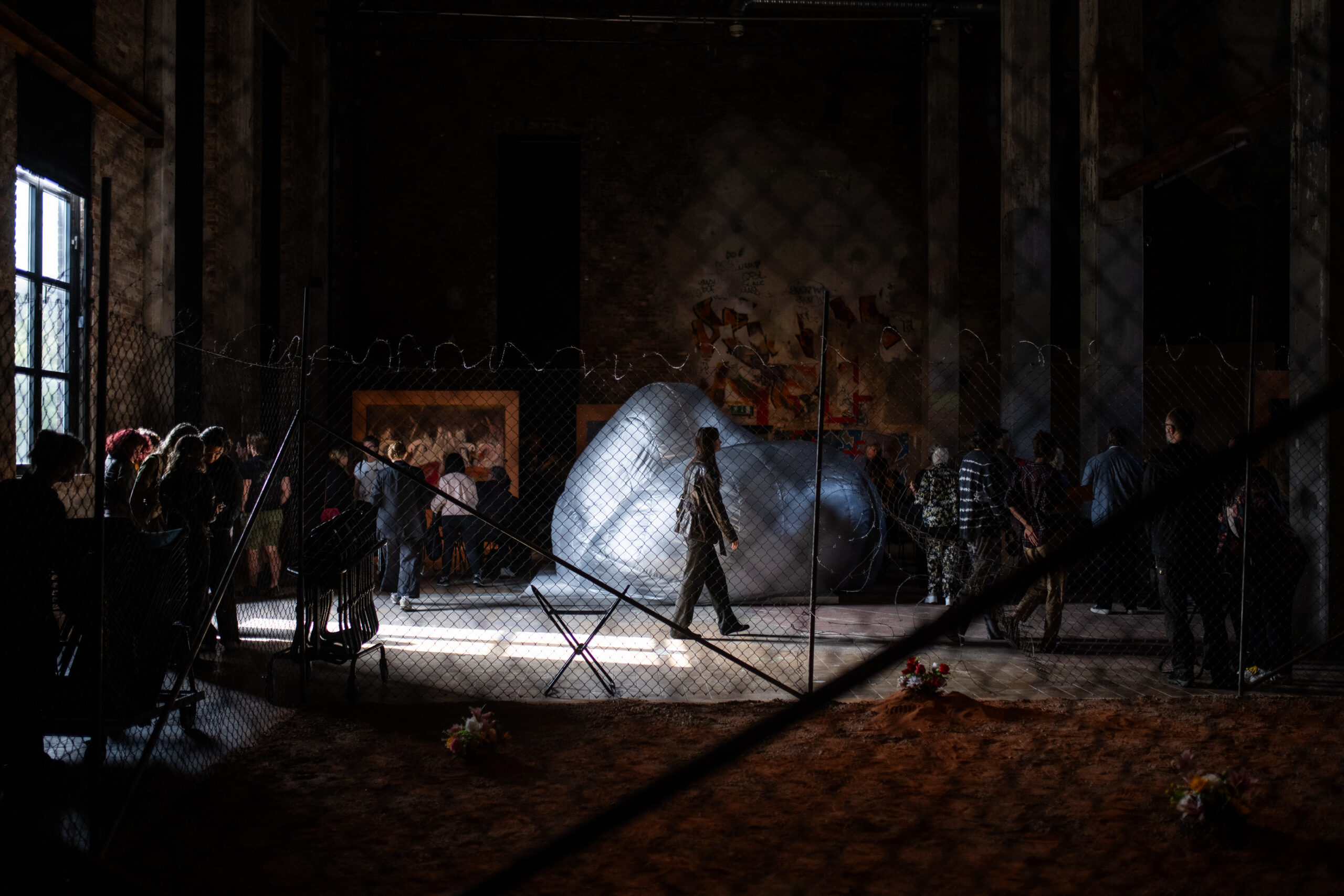

Georgia Sagri participates in the Gothenburg International Biennial for Contemporary Art #13, curated by Christina Lehnert. GIBCA is organized by Röda Sten Kunsthalle in collaboration with The Gothenburg Museum of Art, Göteborgs Kunsthalle, Gothenburg City Library and Skövde Art Museum.


Can we think beyond Us and Them?


The title, a hand that is all our hands combined, originates in a line from a poem by Solmaz Sharif, and stands as a reminder of the collective responsibility that we all share towards the present, past and future, on both individual and societal levels. The curator, Christina Lehnert, works here with artists who strive for artistic freedom, challenge the institutions who yield to political pressure, and have a practice characterized by acts of solidarity. A new sense of responsibility for the present emerges through active engagement in political events, social movements and alternative forms of expression.


Georgia Sagri contributes with two works, Gone, Gone Beyond a new sculpture and performance piece; and City, an installtion and perfor presented firstly in Kunstmuseum Liechtenstein, Vaduz.


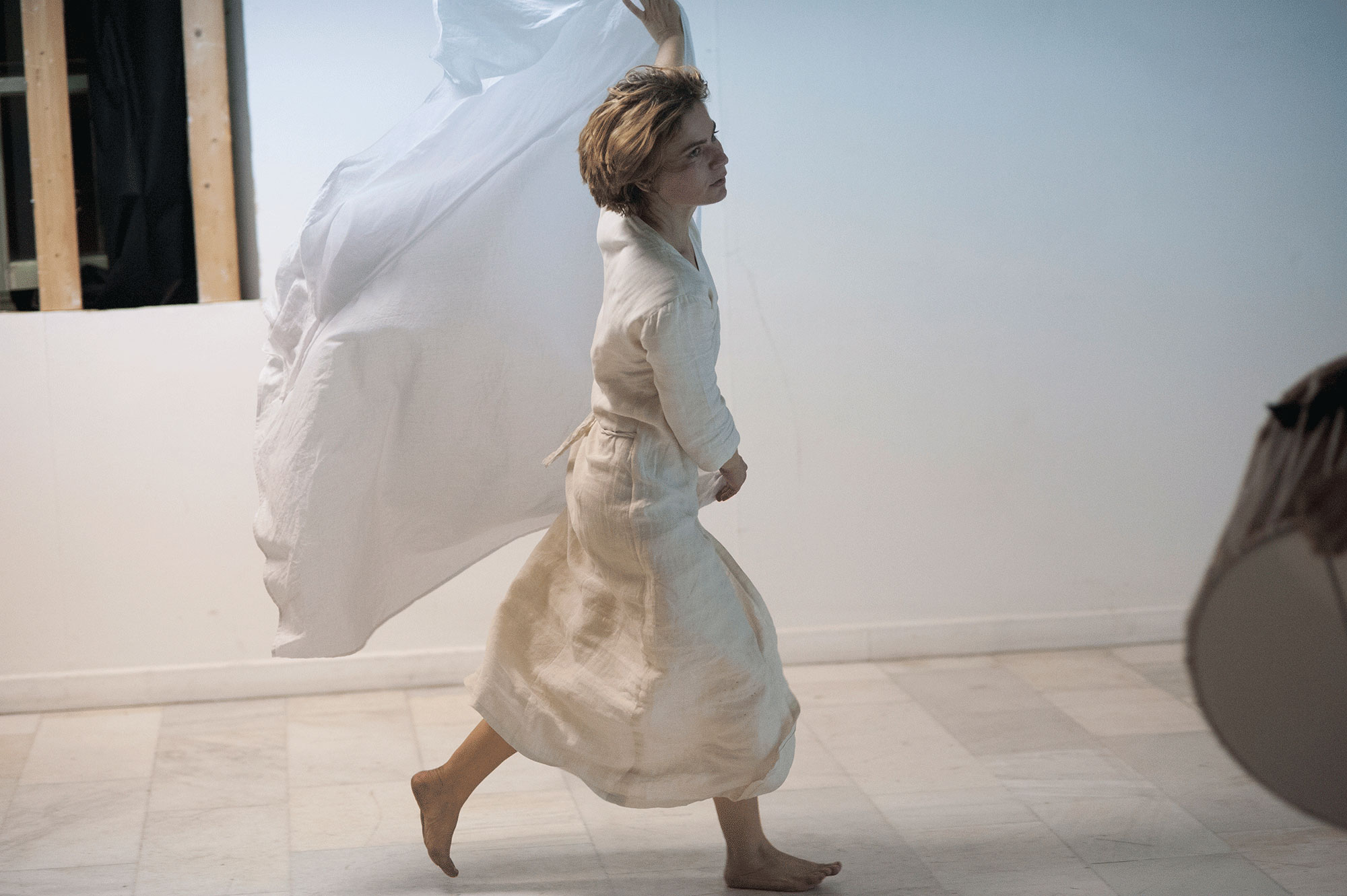
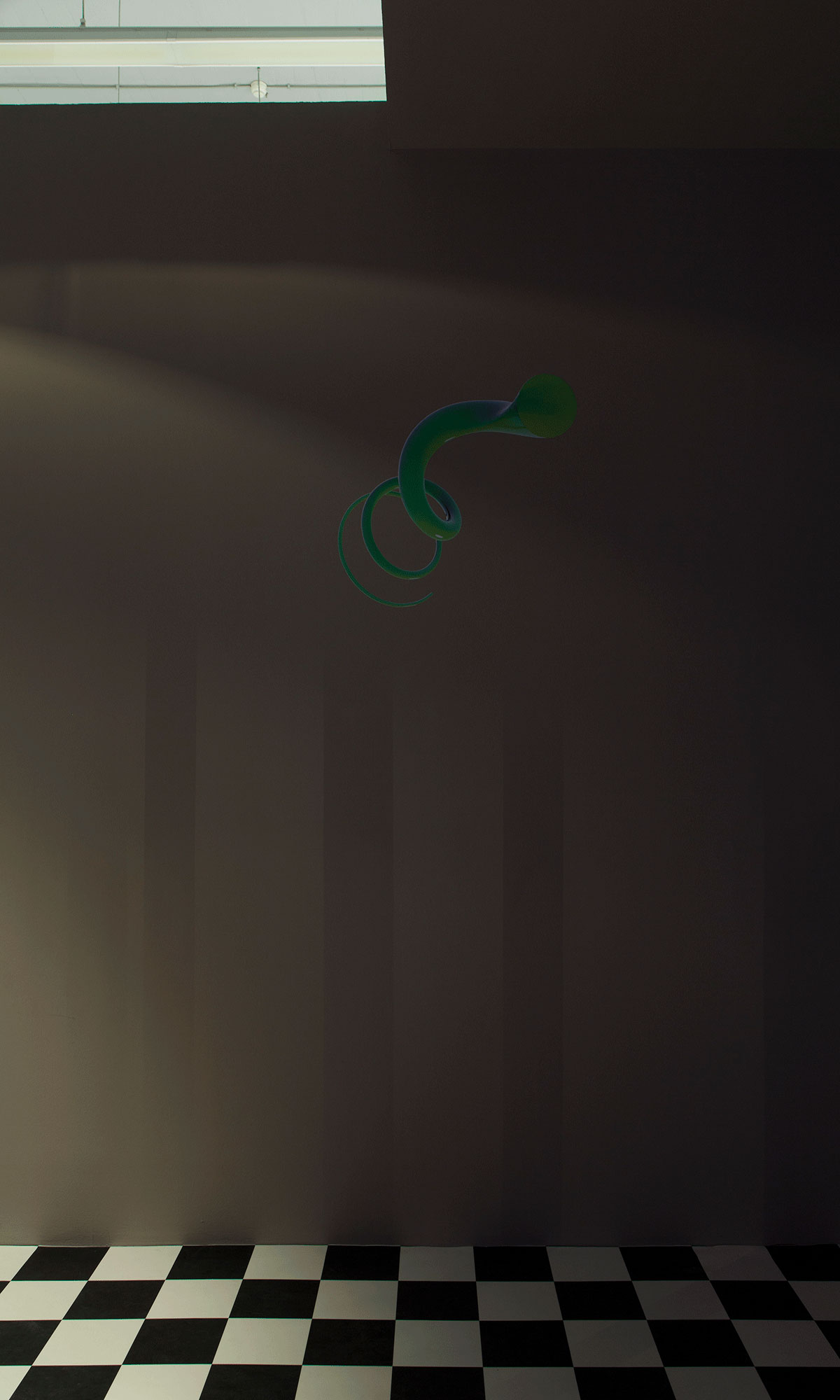
Gone, Gone Beyond has developed around breath—its visibility, invisibility, and political weight. A pressure-device sculpture inhales and exhales like a living organism, while a performance engages with rupture, grief, and the ways identity can be reassembled when coherence falters. Inspired by the late work of one of Greece’s most important poets, Katerina-Aggelaki Rouk, Of the loneliness double-faced monologues, the piece asks how presence can be held when parts of the self vanish, and how one begins again, breathing toward connection. The performance premiered for the public on September 20th at Röda Sten Kunsthalle.


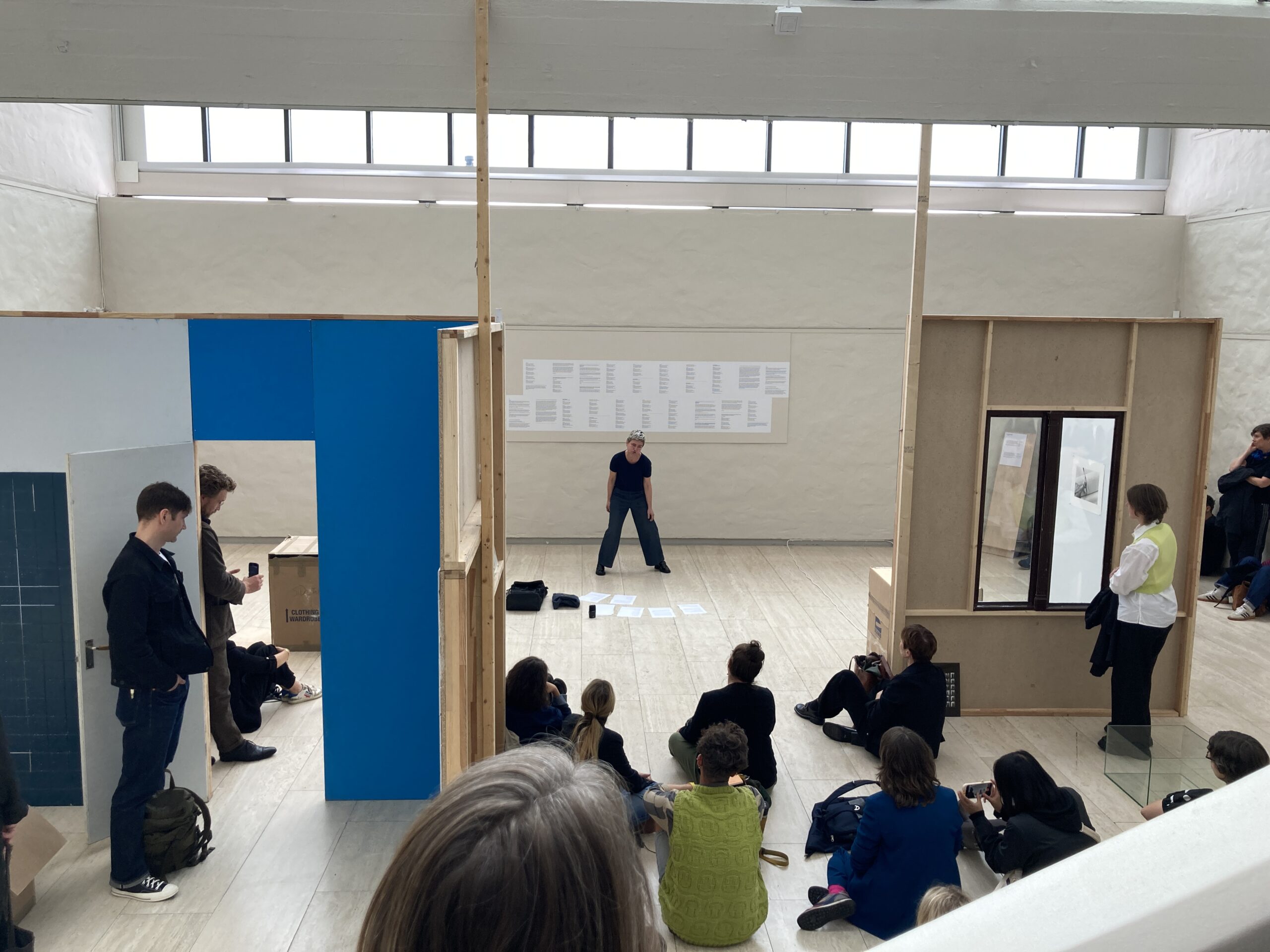
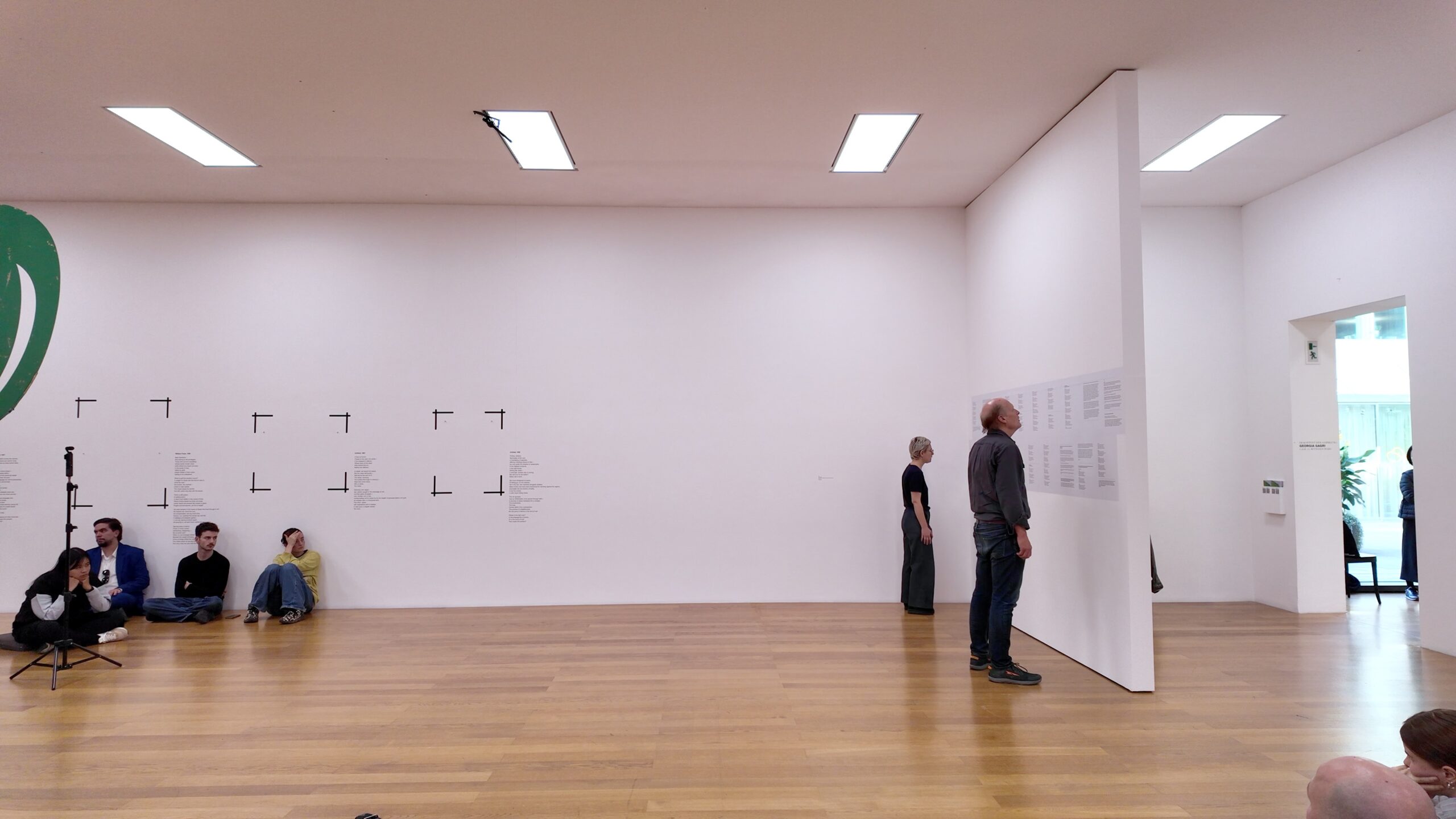
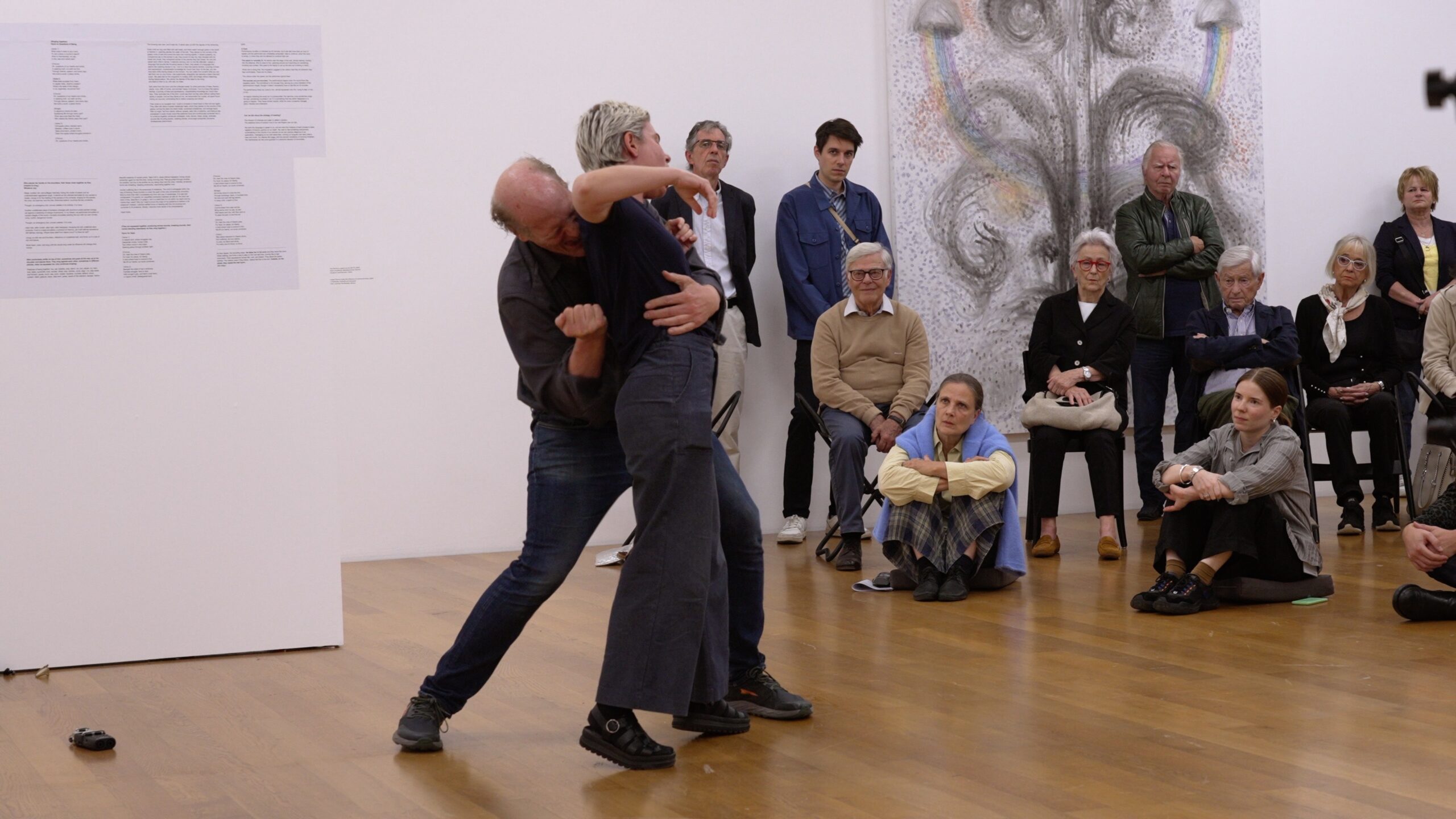
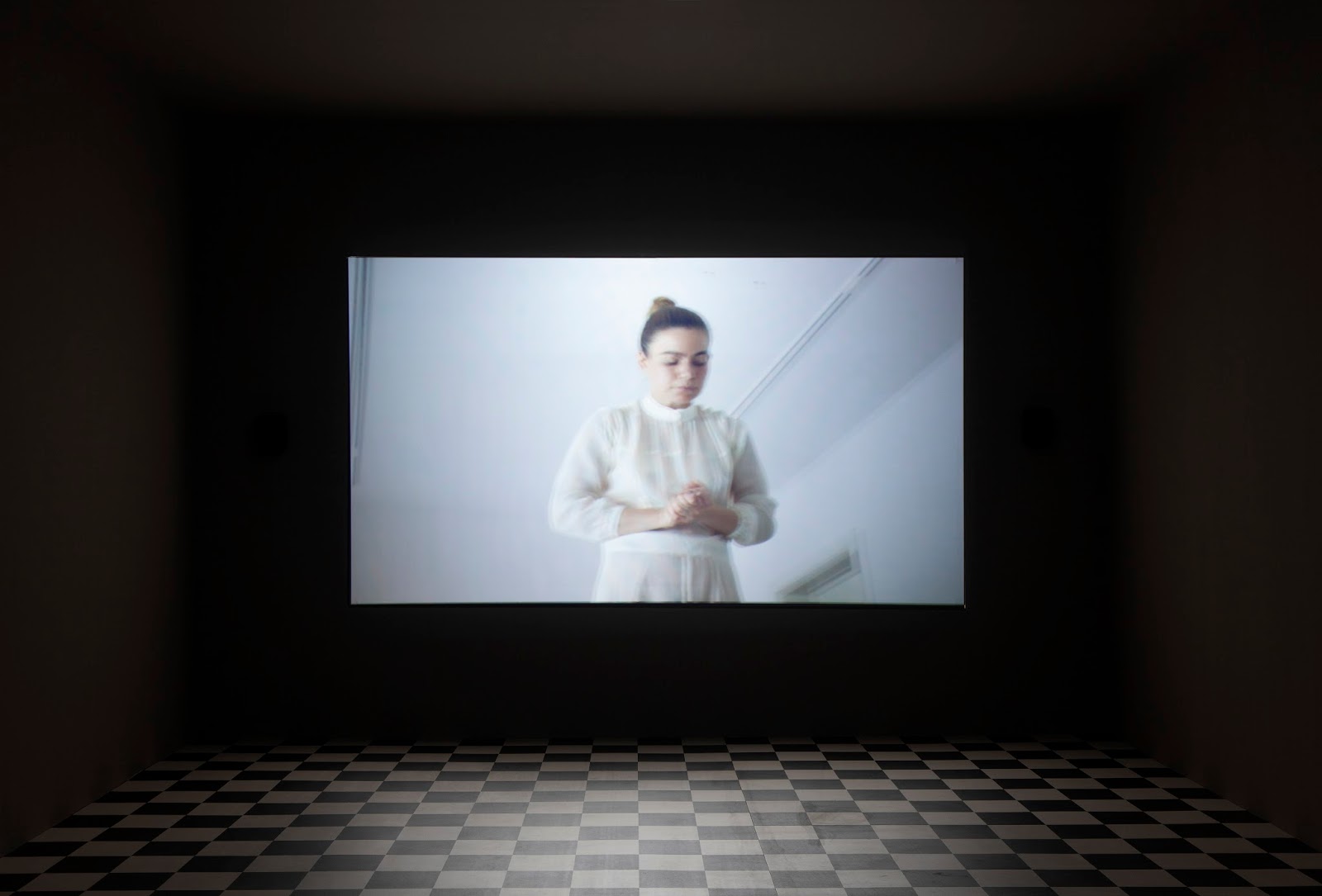
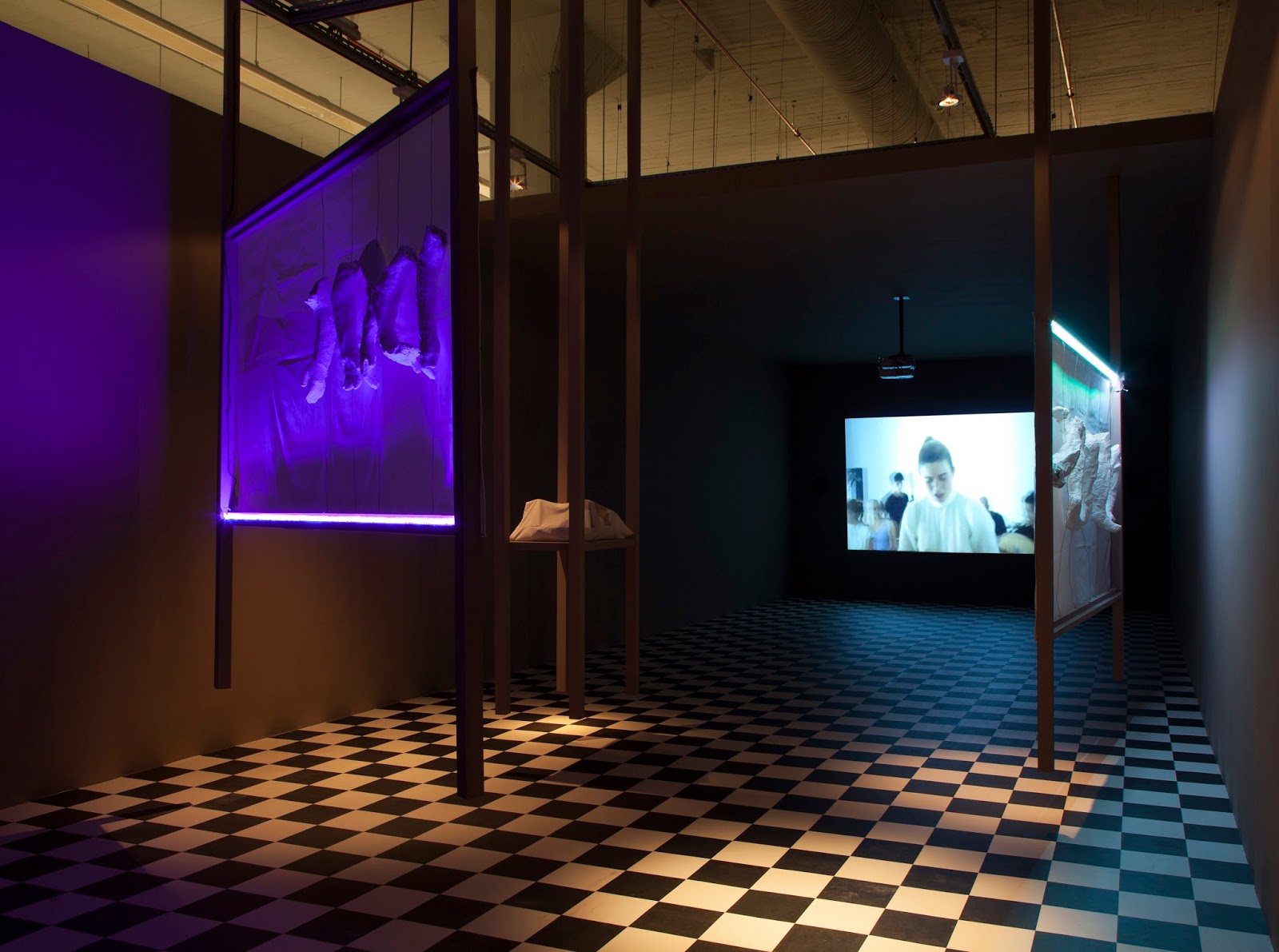
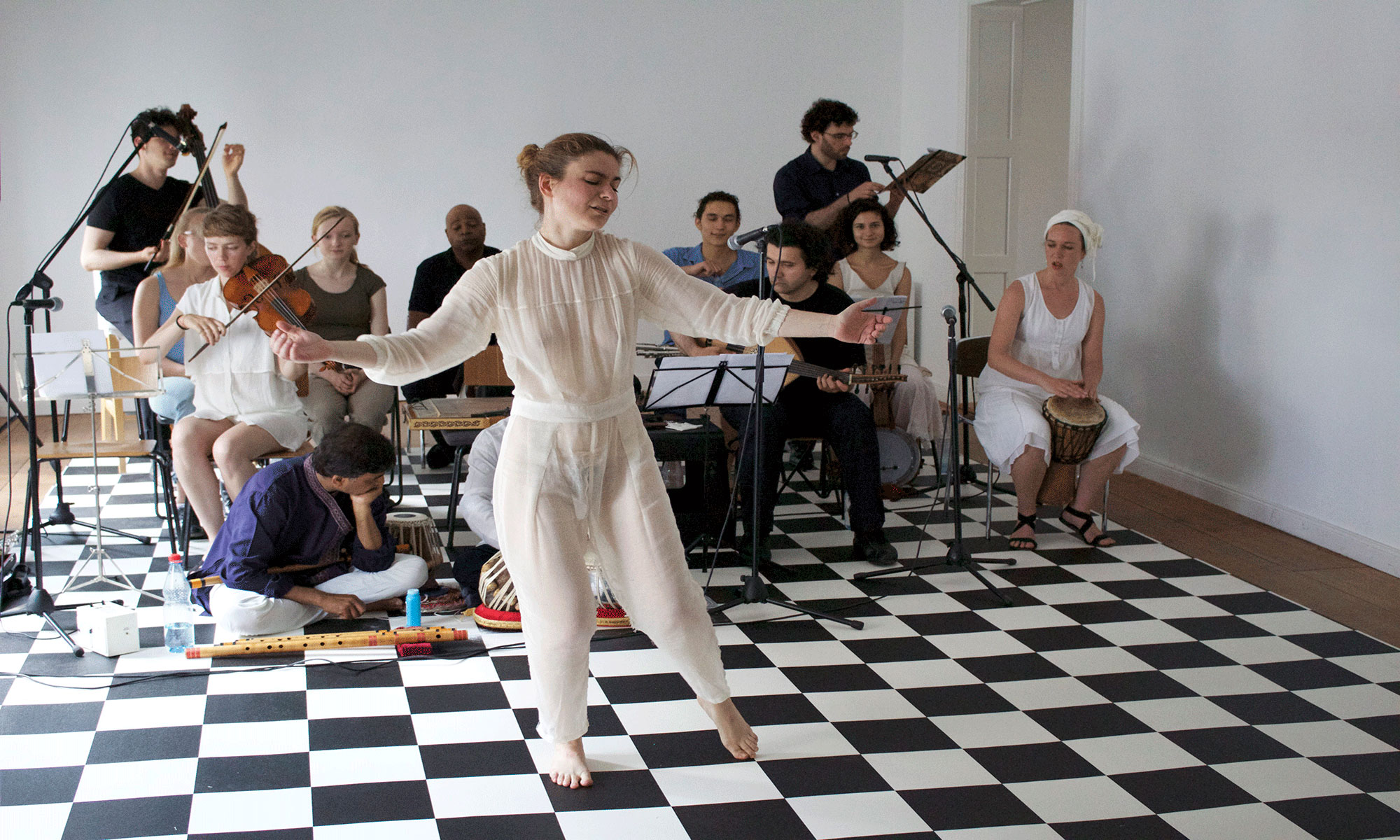
CITY was first presented in Sagri’s solo exhibition Case_O. Between Wars at the Kunstmuseum Liechtenstein. For GIBCA, she brought a revisited version of the work, originally conceived as a duet with actor Jim Fletcher. Through pre-recorded voices, live singing, hymns, liturgies, and physical strain, CITY opens a space where language and gesture shift into communal practice. It is a fragile yet insistent attempt at being with one another: trembling, surrendering, resisting, and singing through rupture. The performance took place for the public on September 21rst at Skövde Art Museum.


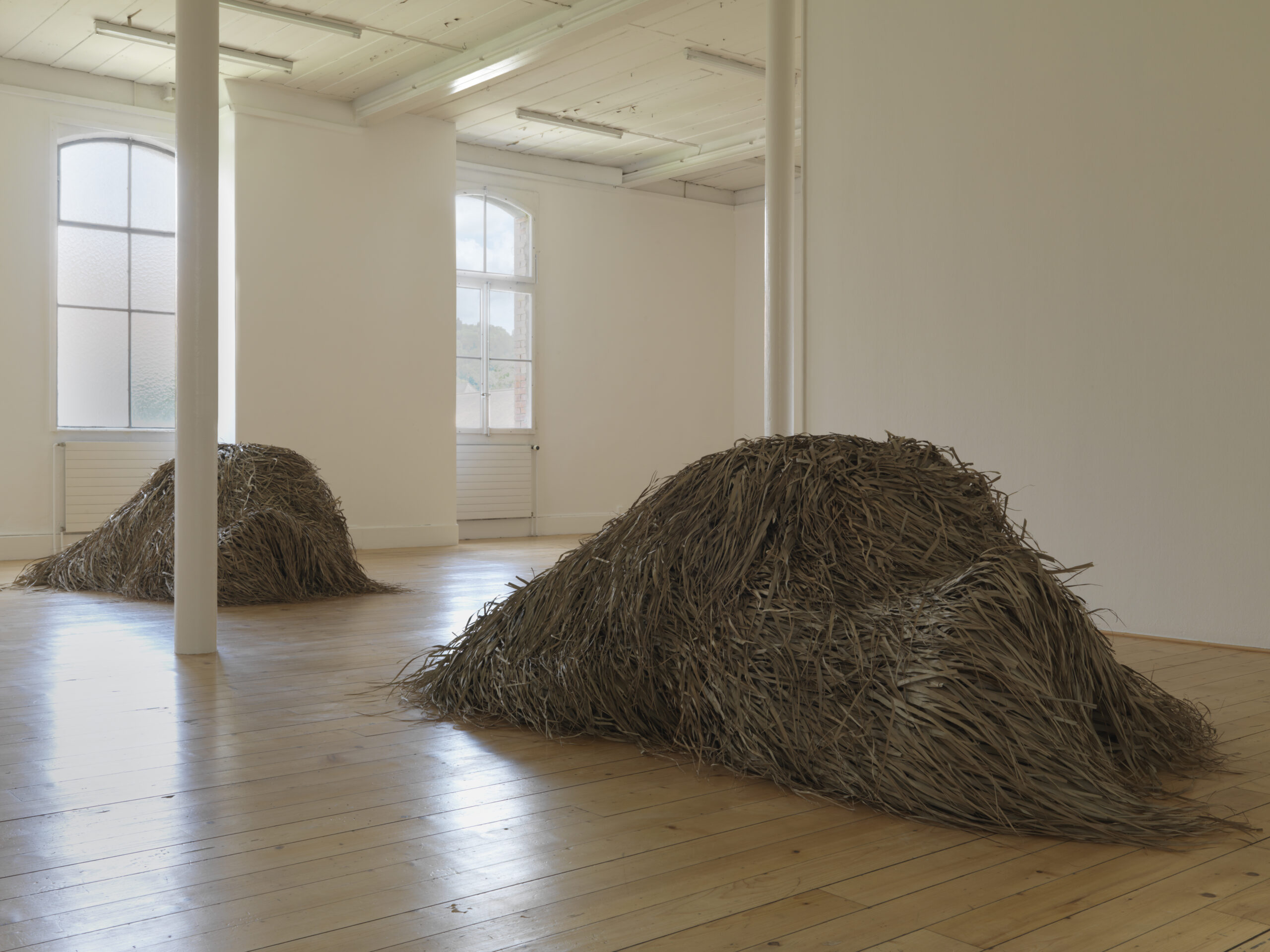
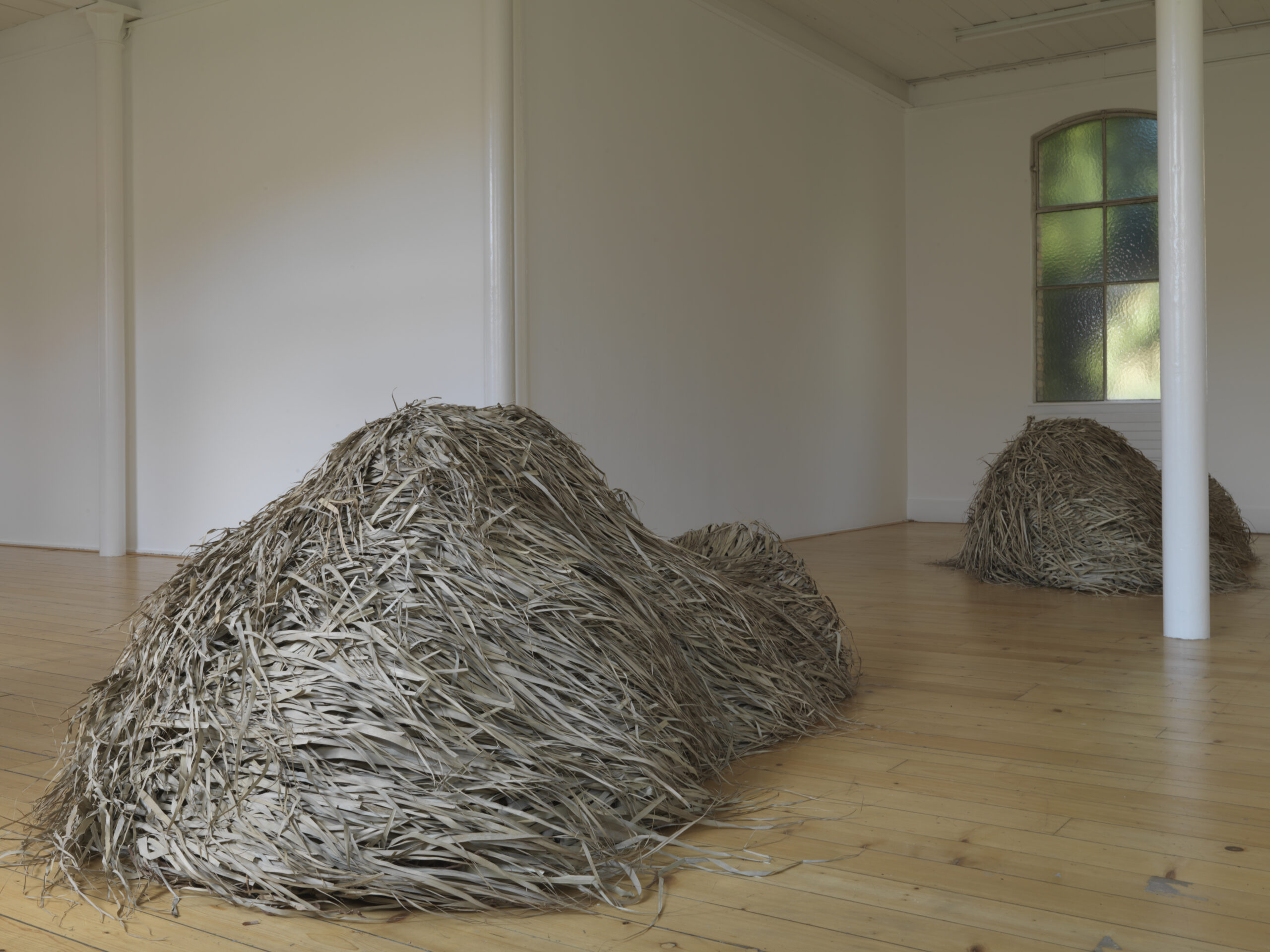
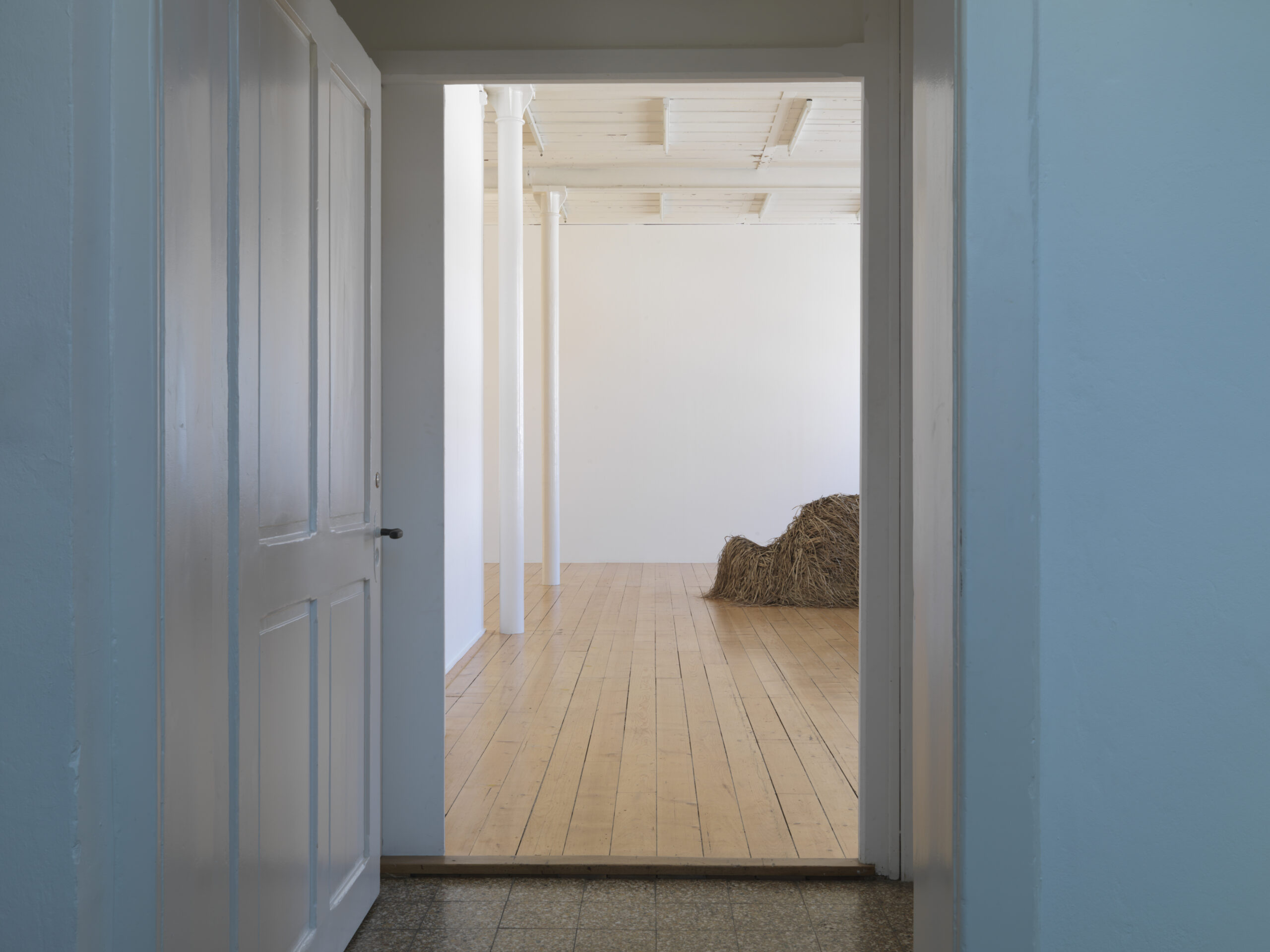
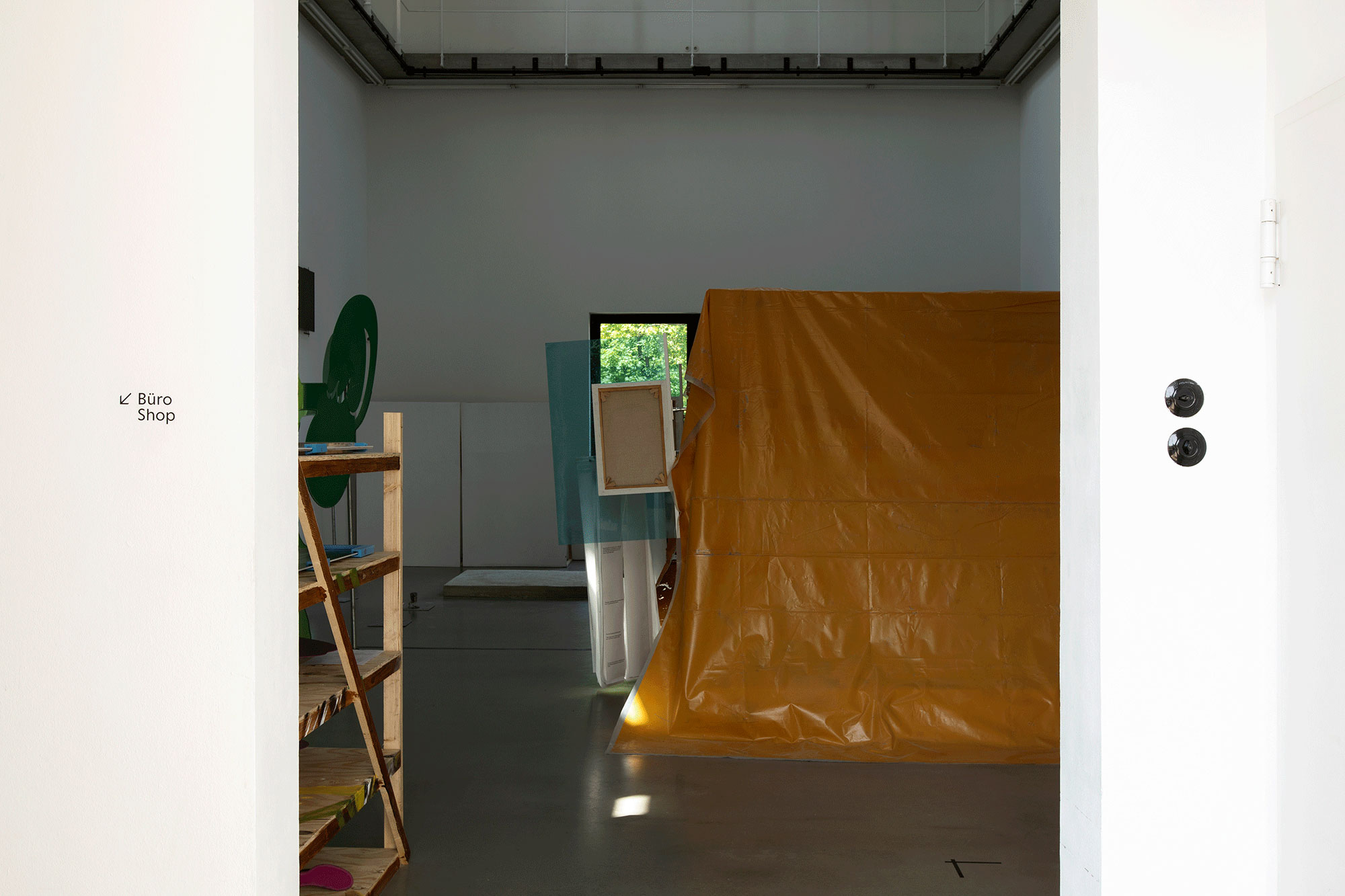
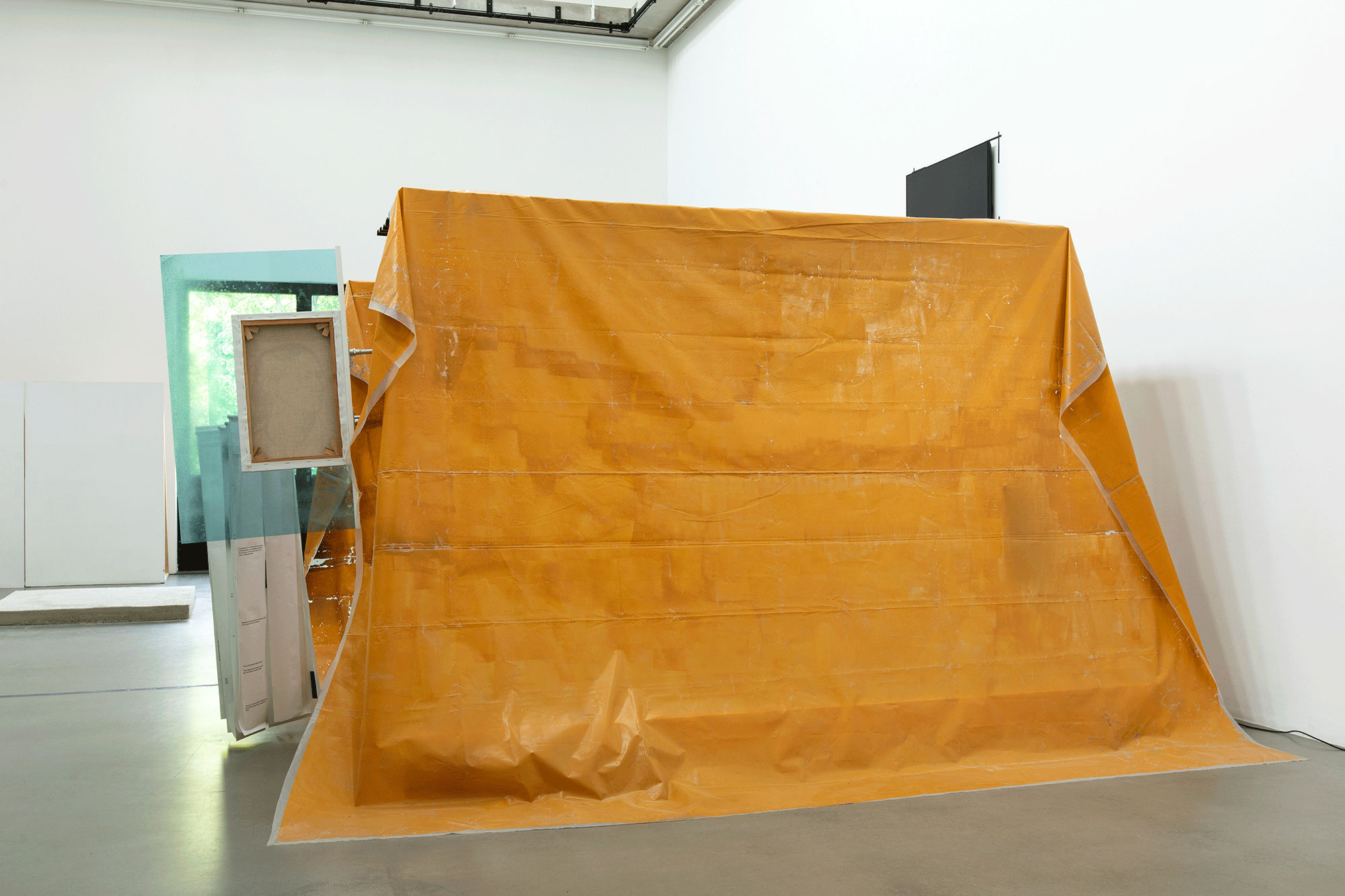
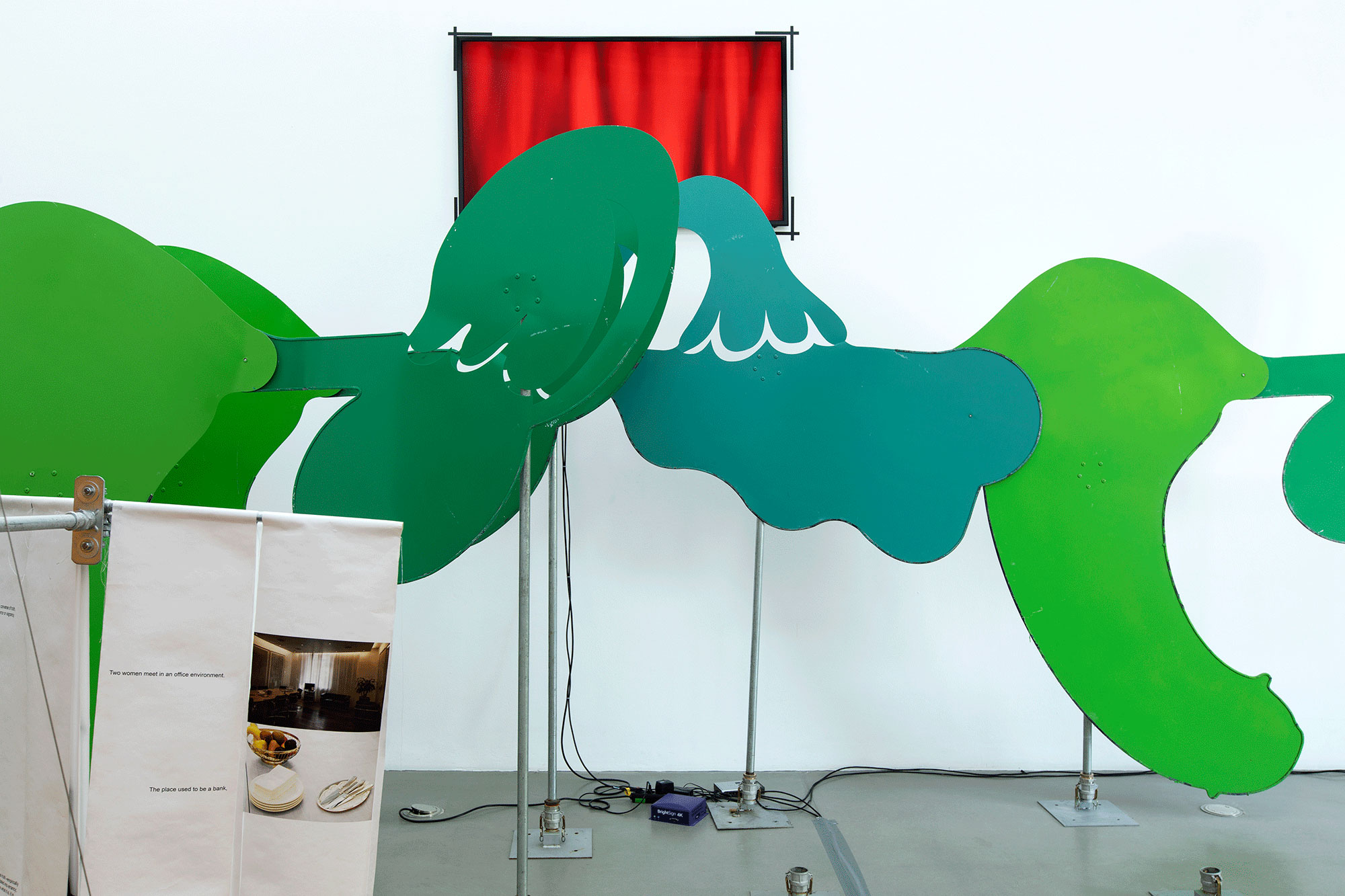
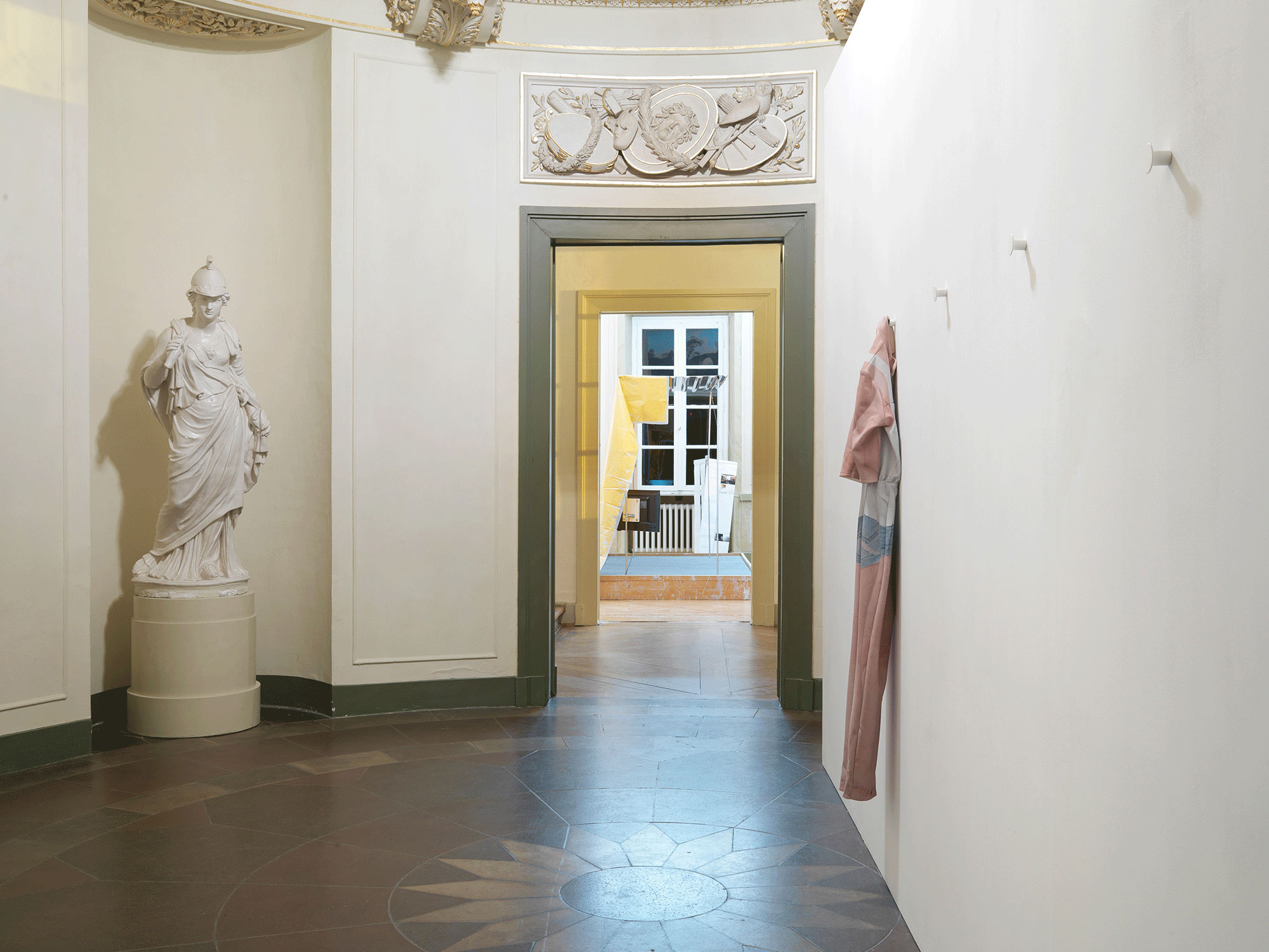
Georgia Sagri, Gone Gone, Beyond, 2025, Fabric, polyester, permanent blower, guy ropes, bag, 4.9m x 2.7m x 2.7m GIBCA #13, Röda Sten Kunsthalle, Gothenburg. Photo by: Ellika Henrikson ©Georgia Sagri

Georgia Sagri, Gone Gone, Beyond, 2025, Fabric, polyester, permanent blower, guy ropes, bag, 4.9m x 2.7m x 2.7m GIBCA #13, Röda Sten Kunsthalle, Gothenburg. Photo by: Ellika Henrikson ©Georgia Sagri

Georgia Sagri, Gone Gone, Beyond, 2025, Fabric, polyester, permanent blower, guy ropes, bag, 4.9m x 2.7m x 2.7m GIBCA #13, Röda Sten Kunsthalle, Gothenburg. Photo by: Ellika Henrikson ©Georgia Sagri

Georgia Sagri, Gone Gone, Beyond, 2025, sculpture and performance, 20 September 2025, GIBCA #13, Röda Sten Kunsthalle, Gothenburg. Photo by: Ellika Henrikson ©Georgia Sagri

Georgia Sagri, Gone Gone, Beyond, 2025, sculpture and performance, 20 September 2025, GIBCA #13, Röda Sten Kunsthalle, Gothenburg. Photo by: Ellika Henrikson ©Georgia Sagri

Georgia Sagri, Gone Gone, Beyond, 2025, sculpture and performance, 20 September 2025, GIBCA #13, Röda Sten Kunsthalle, Gothenburg. Photo by: Ellika Henrikson ©Georgia Sagri

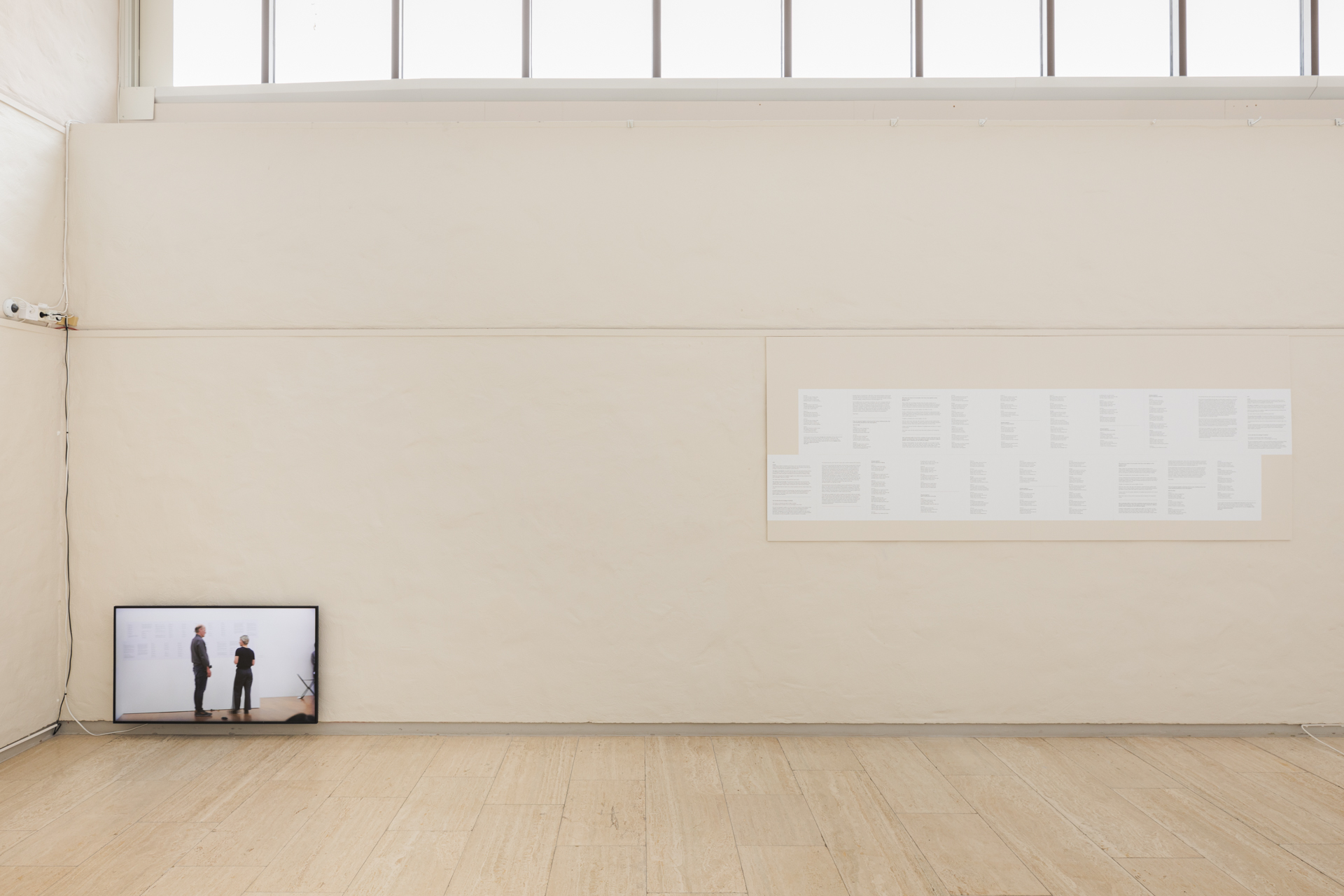
Georgia Sagri, City (2024), 2025, HD video, 40 min., 10 posters, inkjet print on paper, Röda Sten Kunsthalle, Gothenburg. Photo by: Andrej Lamut ©Georgia Sagri

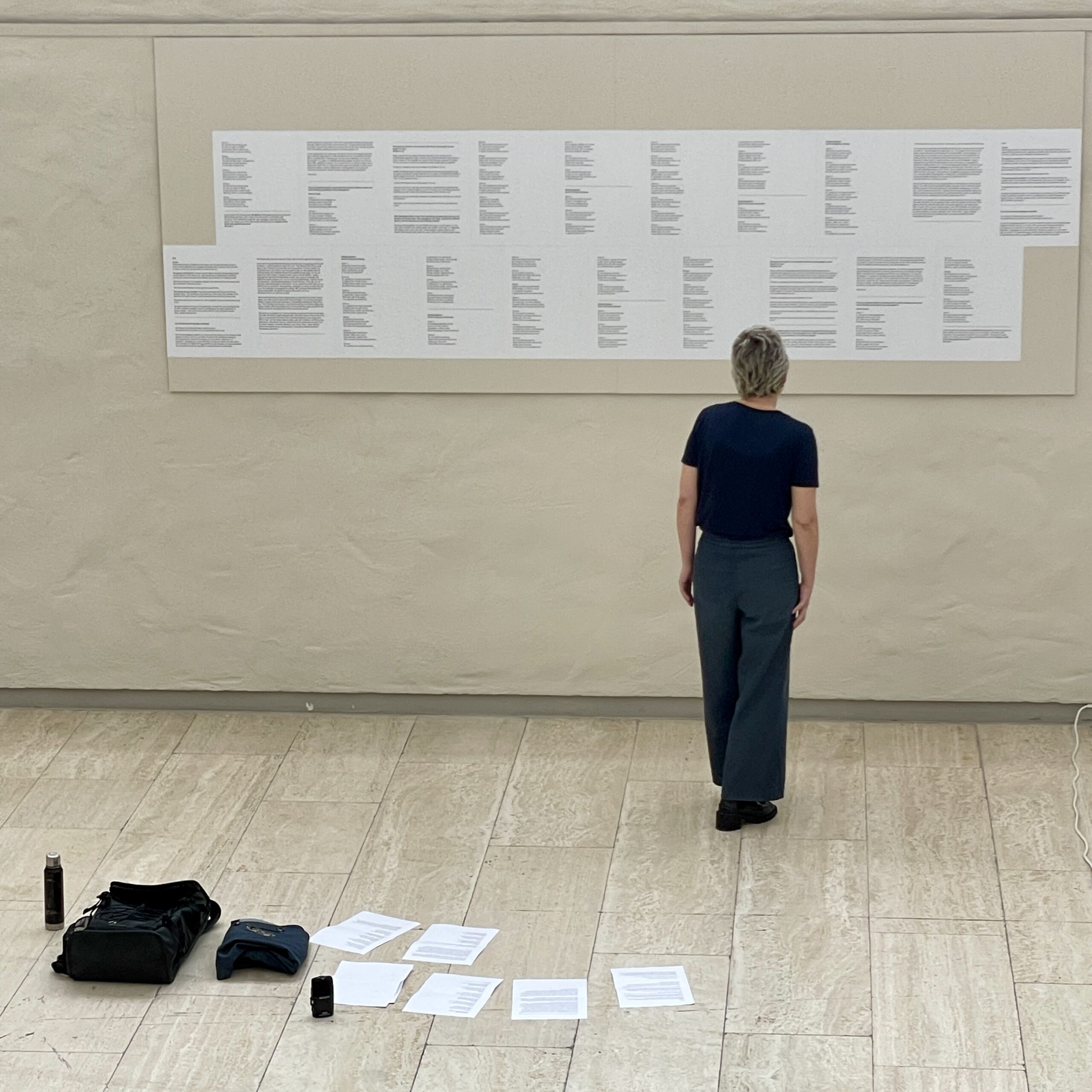
Georgia Sagri, City (2024), performance, 21 September 2025, 40 min., Röda Sten Kunsthalle, Gothenburg. Photo by: Andrej Lamut ©Georgia Sagri

Georgia Sagri, City (2024), performance, 21 September 2025, 40 min., Röda Sten Kunsthalle, Gothenburg. Photo by: Andrej Lamut ©Georgia Sagri

The Cynics Republic

at Palais de Tokyo, Paris (13/11/2024 - 01/12/2024)
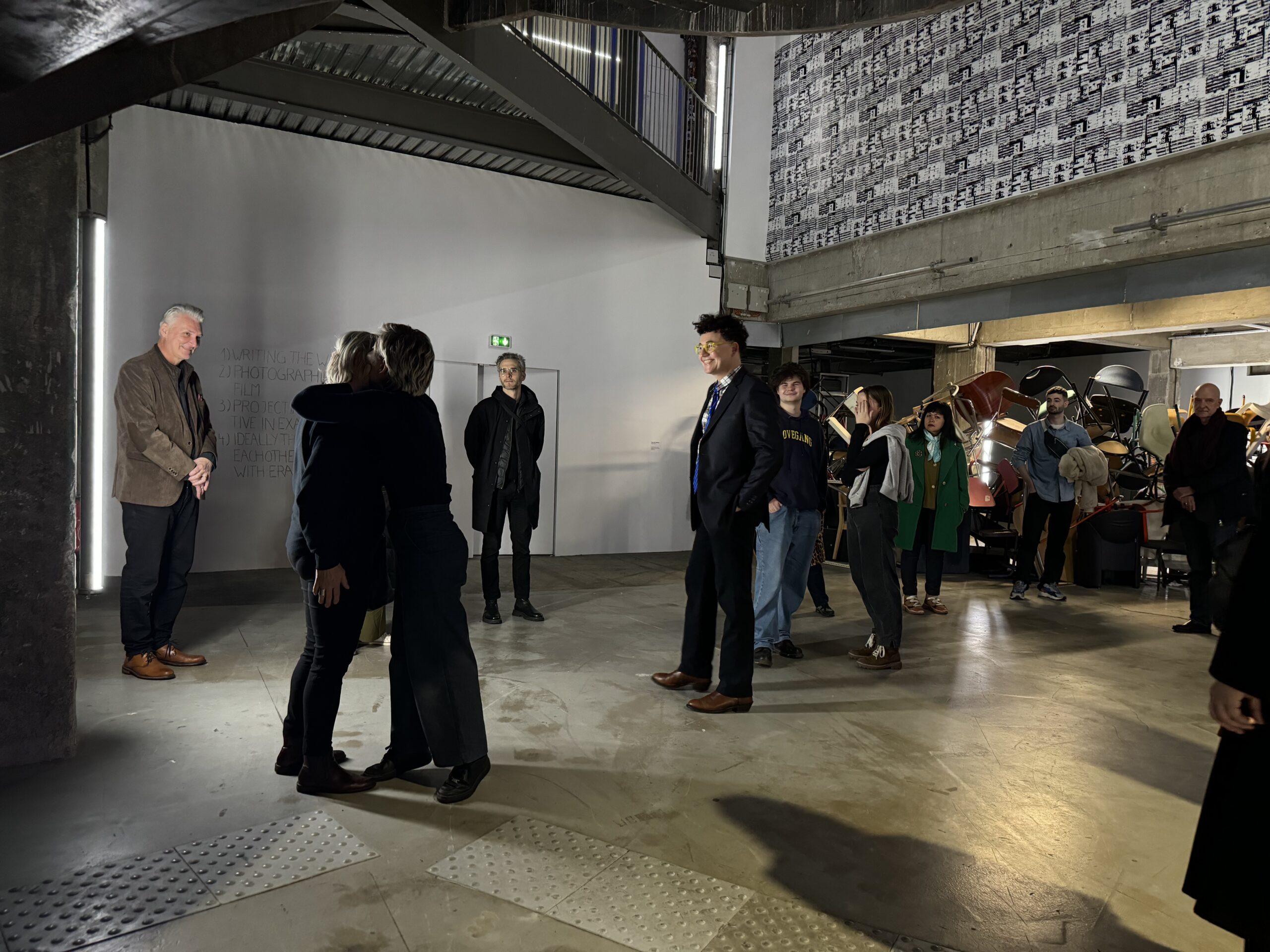

The exhibition ‘The Cynics Republic’ offered a counter-narrative of the history of performance. It looked at the emergence of ‘performative practice’ from Antiquity onwards and seeked to recover the relevance of the values of ancient cynicism – truth, self-sufficiency, endurance, sobriety and free sexuality – in the context of today’s social and ecological challenges. ‘The Cynics Republic’ offered visitors the chance to experience an exhibition constructed as a score and was renewed on a daily basis over the course of three weeks thanks to the use of dematerialized resources (scores, protocols, films and sound pieces) from the national collections of the Centre national des arts plastiques (Cnap) and the Kontakt collection in Vienna.


Exhibition score by Pierre Bal-Blanc.


Georgia Sagri participated in the exhibition The Cynics Republic with two performances: "Deep Listening" (2001/2023) on November 25th and "Solo Nature Study Notes, Athens version" (1969-2019) on November 27th, 2024.


Georgia Sagri, "Deep Listening" (2001-2023), 2024, The Cynics Republic, Palais de Tokyo, Paris, Photo by: Jeff Wall Production ©Georgia Sagri

Georgia Sagri, "Deep Listening" (2001-2023), 2023, The Cynics Republic, 2024, Palais de Tokyo, Paris. Photo by: Jeff Wall Production ©Georgia Sagri

Georgia Sagri, "Solo – Nature Study Notes – 1969-2019 ", 2019, The Cynics Republic, 2024. Palais de Tokyo, Paris. Photo by: Jeff Wall Production ©Georgia Sagri

Georgia Sagri, "Solo – Nature Study Notes – 1969-2019 ", 2019, The Cynics Republic, Palais de Tokyo, 2024.Paris. Photo by: Jeff Wall Production ©Georgia Sagri

In the Context of the Collection: Georgia Sagri: Case_O. Between Wars

at Kunstmuseum Liechtenstein, Vaduz (20/09/2024 - 09/02/2025)
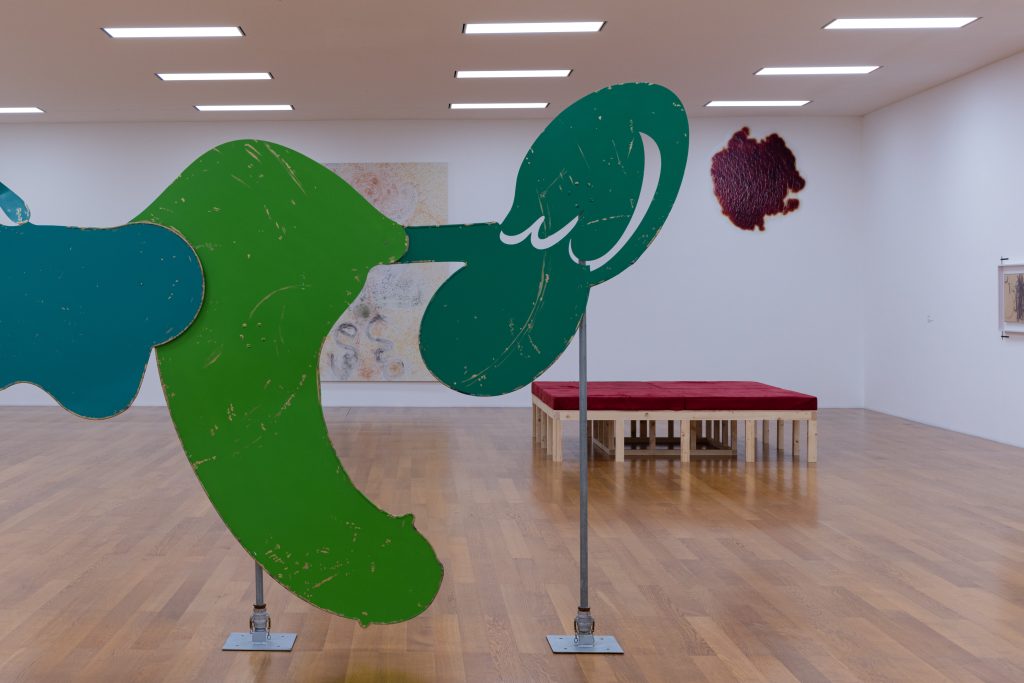

Running from September 2024 to February 2025, Case_O. Between Wars examined how wars—both internal and external—shape identities, societies, and histories. The exhibition continues Georgia Sagri's ongoing “Cases” series following Case_L at Kunsthalle Friart, Fribourg (2022). In Case_L, she focused on physiological responses to anxiety and panic attacks—recurring themes in her research practice, IASI (Greek for "recovery"). This series explored wounding and healing, exhaustion and recovery, with Case_O centered on the remnants of conflict, trauma, and the potential for regeneration.


In Case_O.Between Wars, the fruitage of IASI sessions inform much of the exhibition’s material. By incorporating six art informel works from the Veronika and Peter Monauni collection, presented alternately with new works alongside existing pieces of hers, she initiated this juxtaposition as an acknowledgement of the ongoing global conflict and stagnation. She attempts to open a sociopolitical and historical wound and touch upon it, aiming to explore new forms of recovery and treatment—perhaps an epistemological slippage.


Central to the exhibition was the sculpture Dynamis | Soma in Orgasm as Sex (2017), 2023, a work initially conceived for documenta 14, which she repaired after it was damaged during public display, re-presented as a new art work in her solo exhibition Oikonomia in 2023. This aluminum sculpture, depicting united male and female sex organs, serves as both the starting point and anchor for Case_O. Here, orgasm is the "structural methodology" of the work, an approach that outdoes traditional conceptions of the body, sexuality, and economy. The body is a site of resistance and a medium through which societal structures that attempt to define us are confronted and transcended.


The exhibition was a Kunstmuseum Liechtenstein production curated by Christiane Meyer-Stolland and Letizia Ragaglia.


Performance: CITY An integral part of the exhibition was the new performance CITY, that premiered alongside renowned New York actor Jim Fletcher at the exhibition's opening on Thursday, 19 September, at 5 pm. This was her first-ever written duet performance that confronts themes of resilience, war, and internal conflict—destruction and renewal—encouraging the audience to reflect on their relationship to war, memory, and survival. More than just a performance, CITY functioned as a living sculpture within the exhibition, inviting participants into a deeply personal and communal experience.


Publication & Discussion The exhibition accompanies a publication Case_O, featuring contributions from Christina Lehnert, Letizia Ragaglia, Christiane Meyer-Stoll, and Mayra Rodríguez Castro. This publication offers insight into the intellectual and visceral layers of the exhibition, with installation views and images of the performance CITY. The catalogue presentation, including a discussion between Lehnert, Ragaglia, and Georgia took place on 6 February 2025.


Powered by Onassis Foundation


In the Context of the Collection: Georgia Sagri: Case_O. Between Wars, installation view. Photo by Alicia Olmos Ochoa, © the artist / Kunstmuseum Liechtenstein

In the Context of the Collection: Georgia Sagri: Case_O. Between Wars, installation view. Photo by Alicia Olmos Ochoa, © the artist / Kunstmuseum Liechtenstein

Georgia Sagri, City, 2024, performance, 19 September 2024, 40 min., Kunstmuseum Liechtenstein, Photo by: Sandra Maier, © Georgia Sagri

Georgia Sagri, City, 2024, performance, 19. September 2024, 40 min., Kunstmuseum Liechtenstein. Photo by: Sandra Maier, © Georgia Sagri

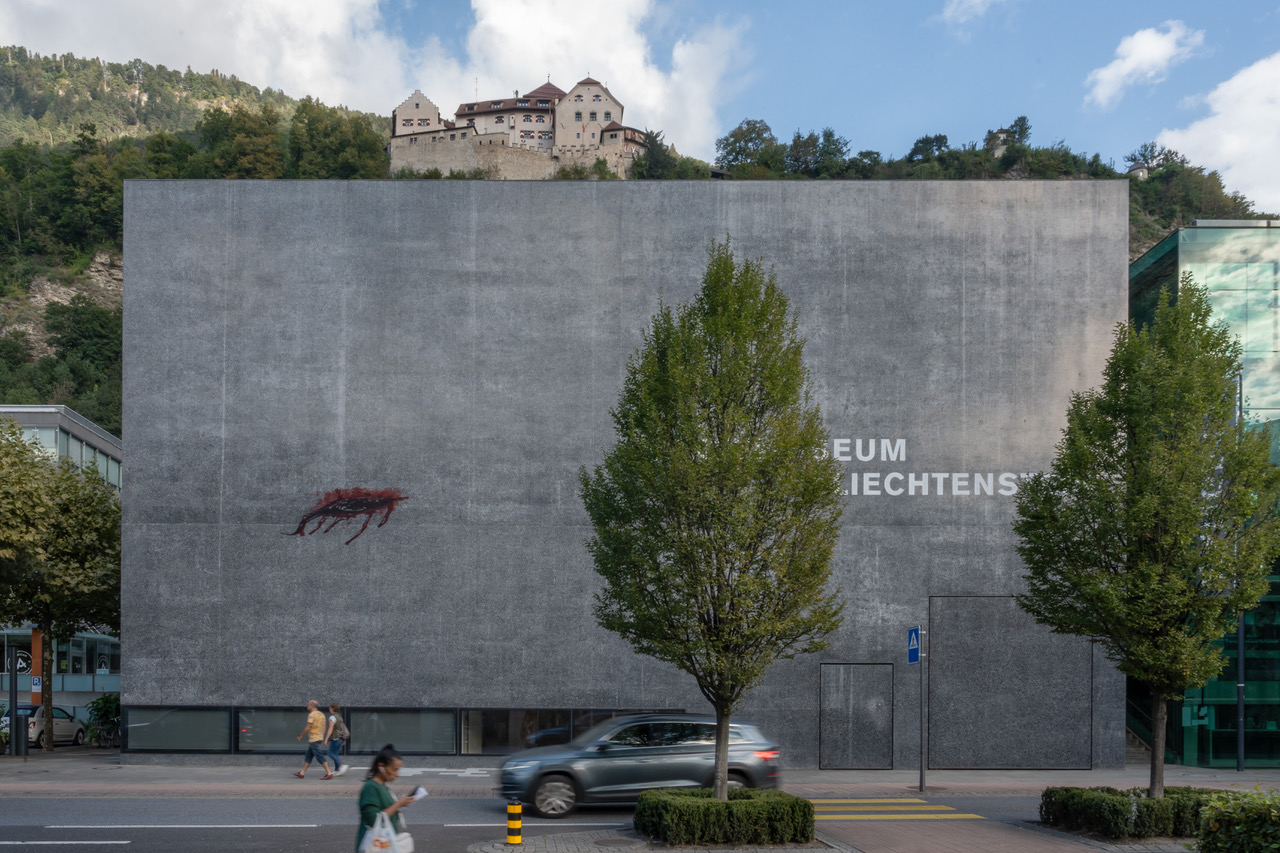
Facade Kunstmuseum Liechtenstein: Georgia Sagri, Deep Cut, 2018, Photo by: Sandra Maier, © Georgia Sagri / Kunstmuseum Liechtenstein

One

Boulevard Maurice Lemonnier 167, Bruxelles (exhibition 12 - 31/12/10, performance 11/12/10)
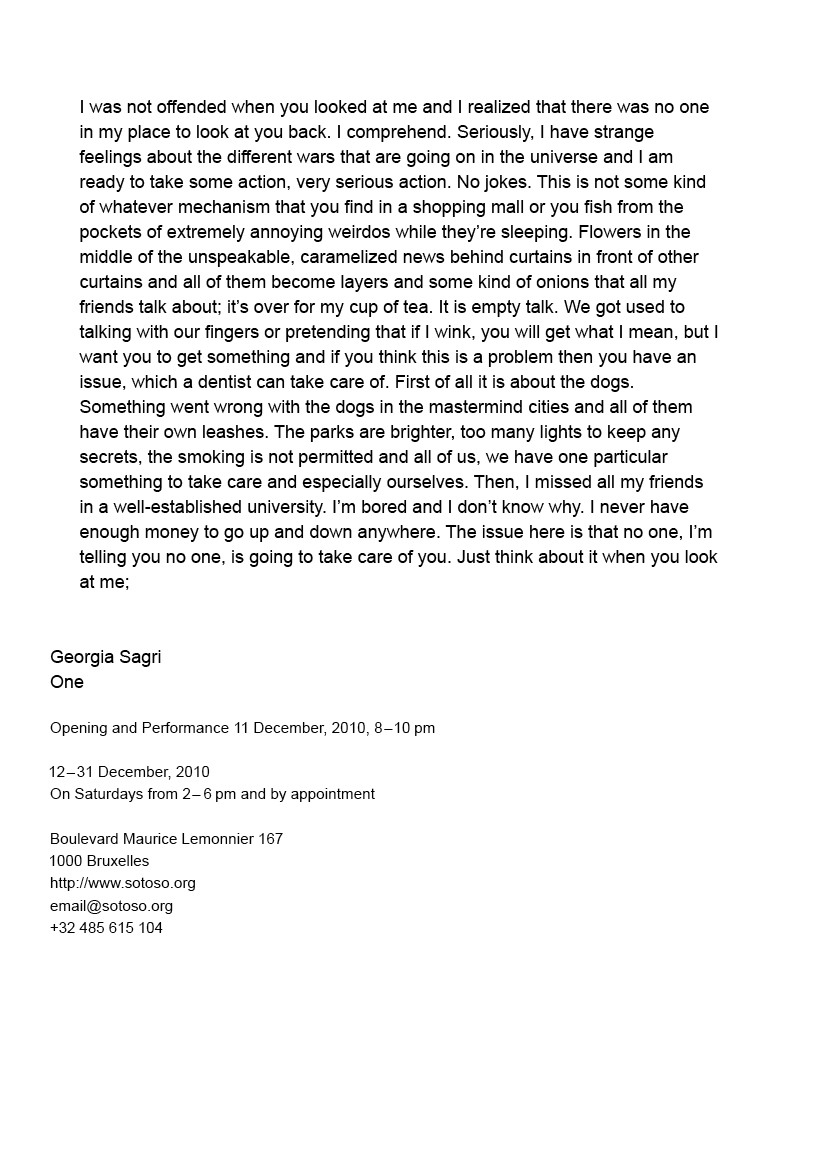

I was not offended when you looked at me and I realized that there was no one in my place to look at you back. I comprehend. Seriously, I have strange feelings about the different wars that are going on in the universe and I am ready to take some action, some serious action. No jokes. This is not some kind of whatever mechanism that you find in a shopping mall or you fish from the pockets of extremely annoying weirdos while they‘re sleeping. Flowers in the middle of the unspeakable, caramelized news behind curtains in front of other curtains and all of them become layers and some kind of onions that all my friends talk about; it‘s over for my cup of tea. It is empty talk. We got used to talking with our fingers or pretending that if I wink, you will get what I mean, but I want you to get something and if you think this is a problem then you have an issue, which a dentist can take care of. First of all it is about the dogs. Something went wrong with the dogs in the mastermind cities and all of them have their own leashes. The parks are brighter, too many lights to keep any secrets, the smoking is not permitted and all of us, we have one particular something to take care and especially ourselves.


Then, I missed all my friends in a well-established university. I‘m bored and I don‘t know why. I never have enough money to go up and down anywhere. The issue here is that no one, I‘m telling you no one, is going to take care of you. Just think of that when you look at me;


Georgia Sagri

Invitation for Georgia Sagri - One, Bruxelles, 2010

Put your money where your mouth is, and if approaching pain gives you a way of recovering the memory of flesh then go elsewhere.

at On Stellar Rays gallery, NY


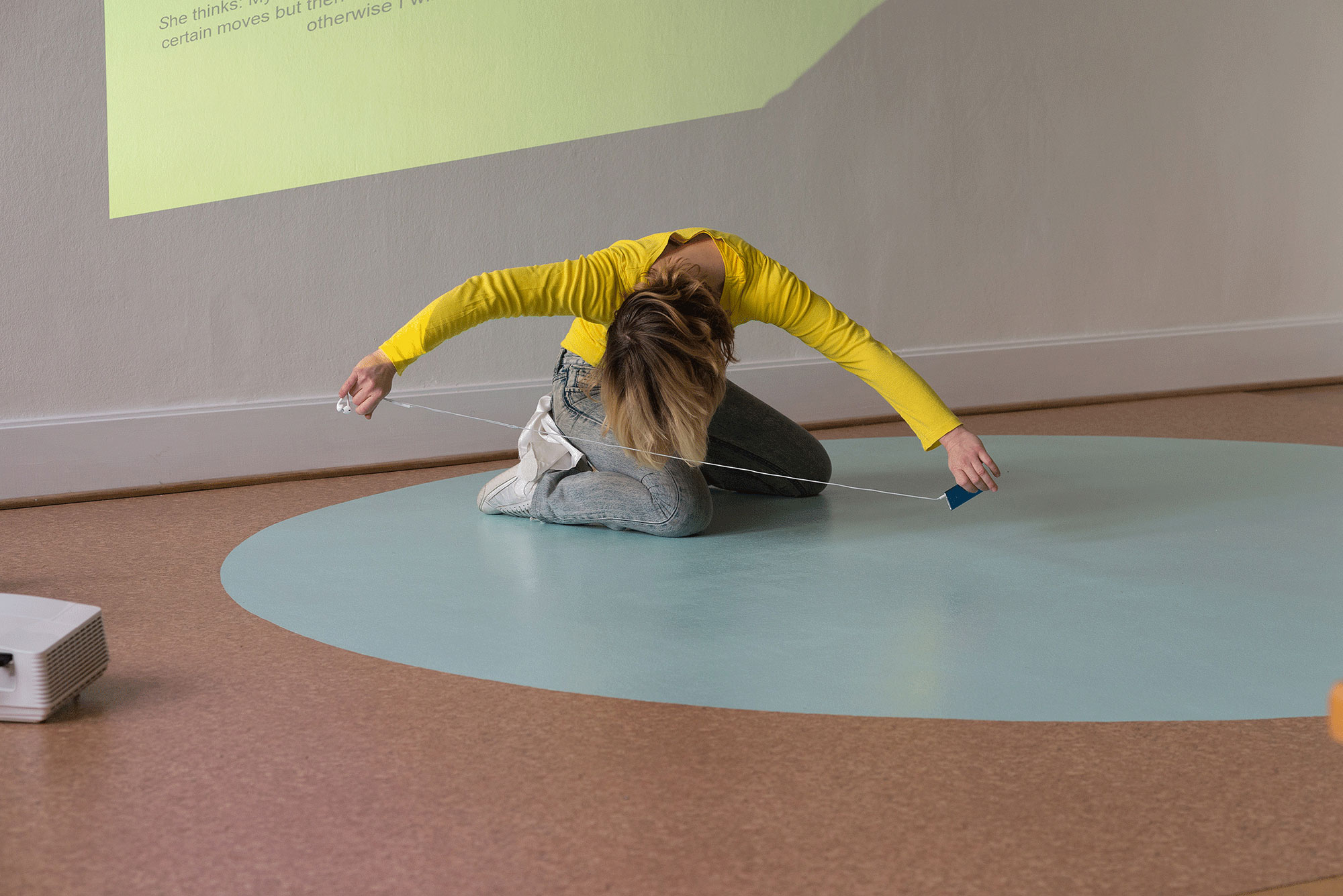
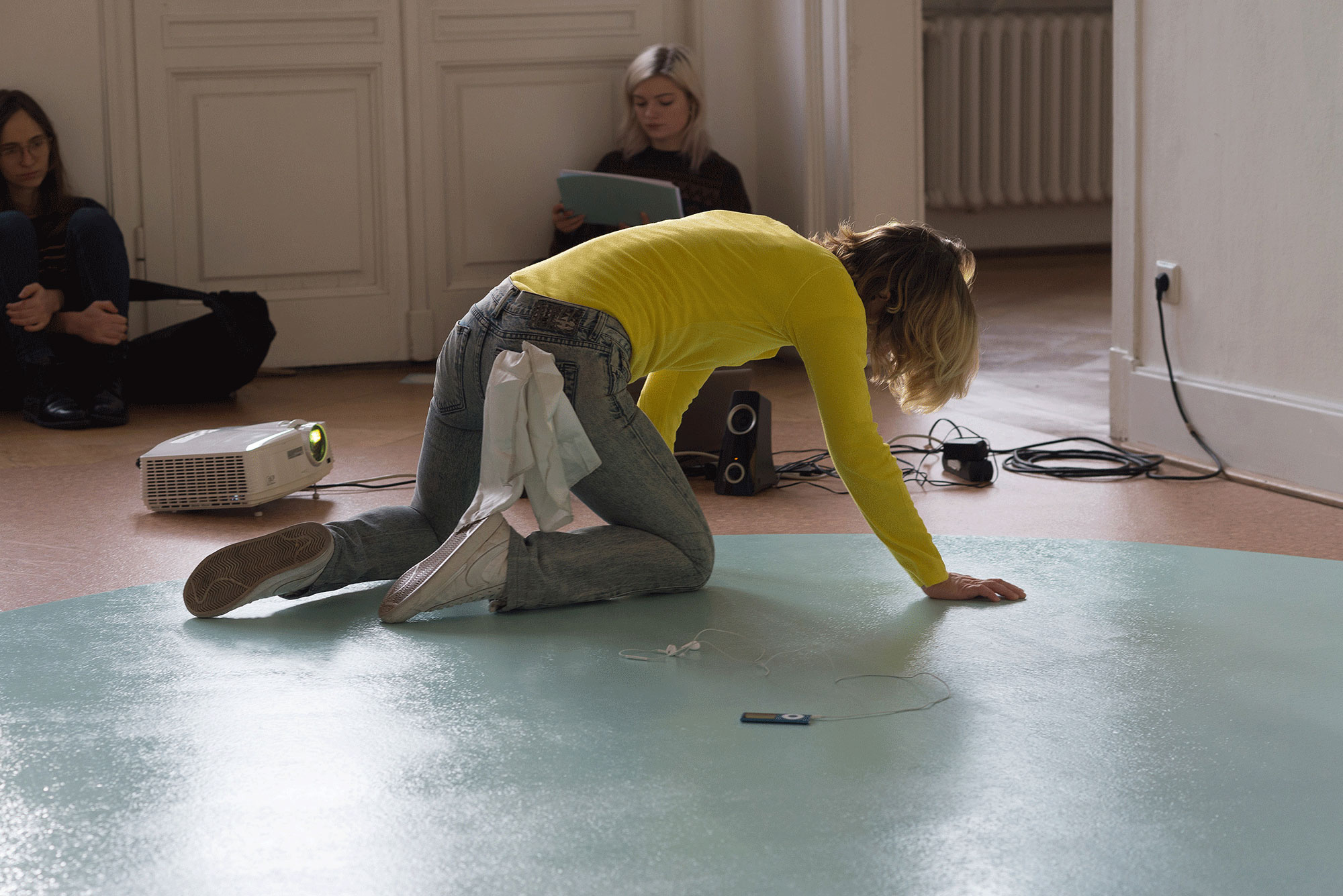
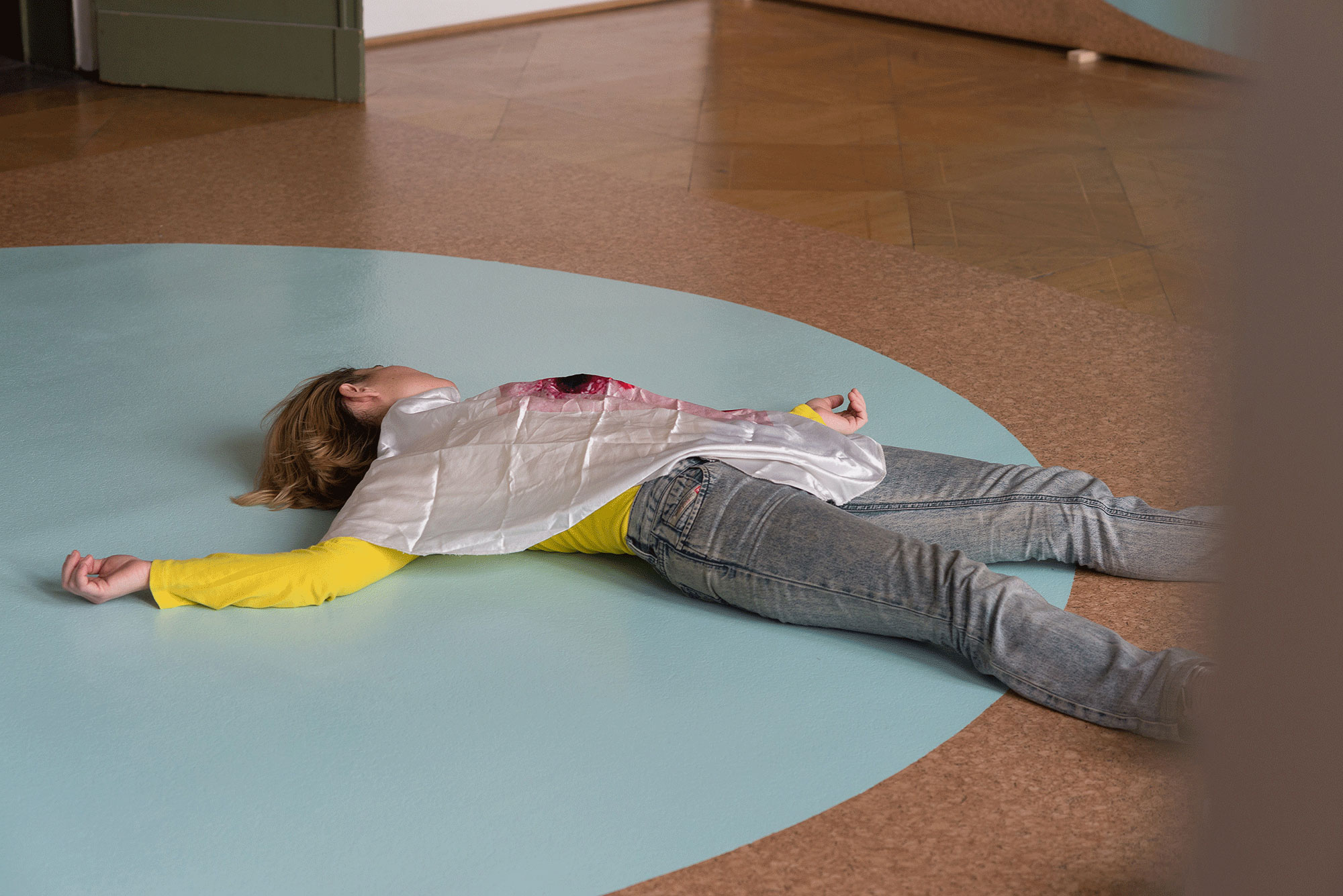
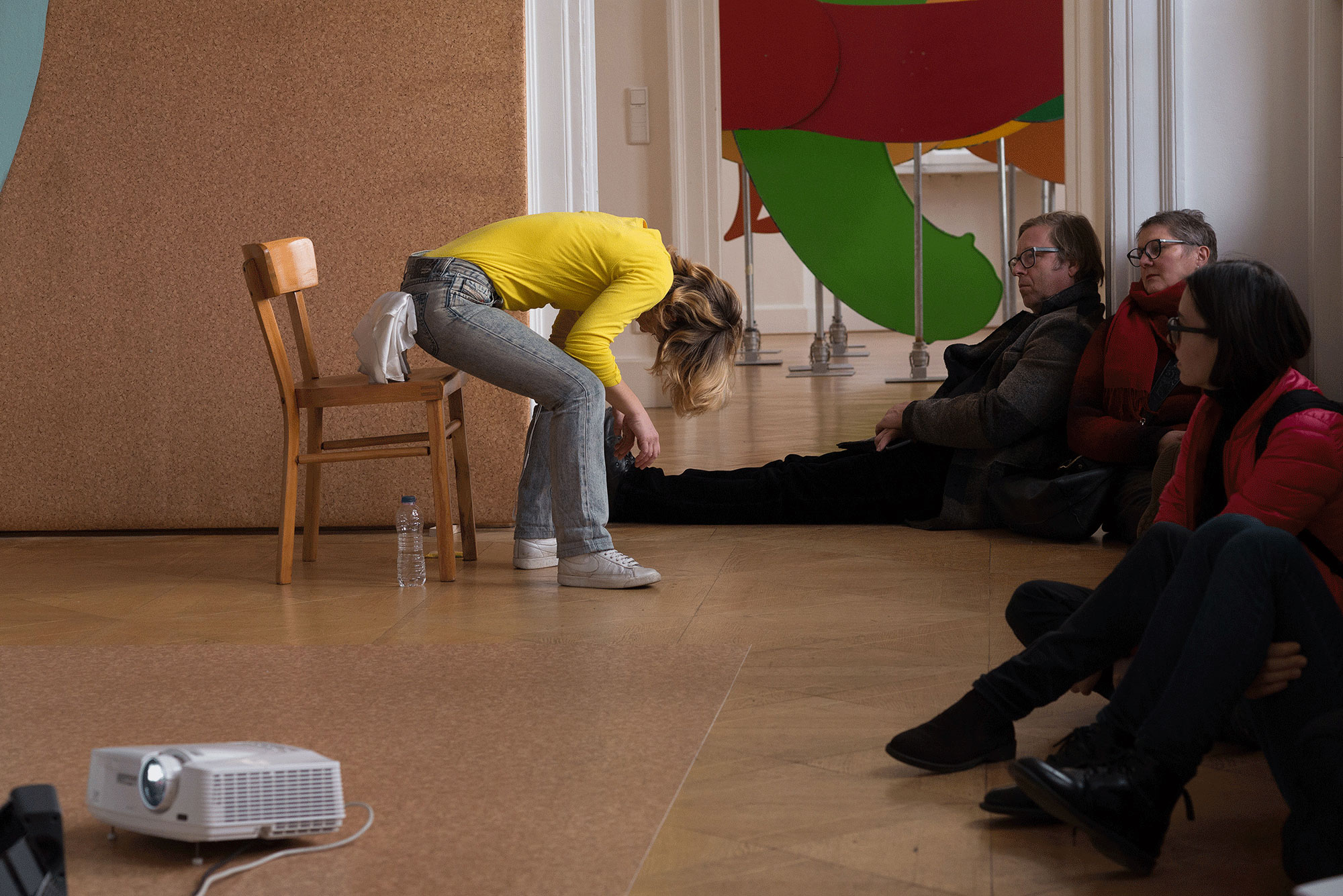
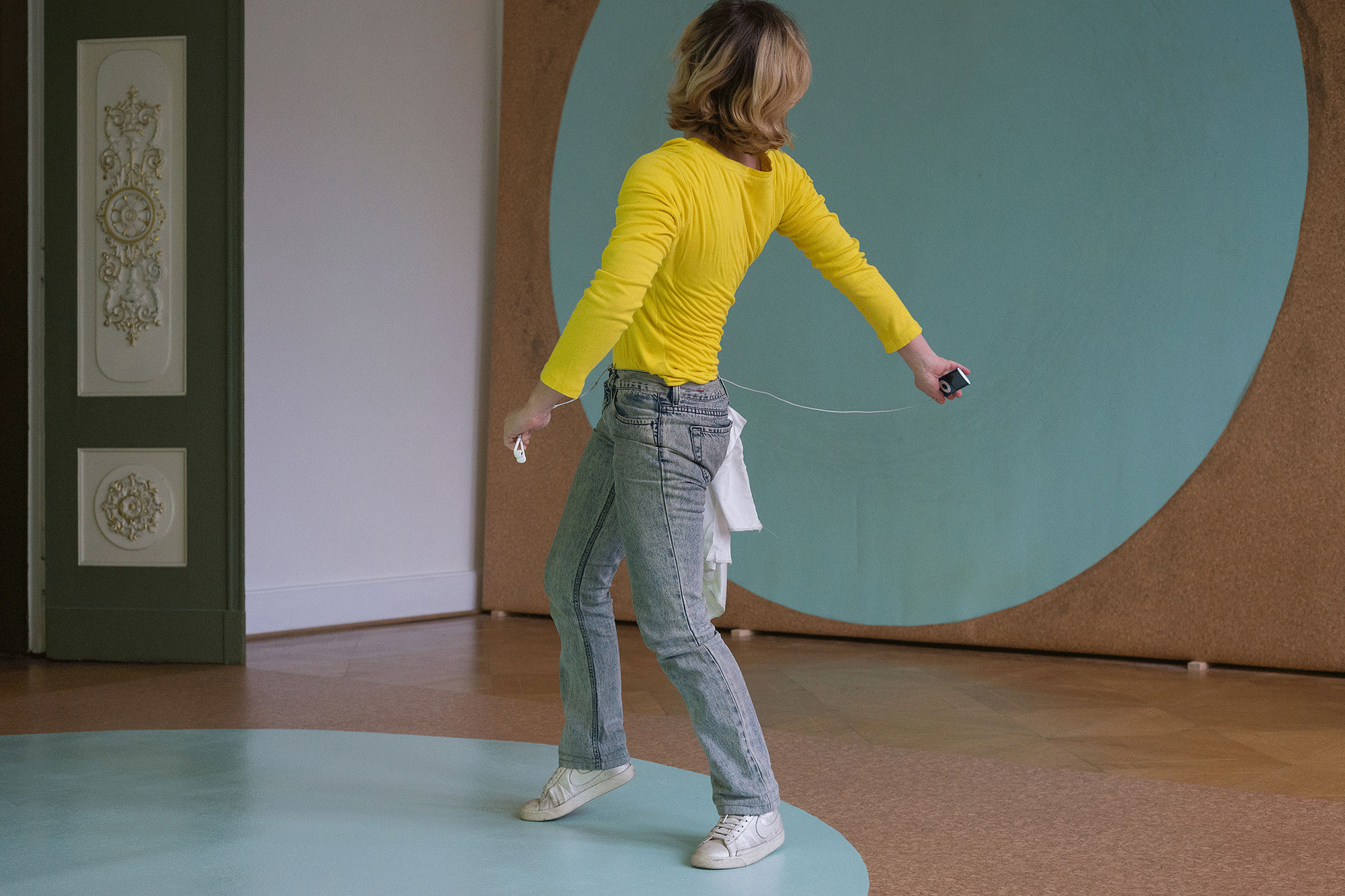
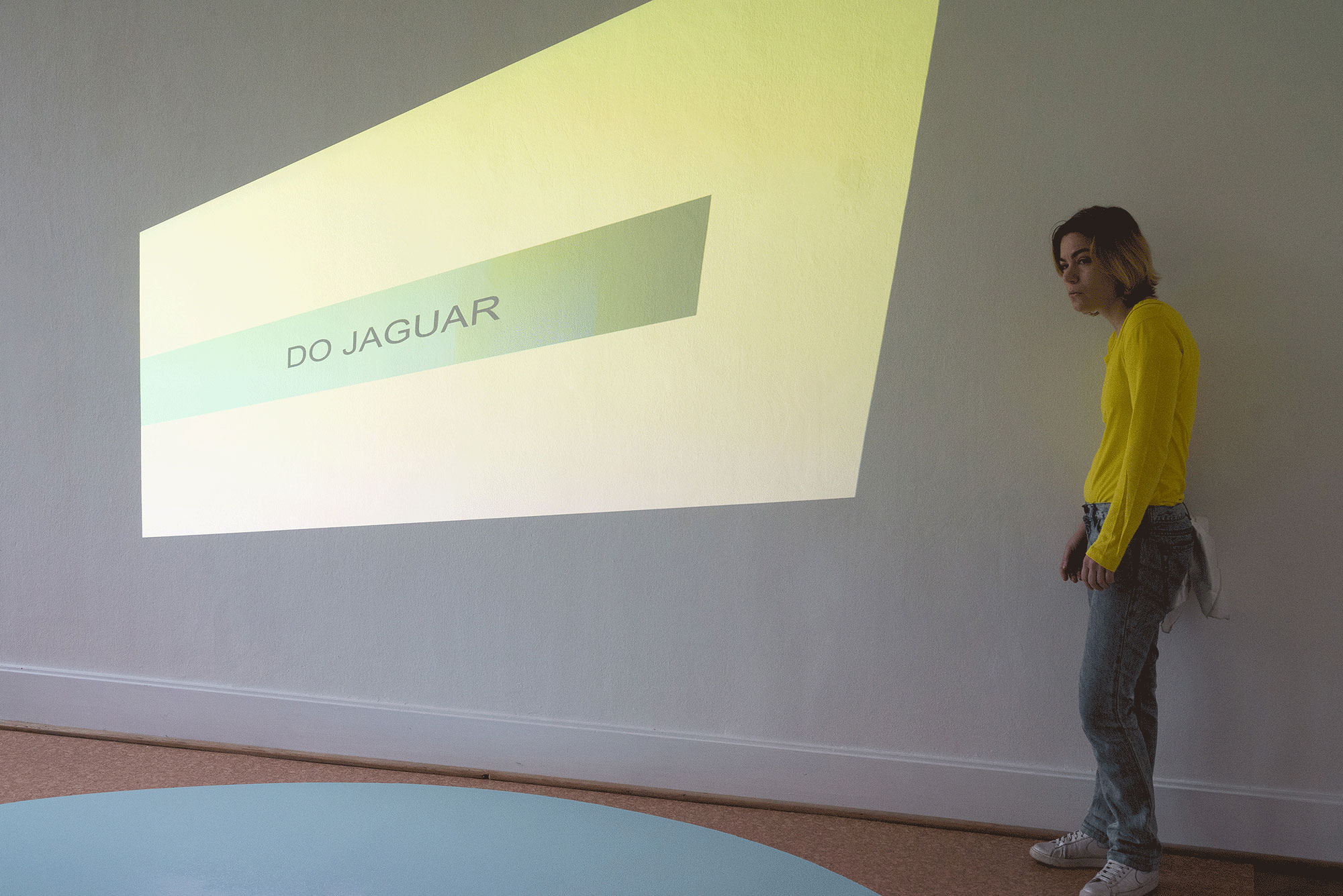
(...)At the Lower East Side gallery On Stellar Rays, artist Georgia Sagri spent nearly a month executing her imagination of the banal rituals of an immigrant car sales person. For Sagri’s show “Put Your Money Where Your Mouth Is,..” the artist -executing the performance Do Jaguar- outlined a circle on the gallery’s floor, and during hours of operation she did laps around the demarcated space, acting according to prepared instructions, projected on the wall via a PowerPoint presentation. Sagri’s sales pitch was aggressive at times; sometimes it involved crawling into the fetal position, or growling for minutes like an aroused feline. As the performance advanced, Sagri hit her stride with certain parts and experimented with others. The script itself was absurd, filled with childlike calls and response; even so, the performance was unpredictable.


Sagri’s performance is fairly literal about the themes of exhange that the work is intended to embody. The title, “Put Your Money Where Your Mouth Is” doesn’t suggest so much the substitution of currency for communication as it does the inevitability of such a substitution. Viewers may have been invited to buy or partake in a product, but Sagri quite evidently was only selling her time in the gallery; ultimately, her antics sought to de-sublimate the uncomfortable assessment of value in a performance piece. (...)

-Georgia Sagri: A Stage of her Own, By Alex Gartenfeld, Art In America, 2009

Edtaonisl

at Anthony Reynolds Gallery, London (21/2/08 - 8/3/08)
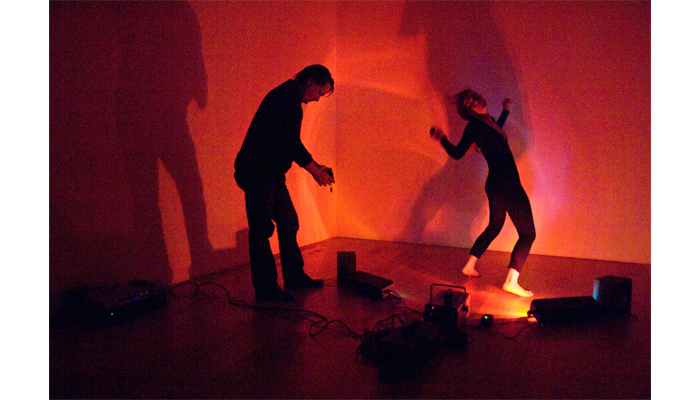

An unseen assailant inflicts multiple blows on a victim who cannot fight back

A female cult leader exhorts potential acolytes to follow her impossible call

A passion too great to endure generates the knowledge it can never be fulfilled

On board an ocean liner crossing the Atlantic, Francis Picabia observed a priest engrossed in a dancer’s self-absorbed rehearsals. The eventual result was a masterpiece of modern art, Edtaonisl, now hanging in the Art Institute of Chicago. This tale, this rumour, was the inspiration for Georgia Sagri’s performances in the gallery. The threads that unite the three performances are entangled but knit together to fashion an emotional and intellectual whole. The intensity generated by Sagri’s work is hard to absorb. The relationship between viewer and artist gives birth to a new subject, absent without the meeting of the participants but more real an experience than either party could recognise alone. This, in the end, is the nature of art. And this is live. It owes much to theatre, to dance, to music but is, in the end, supremely visual; visual in its exposure of the inadequacy of language. At the age of 21, Sagri was awarded the 2001 Deste Foundation prize. Her physicality, her willingness to take risks and her ability to compromise emotional stability have brought her attention on both sides of the Atlantic. Sagri’s performance at the recent Athens Biennale was one of the most memorable works in a bold and successful exhibition. One after the other, an audience of one was isolated and told a story, a story of a crime of passion, told in a language most could not understand, in a manner that rendered them complicit, ether as perpetrator or victim. The experience was devastating. Of the three performances at the Anthony Reynolds Gallery, one, repeated again and again, will likewise be for an audience of one. The numbers able to experience her work on this occasion were extremely limited. In each case, the work was also filmed and the camera is a participant in the performance. The film then became the final element of the work. One performance took place on each of three days, 21/22/23 February. Their record remained in the gallery for ten days. The audience was on a first-come, first-served basis.

Georgia Sagri, Edtaonisl, 2008 © Georgia Sagri

SALOON: THERE IS NO COUNTRY IN OUR HEARTS GEORGIA SAGRI

at at Museum of Modern Art, Warsaw, Poland (27/9 – 3/10/13)
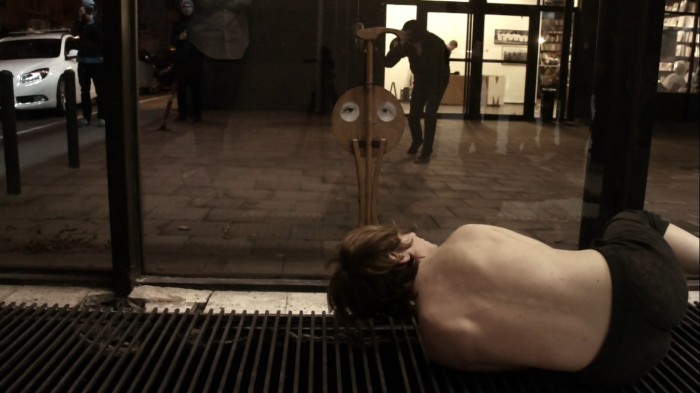

As part of the exhibition "In the Heart of the Country", SALOON by Georgia Sagri presented "There is no country in our hearts". SALOON is an ongoing performance project initiated in 2007. SALOON worked on the collection and its reconfiguration through series of performances with works in the Museum collection and works of the invited artists: Roman Stańczak and Kostis Velonis, Zofia Kulik and Anna Molska, Geta Brătescu and Asli Çavuşoğlu, Jack Smith and Bill Kouligas. Through “hijacking” of a curatorial process this performance in duets reshapes the environment of dynamic exchanges between seen works. SALOON manifests Sagri's involvement in ideas of movement, flee, and deterritorialization. "It derives just out of need for enjoyment and constant change. Assuming there is no passive and active, inside and outside, representation and representatives what kind of social grounds can be created? SALOON is the moment of question not answer."


SALOON: I. September 27 (Friday) at 8pm Roman Stańczak and Kostis Velonis


II. September 28 (Saturday) at 8pm Zofia Kulik and Anna Molska


III. October 2 (Wednesday) at 8pm Geta Brătescu and Asli Çavuşoğlu


IV. October 3 (Thursday) at 8pm Jack Smith and Bill Kouligas


SALOON: There is no country in our hearts "There is no country in our hearts" I told her and she looked at me with surprise. I couldn't suggest a drink after that look of hers. With that gaze of hers, its discomfort that made me think of my knees and how I need to open my bag without reason, just checking things in my bag I walked and walked for hours. I started recording my voice saying how I hate being asked from which country I am, those shitty borders, nationalities, national expectations for what, for whom exactly are those expectations for, for which reason to talk my mother tongue like there is something that belongs to me when I speak it? I want my steps to be steps of pleasure for the things I do that I don't need to name, - I recorded that- the smells, sounds, textures, clothing and behaviors of a different world. G.S. 2013

SALOON, Museum of Modern Art, Warsaw (2013). ©Georgia Sagri

SALOON, Museum of Modern Art, Warsaw (2013). ©Georgia Sagri

3rd THESSALONIKI BIENNALE OF CONTEMPORARY ART

at Thessaloniki Performance Festival, Thessaloniki (exhibition-performances 19 - ­25/9/11, masterclass 23/9/11)


Owen in Georgia Sagri's performance is a fictional name, inspired by a real person. That person was a young soldier in the US Army, who served in Iraq as a sniper. Georgia Sagri met him by chance and then they both went on to produce an autobiographical text together. As a former soldier, Owen was not allowed to give a public apology, so in his effort to find catharsis, he seeks redemption for his actions through a process of narrating his personal experiences. This narrative aims to convey the psychological torment and heavy conscience of the young soldier. The visitor of the performance realizes immediately when he looks at the text, that it talks about the story of a soldier, becoming by extension a medium that allows him to be informed and knowledgeable of a political situation. Sagri, however, balancing between the narration of a personal story and the embodiment of the protagonist, brings forth the personal aspect of events and at the same time goes beyond the aloofness of the information. The text is a purely confessional and utterly personal attempt, and in effect is self­ repealed by the manner of its narration, bringing the narrator up against fragments of memory and identity throughout the deliberate and arduous memorization. The segmented and fragmentary narration of Georgia Sagri unfolds through a relationship of solidarity between herself and the viewer, who, in a way, is the cause of the narration and who also attempts to give it direction and lead it to completion. Furthermore, Sagri's work manages to instigate the viewer to participate in a collective, collaborative action, which unfolds in successive stages. The viewer's presence and contribution is not only of a practical nature, but also becomes the connecting link of a verbal exchange and of a more personal and emotional contact. Her performance, having a political dimension, is not exclusively an attempt to scrutinize the workings of American democracy or to satirically hail the overwhelming influence of military interests on America; she also scathes any society that manipulates and subjugates its members under similar power systems or strict militarism. At the same time, she addresses each and every one of us, raising the issue of how free we really are to express ourselves, forcing us to get involved in a process of self­ examination and critical reflection.


A masterclass was organized during the 2nd Performance Festival by the artist Georgia Sagri. The masterclass was an invitation to question and think about performance. The main aim of the seminar was to search for possible shifts in performance's construction via the position of the spectator (presentation) rather than that of the spectacle (representation). The class aimed to alter the way of constructing, composing a performance by locating the performer in the position of the spectator. The presentation and the execution of a performance piece could then occur only if there are reasons or purposes to negotiate with another (object/subject). With a series of discussions, readings and exercises, whether performance can have an impact on someone else was investigated when, instead of being a spectacle, it becomes the spectator's own state of understandings and commitments.

Georgia Sagri, Owen, at the 3rd Thessaloniki Biennial 2011 ©Georgia Sagri

Georgia Sagri, Owen, at the 3rd Thessaloniki Biennial 2011 ©Georgia Sagri

Georgia Sagri, Owen, at the 3rd Thessaloniki Biennial 2011 ©Georgia Sagri

Whitney Biennial 2012

at Whitney Museum of American Art (1/4 - 27/5/12)
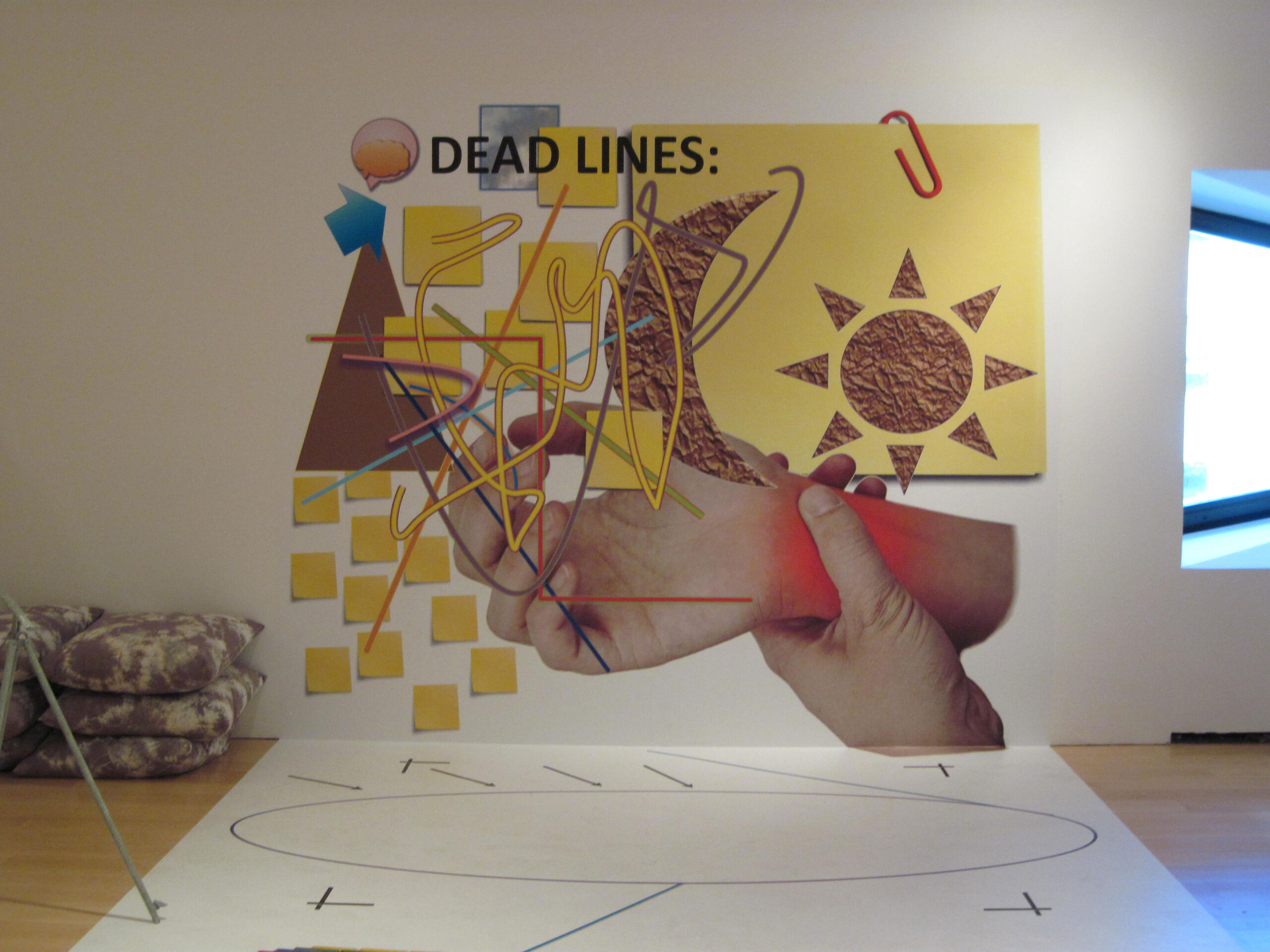

Sculpture, painting, installations, and photography—as well as dance, theater, music, and film—fill the galleries of the Whitney Museum of American Art in the latest edition of the Whitney Biennial. With a roster of artists at all points in their careers the Biennial provides a look at the current state of contemporary art in America. This is the seventy-sixth in the ongoing series of Biennials and Annuals presented by the Whitney since 1932, two years after the Museum was founded. The 2012 Biennial takes over most of the Whitney from March 1 through May 27, with portions of the exhibition and some programs continuing through June 10. The 2012 Biennial is in constant flux, with artists, works, and experiences varying over the course of the exhibition.


Georgia Sagri presents an ongoing installation/performance in which she engages a variety of media-distribution methods, such as film and video, audio recording, and print publishing. With the goal of producing of a book, Sagri will invite philosophers, activists and organizers, artists, and laborers to shape, through conversations and activities, the concept of “Working The No Work.” Reflecting especially on the radical shifts in political and social life of the present and recent past, the texts generated will feed back into the project as a whole, with Sagri playing the role of designer/editor/illustrator in unexpected ways.


PERFORMANCES Sundays: March 11–May 27 1 pm Fridays: March 9 and 16; April 27; May 18 7 pm

Working the No work. ©Georgia Sagri

Working the No work. ©Georgia Sagri

Working the No work. ©Georgia Sagri

Working the No work. ©Georgia Sagri

Working the No work. ©Georgia Sagri

Working the No work. ©Georgia Sagri

Working the No work. ©Georgia Sagri

Georgia Sagri Antigone Model

at KW Berlin (Exhibition 3-5/7/13, Performance 4/7/13)


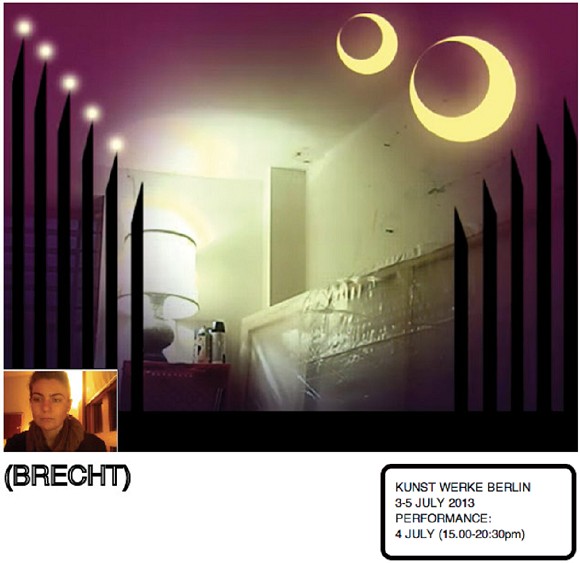
Georgia Sagri presents the third edition of the piece Antigone Model, conceived specifically for KW Institute for Contemporary Art. Six sculptures in an installation function as a chorus and as individual characters. These characters - the "dramatis personae" of Antigone - are animated through operating objects, building vocal and rhythmical soundscapes that are recorded and repeated. Each figure is thus characterized by its audible and visual presence. The installation and performance are conceived as a whole, and exist as equal parts of the work.

Antigone Model, photo by Frederic Detjens. ©Georgia Sagri

Antigone Model, photo by Frederic Detjens. ©Georgia Sagri

Antigone Model poster, Kunst-Werke Institute for Contemporary Art (KW), 2013

Georgia Sagri – Owen

at Arnolfini Arts, Bristol (18/1 - 20/1/13)
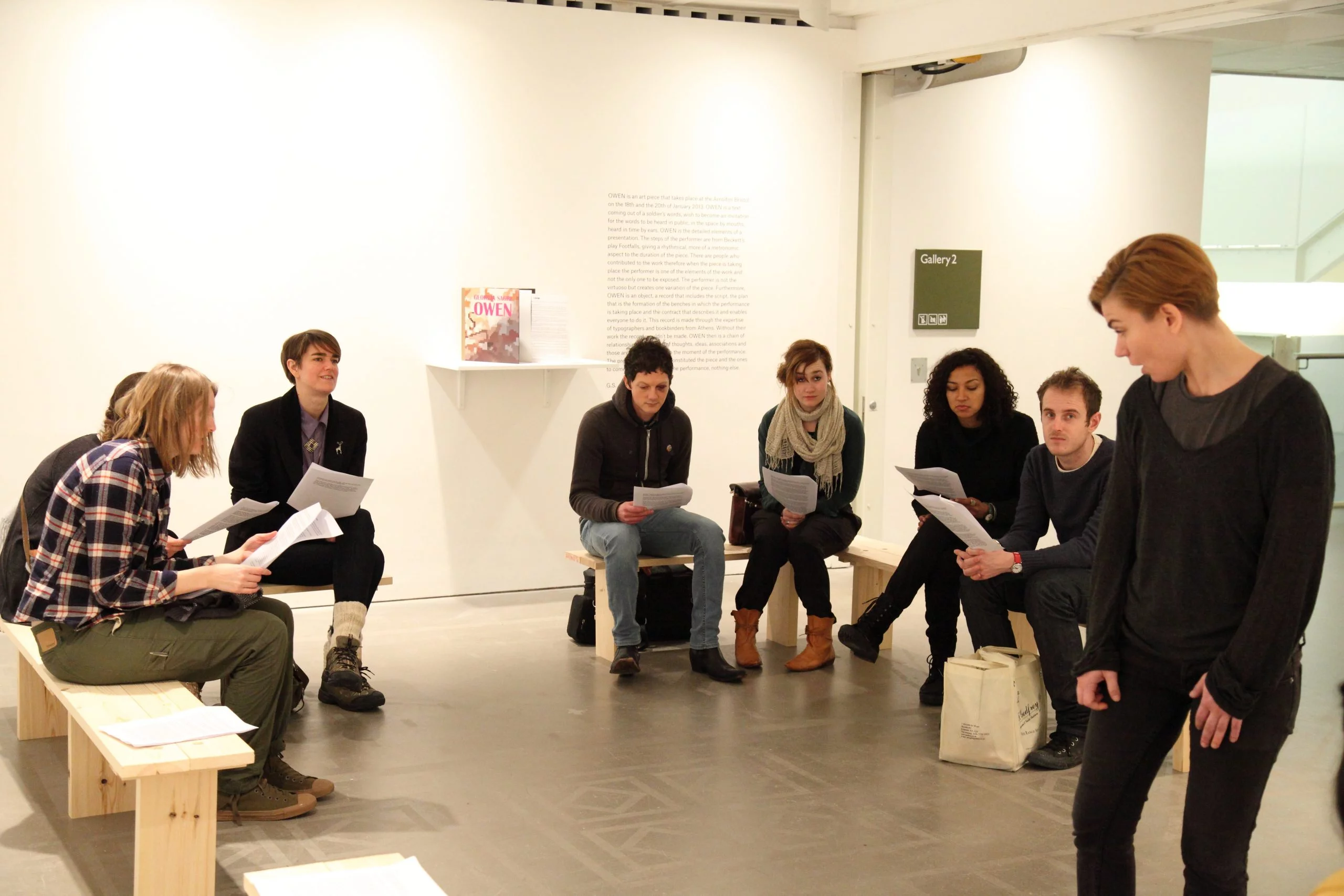

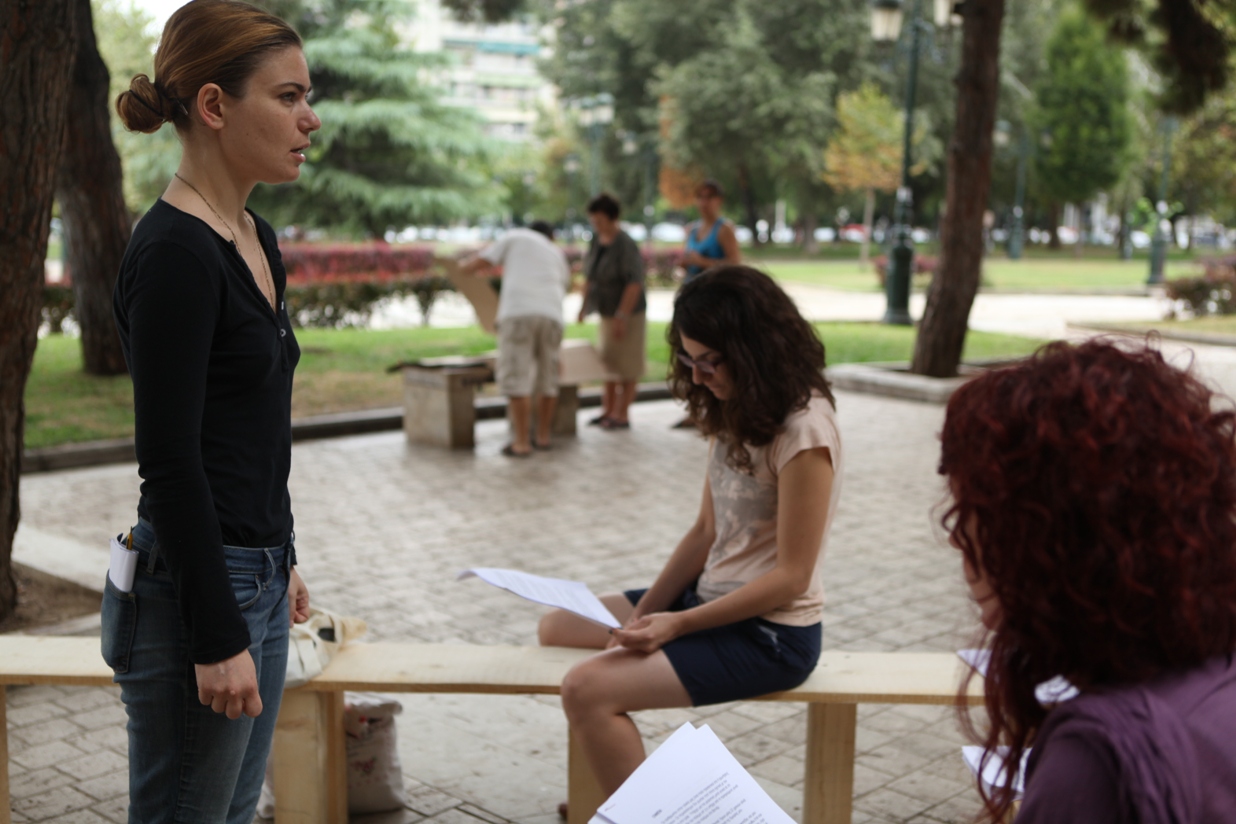
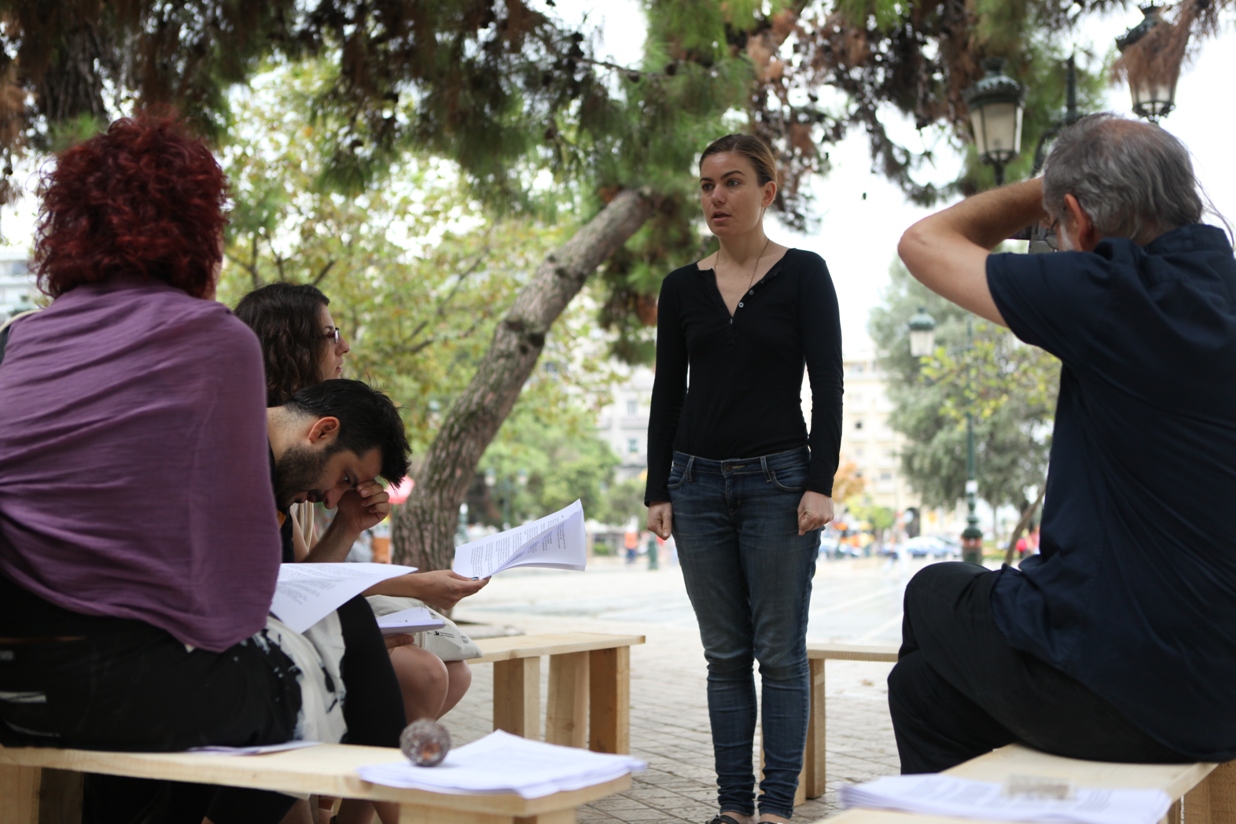
Moved by Gertrude Stein’s idea that an acting subject is but one of many factors on the landscape of an event, Georgia Sagri’s ‘Owen’ perceives viewer and performer to be actor and spectacle at the same time. The title of the performance refers to a soldier (not their real name) who having fought in Iraq, wished to talk about their experience in the form of a public speech through a third party, Sagri. She invites the visitors to assist her in a durational learning by heart of the soldier’s speech and sit together on benches at Arnolfini. Nearby, a manual – made to look like a vinyl record – offers the elements on how anyone can activate the piece again on a different occasion.


Sagri’s performances question the presupposed antagonistic social interactions and the exchange of ideas, which they produce; demanding possible breaks beyond the presupposed in many ways and levels. In this piece, the stage is not an antagonistic space, as she believes that each and everyone including herself is a contributing author, elements of the landscape, a communal setting on the sorts of benches typically found in a town square.


‘Owen’- the soldier, the text, the action and as she describes it: the oral monument- is open for interpretation and activation at any time, albeit with some short of instruction. One short of requirement for example is that the ‘performer’s’ movements during the presentation of the piece follow the diagram from Samuel Beckett’s play ‘Footfalls’.

Georgia Sagri, Owen at Arnolfini Arts, Bristol, 2013 ©Georgia Sagri

I GOT UP

at Hot Wheels, Athens (05/06 – 07/08/21)
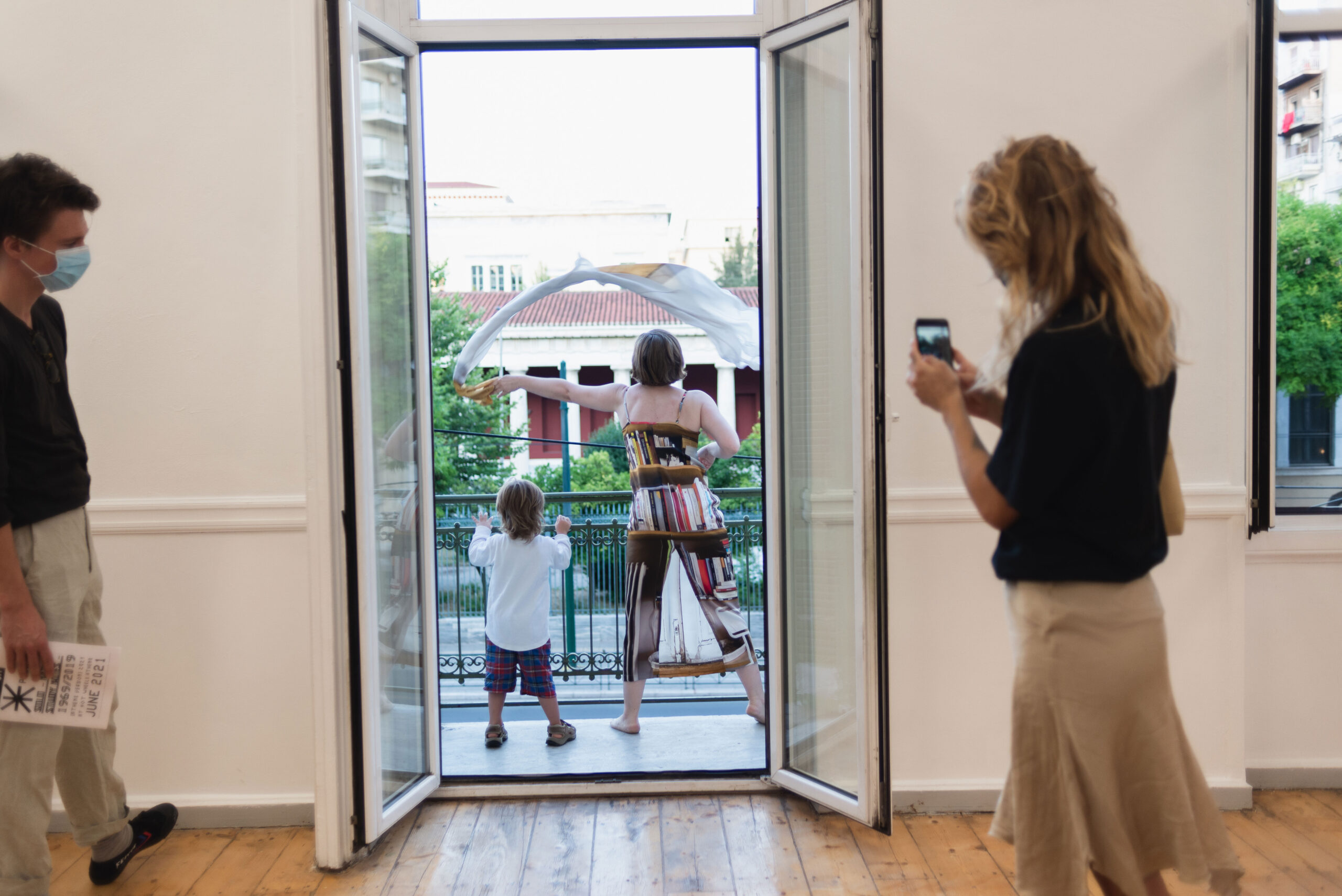

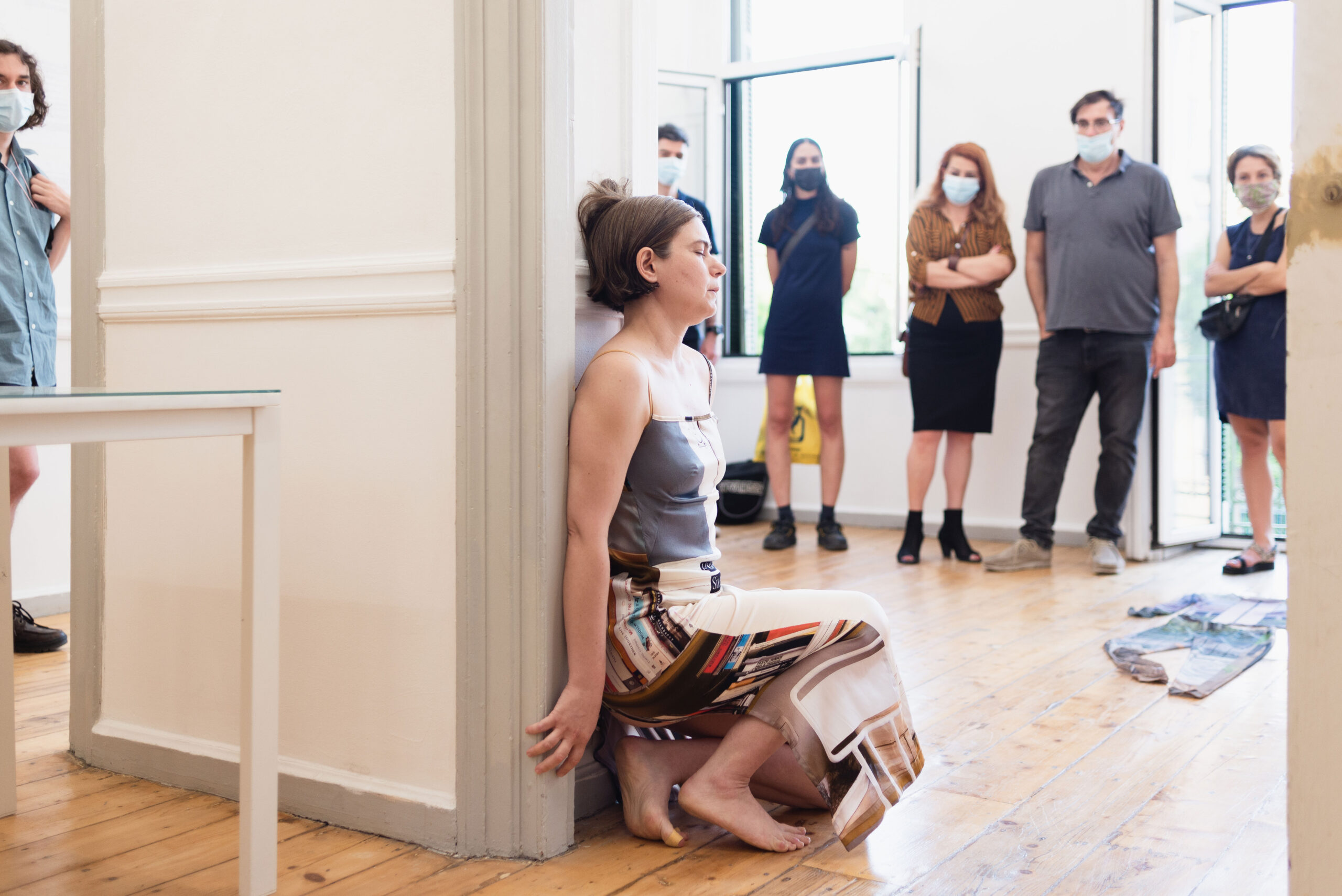
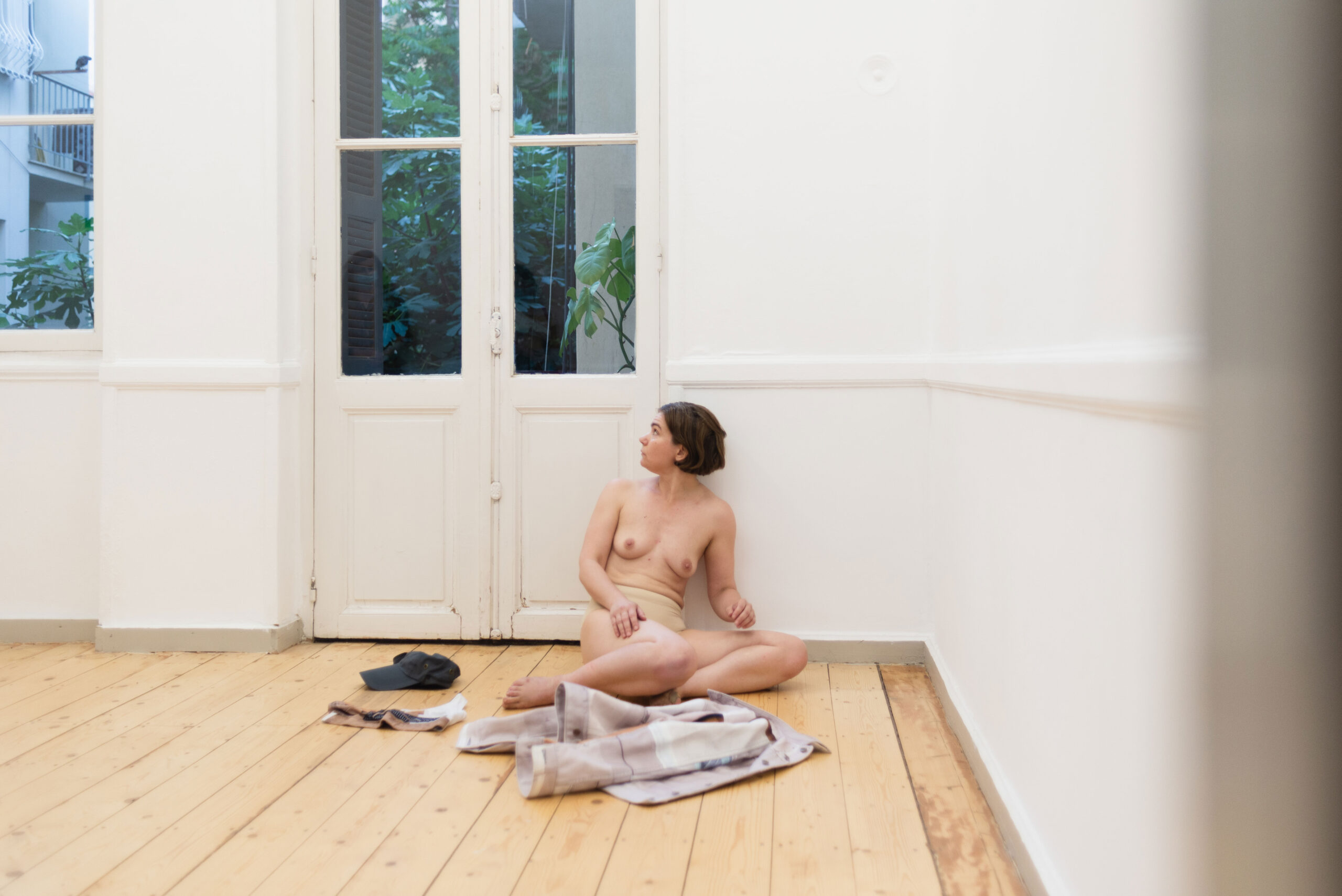
“Solo – Nature Study Notes – 1969-2019 [Athens Version] 2021” Performance by Georgia Sagri, Music Performance by Delia Gonzalez, Garments by Serapis Maritime, Score by Pierre Bal-Blanc June 11, 2021 at 8:00 pm June 18, 2021 at 8:00 pm June 25, 2021 at 8:00 pm


The exhibition entitled – I GOT UP – adopts the formula used by the conceptual artist On Kawara in a series that he began on May 10, 1968 and completed twelve years later in 1979. This work, from which four pieces are exhibited here, consists of sending a postcard to different recipients every day, indicating the exact time at which the artist’s daily activity began with an ink stamp. This exhibition will also be the setting for the world premiere activation on June 11, 2021 (followed by June 18 and 25) by Georgia Sagri, Delia Gonzalez, and Serapis Maritime of the latest score “Solo – Nature Study Notes – 1969-2019 [Athens Version] 2021” written by Pierre Bal-Blanc from the rites (Nature Study Notes, 1969) of the Scratch Orchestra.

Solo – Nature Study Notes – 1969-2019 [Athens Version], 2021, Performance by Georgia Sagri in the live exhibition curated by Pierre Bal-Blanc with Delia Gonzalez and Serapis Maritime, Hot wheels, Athens. ©Georgia Sagri

Solo – Nature Study Notes – 1969-2019 [Athens Version], 2021, Performance by Georgia Sagri in the live exhibition curated by Pierre Bal-Blanc with Delia Gonzalez and Serapis Maritime, Hot wheels, Athens. ©Georgia Sagri

Solo – Nature Study Notes – 1969-2019 [Athens Version], 2021, Performance by Georgia Sagri in the live exhibition curated by Pierre Bal-Blanc with Delia Gonzalez and Serapis Maritime, Hot wheels, Athens. ©Georgia Sagri

Solo – Nature Study Notes – 1969-2019 [Athens Version], 2021, Performance by Georgia Sagri in the live exhibition curated by Pierre Bal-Blanc with Delia Gonzalez and Serapis Maritime, Hot wheels, Athens. ©Georgia Sagri

Solo – Nature Study Notes – 1969-2019 [Athens Version], 2021, Performance by Georgia Sagri in the live exhibition curated by Pierre Bal-Blanc with Delia Gonzalez and Serapis Maritime, Hot wheels, Athens. ©Georgia Sagri

Solo – Nature Study Notes – 1969-2019 [Athens Version], 2021, Performance by Georgia Sagri in the live exhibition curated by Pierre Bal-Blanc with Delia Gonzalez and Serapis Maritime, Hot wheels, Athens. ©Georgia Sagri

Solo – Nature Study Notes – 1969-2019 [Athens Version], 2021, Performance by Georgia Sagri in the live exhibition curated by Pierre Bal-Blanc with Delia Gonzalez and Serapis Maritime, Hot wheels, Athens. ©Georgia Sagri

Solo – Nature Study Notes – 1969-2019 [Athens Version], 2021, Performance by Georgia Sagri in the live exhibition curated by Pierre Bal-Blanc with Delia Gonzalez and Serapis Maritime, Hot wheels, Athens. ©Georgia Sagri

Georgia Sagri: IASI, Stage of Recovery

at De Appel, Amsterdam (28/09 - 18/1/21) (Iasi one-to-one sessions: 28/9 - 19/11/20, exhibition: 23/11 - 18/1/21)


The fuller meaning of IASI
IASI (‘recovery’ in Sagri’s native Greek) involves the recovery of health in the physical and mental sense without binary. The deeper, fuller breath of life. At the heart of Sagri’s process are questions so basic that they may have been forgotten: How well do we breathe? How to inhale as fully as we exhale? How to give as much as we take? IASI also emphasises remembering as part of recovery. For Sagri, this involves the reclamation – in the contemporary world – of a political horizon for performance established within Ancient Greek theatre. For example, at the Epidauros Amphitheatre in the Peloponnese, which rests near the Sanctuary of Asclepius (a god of medicine), we find evidence of the close relation between theatrical roles, civic participation and the beginning of medicinal categories – all of great inspiration to the artist. Indeed, her one-on-one treatments aim to reclaim or remind each person of the sense of the unique strength we each hold deep in our system, which is the basis of readiness for meaningful public encounters. (...)


About the exhibition
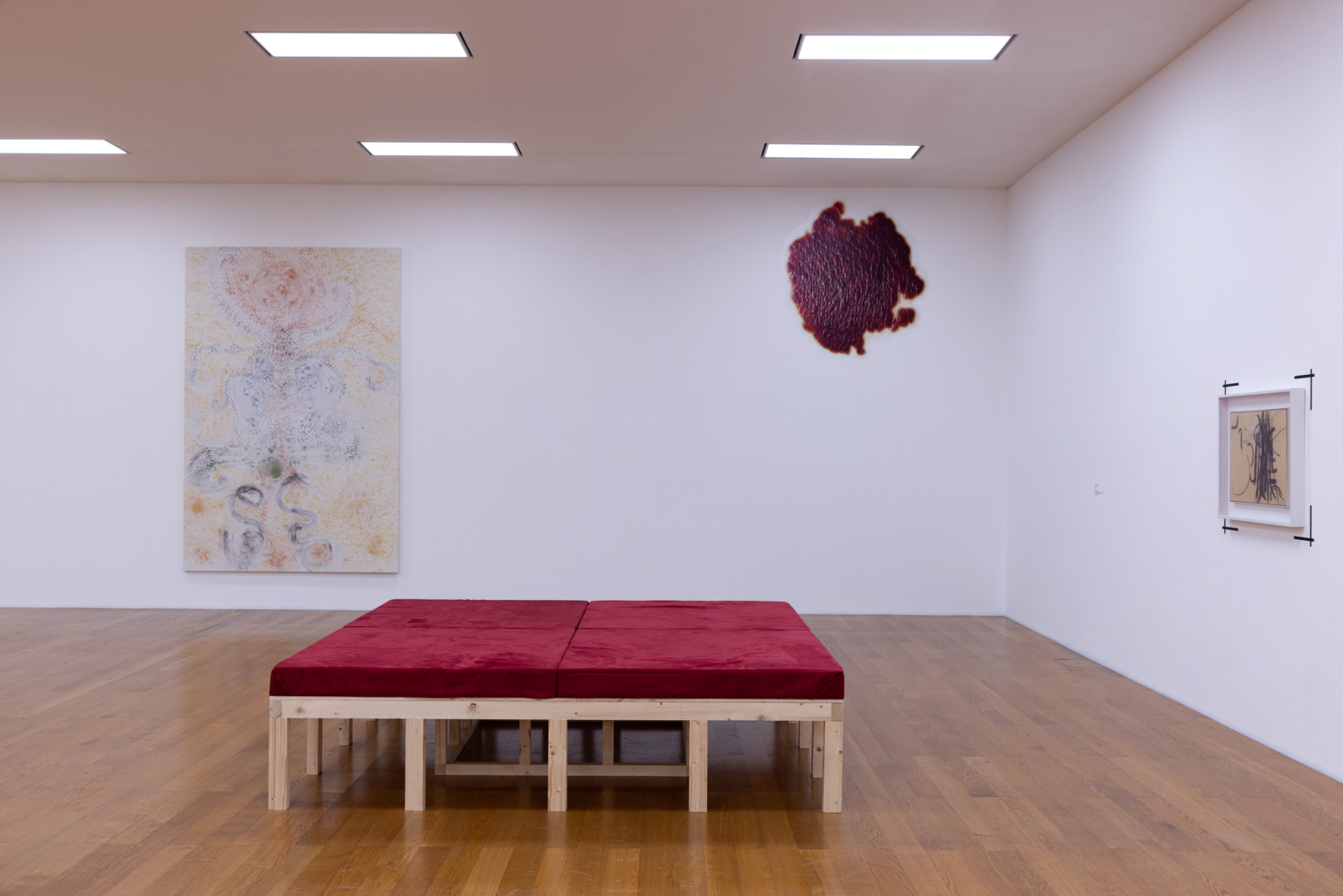
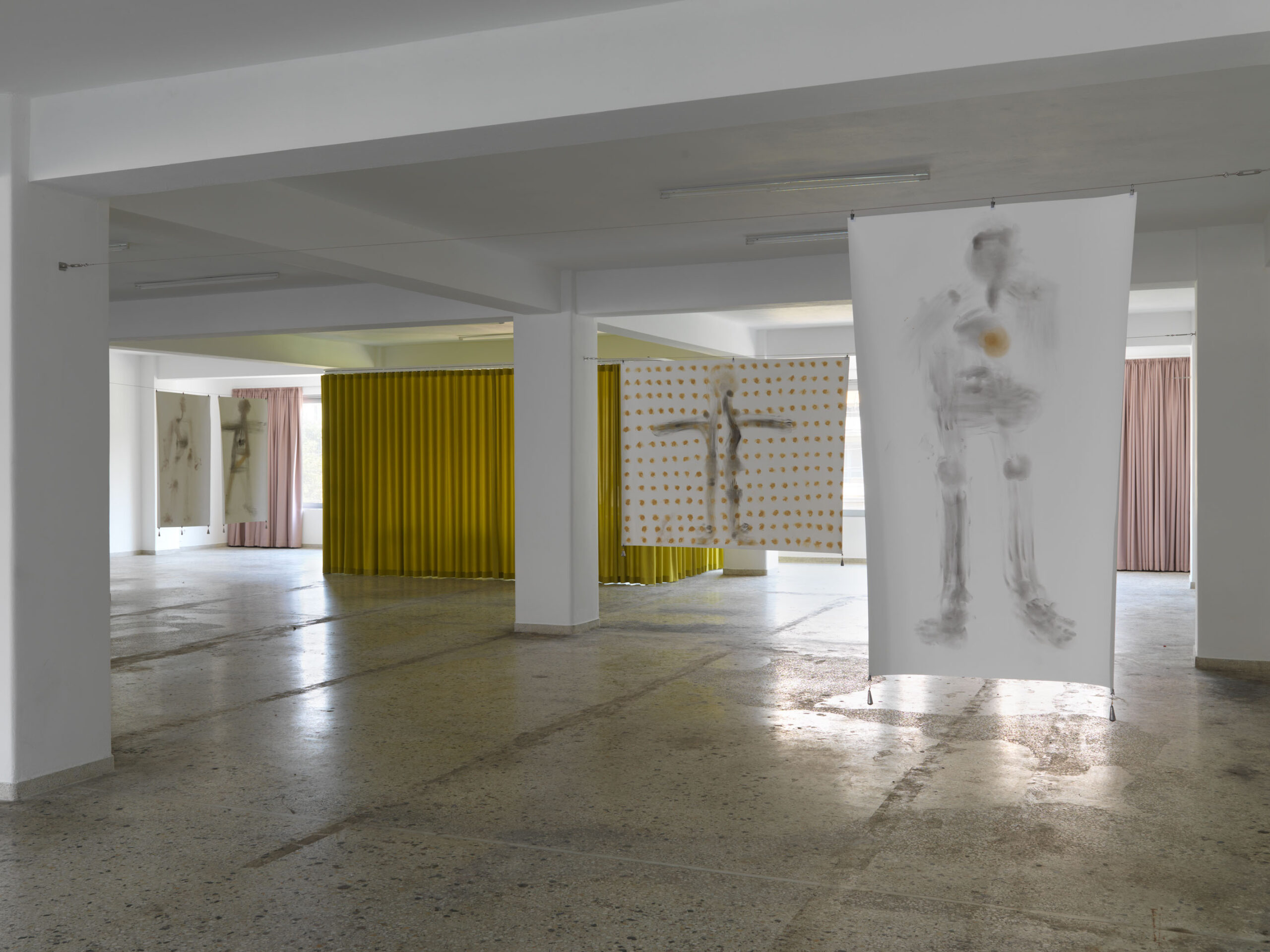
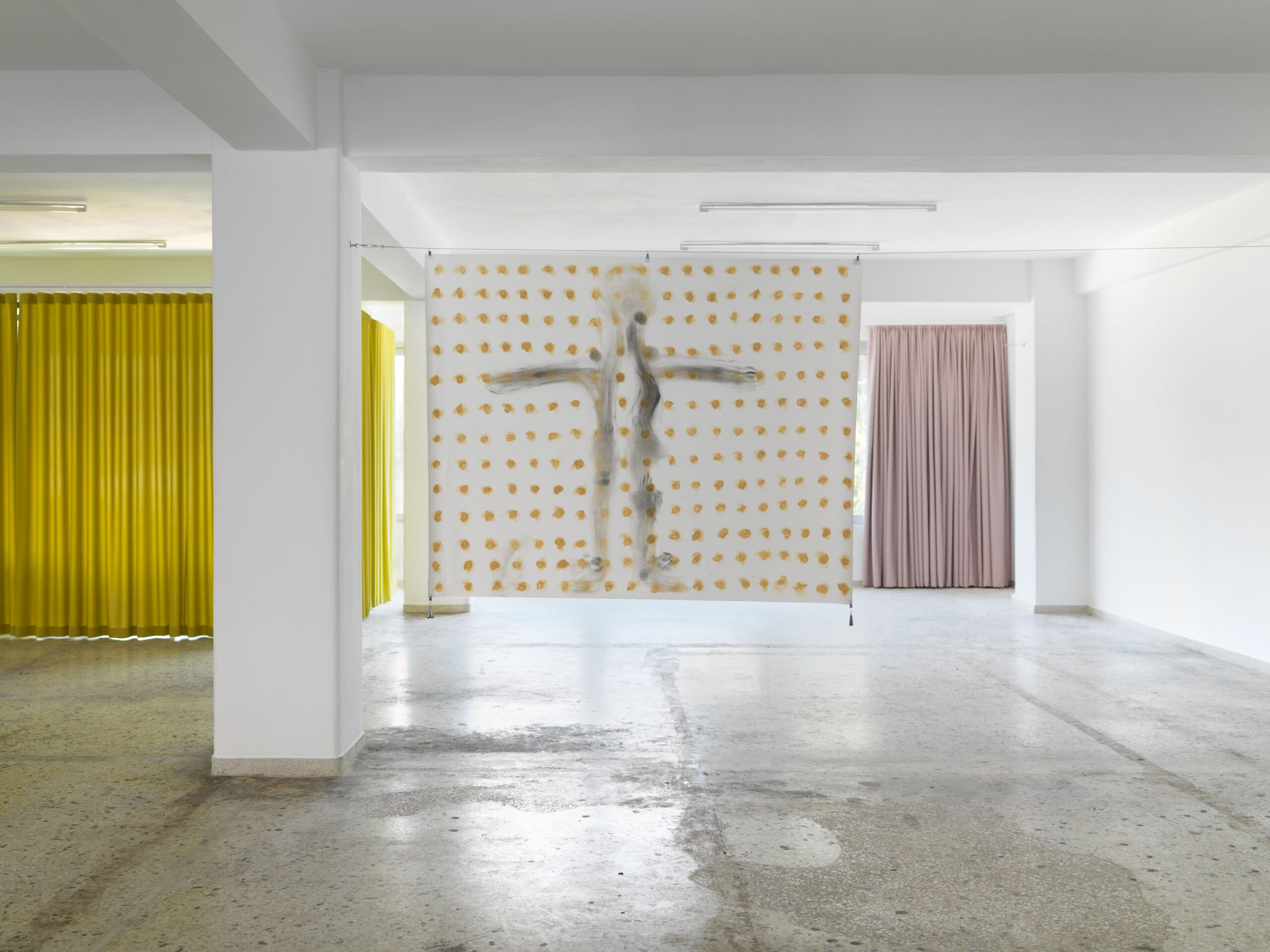
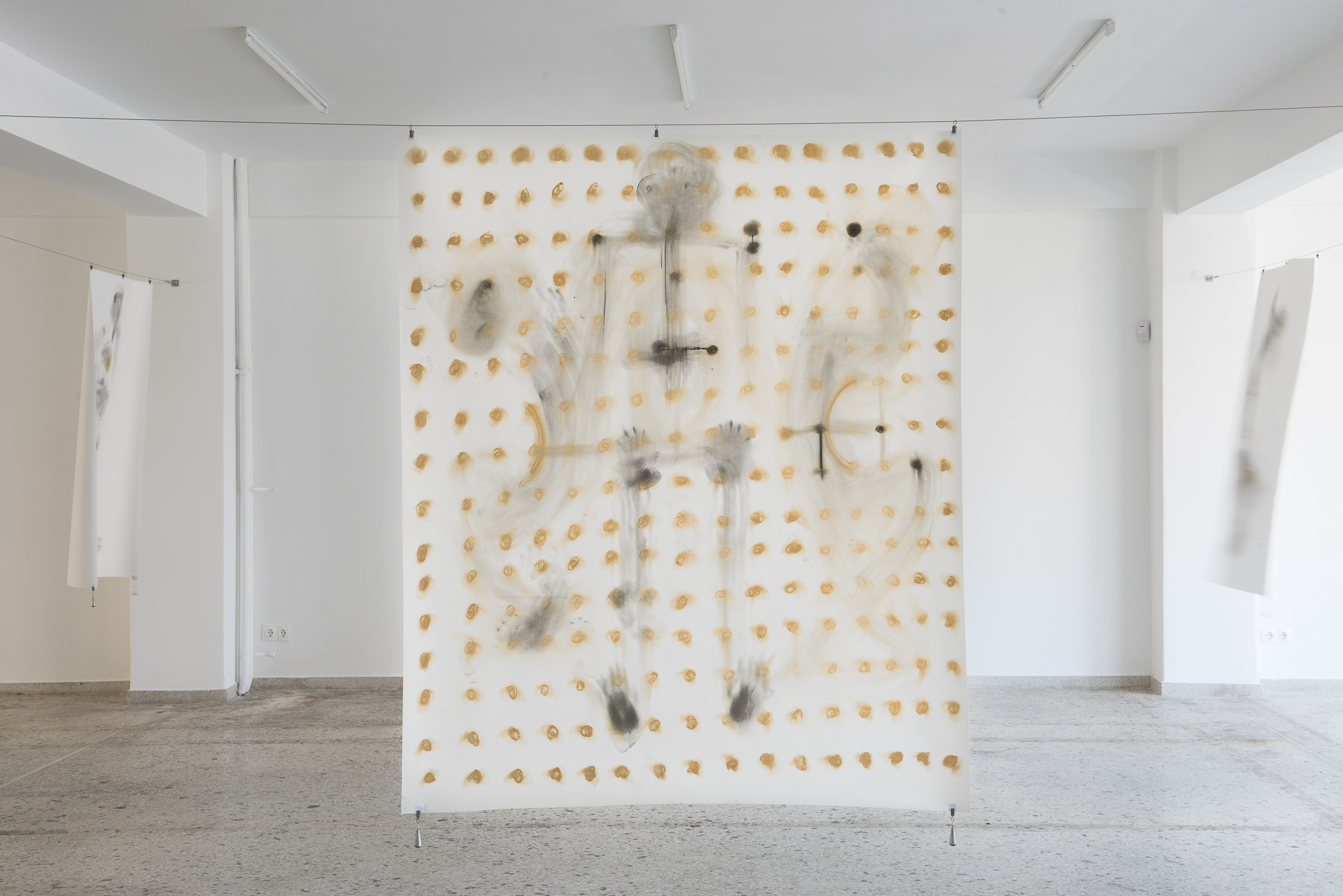
The first element built for the exhibition is a soft stage – a functional sculpture designed by Georgia Sagri especially for the one-on-one sessions of IASI. It is a modular sculpture with versions at Mimosa House in London and Tavros in Athens. While the specific scale of an oversized bed remains constant in all locations, the artist chooses differently dyed fabric to suit each setting. At de Appel, the deep crimson stage rests on top of the existing stage of the iconic Aula at Broedplaats Lely (formerly Pascal College, built in 1969 by Ben Ingwersen). The installation might give visitors a sense of the recovery of this public theatrical space for the purpose of personal strengthening. The perfect acoustics of the Aula further enhance the reclamation of breath and voice that lie at the heart of Sagri’s approach. Hanging high in the spacious Aula are Sagri’s full-bodied drawings. The charcoal and chalk pastels applied by the artist’s hands record the exchange of information and energy from the one-on-one sessions in Amsterdam. Together with those created from past sessions in London and in Athens, these drawings function as practical memory traces, as “sensorial references” and as scores for the continuing treatments. They can be apprehended as individual images and as a collective. During the exhibition, materials from the evolving history of performance art dating back to the 1970s, found in de Appel’s Archive, add depth and historical context to Sagri's pivotal practice. As this evocative ephemera enters into a dialogue with Sagri’s modular stage-sculpture and full-bodied drawings. Here, a number of questions arise:


What is/has been the artist’s role in society?
What is/has been the role of the public?
Can we conceive of performance art without a sense of spectacle?
What traditions of theater and/as therapy remain to be recovered?
How do we breathe better together?


The Sessions
(...) Following an open call (sent on August 3, 2020), the artist selected participants in Amsterdam, which she welcomes (September 28–19 November) inside the iconic Aula that de Appel refurbished last year for use as a public presentation space. One of the important criteria for accepting interested participants was their willingness to work together with the artist on their own recovery. Another was that each had a clear reason for entering this rigorous process. While IASI treatments are fully confidential, the artist has developed a system for recording what she learns with each case in such a way that the participants remain anonymous when these findings are shared with the public.

Breathing (7-1-7) with embryac position / Windface, Performance, DeAppel, Amsterdam. ©Georgia Sagri

Breathing (7-1-7) with embryac position / Windface, Performance, DeAppel, Amsterdam. ©Georgia Sagri

Installation view of Georgia Sagri - IASI, Stage of Recovery, de Appel Amsterdam, 2020. Photo by Cassander Eeftinck Schattenkerk

Installation view of Georgia Sagri - IASI, Stage of Recovery, de Appel Amsterdam, 2020. Photo by Cassander Eeftinck Schattenkerk

Installation view of Georgia Sagri - IASI, Stage of Recovery, de Appel Amsterdam, 2020. Photo by Cassander Eeftinck Schattenkerk

Installation view of Georgia Sagri - IASI, Stage of Recovery, de Appel Amsterdam, 2020. Photo by Cassander Eeftinck Schattenkerk

Installation view of Georgia Sagri - IASI, Stage of Recovery, de Appel Amsterdam, 2020. Photo by Cassander Eeftinck Schattenkerk

iasi

at Tavros Space, Athens (5 - 27/6 & 17/9 - 24/10/20)


IASI begins at the start of us all. Our breathing bodies. Few of us really comprehend how much we limit our breath. How much we limit our living. Our ability to take in the world and to inhale, this our ultimate most vital act of sharing; in turn, as we exhale, perhaps our most generous act of giving. This rhythmic circularity has been interrupted as we seemingly gasp for air: the reverberations are political and existential. How much oxygen are we allowed in a world going up in flames? Stifled, unable to breathe, and speak, not just for the sake of the words but in order to be heard.


IASI, Georgia Sagri’s ongoing research practice which started almost ten years ago in the form of self-training and which continues at her studio and artist run space Ύλη[matter]HYLE in Athens, now takes on a new form of one-on-one sessions with participants that have responded to an open call. These sessions are based on physical techniques that use breath as an active agent, movement and voice training. The sessions, two or three times a week over a period of two months, are private. Intensely so. They take place on a specially designed soft stage, an art object but also a welcoming place, a shell of sorts. This “stage of recovery” is based on Georgia Sagri’s premise that, “we all live our lives on stage, endlessly performing. The “stage of recovery” is a place where the participants can, for a while, be freed from the necessity of performing to others and for themselves. It gives them the time to be safe and free from an audience.” Whatever shifts, releases or movements occur in these private interchanges remains undisclosed. Unrepresented; still, they are.


New forms however demand new languages, and with IASI, Sagri sets the terms of the game. At the crossroads between activism, performance and self-recovery, this new phase in her practice is also a quest for an appropriate wording. Bodies in IASI birth their own cosmologies, circumventing scientific and empirical terminologies and allowing for intuited responses. Following each session Sagri summarizes written reports whose origin lies in the liminal moments of a body in treatment. Language, terminologies, rules, time-lapse as new forms of existing appear as fragile intermediaries between the then and the now. IASI is nothing less then, than a search for a new vocabulary, an original script for a new way of being and a movement for caring of oneself and others. IASI is also a search for new formats, where time is given and taken for reflection and research, where what is visible and what isn’t, is to be seen. Following the sessions, Sagri, using all her tactile forces, colors out primal imprints, like memory skins. This series of visual impressions of the accumulated bodily experiences (chronic pains and releases) form, alongside the reports and performances, the formal backbone of the resulting exhibition. Throughout the duration of the exhibition there will be sense of perennial impermanence with works by Georgia Sagri appearing or shifting, hinting at constantly fluctuating temporalities, with each work re-contextualized each time in dialogue with each other. The exhibition will itself be a living form, dilating and compressing, even holding its breath in between. This new chapter of her research will develop in overlapping phases in three art institutions and three cities – Mimosa House (London), TAVROS (Athens), De Appel (Amsterdam) and at her studio ‘Υλη[matter]HYLE – knowledge accrued from one location will be carried to the next, enriching the process. Sagri’s presence in these concurrent spaces will mirror the constant disembodiment in the multiplicity of images (our split screen personalities) with which we diffuse and ‘read’ ourselves. Georgia Sagri, adept at loops, here includes this circularity as part of the very form of her research. Instead of performing in large concentric circles, connectivity in all three locations will be personal. One step at a time. One breath at a time, reaching out. It is this prescient demand for human contact and for a new social contract that brings IASI here to TAVROS. Reflecting our belief that art might no longer concern purely material exchange but will return to other value systems that use action to counter worldly and somatic alienation and that our bodies still have the capacity to rewire, release and be receptive to care and love. IASI provides the basis for a discussion on bodies (as celestial as they are mundane), stillness (through abstention) and voice (as the precondition for political beings). Our pain and subjectivity is removed from the world of things but as it surfaces collectively we have the chance to start on a process of recovery and perhaps a new chapter of living.


Breath, after all is urgent. Bodies, after all are beautiful.


Allies: Mimosa House, De Appel


Supported by and under the auspices of: the Hellenic Ministry of Culture and Sport

Georgia Sagri, Breathing 5-1-5. performance, 90', 4 June 2020, TAVROS, Athens. photograph: Dimitris Parthimos © Georgia Sagri

Georgia Sagri, Breathing 5-1-5. performance, 90', 4 June 2020, TAVROS, Athens. photograph: Dimitris Parthimos © Georgia Sagri

Georgia Sagri, Breathing 5-1-5. performance, 90', 4 June 2020, TAVROS, Athens. photograph: Dimitris Parthimos © Georgia Sagri

Georgia Sagri, Stage of Recovery , 2020, wood, cotton , foam, 240 x 240 x 59 cm.

IASI, installation view, Tavros, Athens. ©Georgia Sagri

IASI, installation view, Tavros, Athens. ©Georgia Sagri

Georgia Sagri, Treatment (Embryonic Pose), 5 April 2020, charcoal, paper, 170 x 150 cm

Georgia Sagri, Treatment, 18 May 2020, charcoal, paper, 150 x 90 cm & Georgia Sagri, Treatment (Breathing 12_1_12), 15 April 2020, charcoal, paper, 150 x 90 cm

Business Meeting With Dry Ear

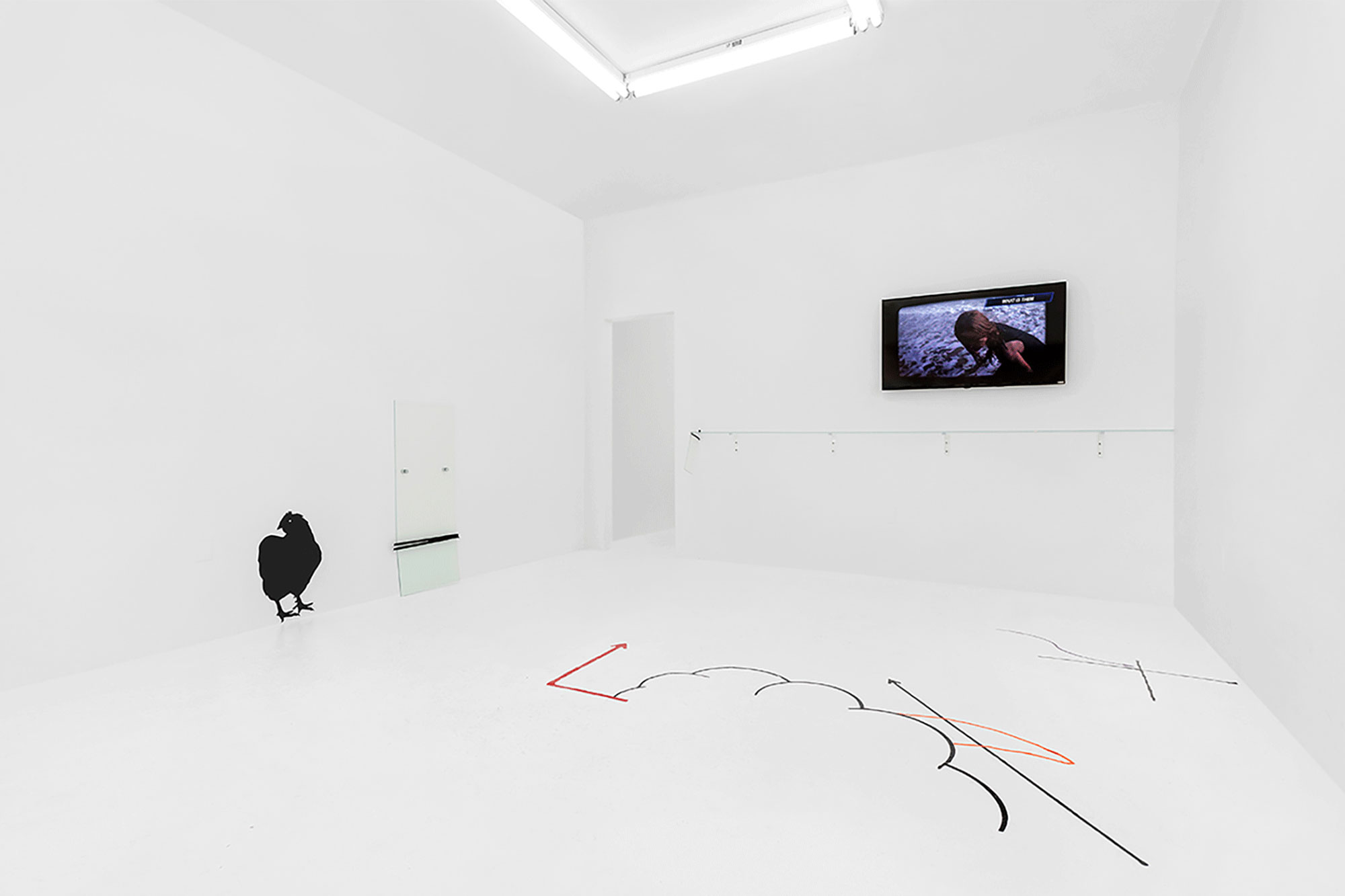
at Central Fine, Miami (1/12/15- 3/1/16, extended until 30/3/16)
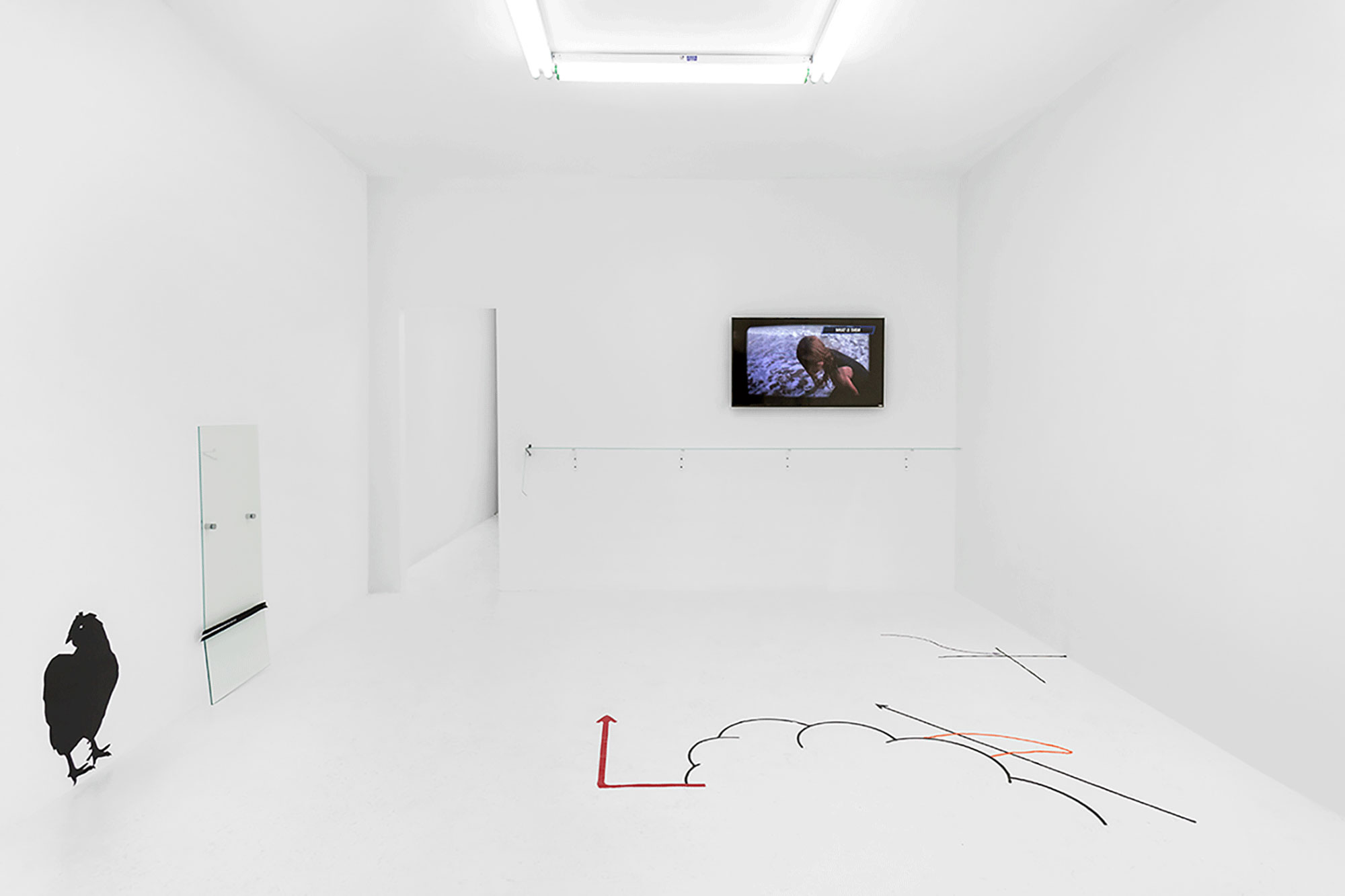

“Business Meeting With Dry Ear. He needs to hear. Ask about Dry Ear and us, and how to proceed with his connection and make him become us.”


Georgia Sagro & Diego Singh

Business Meeting With Dry Ear, photo by Christian Küster. ©Georgia Sagri

Business Meeting With Dry Ear, photo by Christian Küster. ©Georgia Sagri

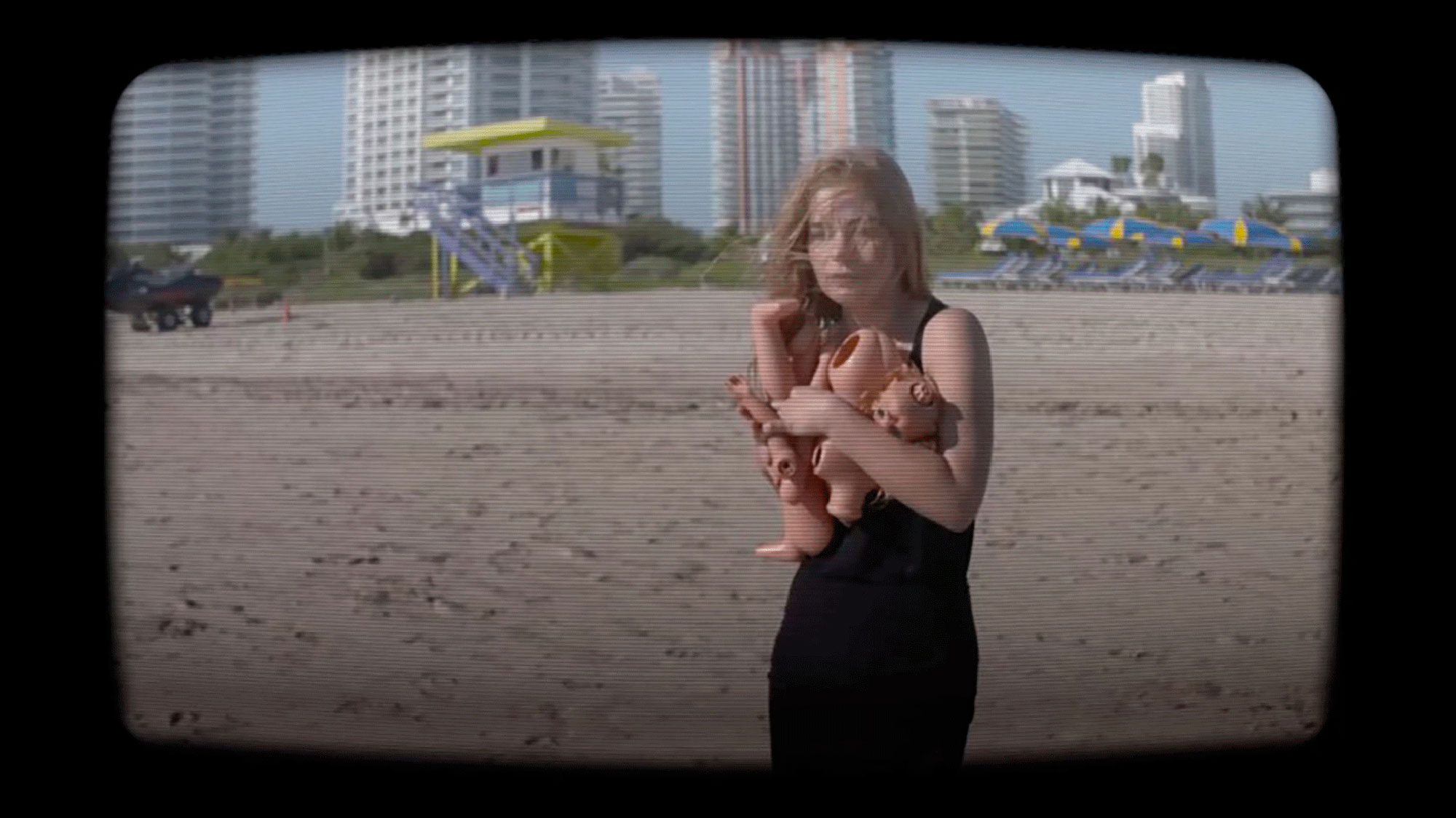
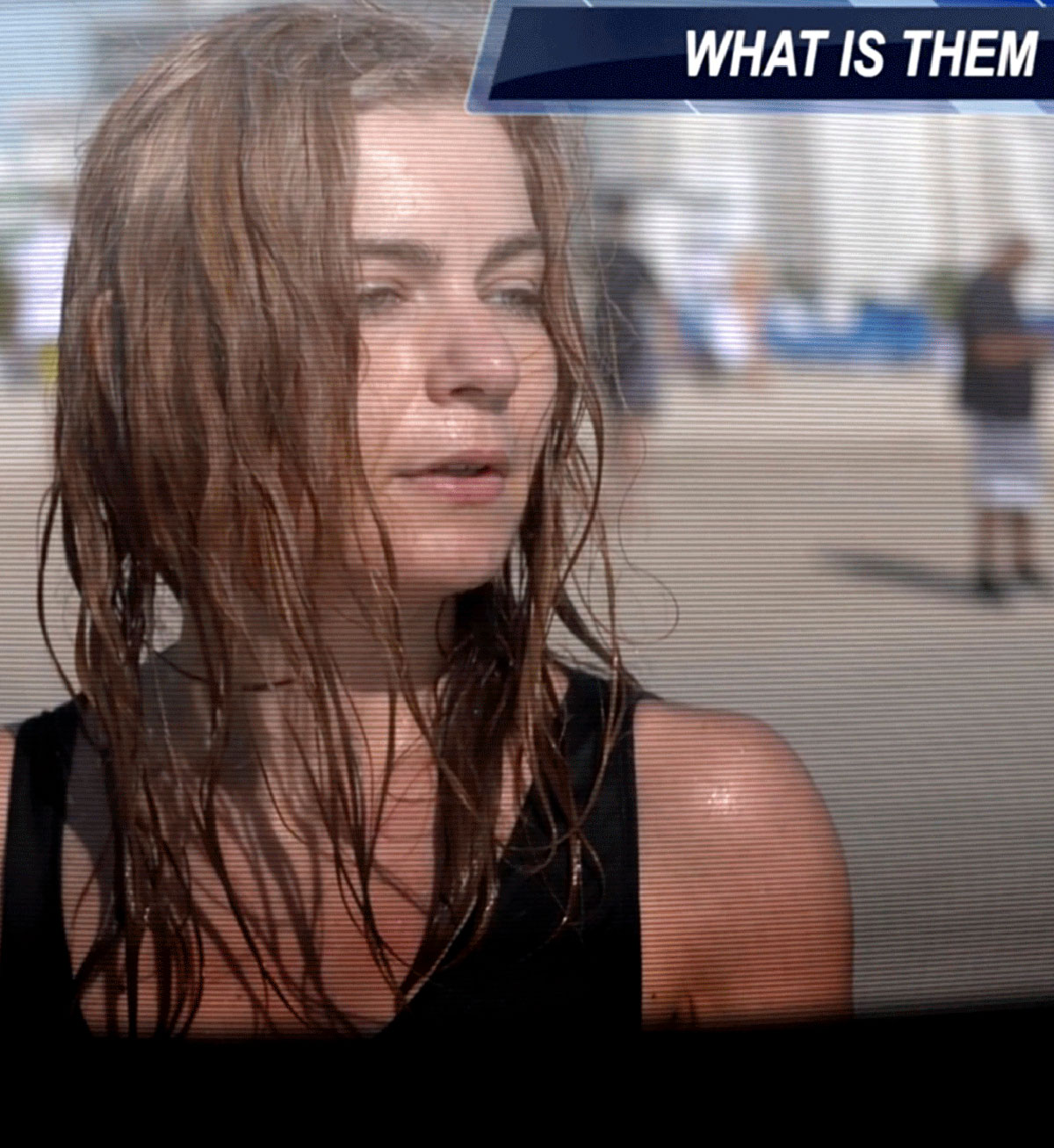
What is Them, 2015, Film, ©Georgia Sagri

What is Them, 2015, Film, ©Georgia Sagri

Business Meeting With Dry Ear, photo by Christian Küster. ©Georgia Sagri

Business Meeting With Dry Ear, photo by Christian Küster. ©Georgia Sagri

Business Meeting With Dry Ear, photo by Christian Küster. ©Georgia Sagri

Mystery 151 A Rave Down Below

at Venue Old Olive Mill, Elefsina (performance 13/1/24, exhibition 18/11/23 - 11/2/24)
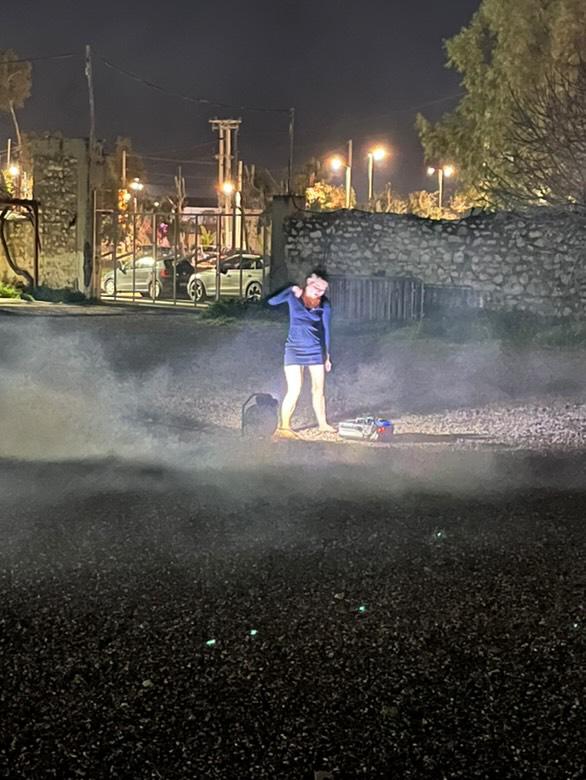

On Saturday 13 January at 19.00, 2023 Eleusis European Capital of Culture presents the performance This is a Party by Georgia Sagri in the context of the group exhibition of contemporary art Mystery 151 A Rave Down Below.


The acclaimed visual artist reconstitutes and reactivates her work, which was first presented in 2006 at the Panic Room exhibition of the DESTE Foundation. She offers the body as an archive of memory and experience, negotiating the relationship between politics and movement. During the performance, the sound of the artist’s voice echoes extracts from her teenage diaries and from the book Call by the political group Invisible Committee, forming an internal dialogue that contributes to the soundscape of the action, which is constantly repeated. A distant dance that seems to be never-ending.


[..This is a party A collection of places, infrastructures, dreams, nightmares, bodies, thoughts and desires. Desires that circulate among us among the places we move and meet. What about, the formation of sensibility as a force. The sensual of the sensitive Of the sensitive sensuality The relationship as no way meeting from the accident to the no resisting full ending Or starting again and again..]


From November 18 to February 11, 2024, 2023 Eleusis European Capital of Culture presents the group exhibition Mystery 151 A Rave Down Below featuring the participation of acclaimed artists from Greece and abroad and showcasing a series of new productions, curated by Panos Giannikopoulos.


Mystery 151 A Rave Down Below explores the political dynamics of the body in motion from a simultaneously geological and cultural underground point of departure. Alchemical wanderings from the historical past towards mythology and a post-industrial present culminate in a delirious dance. Inebriation, intoxication, revulsion, euphoria, release, vent, and ascent; a circular path from the body to the ground and back again. The exhibition’s narrative unfolds through the myths and history of the city of Elefsina and its Mysteries, with dance serving as a means of climax, a sacred ritual, and a method for exploring concepts of death and loss. In Mystery 151 A Rave Down Below, we witness dance and its affinity with the ailing body or even itself as illness and therapy, dance in a state of crisis, as exhaustion that brings pleasure displacing social exhaustion, as escape and counteraction.


Participating artists: Theodoros Giannakis / Viktor Gogas & Kostas Kostopoulos / Captain Stavros / Lito Kattou / Petros Moris / Nkisi / Katerina Papazissi / Georgia Sagri / Yorgos Sapountzis / Baratto & Mouravas / Flux Office / Greek Visions / Klaus Jurgen Schmidt / Odete / Diana Policarpo / Wu Tsang

Mystery 151 - This is a Party performance at Elefsina, (2024)

Mystery 151 - This is a Party performance at Elefsina, (2024)

Mystery 151 - This is a Party performance at Elefsina, (2024) photo by Alexandros Theodoridis

Kyiv Biennial 2023

at Augarten Contemporary, Vienna (17/10–17/12/23)
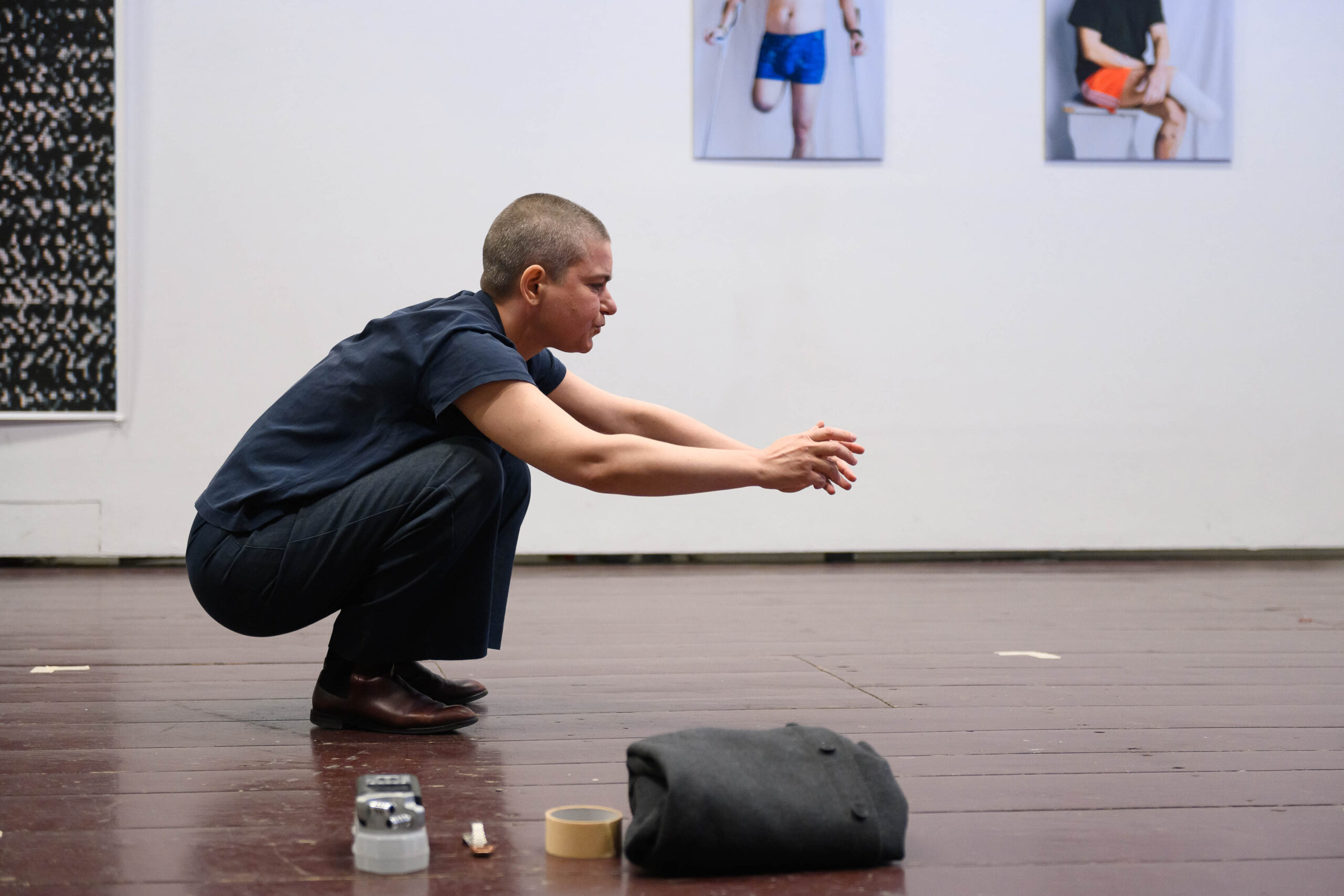

The fifth edition of Kyiv Biennial is conceived as a European event, with dispersed exhibitions and public programs in a number of Ukrainian and EU cities, and realized in partnership with leading European institutions in the field of contemporary art. Georgia Sagri participates in the main exhibition of Kyiv Biennial 2023, with two performance pieces, Deep Listening (2001) and Breathing 7_1_7 with Embryac Position / Sunset which will perform on the opening day of the Biennial as well as with the work Deep Cut which will be installed in the main exhibition venue.

Georgia Sagri, Breathing 7_1_7 with Embryac Position / Sunset, 2023, Kyiv Biennial 2023, Augarten Contemporary, Vienna, Photo by eSeL.at - Joanna Pianka ©Georgia Sagri

Georgia Sagri, Breathing 7_1_7 with Embryac Position / Sunset, 2023, Kyiv Biennial 2023, Augarten Contemporary, Vienna, Photo by eSeL.at - Joanna Pianka ©Georgia Sagri

Kyiv Biennial 2023, Augarten Contemporary, Vienna, photo by eSeL.at - Joanna Pianka

Georgia Sagri, Breathing 7_1_7 with Embryac Position / Sunset, 2023, Kyiv Biennial 2023, Augarten Contemporary, Vienna, Photo by eSeL.at - Joanna Pianka ©Georgia Sagri

Georgia Sagri, Breathing 7_1_7 with Embryac Position / Sunset, 2023, Kyiv Biennial 2023, Augarten Contemporary, Vienna, photo by eSeL.at - Joanna Pianka ©Georgia Sagri

Georgia Sagri, Deep Listening (2001), 2023, Kyiv Biennial 2023, Augarten Contemporary, Vienna, Photo by eSeL.at - Joanna Pianka ©Georgia Sagri

Georgia Sagri, Deep Listening (2001), 2023, Kyiv Biennial 2023, Augarten Contemporary, Vienna, Photo by eSeL.at - Joanna Pianka ©Georgia Sagri

Georgia Sagri, Deep Listening (2001), 2023, Kyiv Biennial 2023, Augarten Contemporary, Vienna, Photo by eSeL.at - Joanna Pianka ©Georgia Sagri

Case_L

Kunsthalle Friart, Fribourg (10/6-31/7/22)
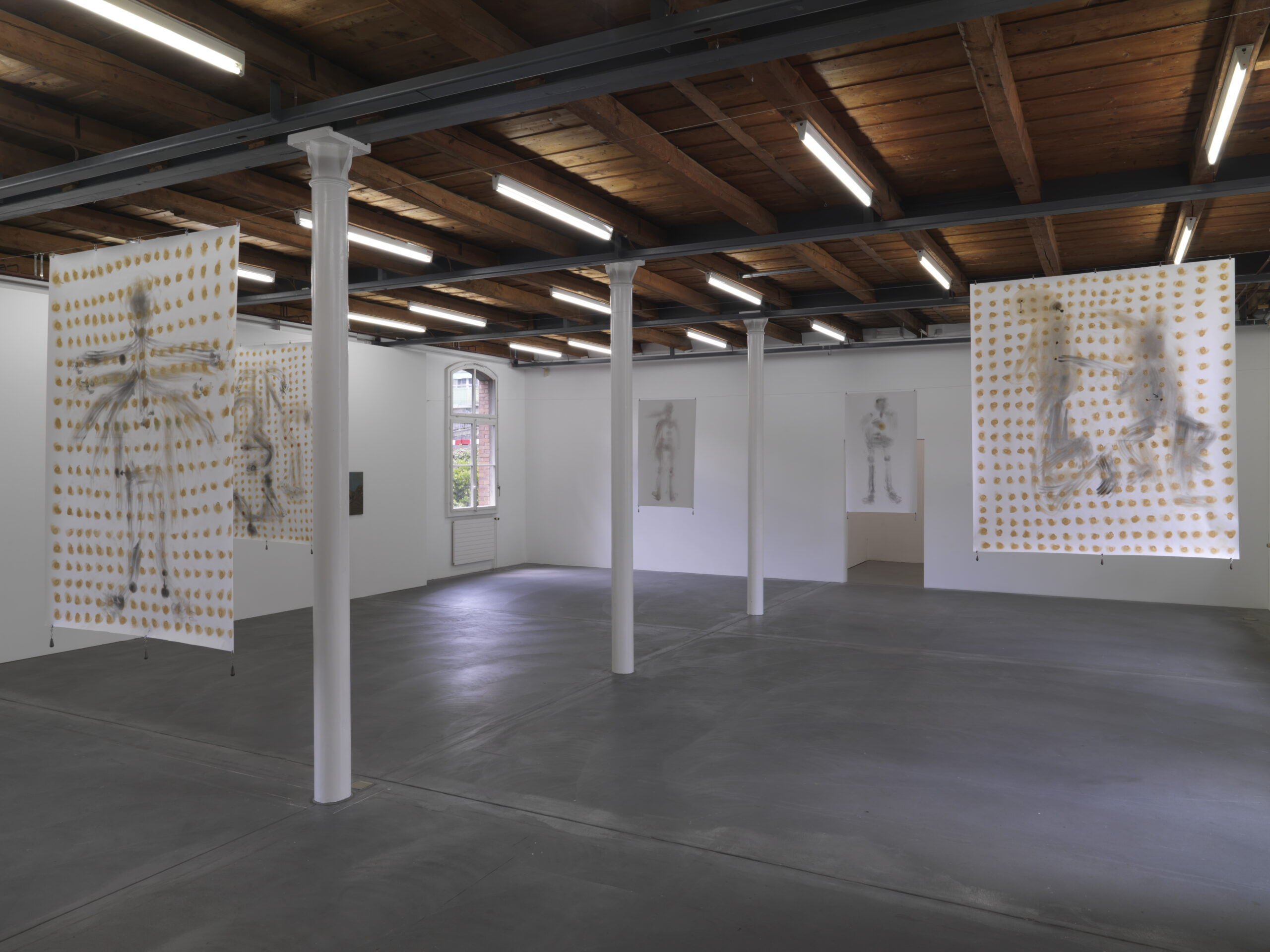

Case_L is the deployment, in the form of an exhibition, of artist Georgia’s Sagri practice of self-recovery and her ongoing research on the physiological and pathological conditions of the body in hyper-capitalist society. A series of techniques (breathing, movement, voice) named IASI (recovery in greek) are used for the preparation of and self-recovery from demanding performance pieces and shared to help others in one-to-one sessions that follow a protocol of confidentiality. Case_L is the study of a recurring case that emerged through IASI sessions, namely that of panic attack. The exhibition unfolds in Friart as a spatial, metaphysical, felt and ideological structure. Its steps include the manifestation, expression, treatment and recovery in a path favoring transversality and connectivity over the segregation of knowledge and perception. Through attention to the diaphragm – metaphorically suggested by the artist as horizon – the exhibition opens up the possibility of recovery from the mechanisms of aggression and fragmentation in which the body is considered an extractable resource. In Friart, Georgia Sagri continues her unique approach of the exhibition as a multi-faceted assemblage of mediums and relationships, including a week-long performance piece entitled Shelter_Refuge along with her works, drawings and writings.

Case_L, installation view, Kunsthalle Friart, Fribourg. Photo by Stathis Mamalakis ©Georgia Sagri

Case_L, installation view, Kunsthalle Friart, Fribourg. Photo by Stathis Mamalakis ©Georgia Sagri

Case_L, installation view, Kunsthalle Friart, Fribourg. Photo by Stathis Mamalakis ©Georgia Sagri

Case_L, installation view, Kunsthalle Friart, Fribourg. Photo by Stathis Mamalakis ©Georgia Sagri

Case_L, installation view, Kunsthalle Friart, Fribourg. Photo by Stathis Mamalakis ©Georgia Sagri

Case_L, installation view, Kunsthalle Friart, Fribourg. Photo by Stathis Mamalakis ©Georgia Sagri

Case_L, installation view, Kunsthalle Friart, Fribourg. Photo by Stathis Mamalakis ©Georgia Sagri

Case_L, installation view, Kunsthalle Friart, Fribourg. Photo by Stathis Mamalakis ©Georgia Sagri

Case_L, installation view, Kunsthalle Friart, Fribourg. Photo by Stathis Mamalakis ©Georgia Sagri

Case_L, installation view, Kunsthalle Friart, Fribourg. Photo by Stathis Mamalakis ©Georgia Sagri

Shelter_Refuge, 2022, Performance, Kunsthalle Friart, Fribourg. Photo by Stathis Mamalakis ©Georgia Sagri

Shelter_Refuge, 2022, Performance, Kunsthalle Friart, Fribourg. Photo by Stathis Mamalakis ©Georgia Sagri

Shelter_Refuge, 2022, Performance, Kunsthalle Friart, Fribourg. Photo by Stathis Mamalakis ©Georgia Sagri

Shelter_Refuge, 2022, Performance, Kunsthalle Friart, Fribourg. Photo by Stathis Mamalakis ©Georgia Sagri

Choreographic Devices

at The Institute of Contemporary Arts, London (10-12/6/22)
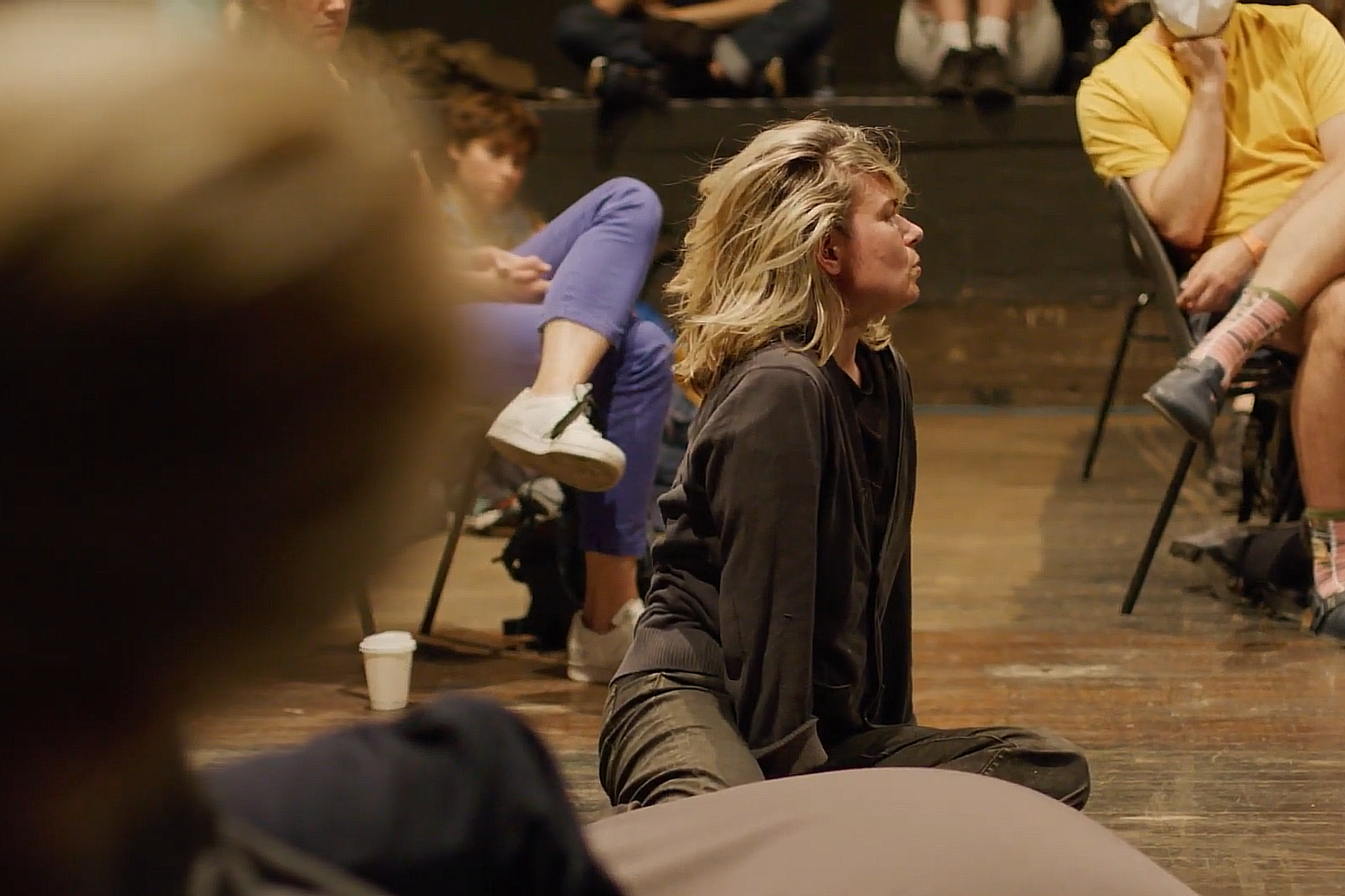

Choreography is no longer simply the art of making dances: complex models of the choreographic are increasingly tasked to investigate and animate the intersecting spatial, corporeal, affective and informational dimensions of being entangled with the world.


What kind of choreographic arrangements can we compose to put diverse thinkers and practitioners in relation to one another? What kinds of time spaces can be plotted, imagined and enacted, when the symposium itself is choreographed and takes shape as a sequence of sessions, each brought to life by different hosts? Through contributions and interventions by over 30 international protagonists from across an expanded ecology of practices, this multi-format symposium speculates on the affordances of choreographic (re-)arrangements and their complex forms of co-production, and tests how organisational formats, material assemblages, and modes of being alongside each other, might be choreographed otherwise.


Choreographic Devices assembles contributors operating across multiple disciplinary boundaries, including Murat Adash (artist), Edwina Ashton (artist), D. Graham Burnett (teacher, writer, interdisciplinary maker), Ofri Cnaani (artist), Augusto Corrieri (artist), Critical Interruptions (Diana Damian Martin + Bojana Janković) (artists), Lou Forster (art historian, curator), keyon gaskin (artist), Martin Hargreaves (dramaturg, writer, performer), Vlatka Horvat (artist), Lenio Kaklea (choreographer, dancer, writer), Sarah Keenan (writer, theorist), André Lepecki (performance studies theorist, curator), Jason Edward Lewis (digital media theorist, poet, software designer), Raimundas Malasauskas (silk painter), Tavi Meraud (artist), Samaneh Moafi (architect, investigator), Rebecca Moss (artist), Harun Morrison (artist, writer), Sandra Noeth (body theorist, curator), Lara Pawson (writer), Daniela Perazzo (dance and performance theorist), Stamatia Portanova (theorist), Filipa Ramos (writer, curator), Irit Rogoff (educator, theorist), Florian Roithmayr (artist), Georgia Sagri (artist), Edgar Schmitz (artist), SERAFINE1369 (artist), Noémie Solomon (theorist, curator), Matthias Sperling (artist, choreographer, performer), Starhawk (author, permaculture designer, teacher, activist), Soap Bubble (complex mathematical problem), and Arkadi Zaides (choreographer).

Georgia Sagri, Choreographic Devices at ICA (2022)

Georgia Sagri, Choreographic Devices at ICA (2022)

Georgia Sagri, Choreographic Devices at ICA (2022)

Georgia Sagri, Choreographic Devices at ICA (2022)

GEORGIA SAGRI: IASI

at Mimosa House, London (Iasi one-to-one sessions: 13/1-19/3/20, exhibition: 14/2 [closed due to COVID until September]-10/10/20)
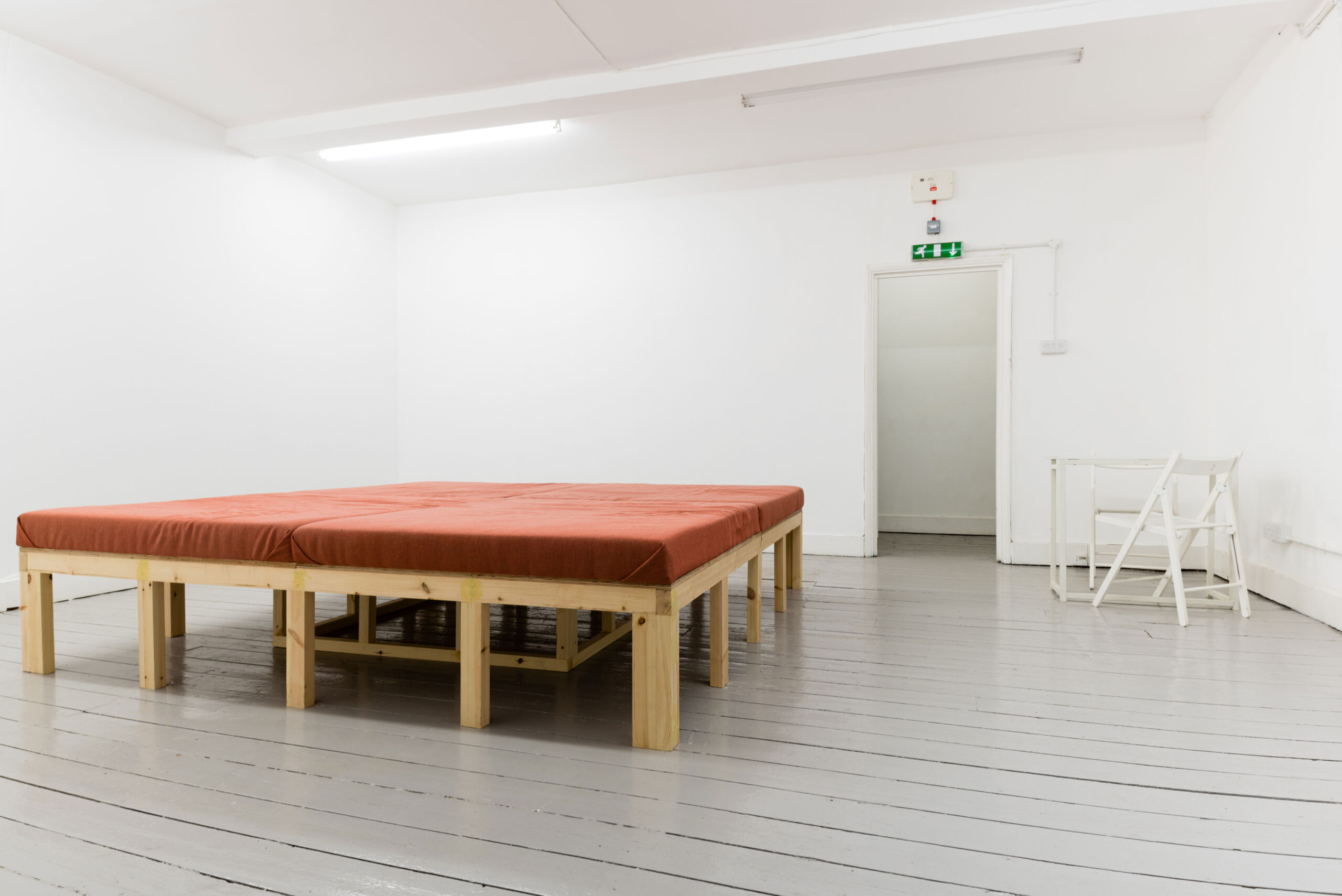
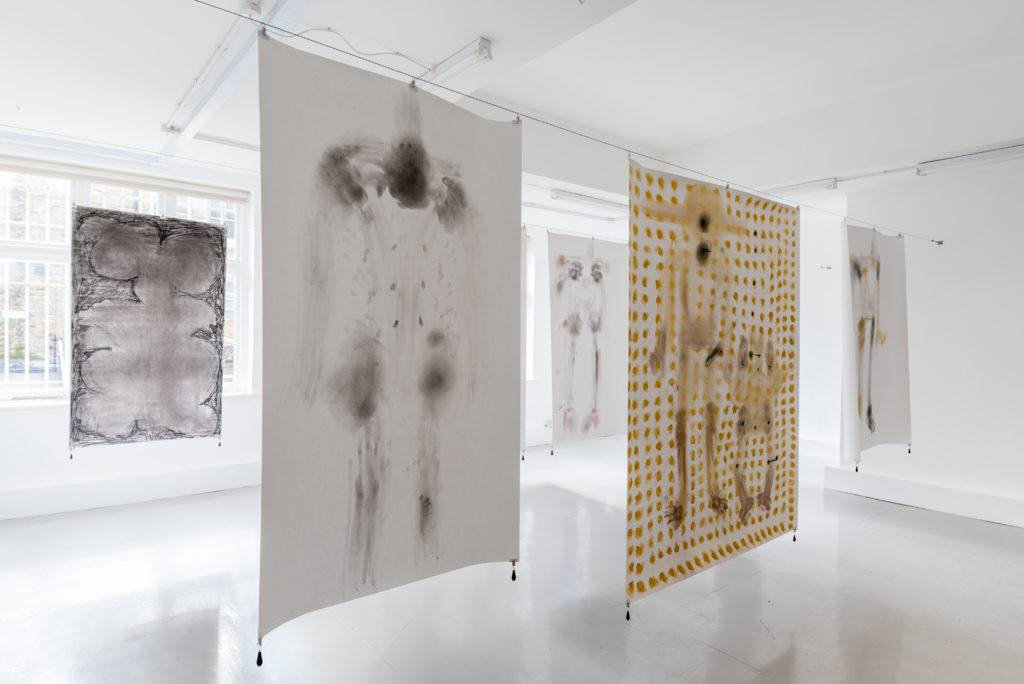
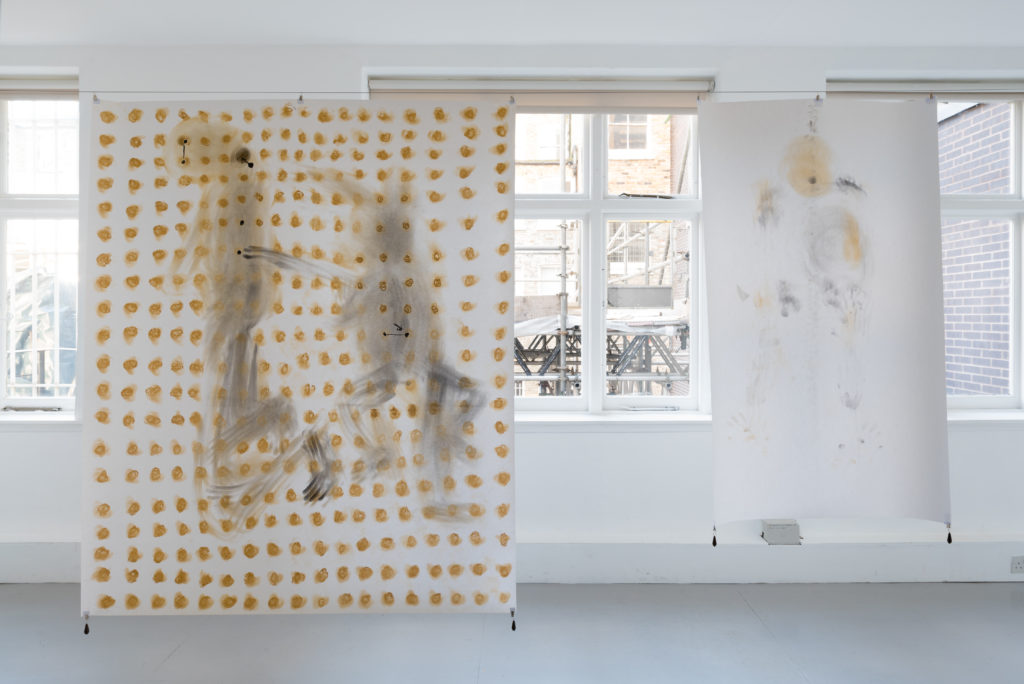
From January to March of 2020, Sagri worked with individual participants via private and anonymous one-to-one sessions as part of her research into self-care and recovery – IASI, a 10 year long body of research which includes voice tuning, breathing exercises and movement techniques. The exhibition in September (which began in January and prematurely closed due to the COVID-19 pandemic) showcased the case studies developed over the three month period, taking shape in the form of performances, objects, drawings and writings by the artist. A screening of a performance by Sagri titled Breathing (5-1-5) which took place in Mimosa House in March 2020 was featured as well.


Sagri’s ongoing research was the basis for her iconic work Dynamis, which featured at documenta 14 (Kassel and Athens, 2017) and involved sharing these techniques with 200+ members of the public across the two cities. During this process, Sagri observed an improvement in the general wellbeing of participants, and continues to explore the stages of recovery in her work, IASI.


The collaboration with Mimosa House is Georgia Sagri’s first institutional exhibition in the UK, and is also the inauguration of her research practice IASI, and her long-term commitment to working directly with the public. This chapter of her research is being developed in overlapping phases across three international organisations, each of which will host Sagri’s one-to-one sessions, research and respective case studies. The organisations are Mimosa House in the United Kingdom, TAVROS in Greece, and De Appel in the Netherlands.


In February 2020, Sagri introduced her project IASI at Mimosa House, in conversation with institutional allies Daria Khan (Mimosa House, United Kingdom), Maria-Thalia Carras (TAVROS, Greece), and Monika Szewczyk (De Appel, The Netherlands) – a video of the conversation is available to view here: https://youtu.be/m8C8fhRadlE


Addressing the pathologies of our time, Georgia Sagri identifies her role in this process: “... to support, listen and navigate with each participant the compass of their discomfort, and its causes and effects. The treatments are approached as a creative practice, in which we work together through voice, gesture and movement techniques. Each participant will find movements and behaviours that allow them to learn from their pain, become stronger and empowered, and facilitate the potential of further self-recovery”


On the project, curator and Mimosa House founder Daria Khan has said: “Georgia Sagri’s ‘IASI’ brings a unique and new opportunity to Mimosa House: to explore the impact of artistic practice on the public, as well as to ask wider questions about artist labour, self-care and pathologies of our time. ‘IASI’ is an experiment in establishing in-depth collaboration with individual members of the audience, through a process of sharing knowledge and bodily practice which have a long lasting effect beyond the exhibition’s timeframe and space.”

IASI, installation view, Mimosa House, London. Photo by Lucy Parakhina. ©Georgia Sagri

IASI, installation view, Mimosa House, London. Photo by Lucy Parakhina. ©Georgia Sagri

IASI, installation view, Mimosa House, London. Photo by Lucy Parakhina. ©Georgia Sagri

IASI, installation view, Mimosa House, London. Photo by Lucy Parakhina. ©Georgia Sagri

IASI, installation view, Mimosa House, London. Photo by Lucy Parakhina. ©Georgia Sagri

IASI, installation view, Mimosa House, London. Photo by Lucy Parakhina. ©Georgia Sagri

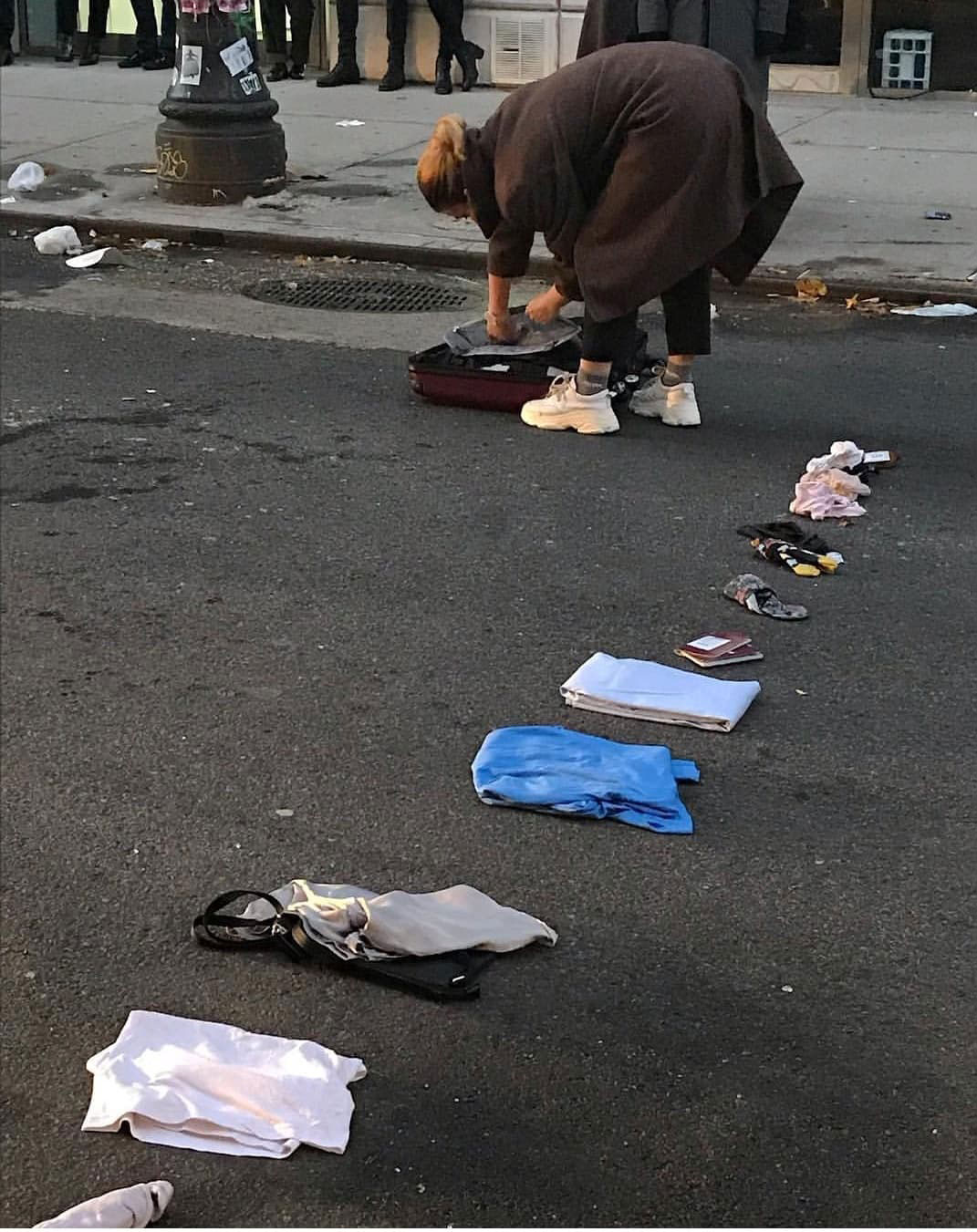
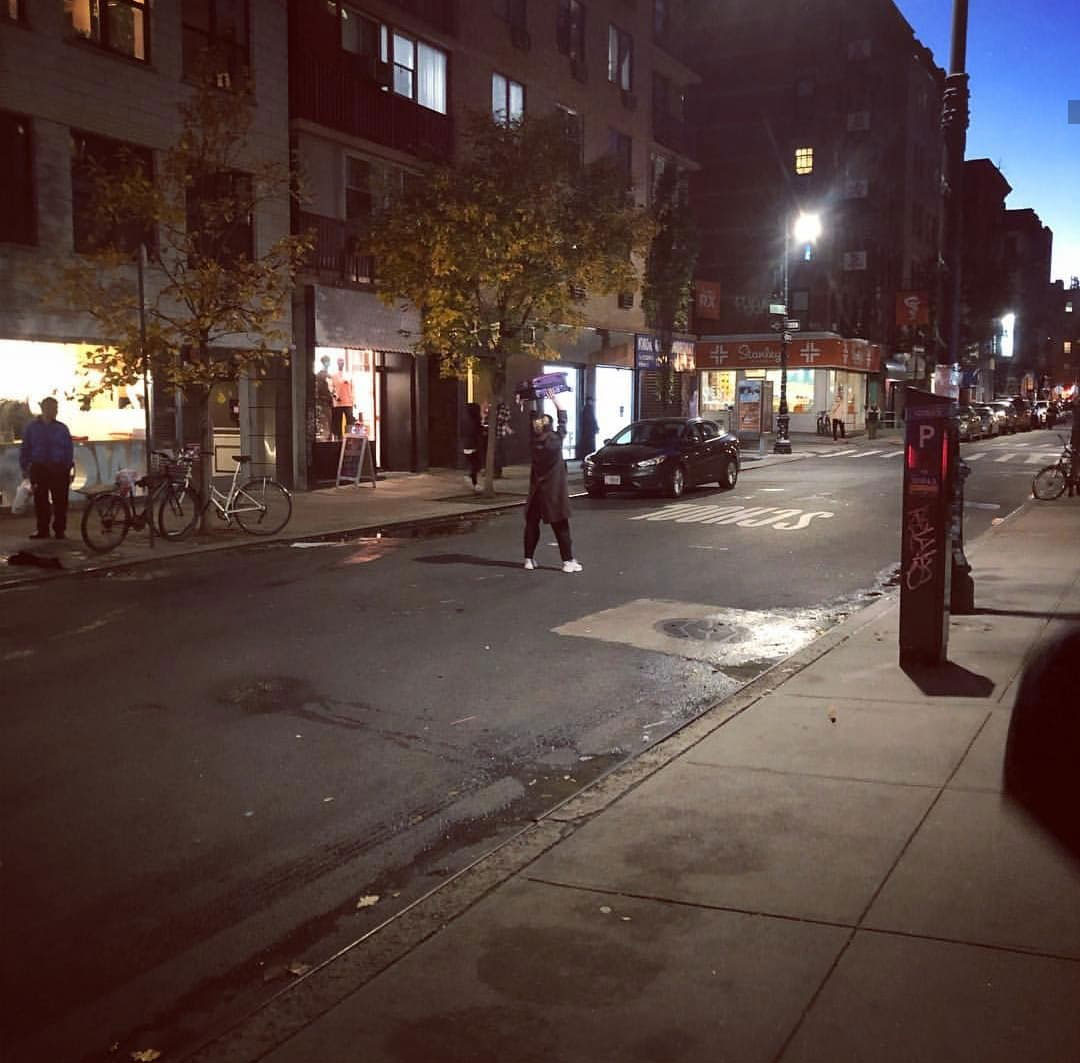
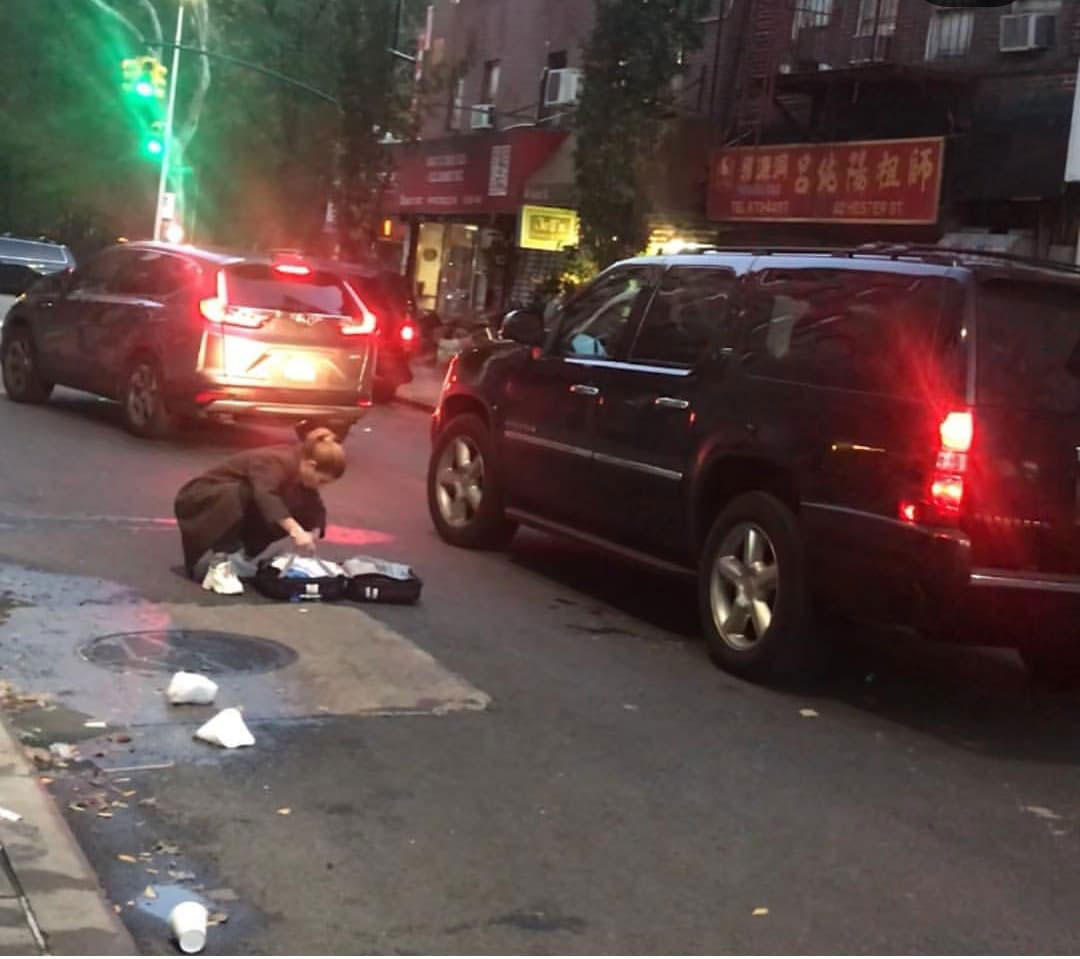
Semiotics of Household

at Hester Street, New York (3/11/18)
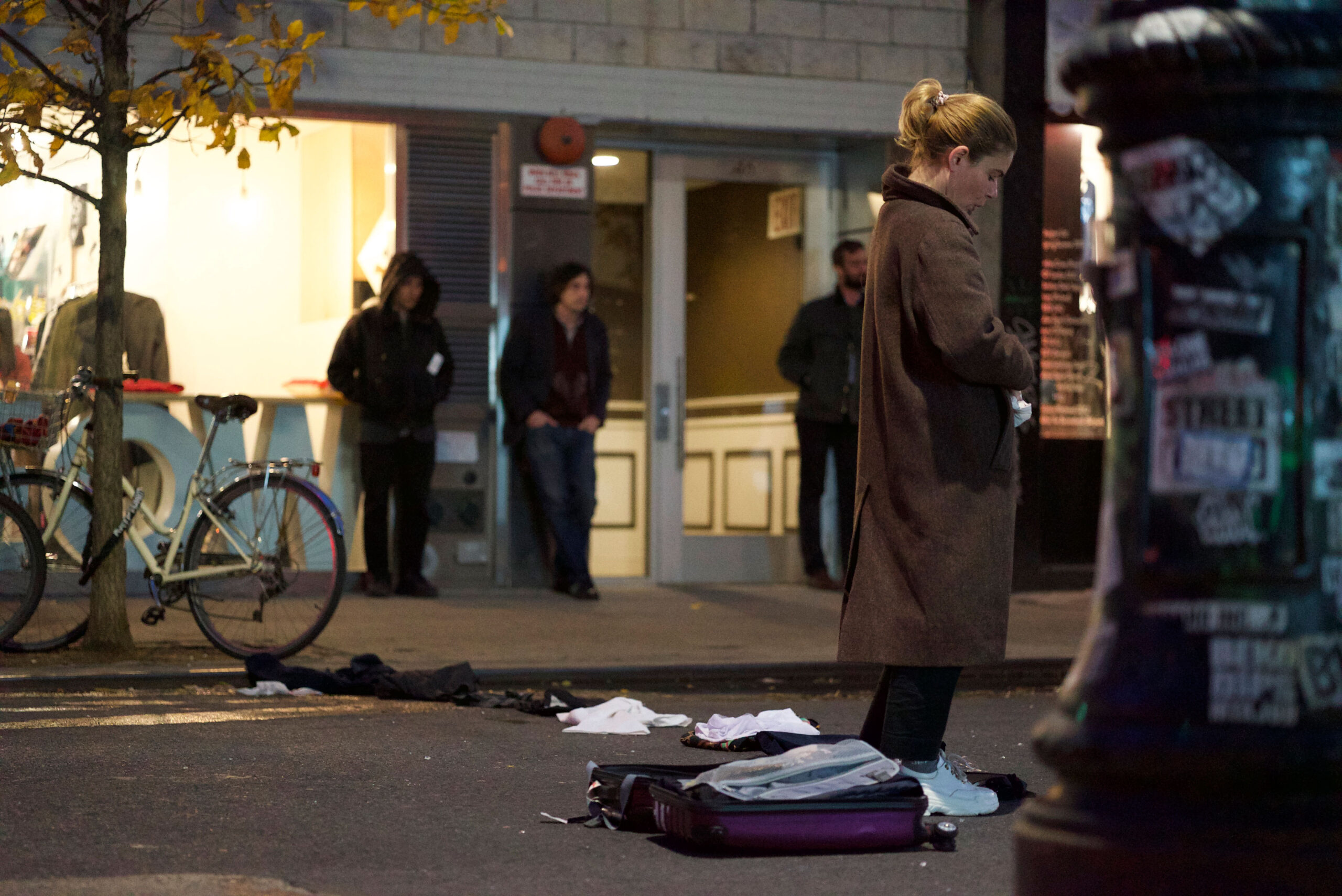

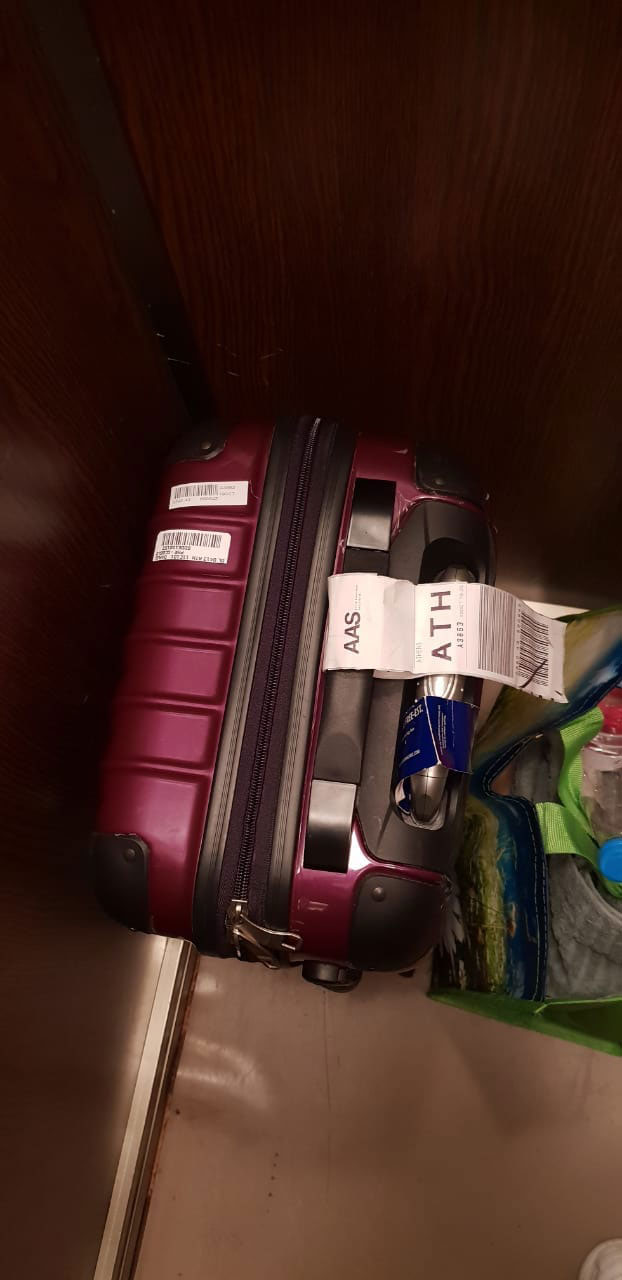
Yet a boundary drawn is never quite fixed. In the video documentation of her droll yet intensely poignant Semiotics of the Household, 2018, the artist is seen on a quiet Lower East Side street at sunset removing her possessions one by one from her wheeled carry-on suitcase, right down to her cosmetics and passport, and using them to draw a line across the street before packing them up and repeating the process. Aux barricades indeed; the personal is political, even the toiletries. Sagri’s act temporarily, gently impedes the flow of traffic; a blockage in the system is created—a minor-key reprise of, say, the occupation of a city park. Reaction from drivers is generally patient; even a garbage truck waits unhonking for her to move out of the way. But after an hour, the NYPD arrives and summarily finds a reason to handcuff a woman with a thick accent acting aberrantly in public. While her responses to the police’s queries are mostly smiling and blandly circular, when the cuffs go on she appears to break character for just a moment, declaring to an off-camera friend, “I cannot be arrested,” hinting at the visa troubles she had after Occupy. -CHAOS CÉLÈBRE: Domenick Ammirati on the art of Georgia Sagri (Artforum, issue November 2019)

Semiotics of the Household. ©Georgia Sagri

Semiotics of the Household. ©Georgia Sagri

Semiotics of the Household. ©Georgia Sagri

Semiotics of the Household. ©Georgia Sagri

Semiotics of the Household. ©Georgia Sagri

Time Bomb

at The Watermill Center, New York (28/7/18)
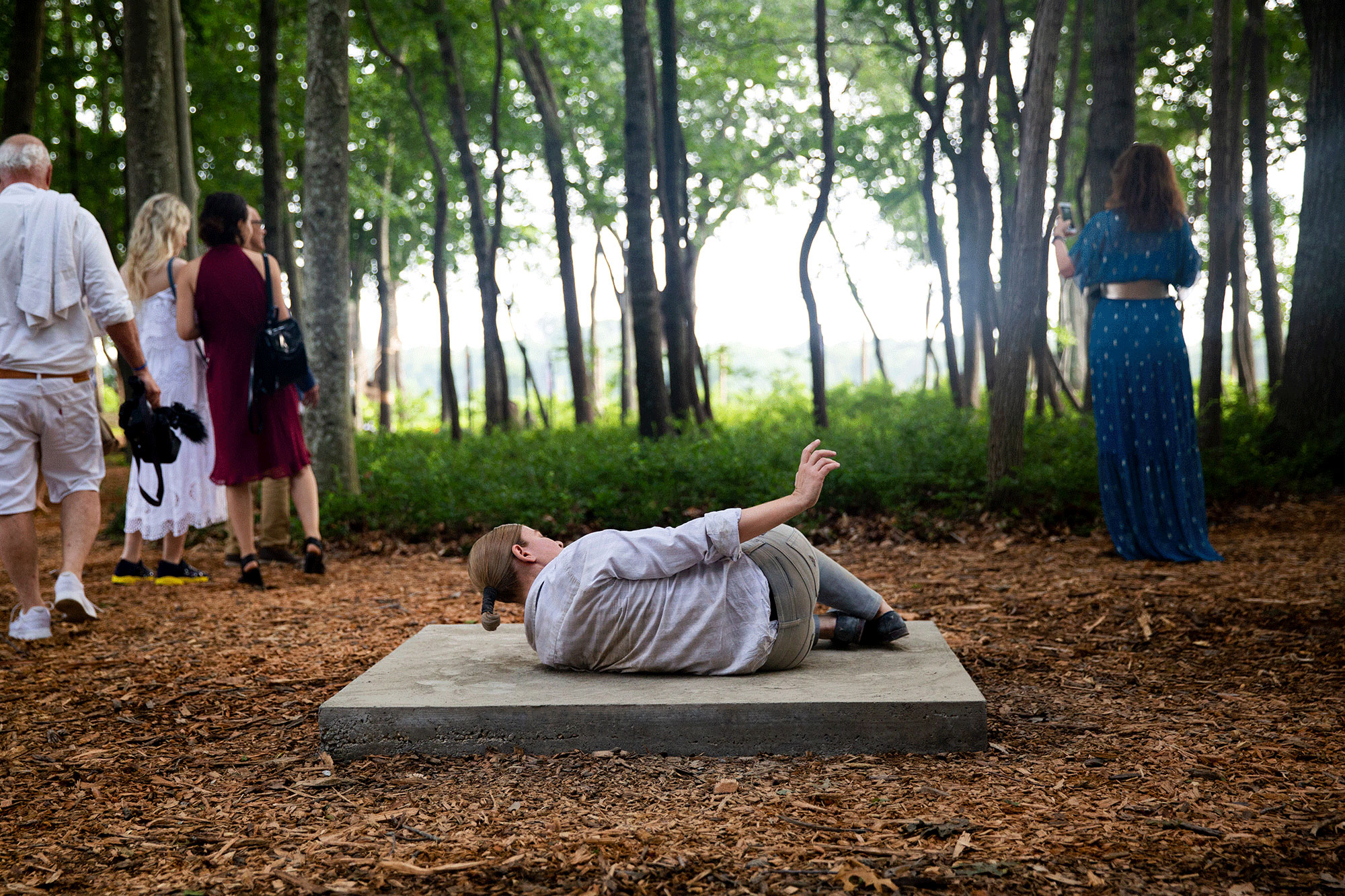

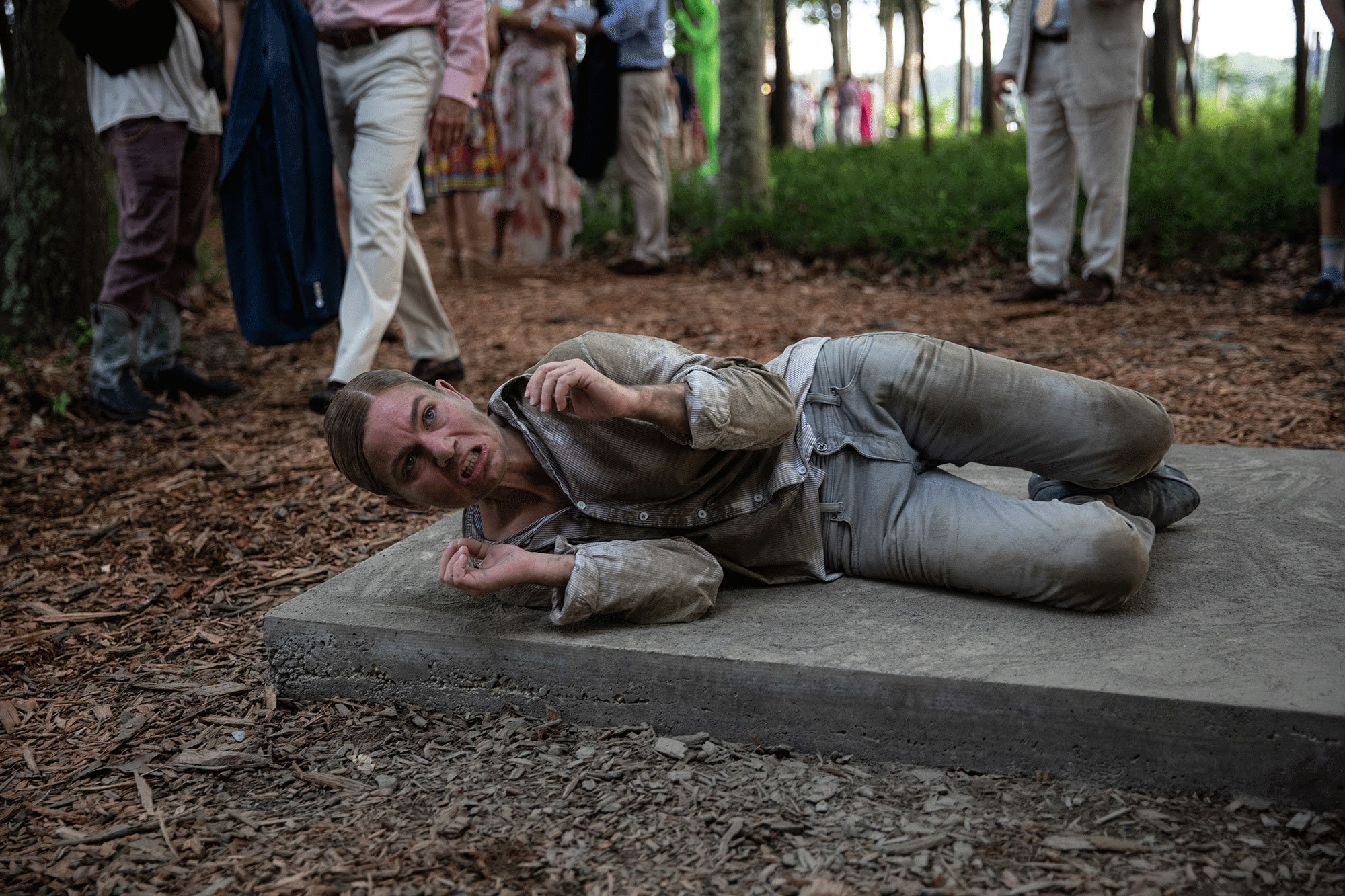
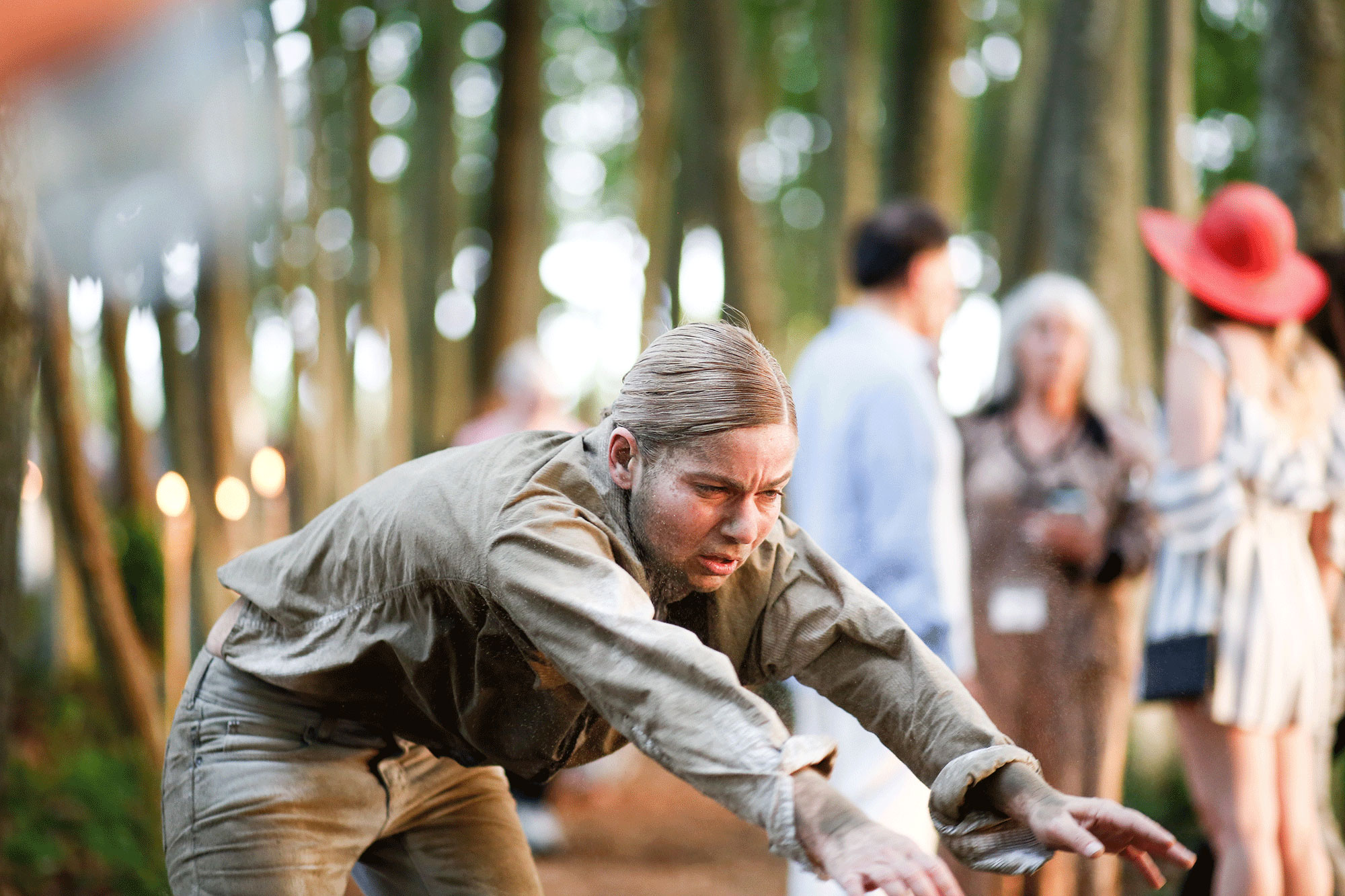
In tribute to Pierre Bergé, presented by Van Cleef & Arpels. Described as an enchanted forest and performance art extravaganza, the Annual Watermill Center Summer Benefit unites the worlds of art, performance, music, theatre, design, architecture and fashion. All funds raised support The Center’s year-round Artist Residency and Education Programs that provide a unique environment for young and emerging artists to explore and develop new work.


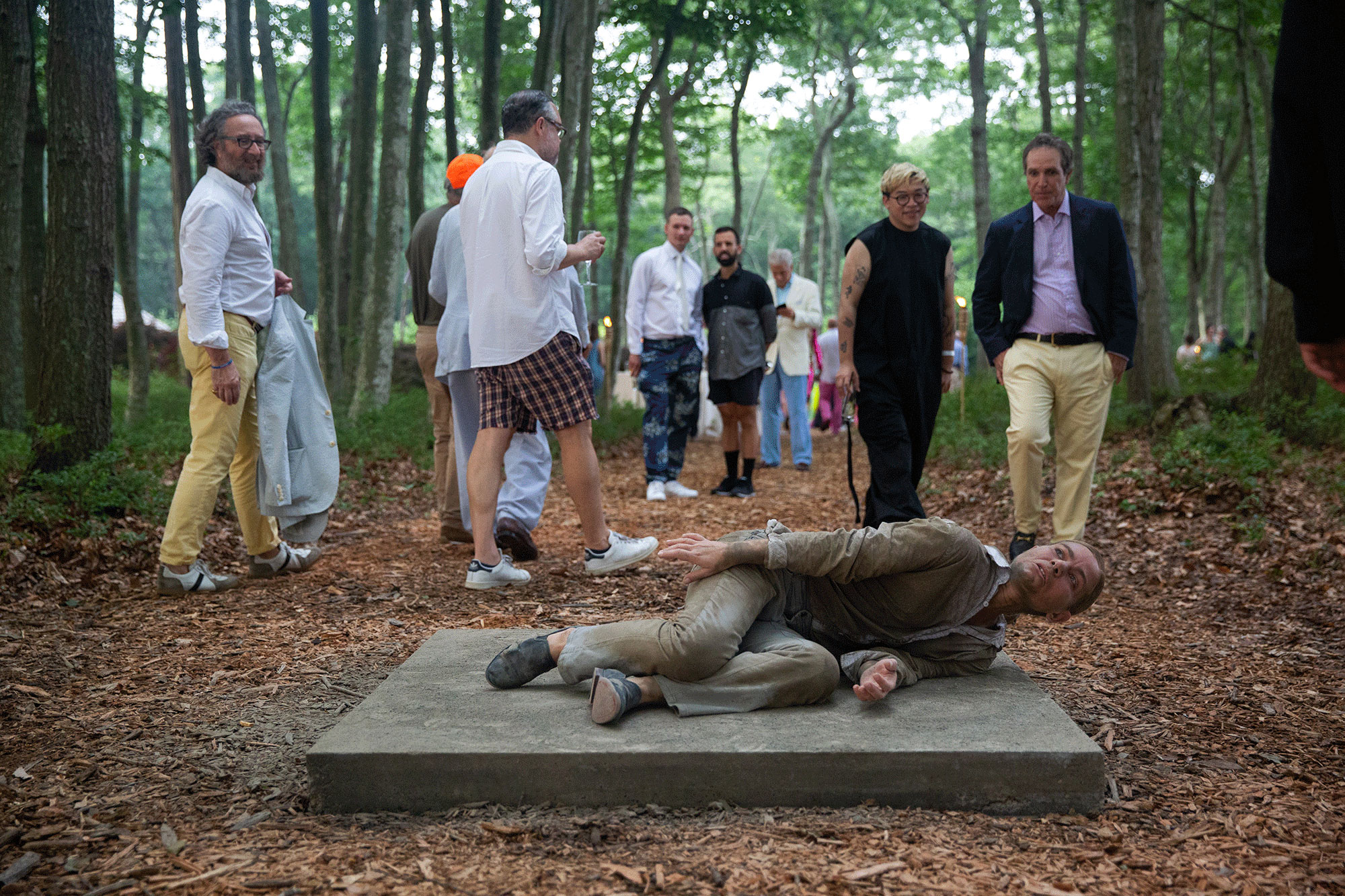
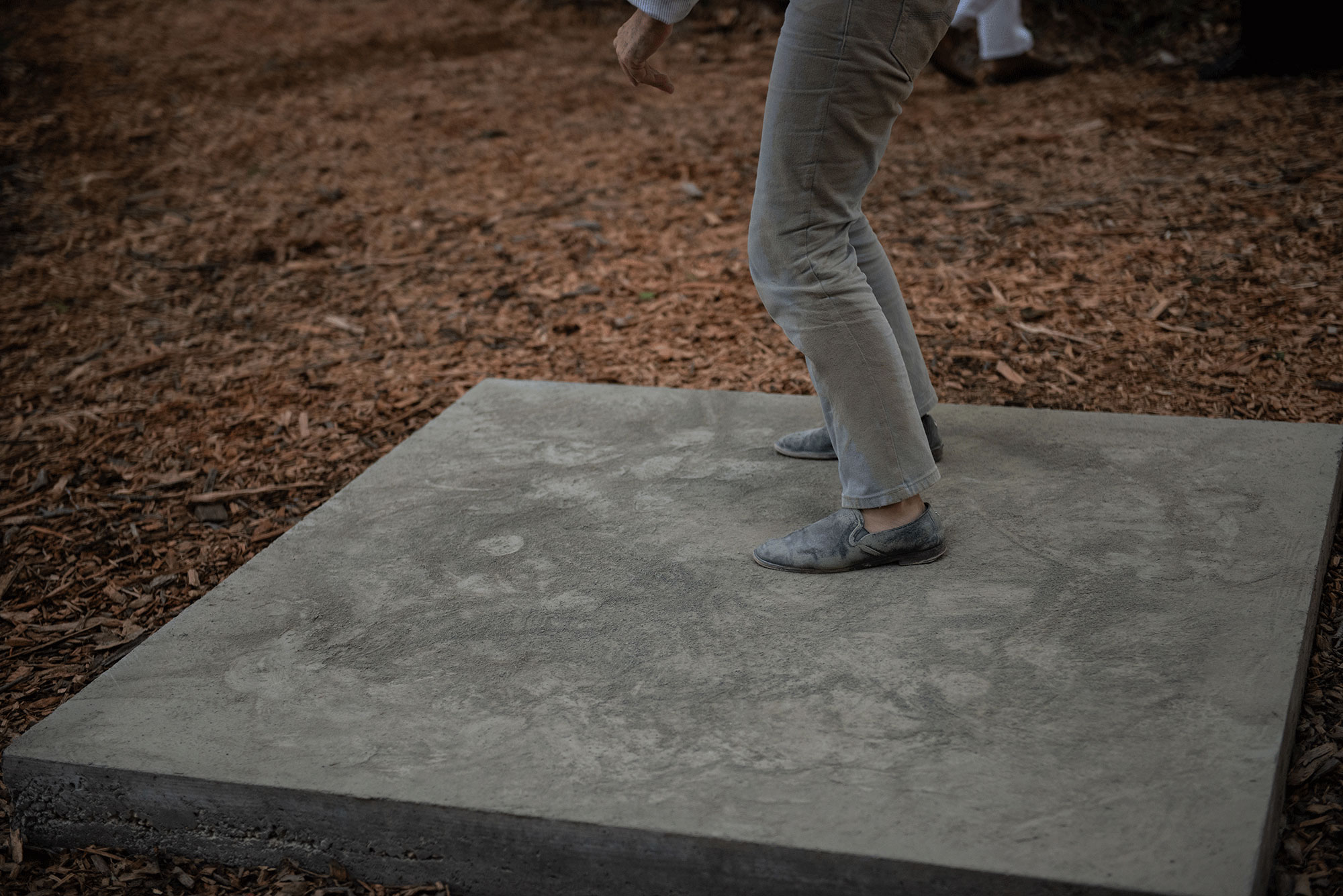
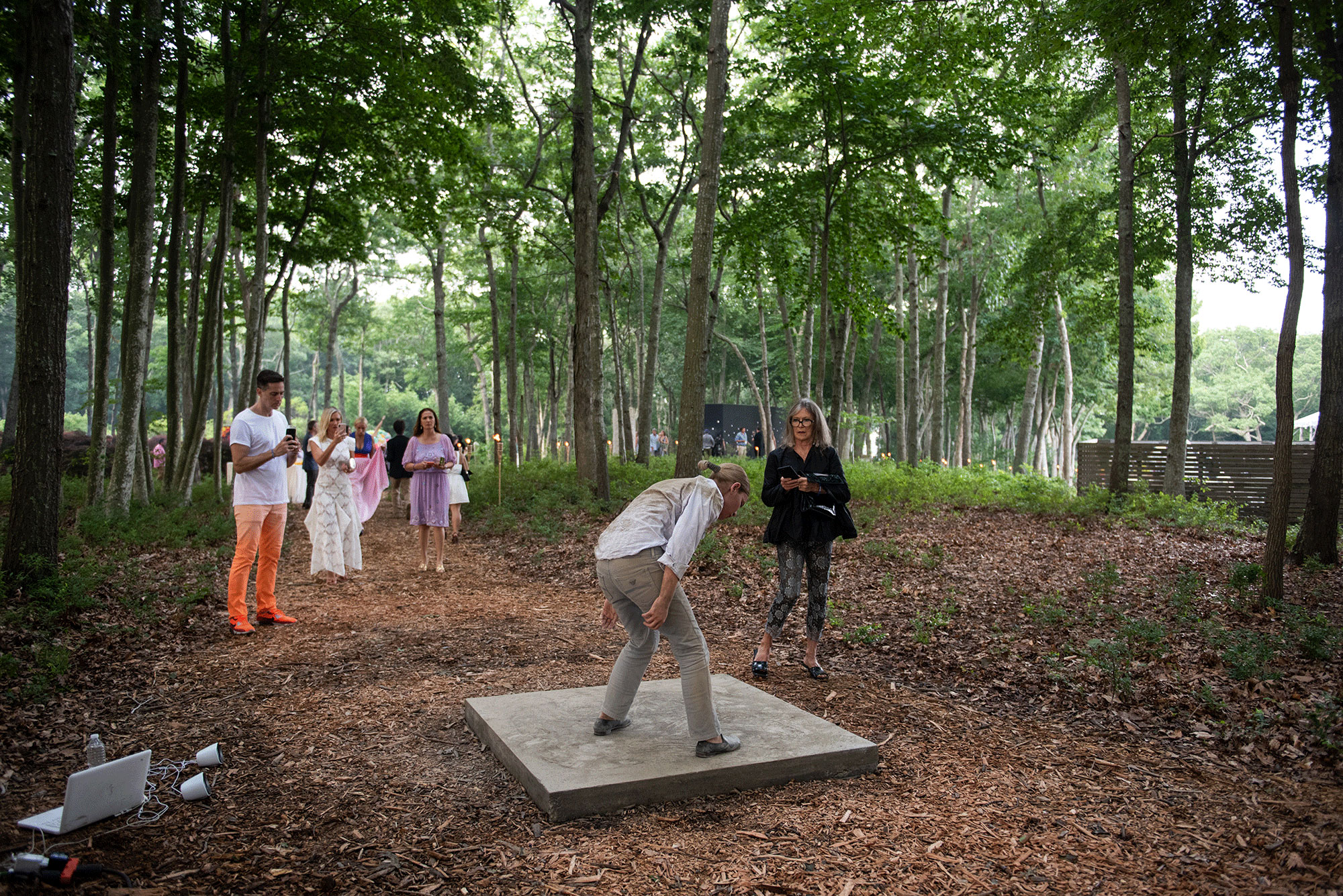
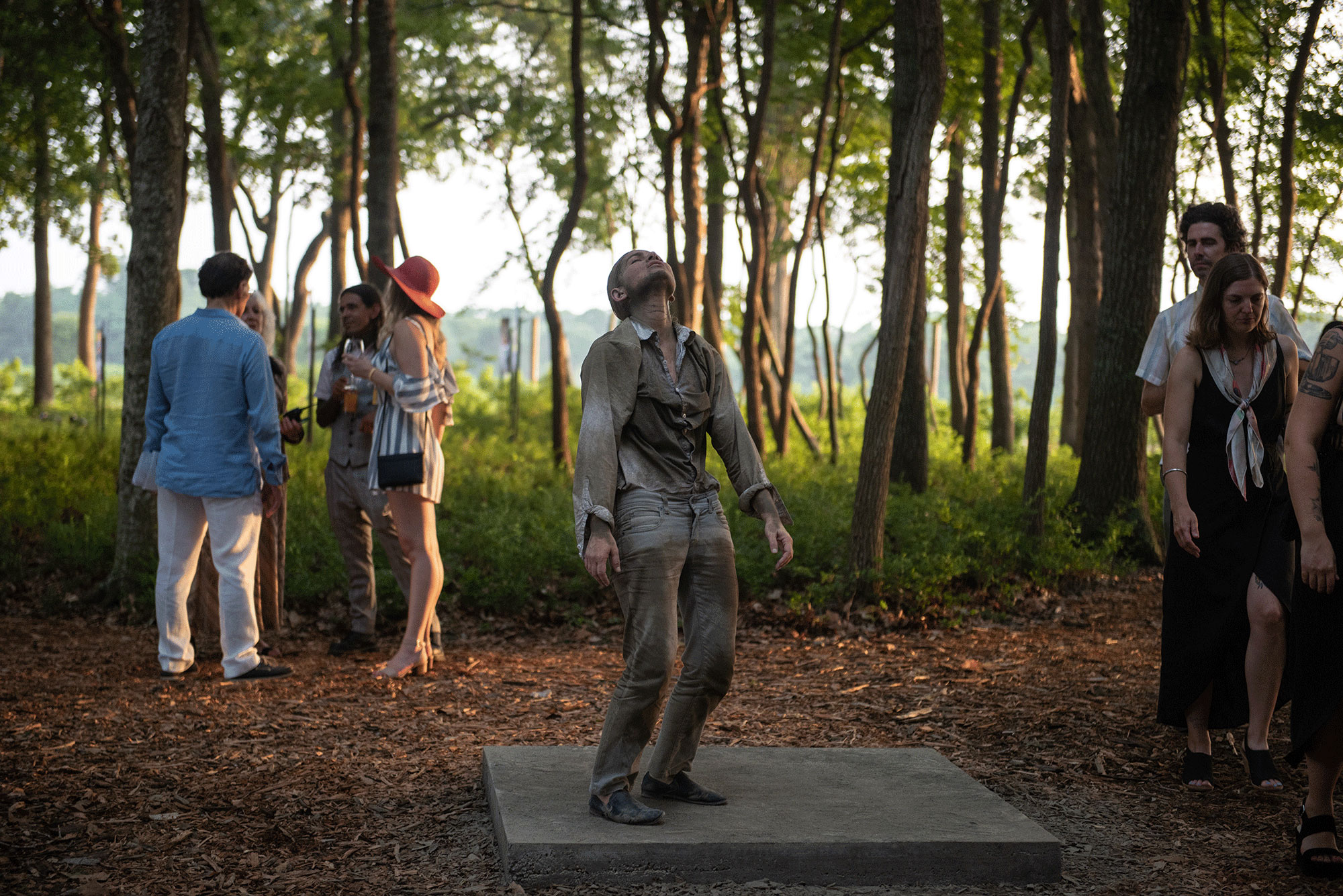
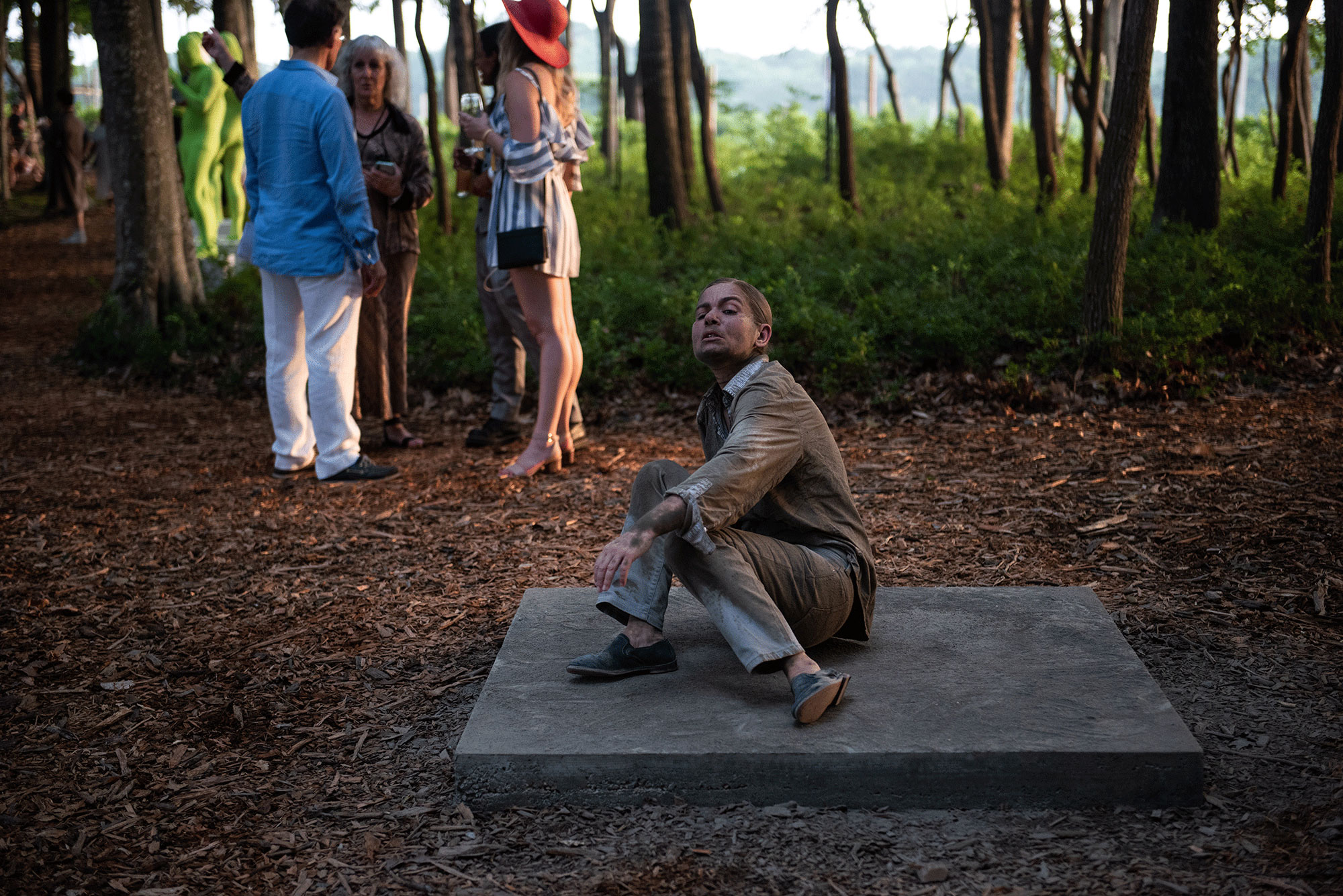
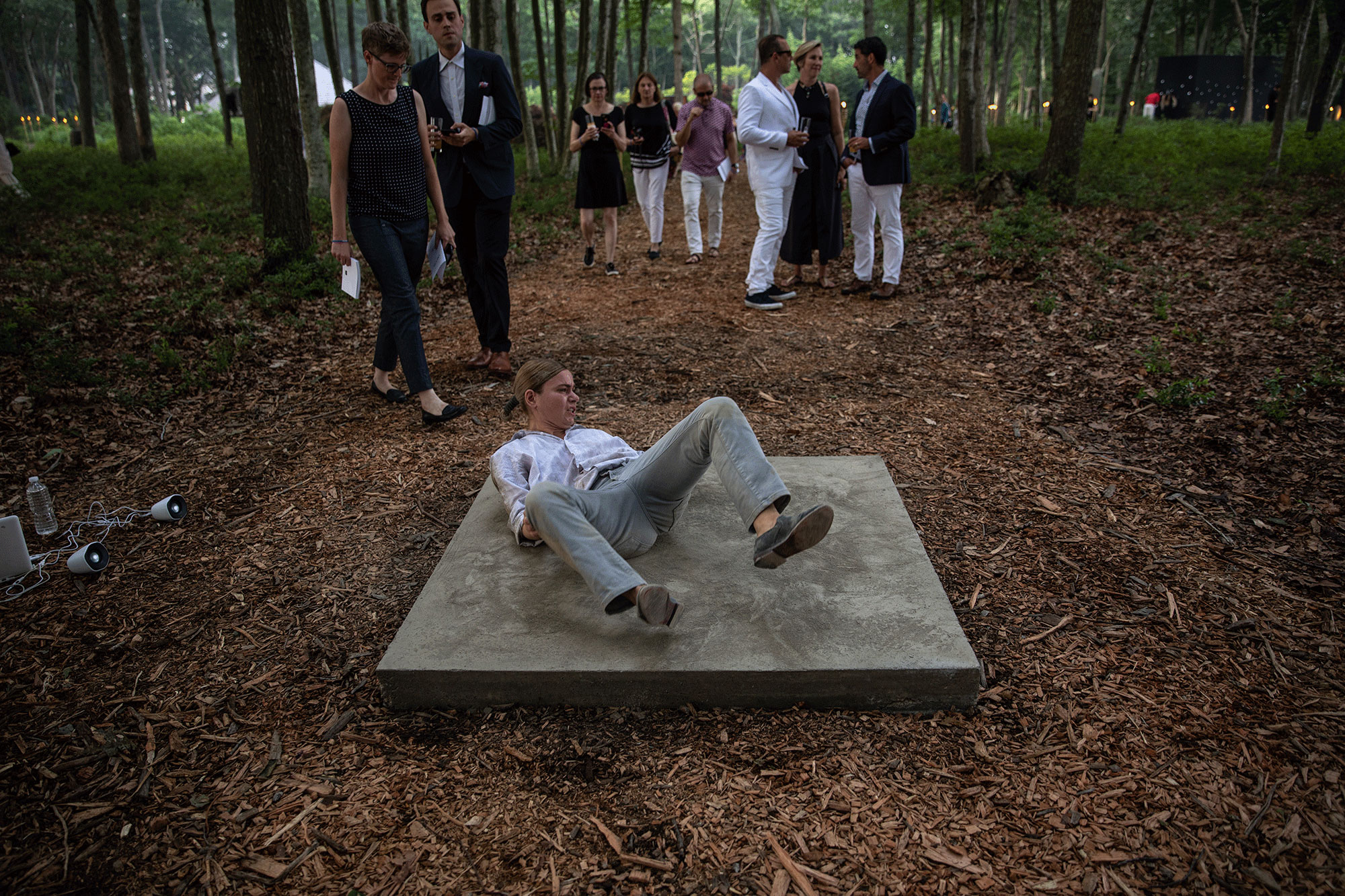
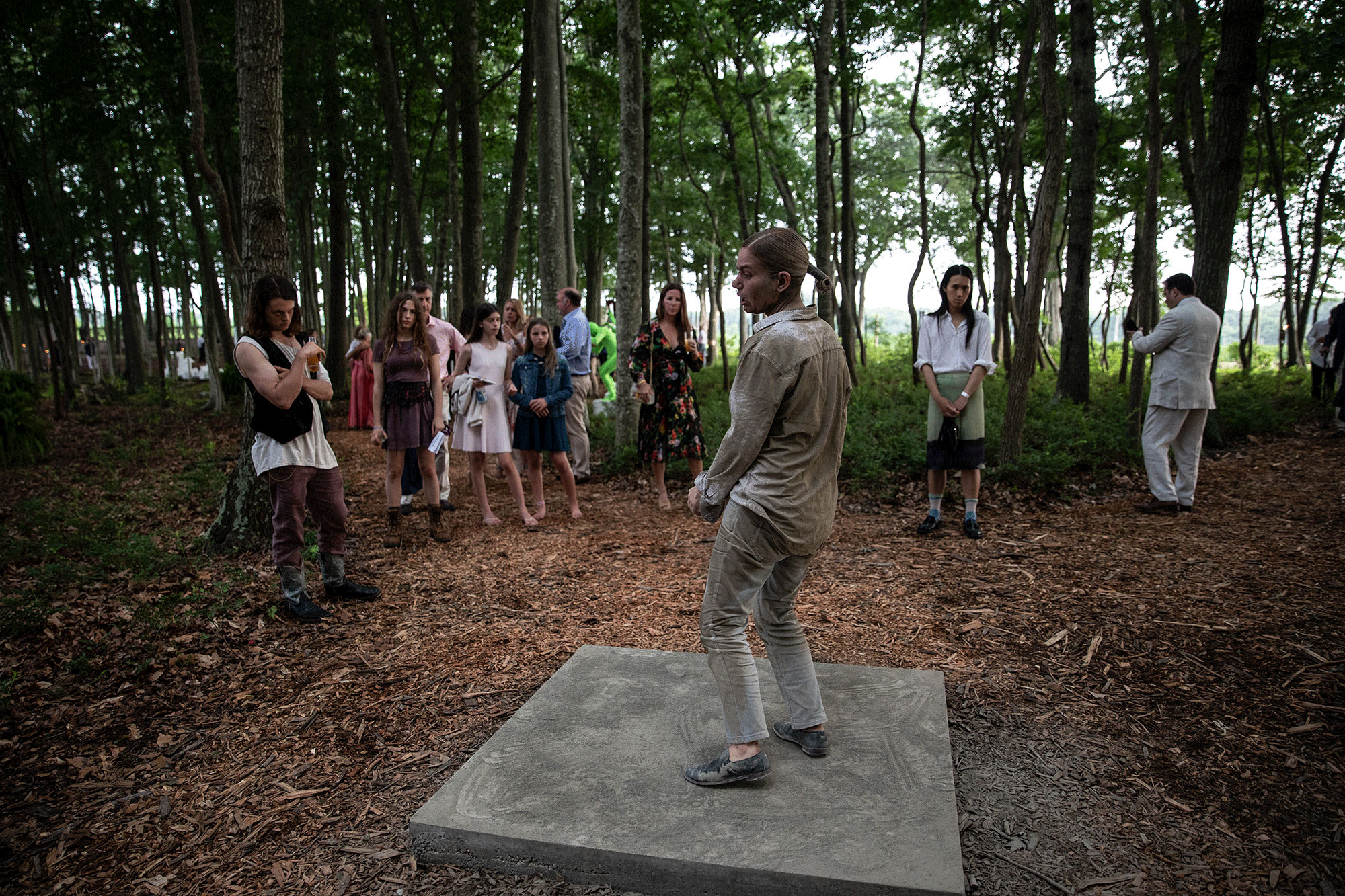
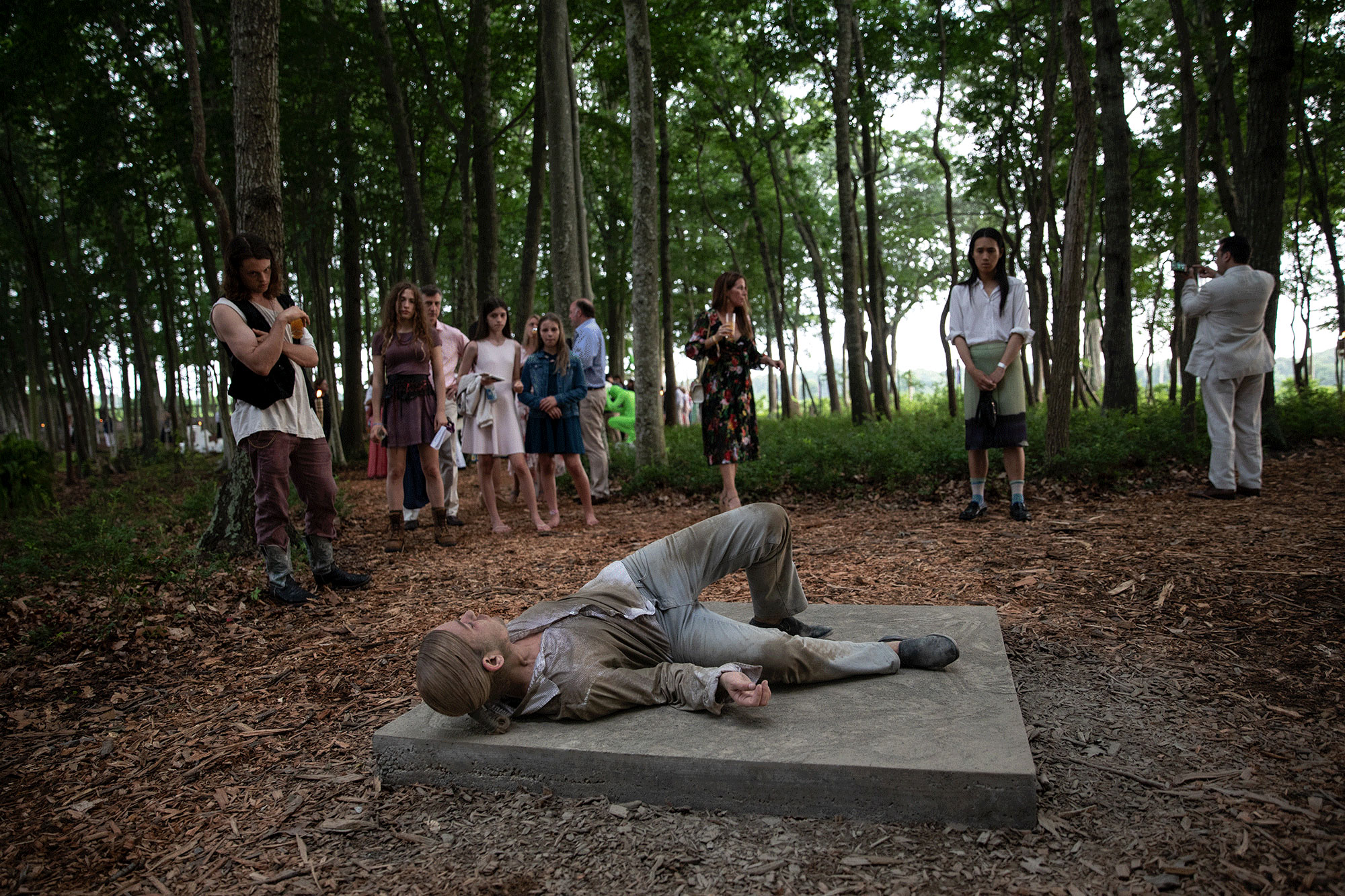
Georgia Sagri participated with the works 'Invisible Ones '(2008) and 'Square' (2007), performance & in situ sculpture.

Invisible Ones '(2008) , 'Square' (2007) at The Watermill Center ©Georgia Sagri

Invisible Ones '(2008) , 'Square' (2007) at The Watermill Center ©Georgia Sagri

Invisible Ones '(2008) , 'Square' (2007) at The Watermill Center ©Georgia Sagri

Invisible Ones '(2008) , 'Square' (2007) at The Watermill Center ©Georgia Sagri

Invisible Ones '(2008) , 'Square' (2007) at The Watermill Center ©Georgia Sagri

Invisible Ones '(2008) , 'Square' (2007) at The Watermill Center ©Georgia Sagri

Invisible Ones '(2008) , 'Square' (2007) at The Watermill Center ©Georgia Sagri

Invisible Ones '(2008) , 'Square' (2007) at The Watermill Center ©Georgia Sagri

Invisible Ones '(2008) , 'Square' (2007) at The Watermill Center ©Georgia Sagri

Invisible Ones '(2008) , 'Square' (2007) at The Watermill Center ©Georgia Sagri

Invisible Ones '(2008) , 'Square' (2007) at The Watermill Center ©Georgia Sagri

Invisible Ones '(2008) , 'Square' (2007) at The Watermill Center ©Georgia Sagri

Invisible Ones '(2008) , 'Square' (2007) at The Watermill Center ©Georgia Sagri

Invisible Ones '(2008) , 'Square' (2007) at The Watermill Center ©Georgia Sagri

Invisible Ones '(2008) , 'Square' (2007) at The Watermill Center ©Georgia Sagri©Georgia Sagri

GEORGIA SAGRI and I

at Portikus, Frankfurt and Main, Germany (21/4 - 17/6/18)
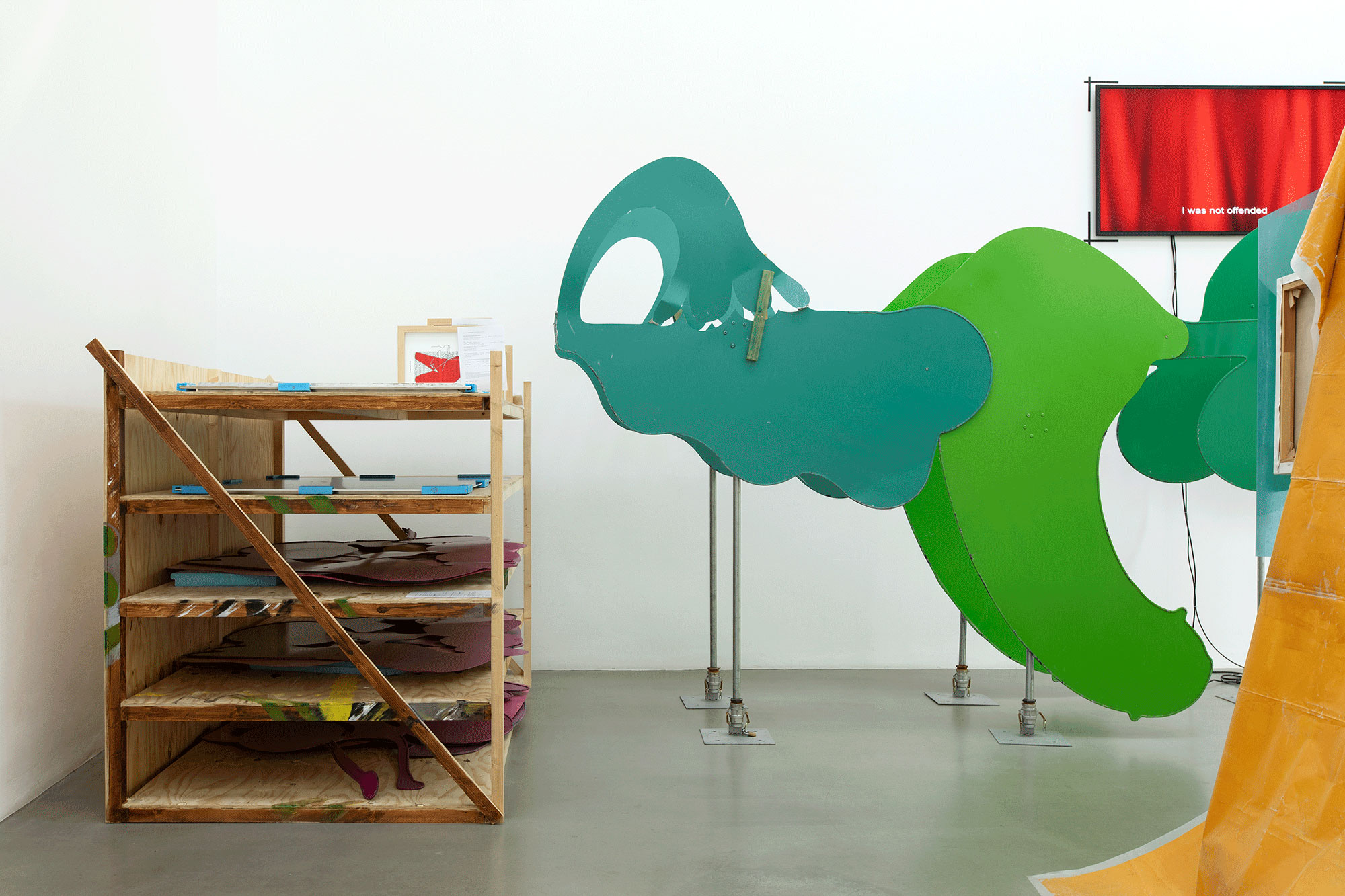

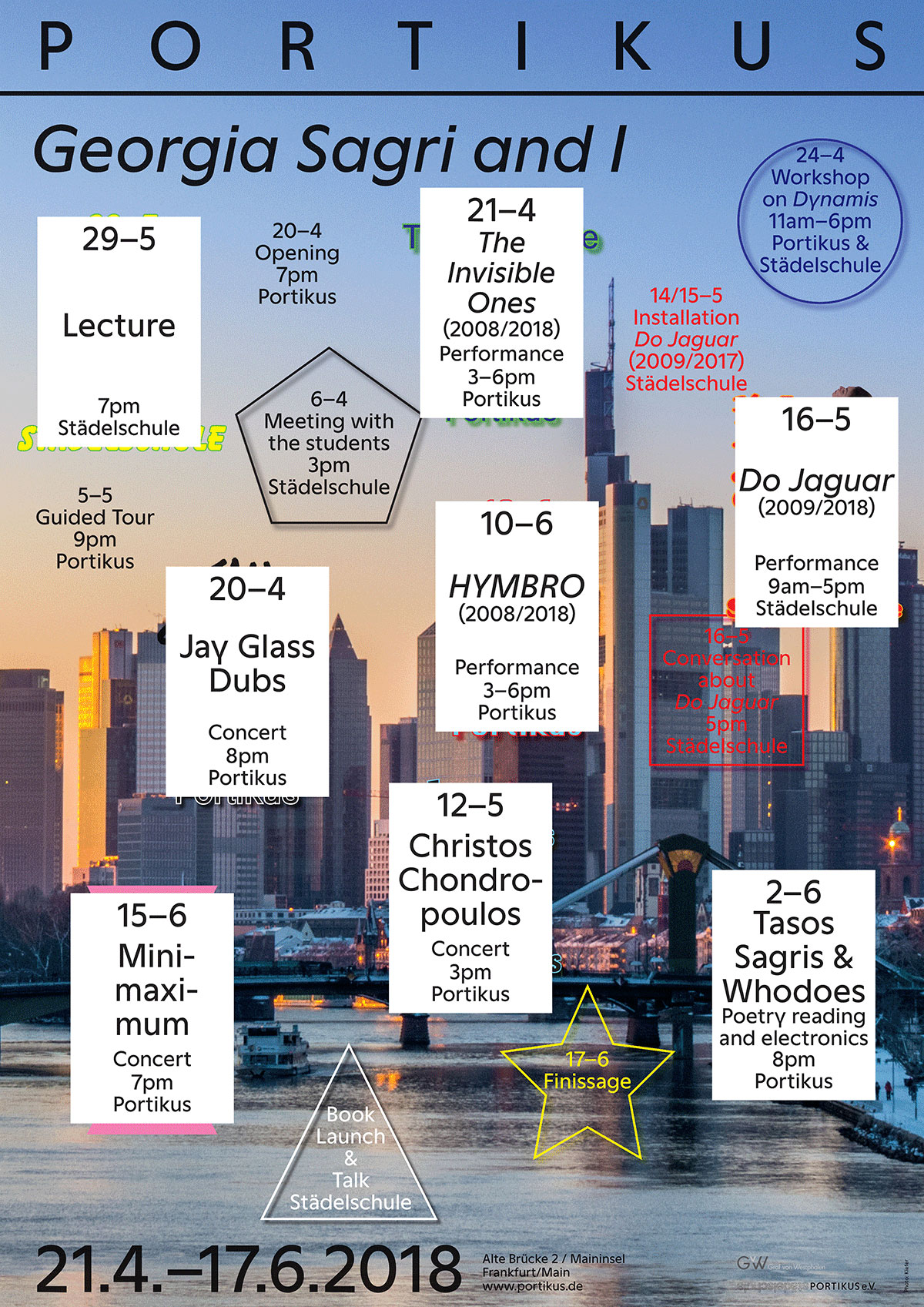
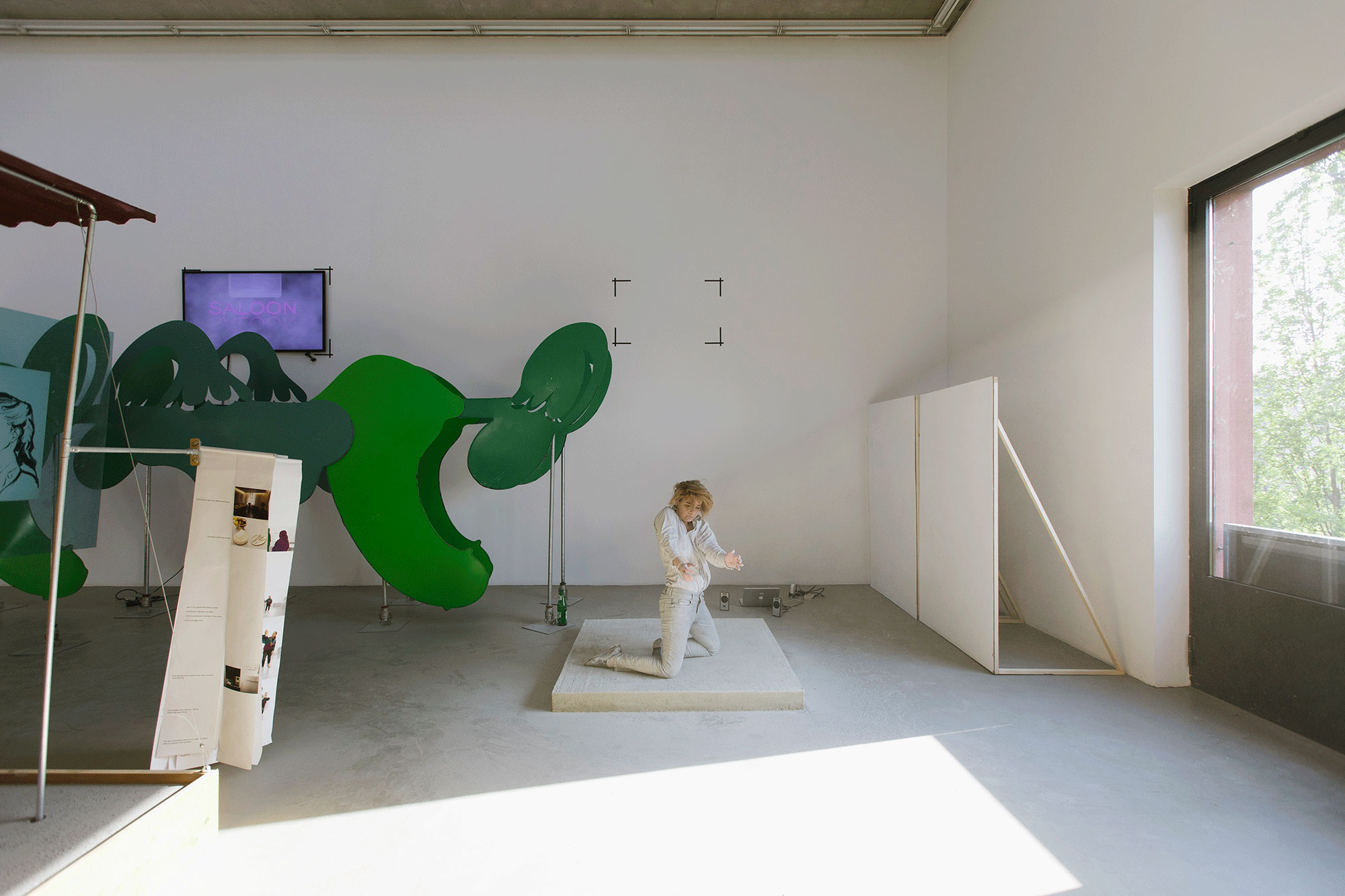
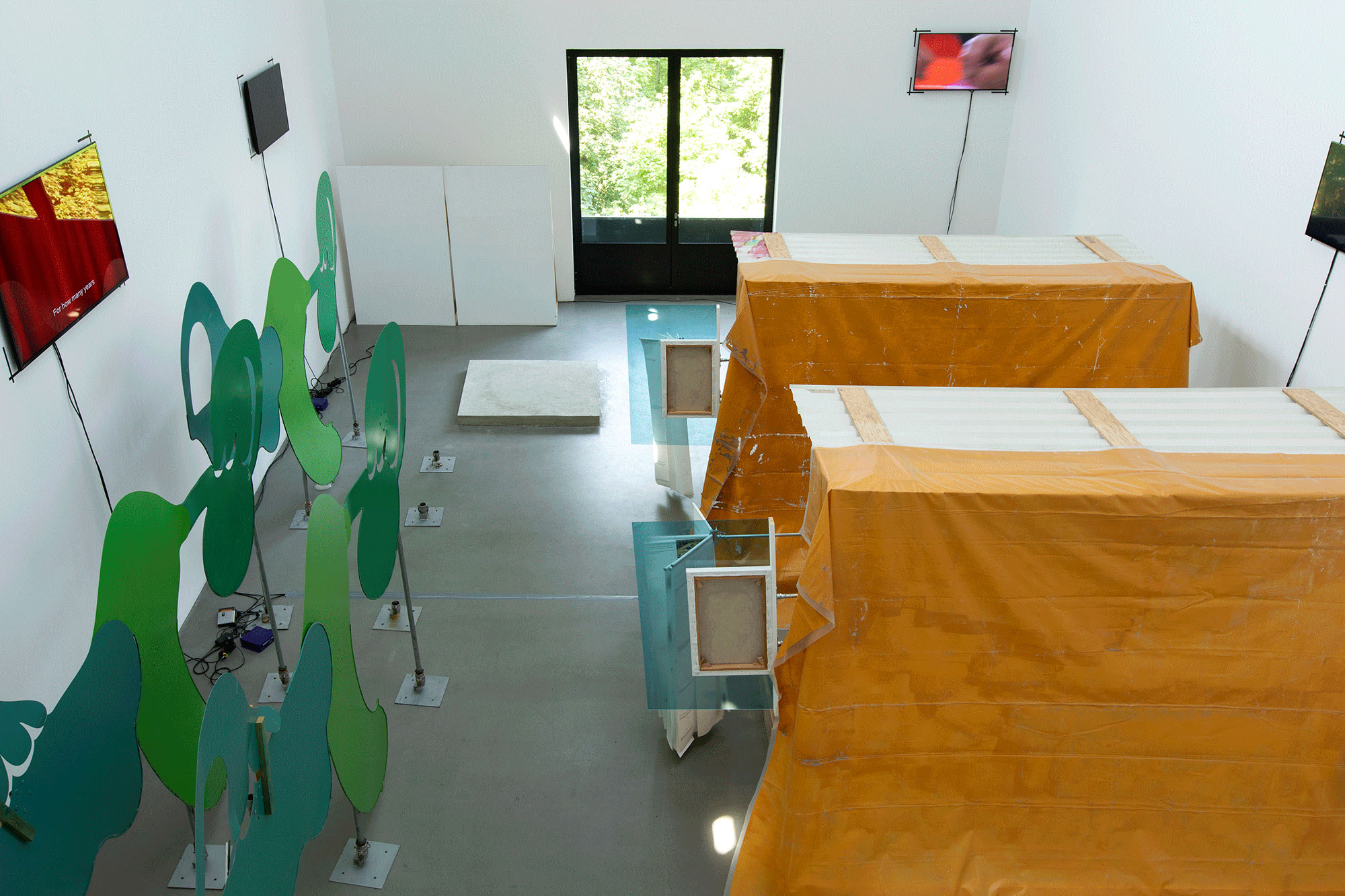
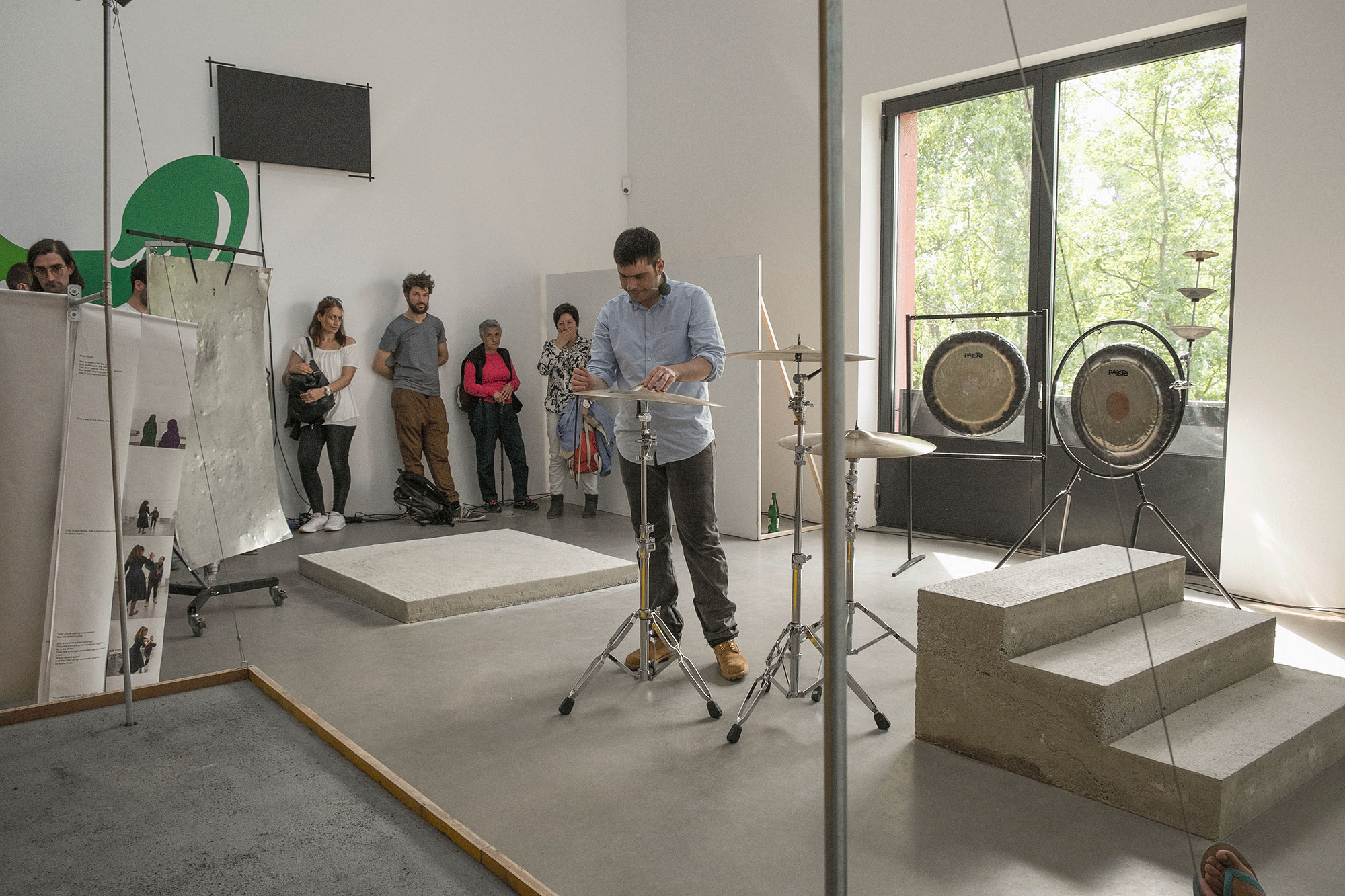
Georgia Sagri and I is a playlist, a perspective on retrospective and an exhibition of exhibiting – an institution without confines. For the first time, sculptures, video works and performances from the last ten years of Georgia Sagri’s multidisciplinary oeuvre come together. Their display is treated as a score that decides on tempo, duration, entry and exit. Screenscapes, landscapes, soundscapes are all part of it, as are performances, concerts, workshops and their organizing modes.

Georgia Sagri and I, installation view. ©Georgia Sagri

Georgia Sagri and I, 2018 Inkjet Print on paper 118.9 × 84.1 cm Poster for the exhibition Portikus, Frankfurt Design by Ronnie Fueglister. ©Georgia Sagri

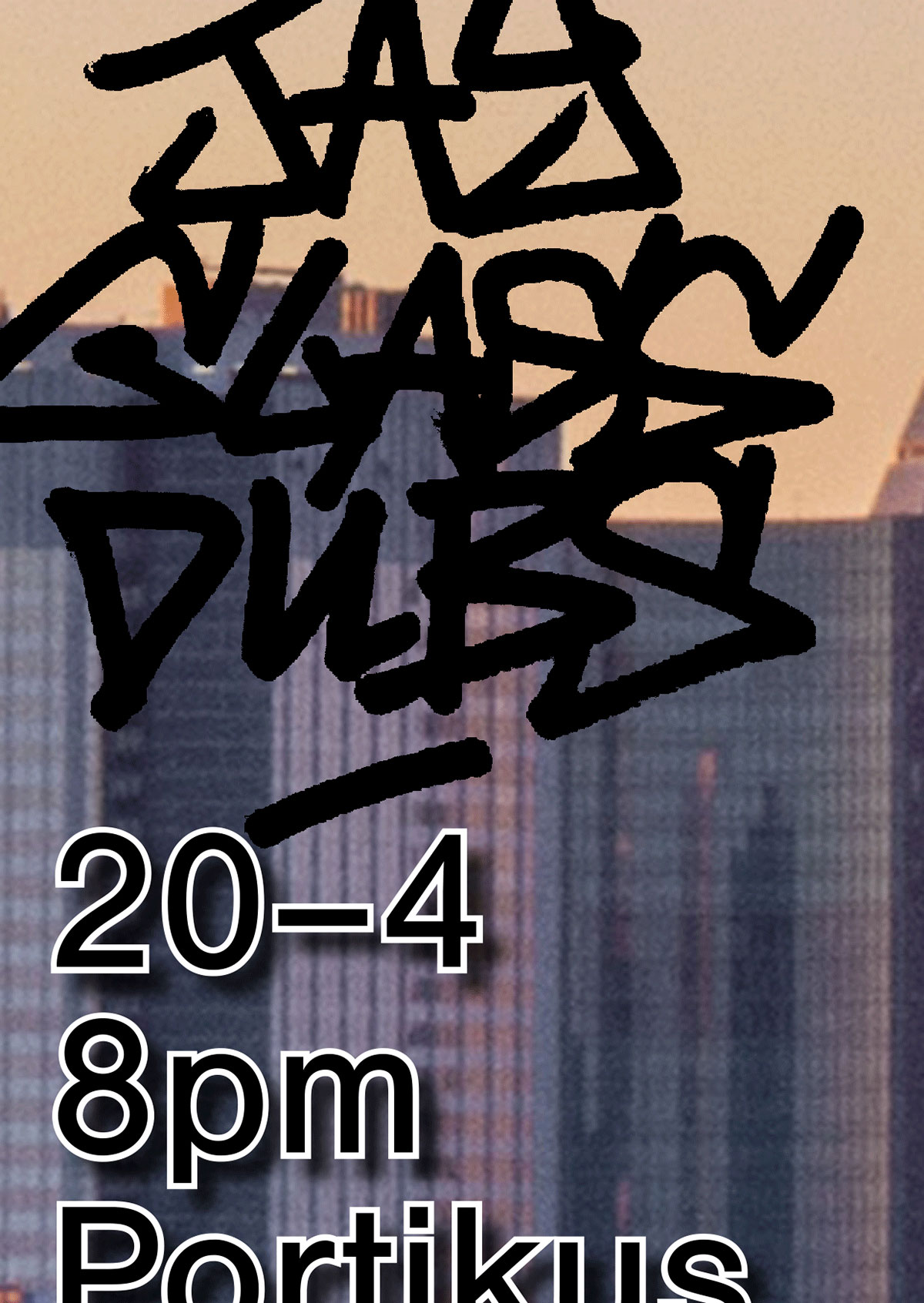
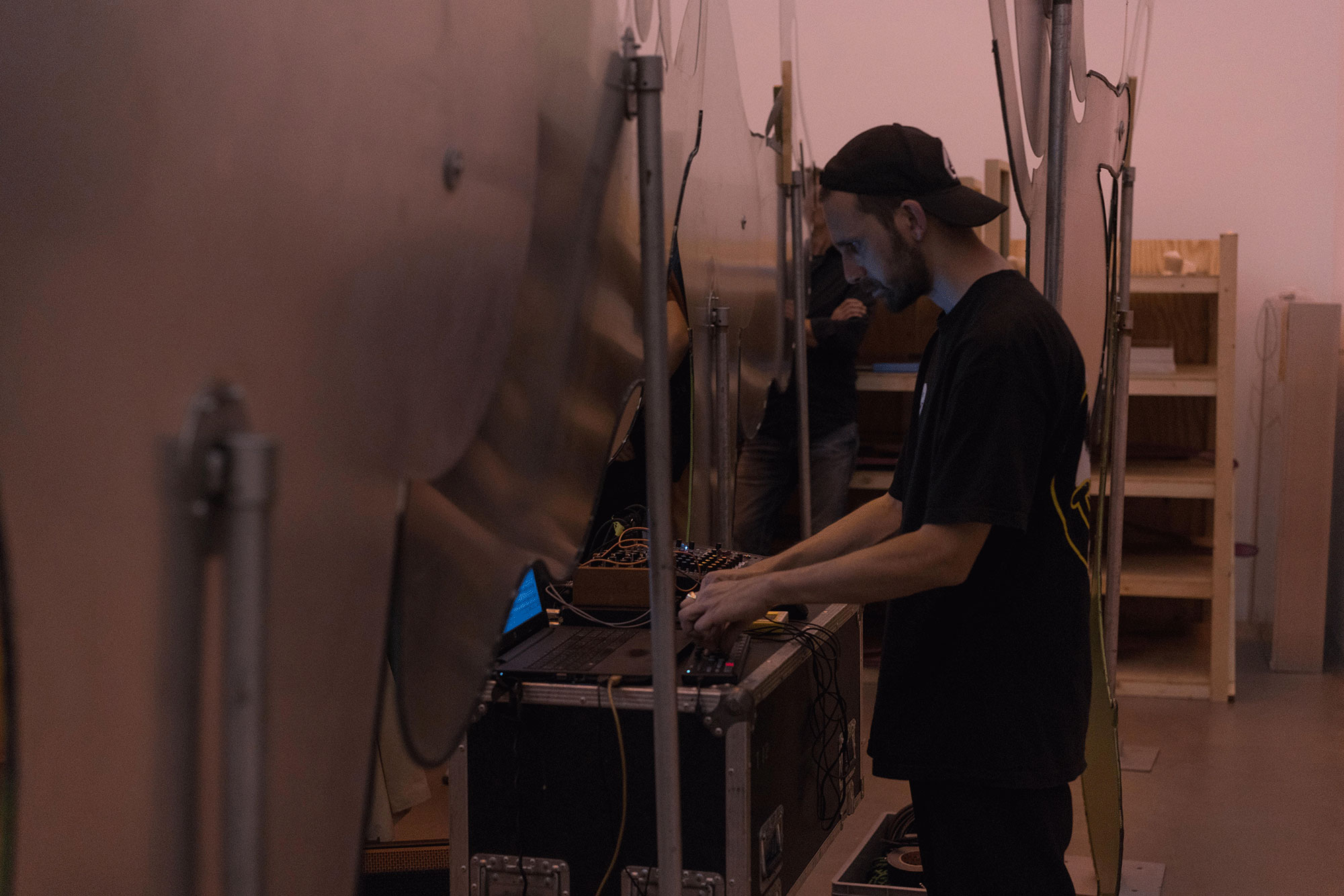
Jay Glass Dubs Concert, Portikus

Jay Glass Dubs Concert, Portikus

Jay Glass Dubs Concert, Portikus

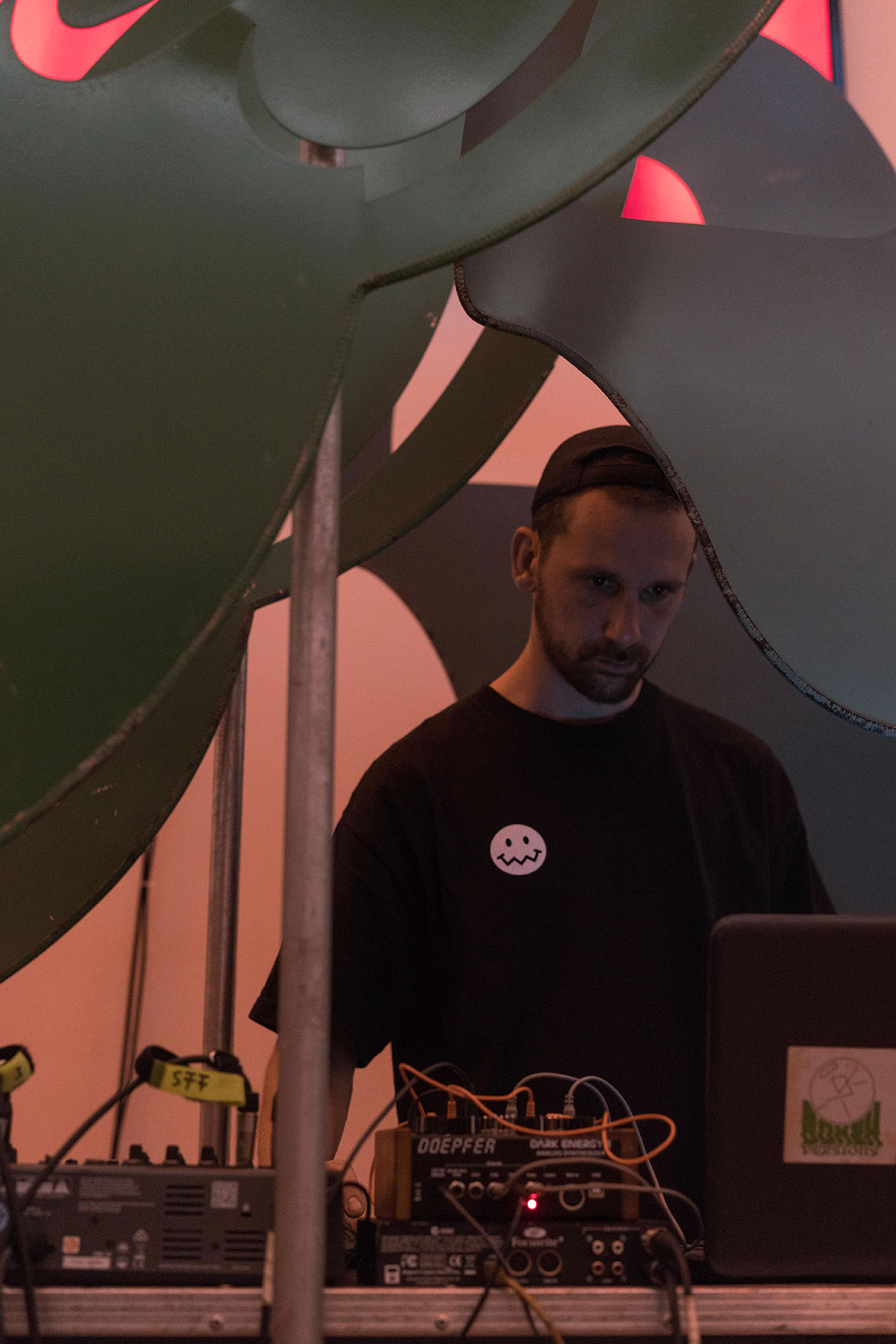
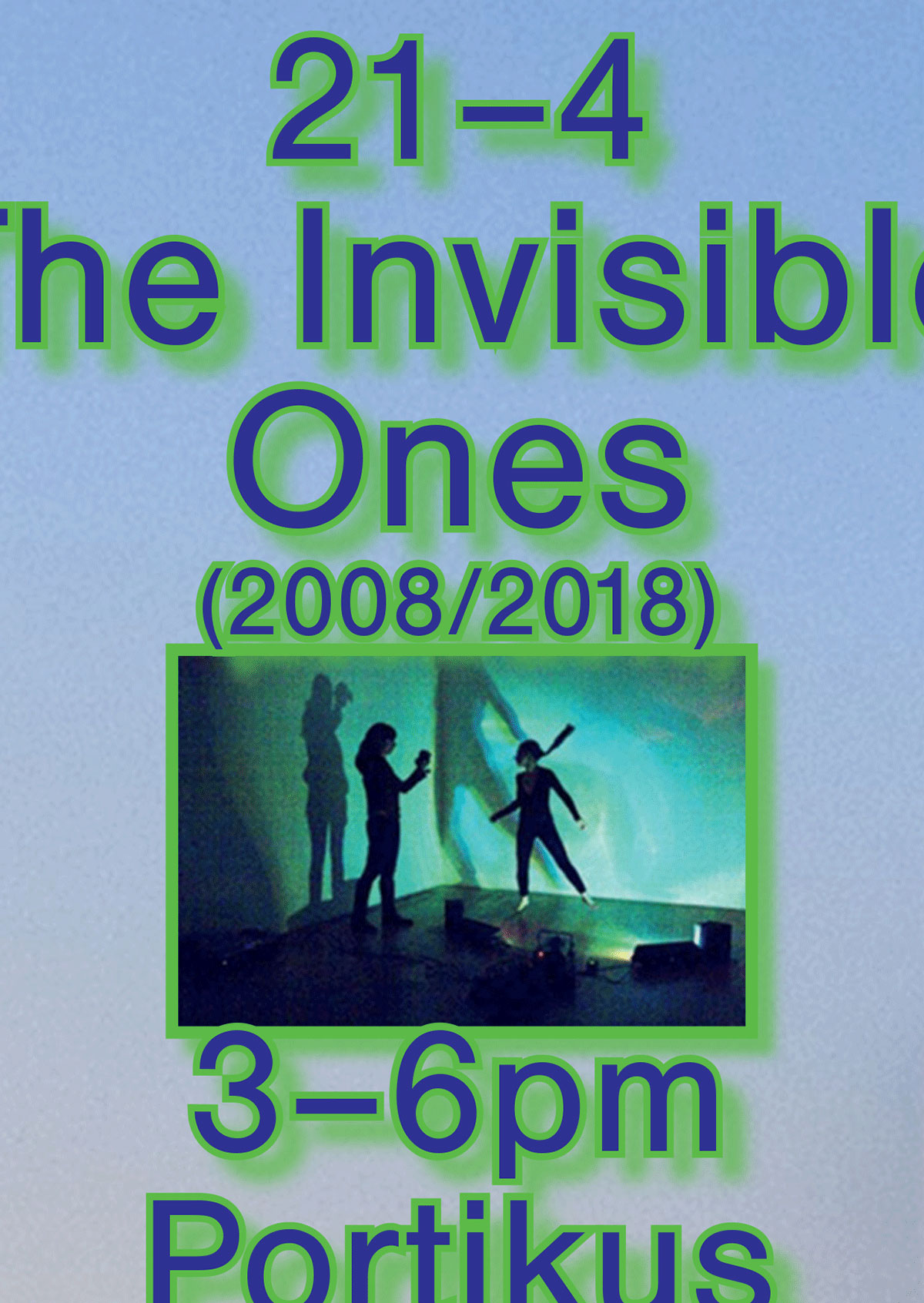
The Invisible Ones (2008) Audio 5‘ looped, performance, April 21, 2018, variation of 3hrs

The Invisible Ones (2008) Audio 5‘ looped, performance, April 21, 2018, variation of 3hrs, ©Georgia Sagri

The Invisible Ones (2008) Audio 5‘ looped, performance, April 21, 2018, variation of 3hrs, ©Georgia Sagri

Georgia Sagri and I, installation view. ©Georgia Sagri

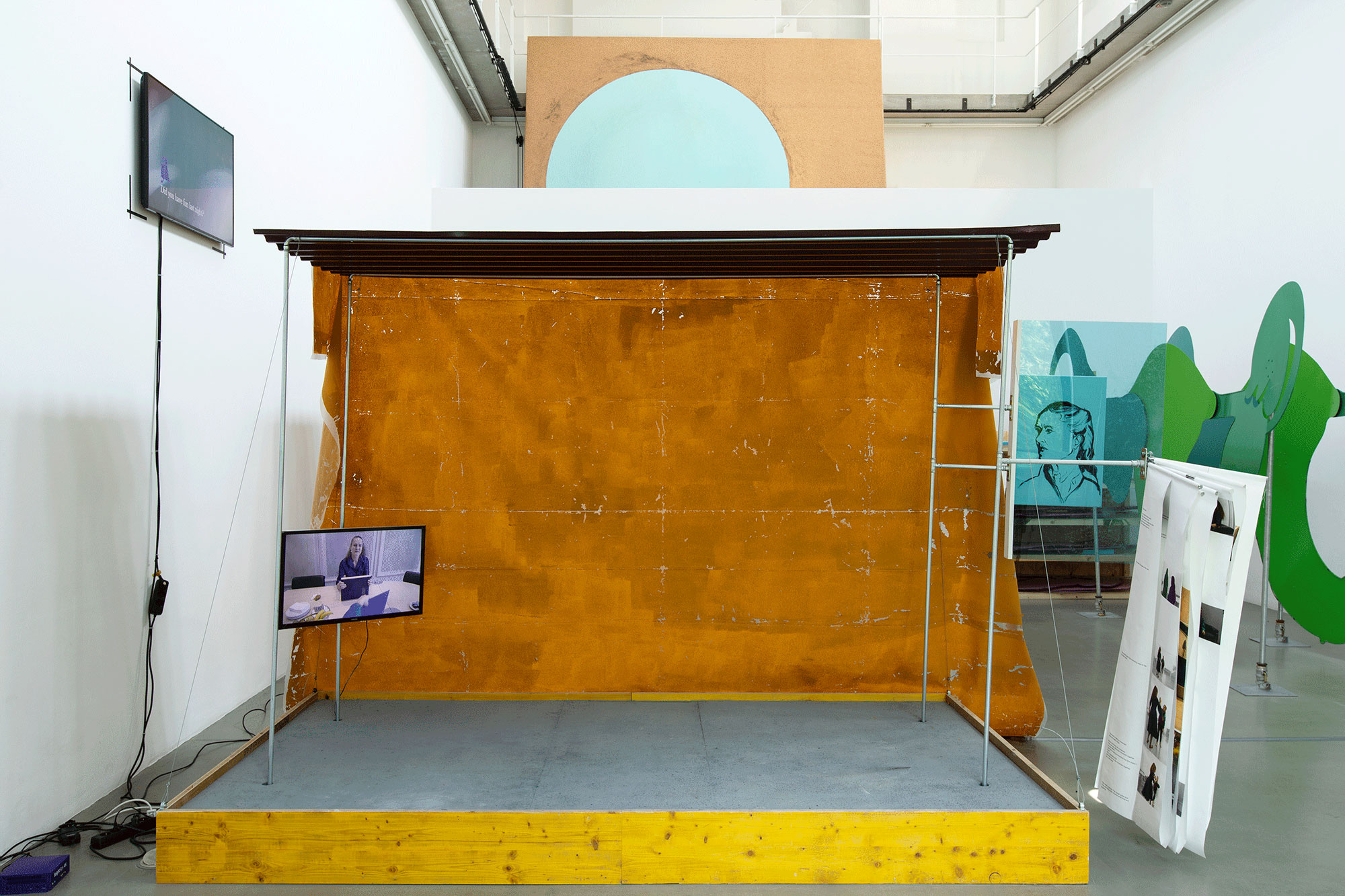
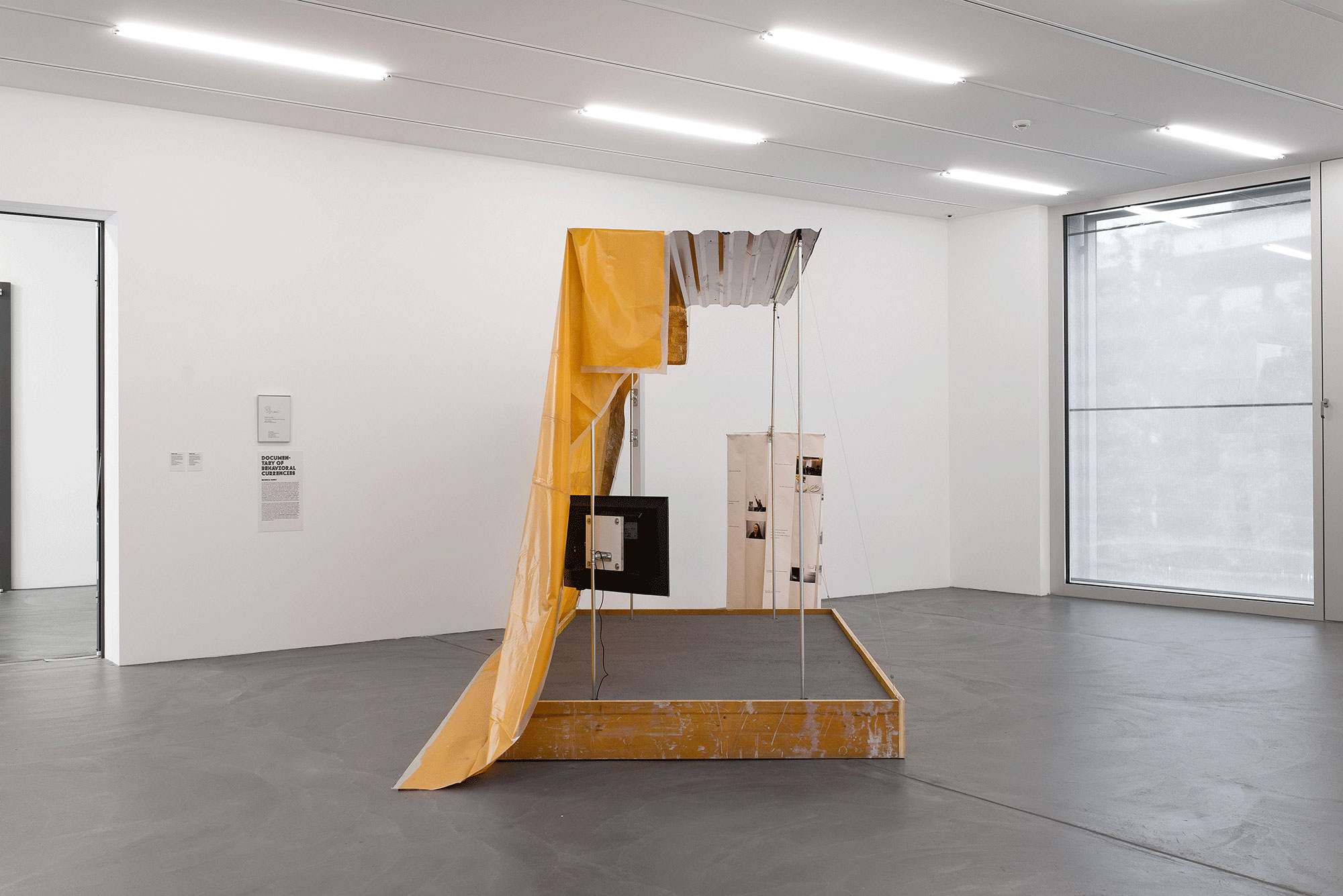
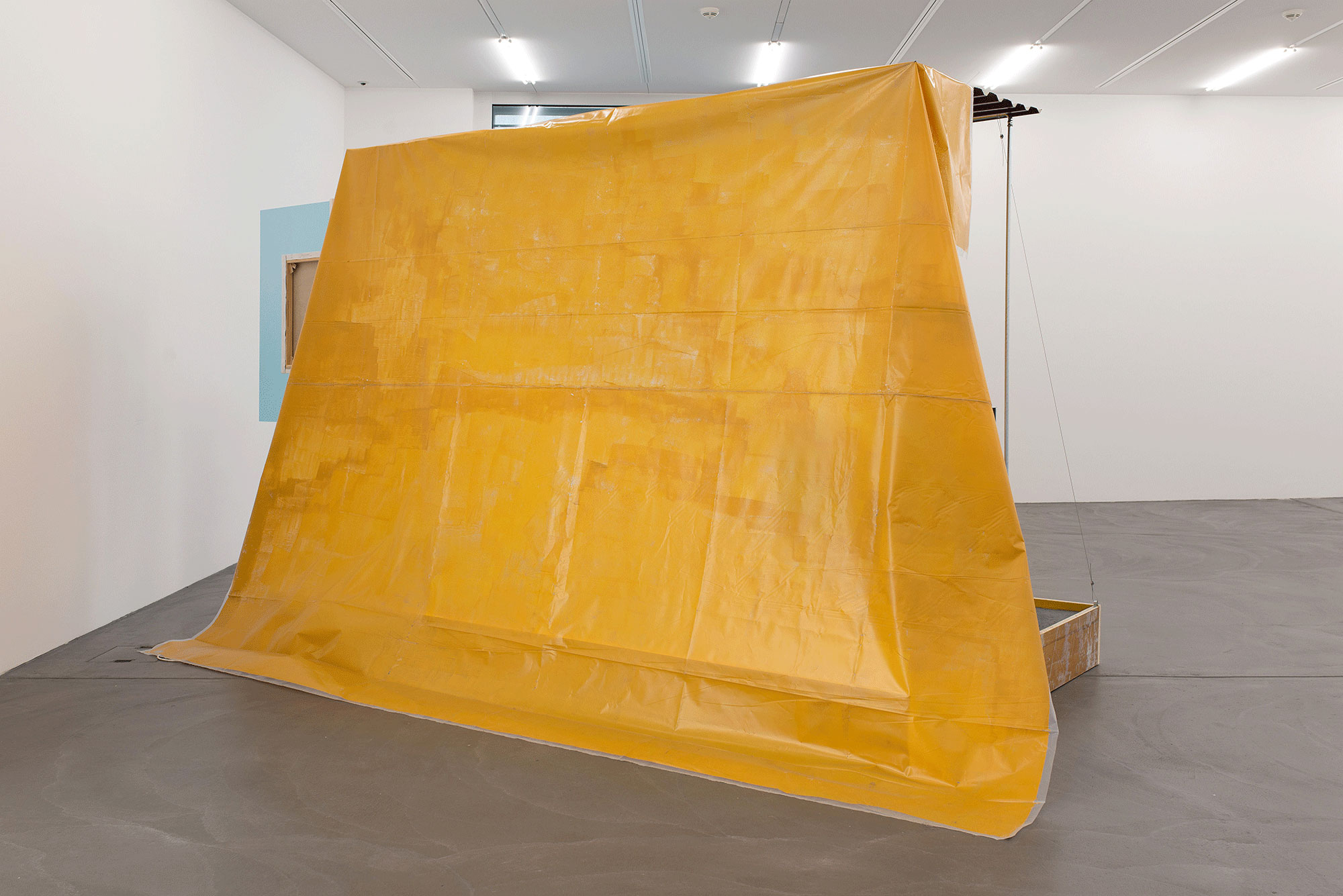
Documentary of Behavioural Currencies (2016) Plywood, shatter boards, acrylic and varnish on wood,corrugated metal sheet, fans, acrylic on plastic sheet, LED tv, HD video 10‘30‘‘ with sound looped, MP4 format on USB drive, thermal tubes,acrylic glass, oil paint on canvas, inkjet print on Tyvek paper, sand and acrylic paint on plywood, various metal components 323 × 240 × 180 cm, Photo by Stathis Mamalakis. ©Georgia Sagri

Georgia Sagri and I, installation view. ©Georgia Sagri

Georgia Sagri and I, installation view. ©Georgia Sagri

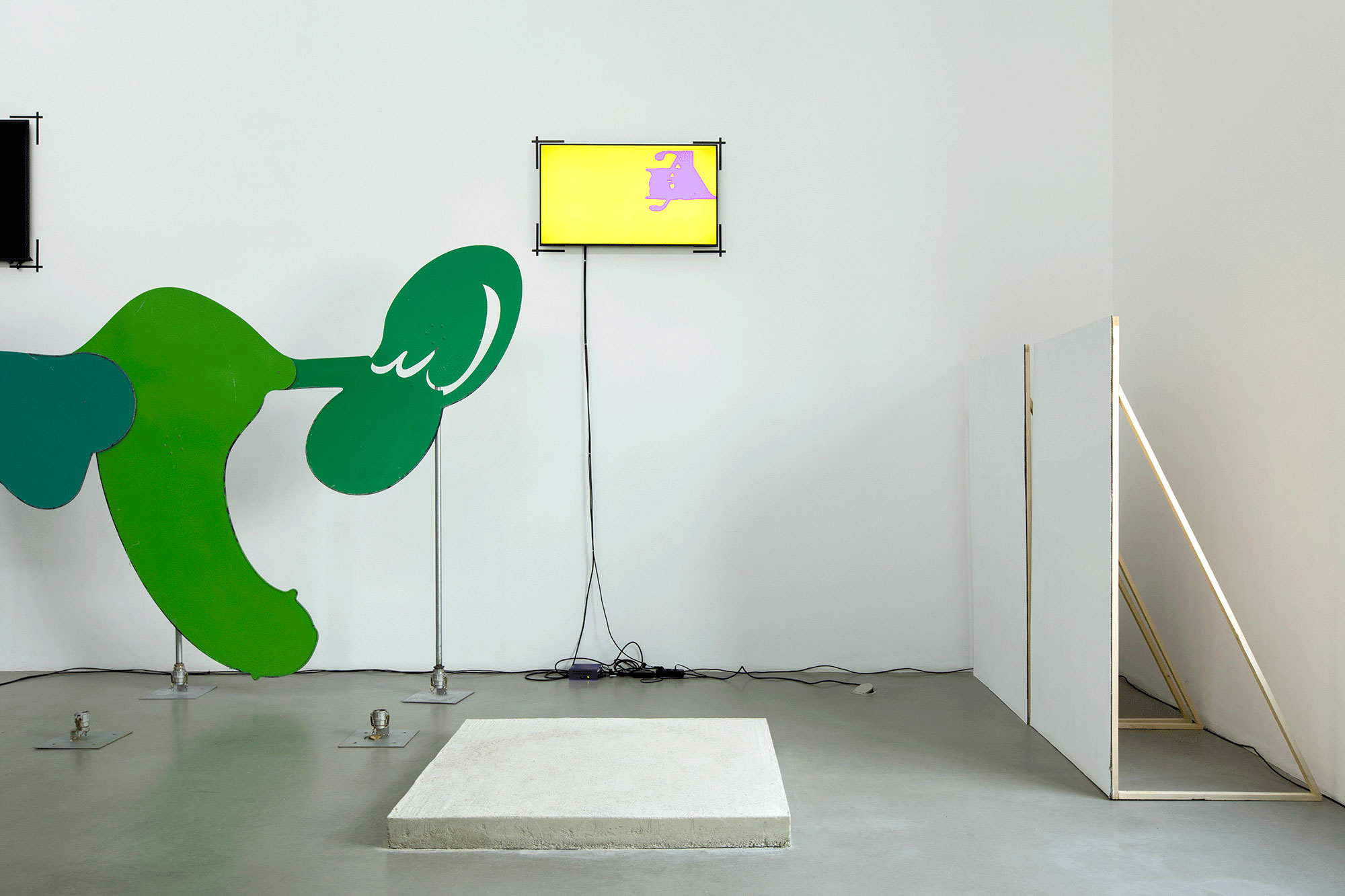
Georgia Sagri and I, Installation view Crop Marks (2010) Ed. 2018: 20 pieces, vinyl 20 × 20 cm Ads for Air (2017) Score of 8 videos (2008–2010) Screen 3: HYMBRO (2008) Video with sound 2’43’’ HYMBRO (2008) Concrete Ed. 2018: 51 × 99 × 119 cm. ©Georgia Sagri

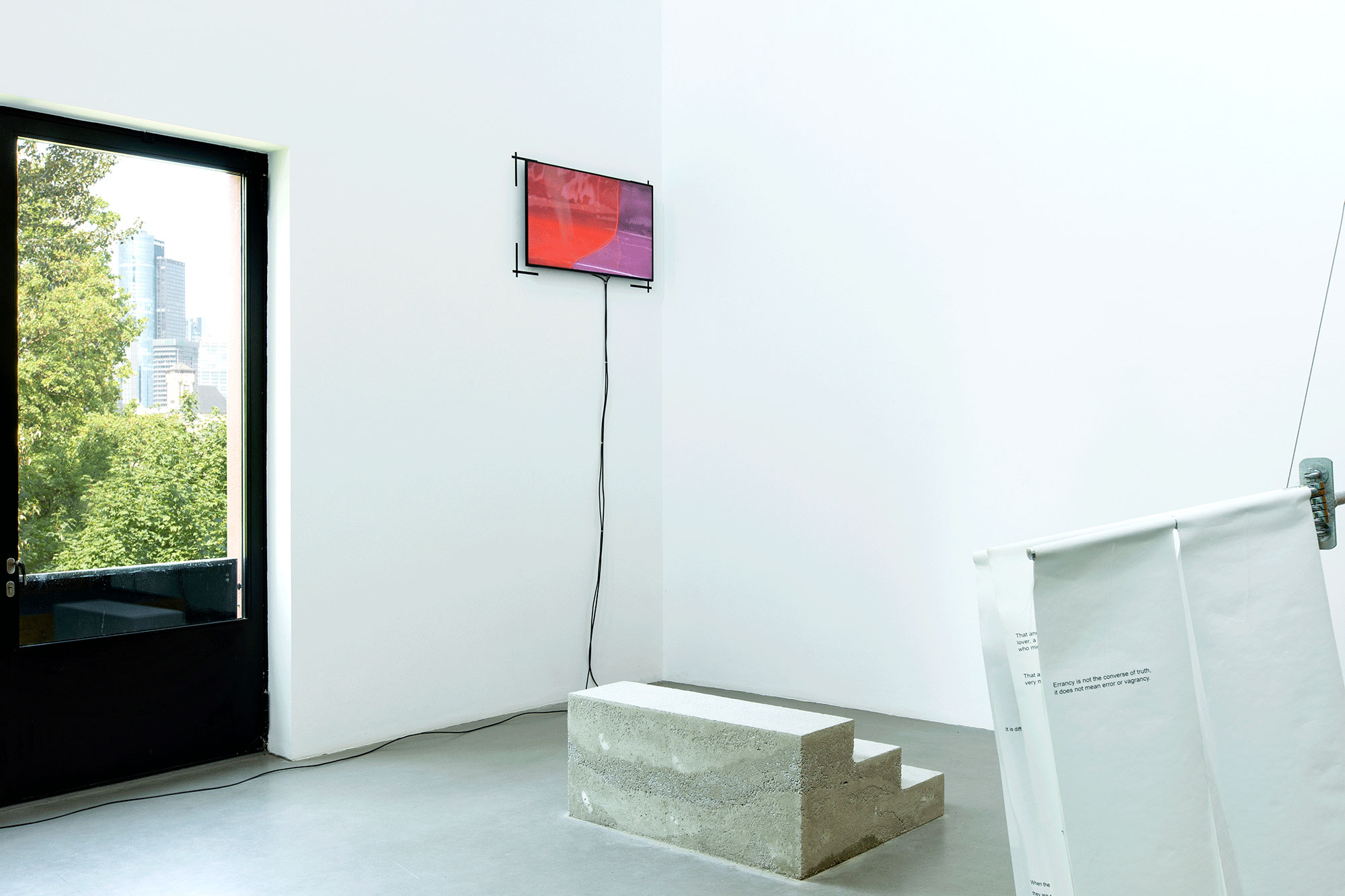
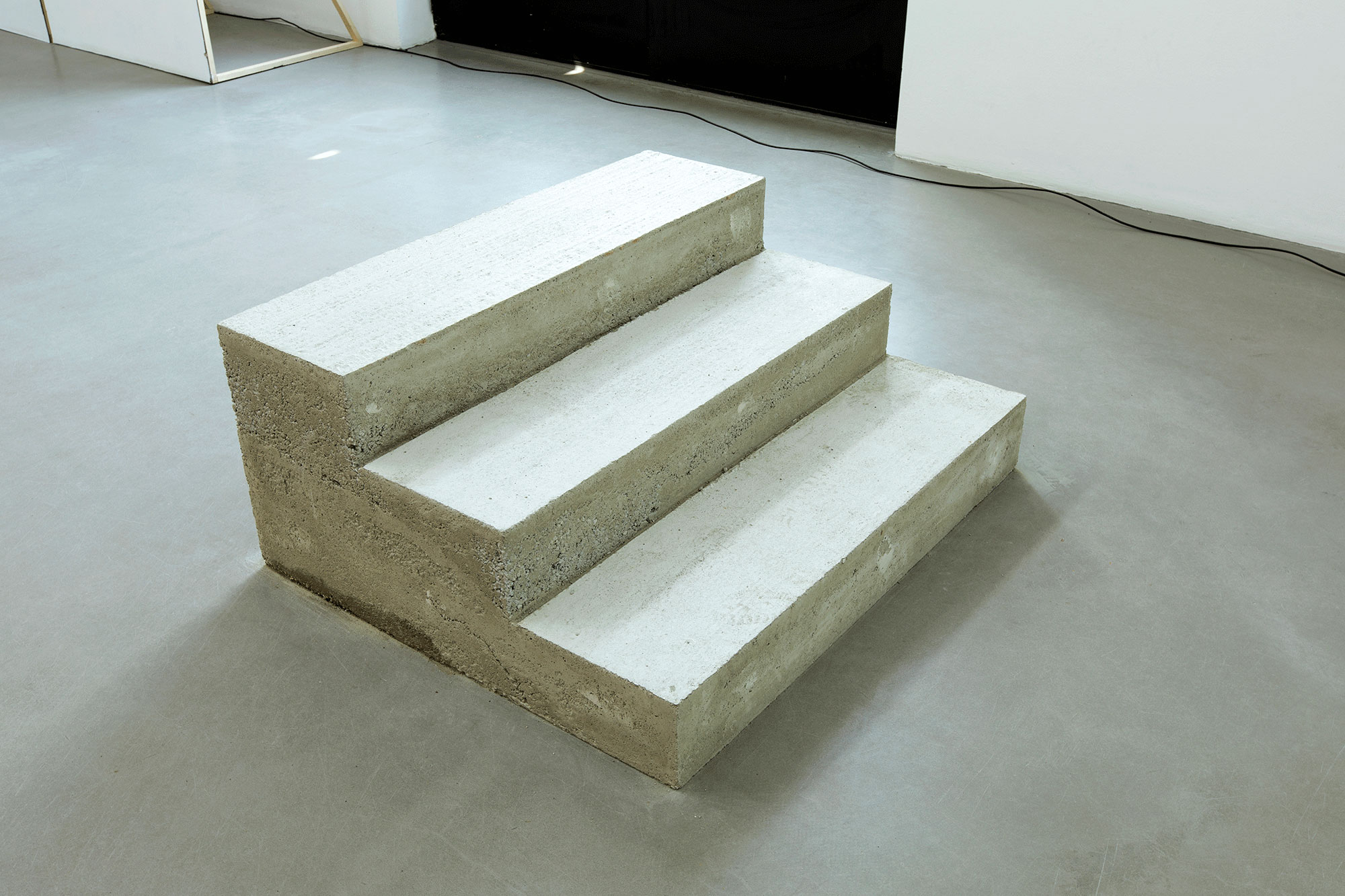
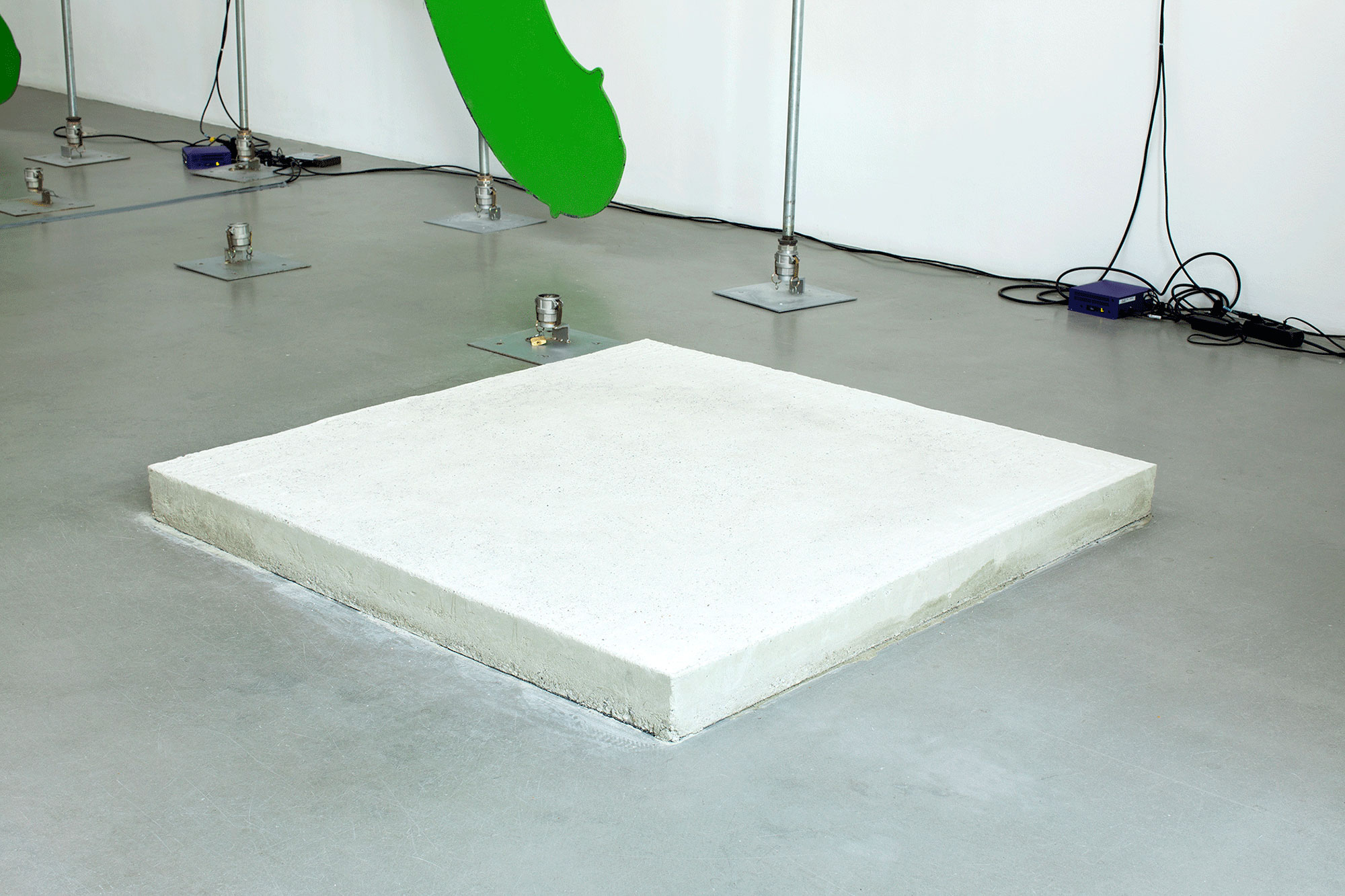
HYMBRO (2008) Concrete Ed. 2018: 51 × 99 × 119 cm Square (2007) Concrete Ed. 2018 11 × 140 × 140 cm, Courtesy of the artist The Invisible Ones (2008) Audio 5‘ looped, performance, April 21, 2018, variation of 3hrs. ©Georgia Sagri

Georgia Sagri and I, installation view. ©Georgia Sagri

Square (2007) Concrete 20 × 20 cm Ed. 2018: Square (2007) Concrete Ed. 2018: 11 × 140 × 140 cm. ©Georgia Sagri

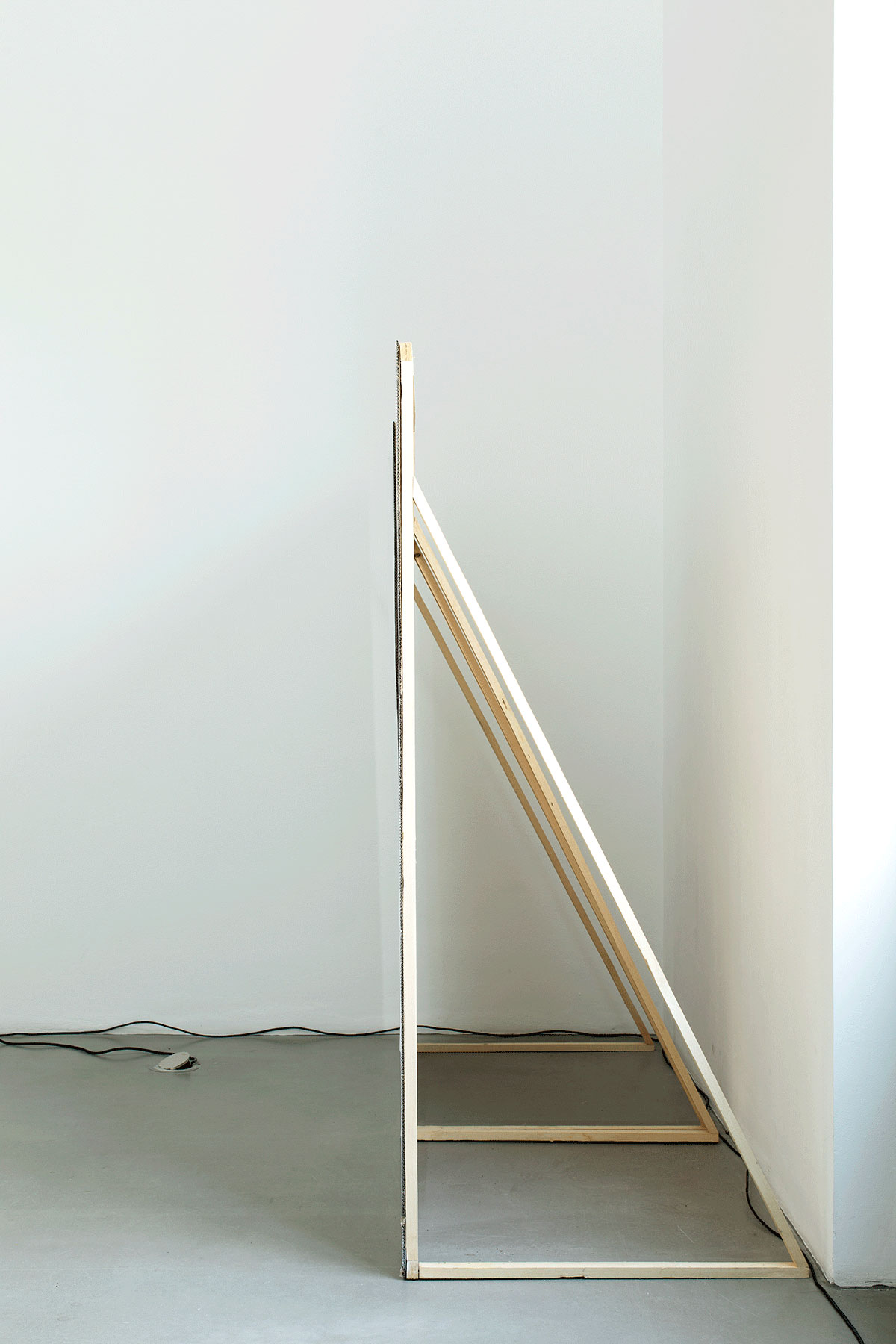
And (2018) Acrylic paint on cardboard, wood 190 × 83 × 120 cm. ©Georgia Sagri

Georgia Sagri and I, installation view, ©Georgia Sagri

Christos Chondropolous Concert, Portikus

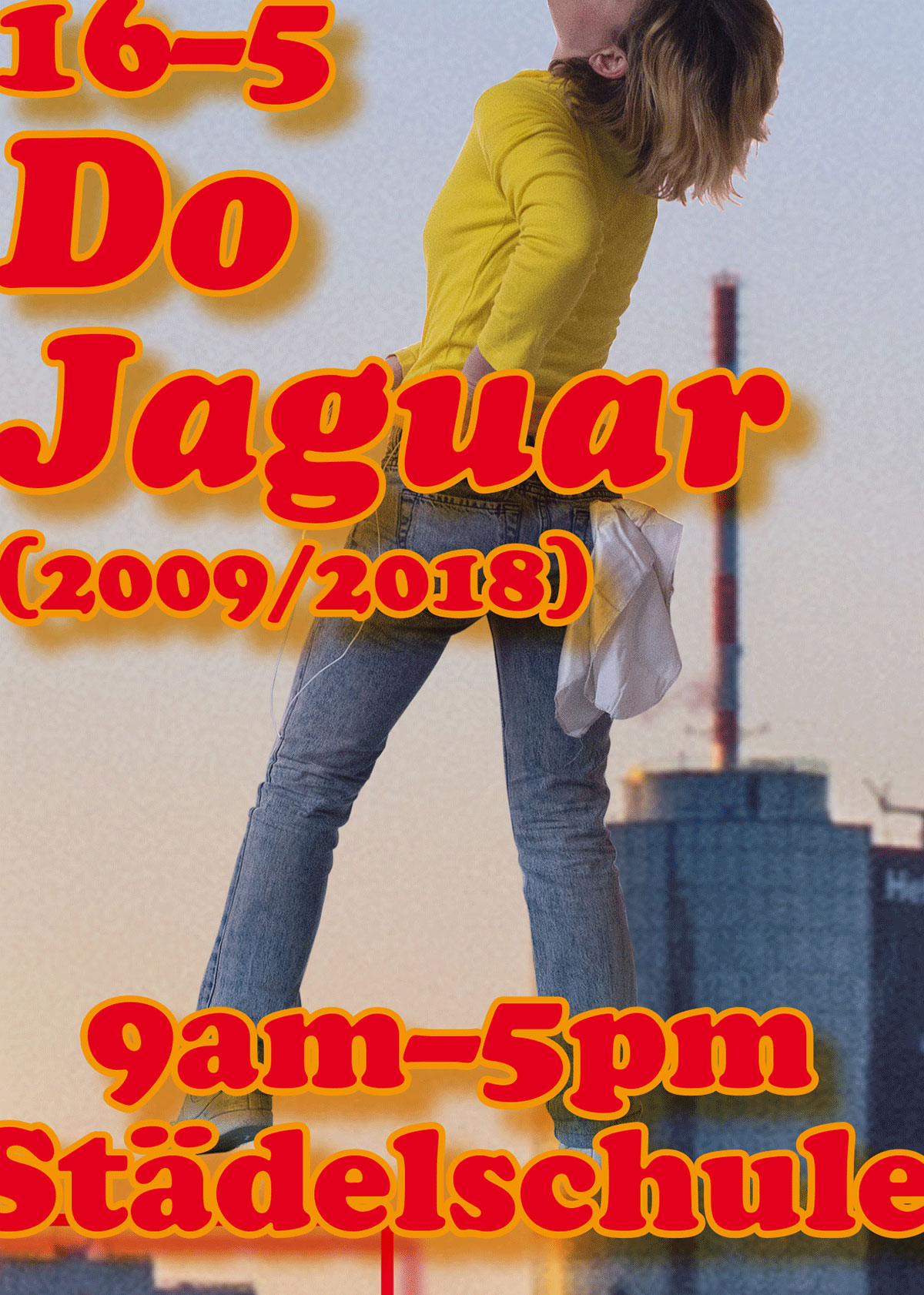
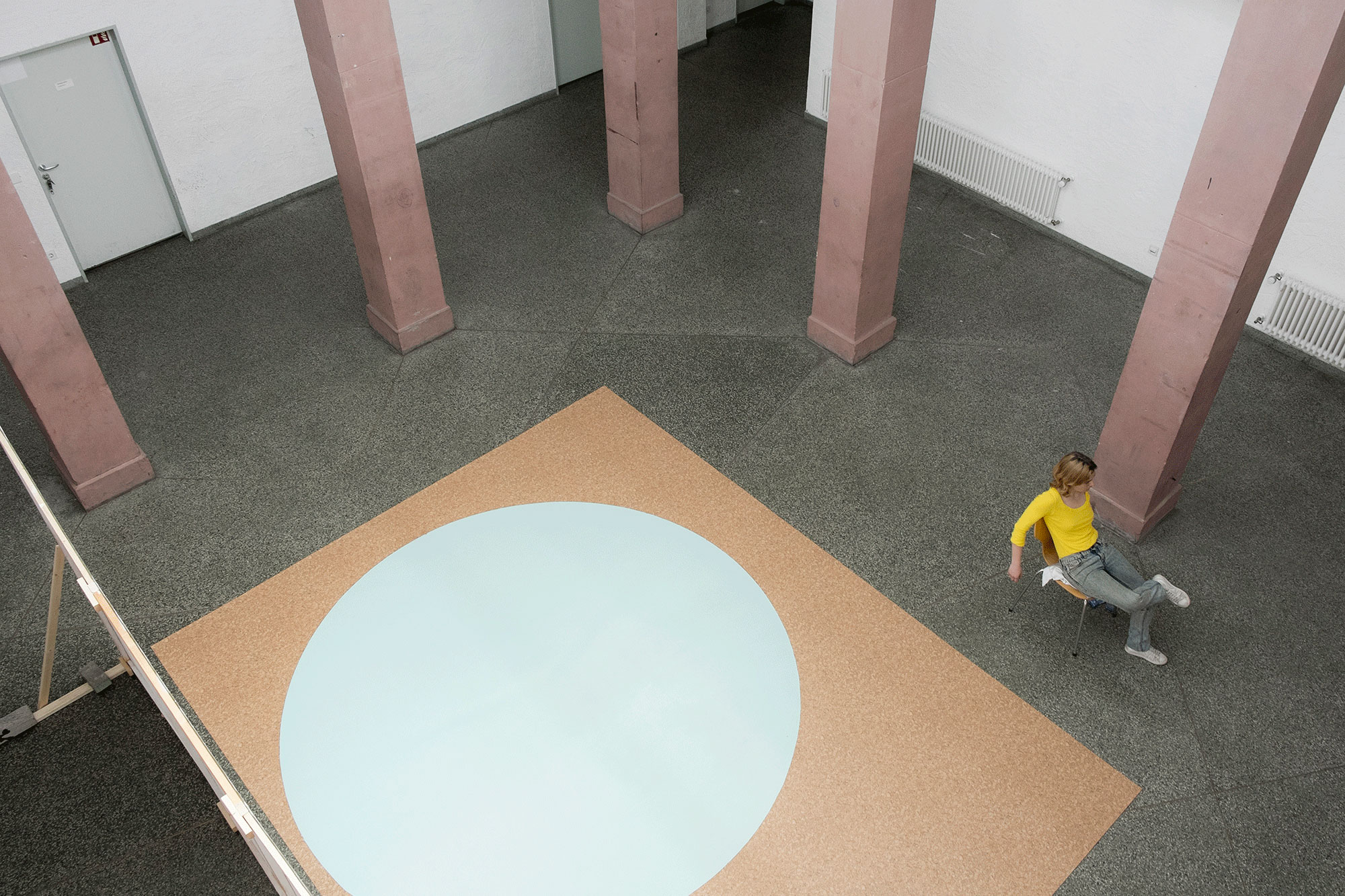
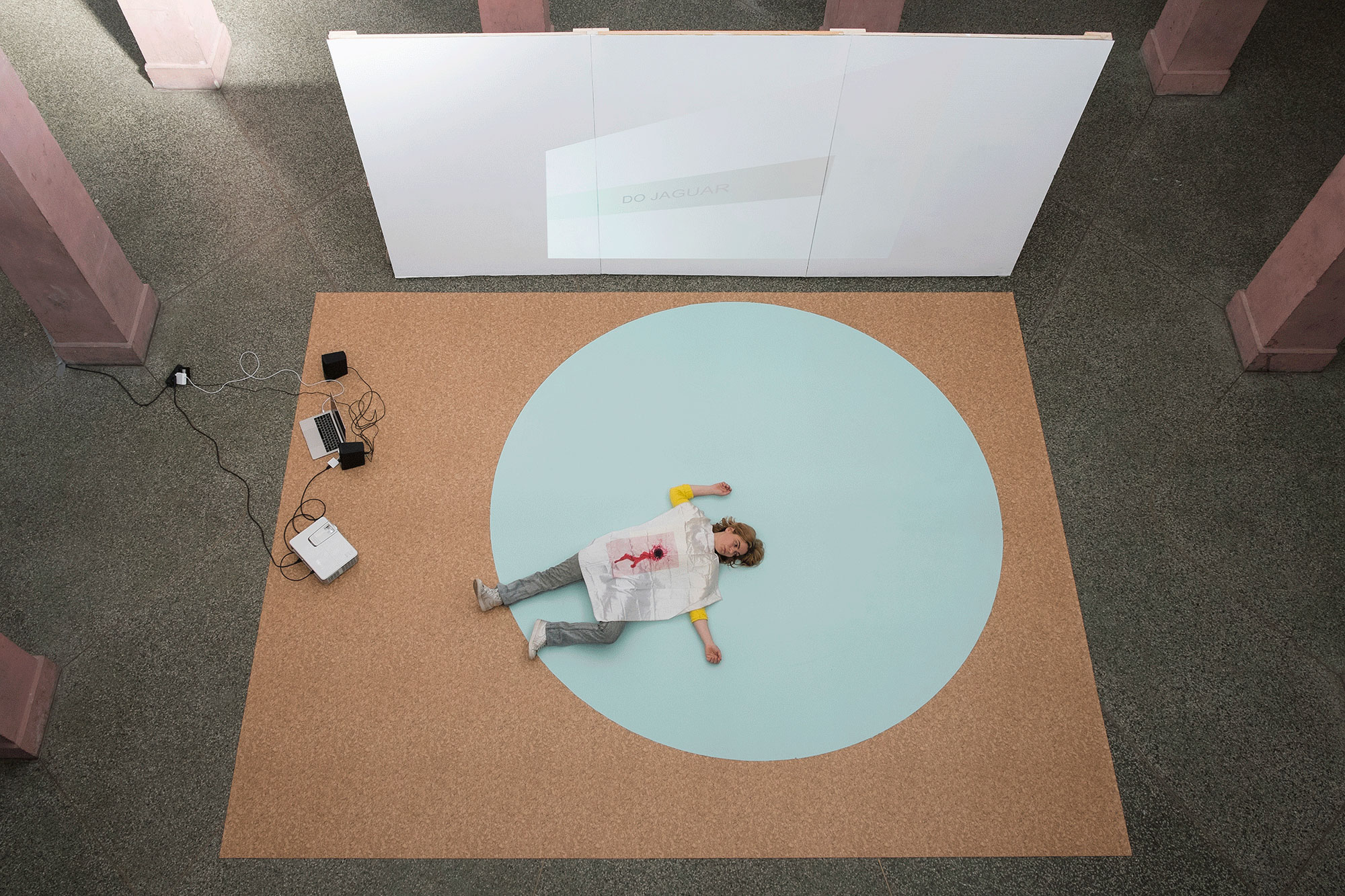
Do Jaguar (2009/2018) Lacquer paint on vinyl floor, iPod Nano, audio 10‘, PowerPoint presentation 23‘17‘‘ with sound, performance (8hrs per day) Variation of 8hrs Performance, Städelschule

Do Jaguar (2009/2018) Lacquer paint on vinyl floor, iPod Nano, audio 10‘, PowerPoint presentation 23‘17‘‘ with sound, performance (8hrs per day) Variation of 8hrs Performance, Städelschule, ©Georgia Sagri

Do Jaguar (2009/2018) Lacquer paint on vinyl floor, iPod Nano, audio 10‘, PowerPoint presentation 23‘17‘‘ with sound, performance (8hrs per day) Variation of 8hrs Performance, Städelschule, ©Georgia Sagri

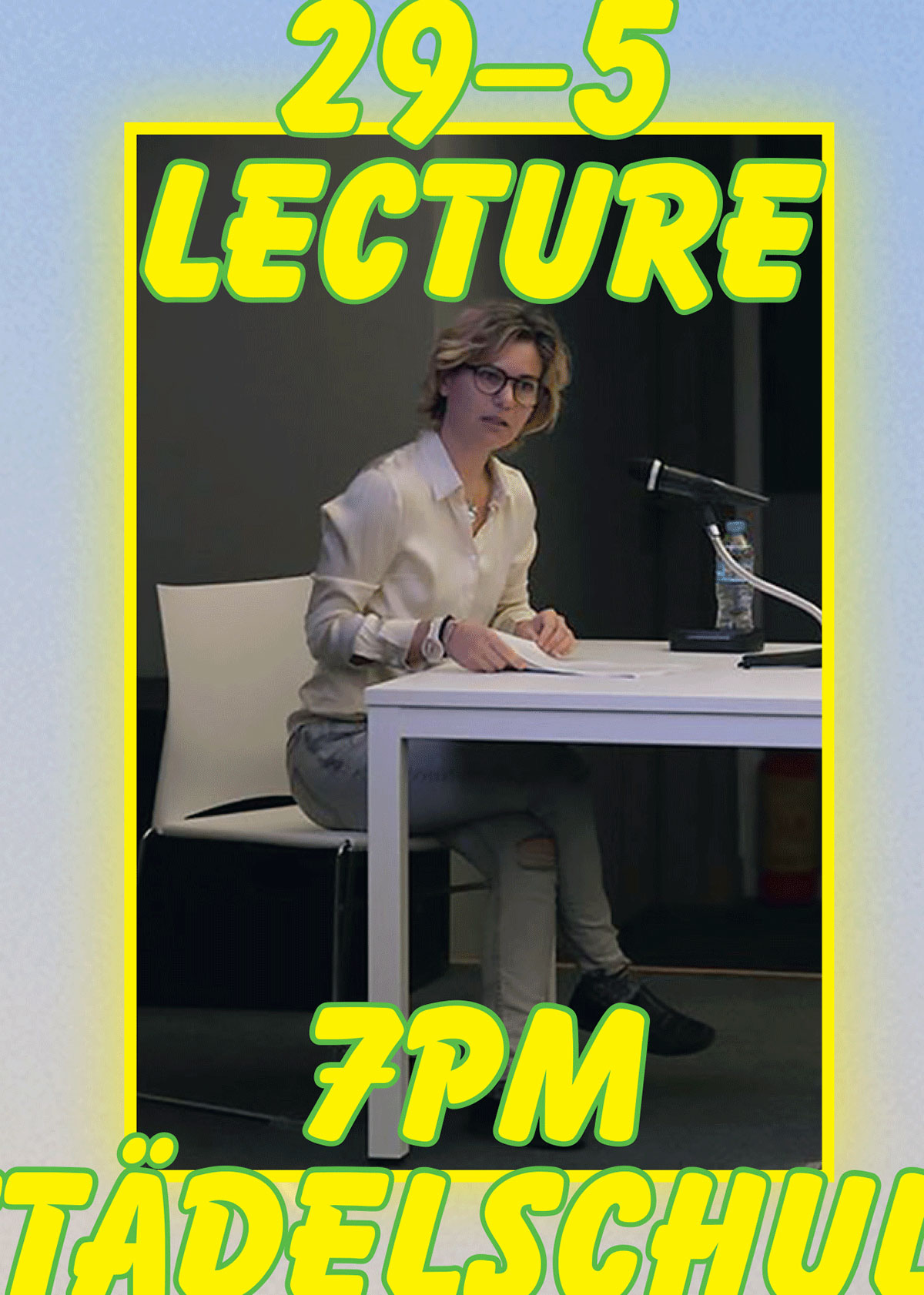
Georgia Sagri, lecture at Städelschule

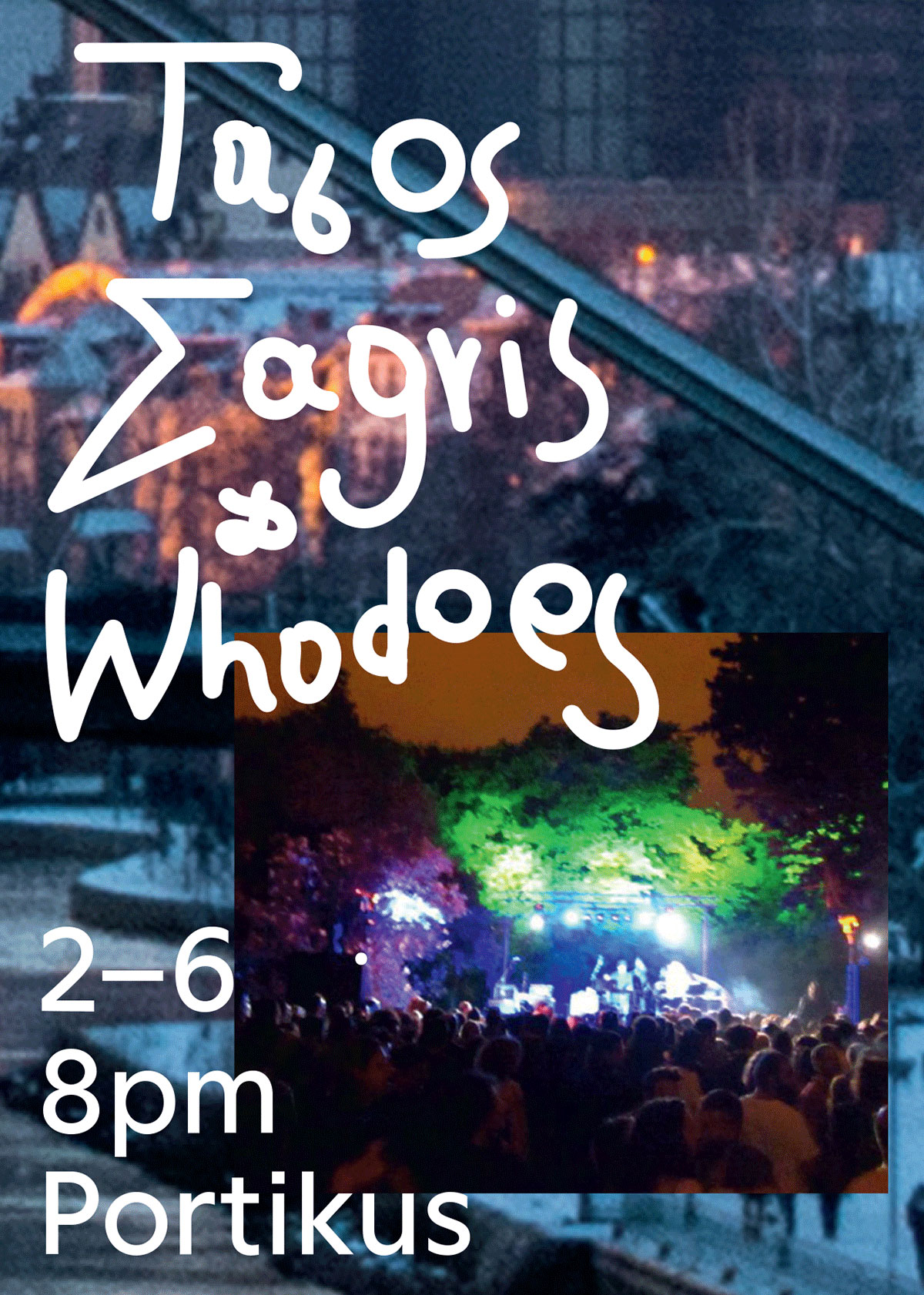
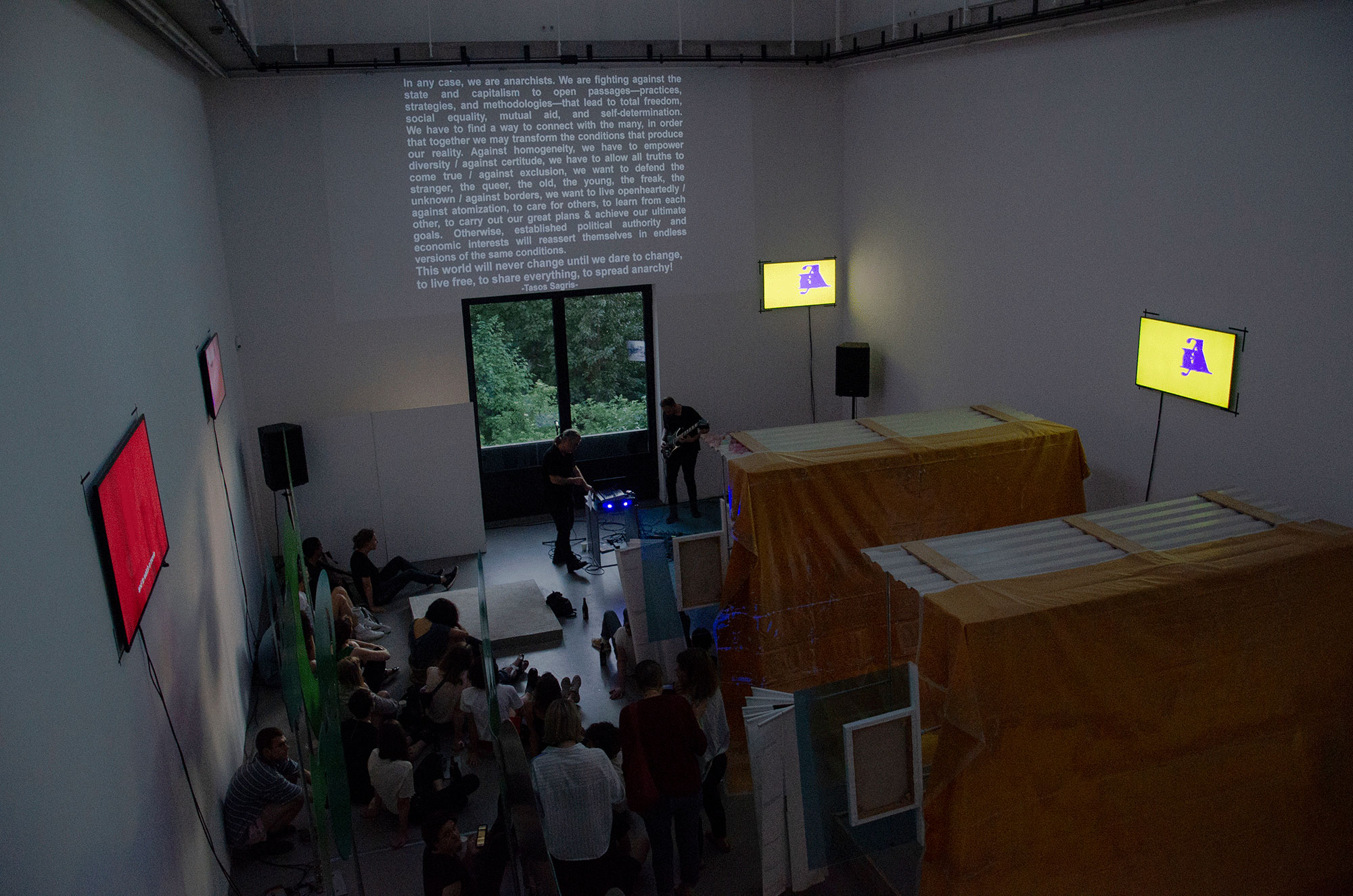
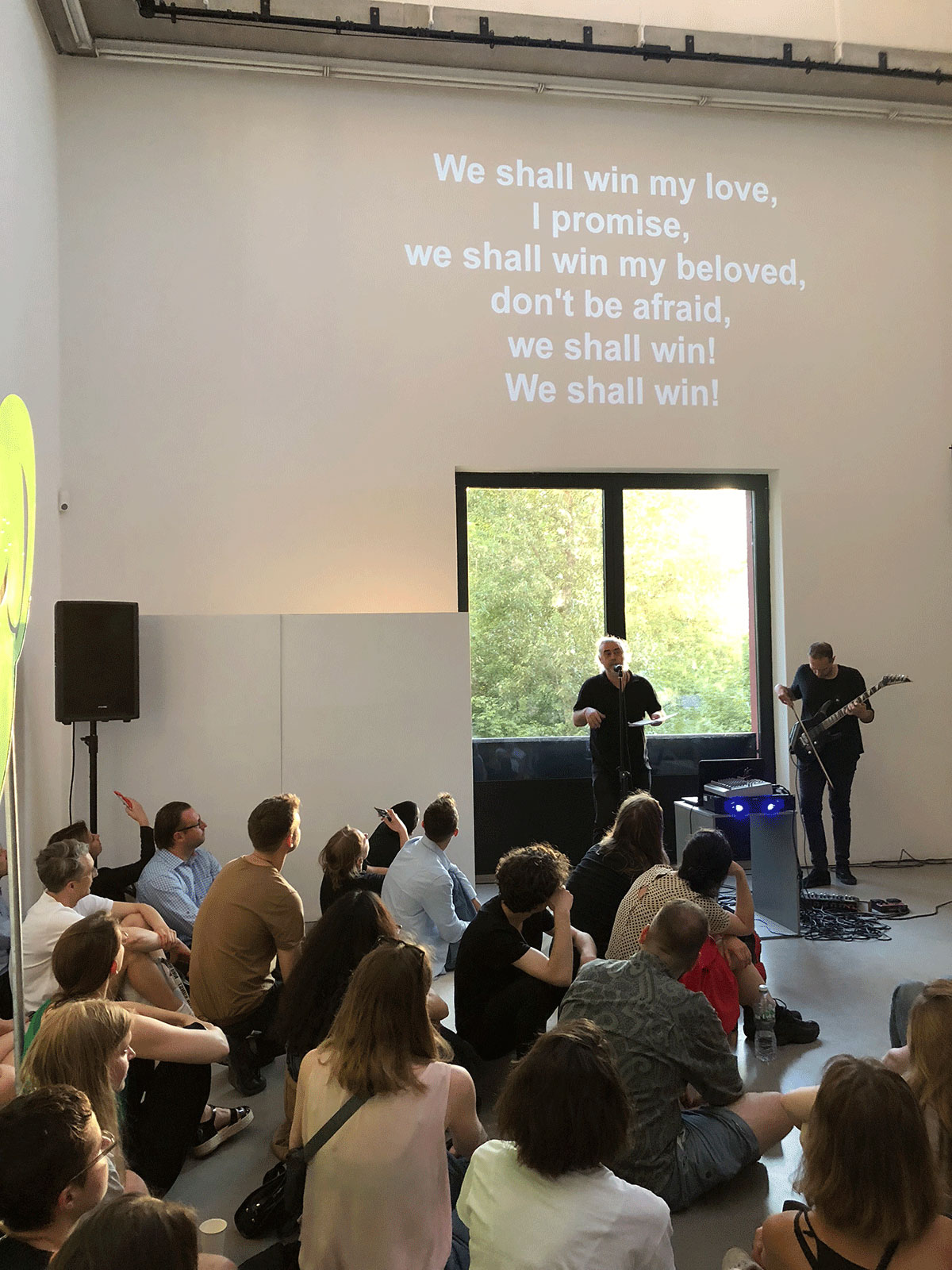
Tasos Sagris & Whodoes, Poetry reading and electronics, Portikus

Tasos Sagris & Whodoes, Poetry reading and electronics, Portikus

Tasos Sagris & Whodoes, Poetry reading and electronics, Portikus

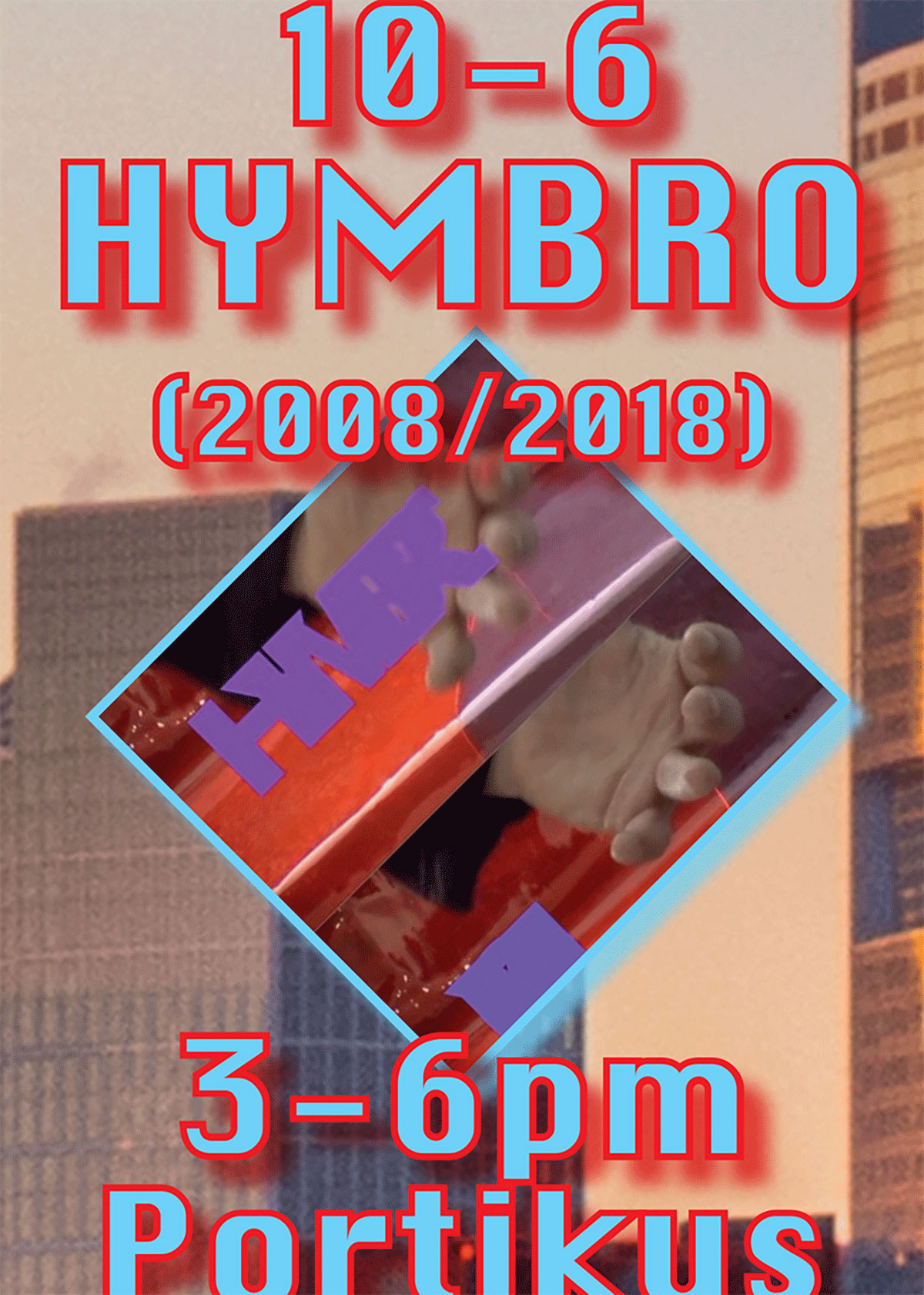
HYMBRO (2008/2018) Variation of 3hrs Performance, Portikus

HYMBRO (2008/2018) Variation of 3hrs Performance, Portikus. ©Georgia Sagri

HYMBRO (2008/2018) Variation of 3hrs Performance, Portikus. ©Georgia Sagri

HYMBRO (2008/2018) Variation of 3hrs Performance, Portikus. ©Georgia Sagri

HYMBRO (2008/2018) Variation of 3hrs Performance, Portikus. ©Georgia Sagri

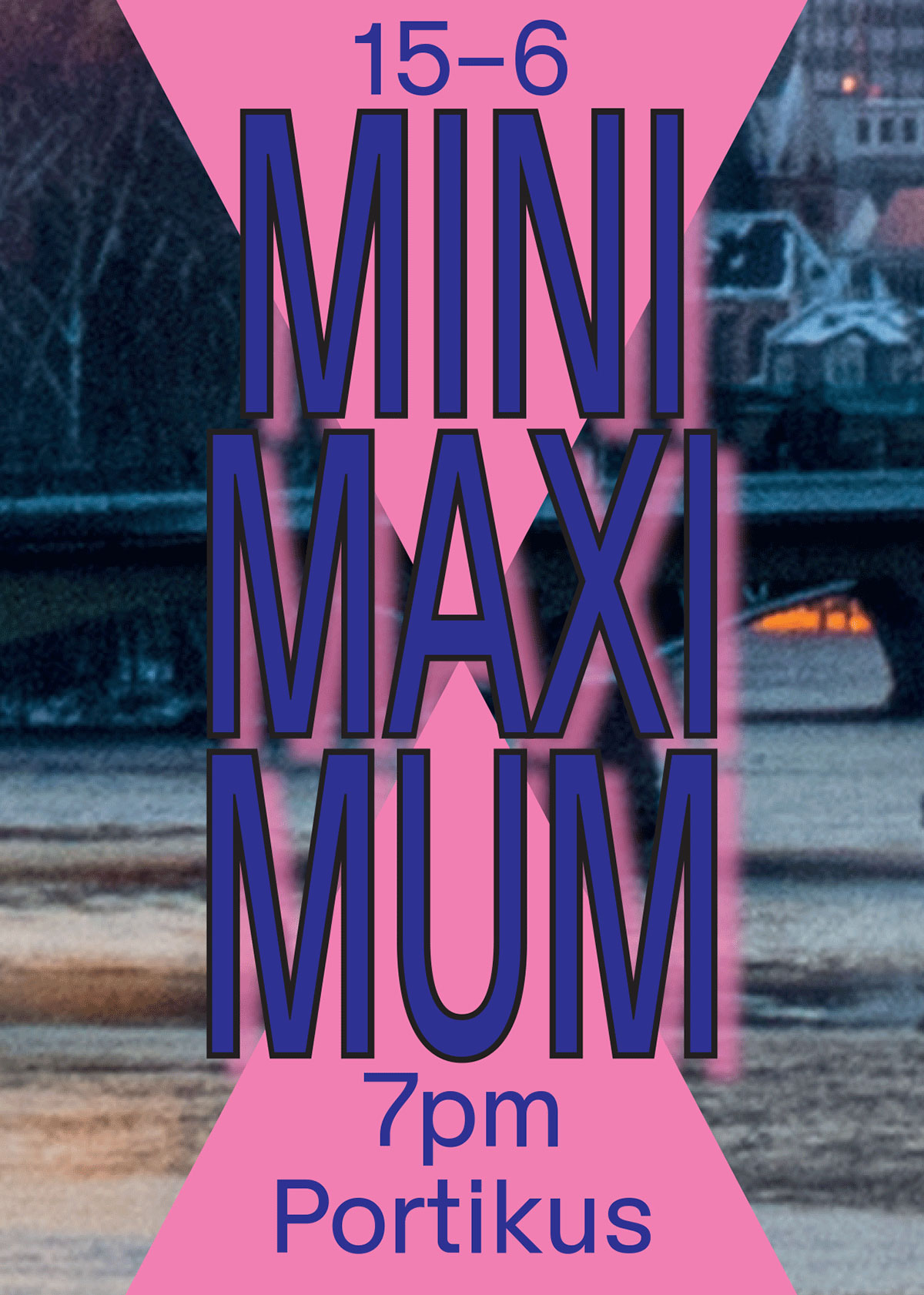
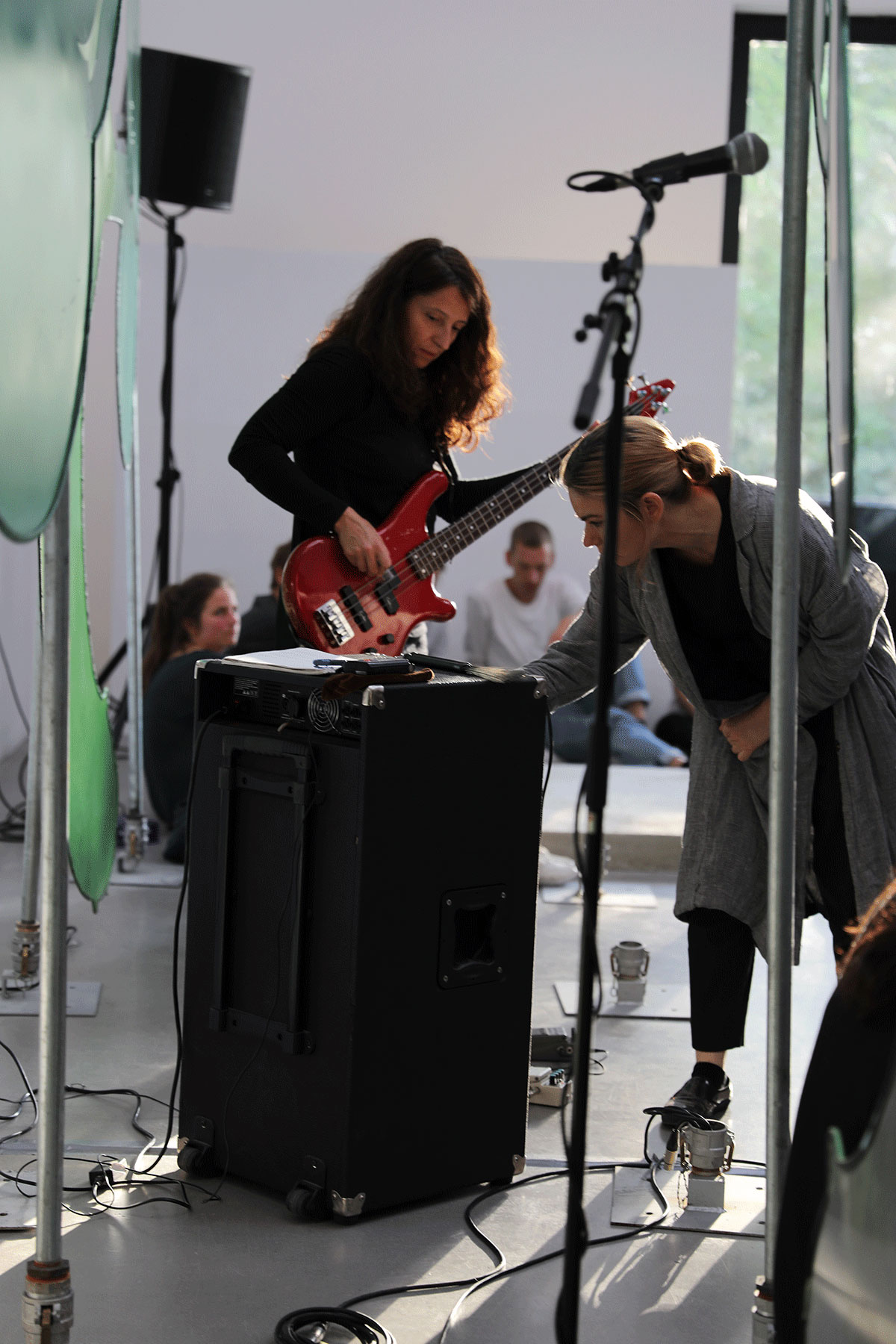
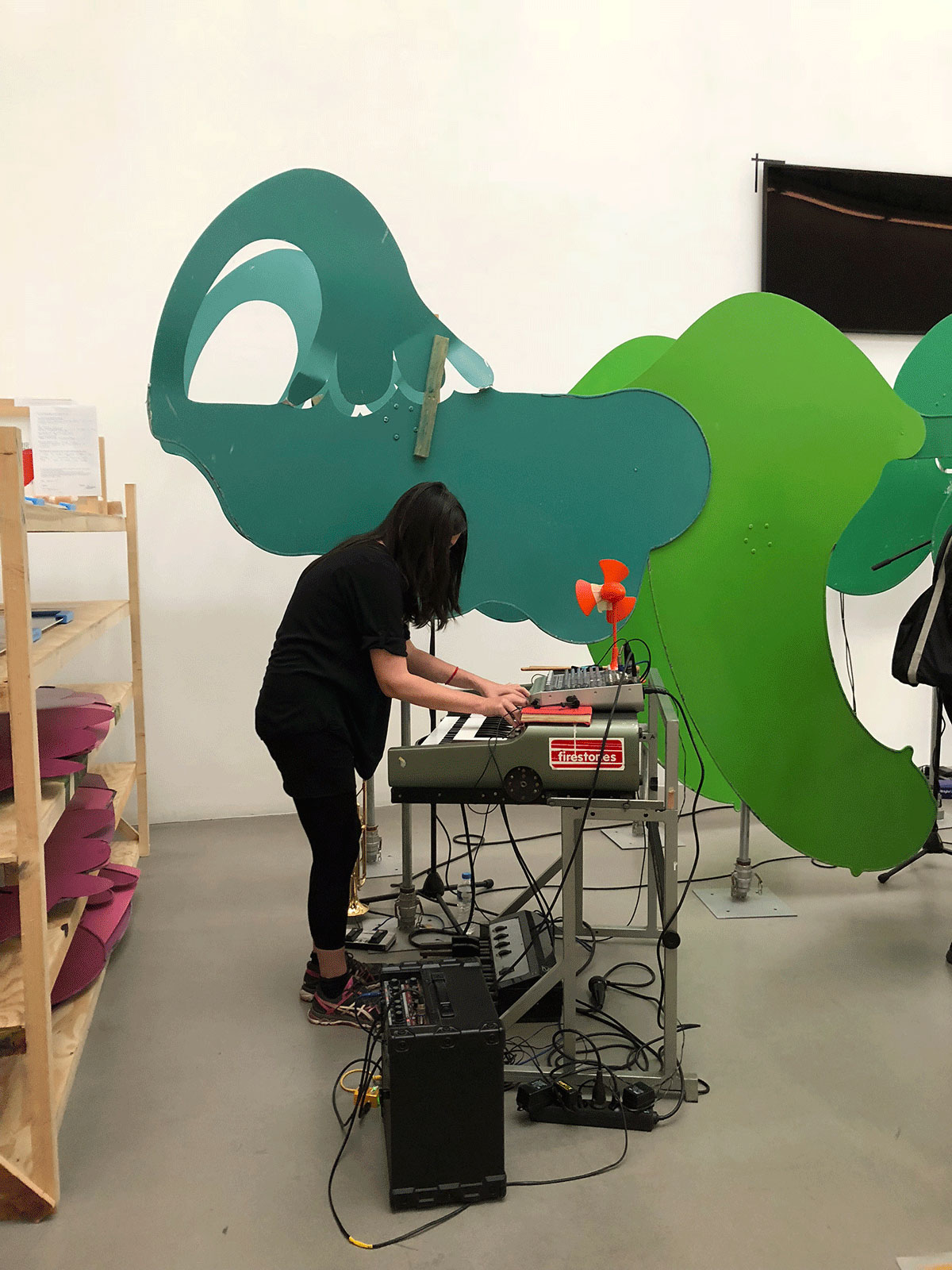
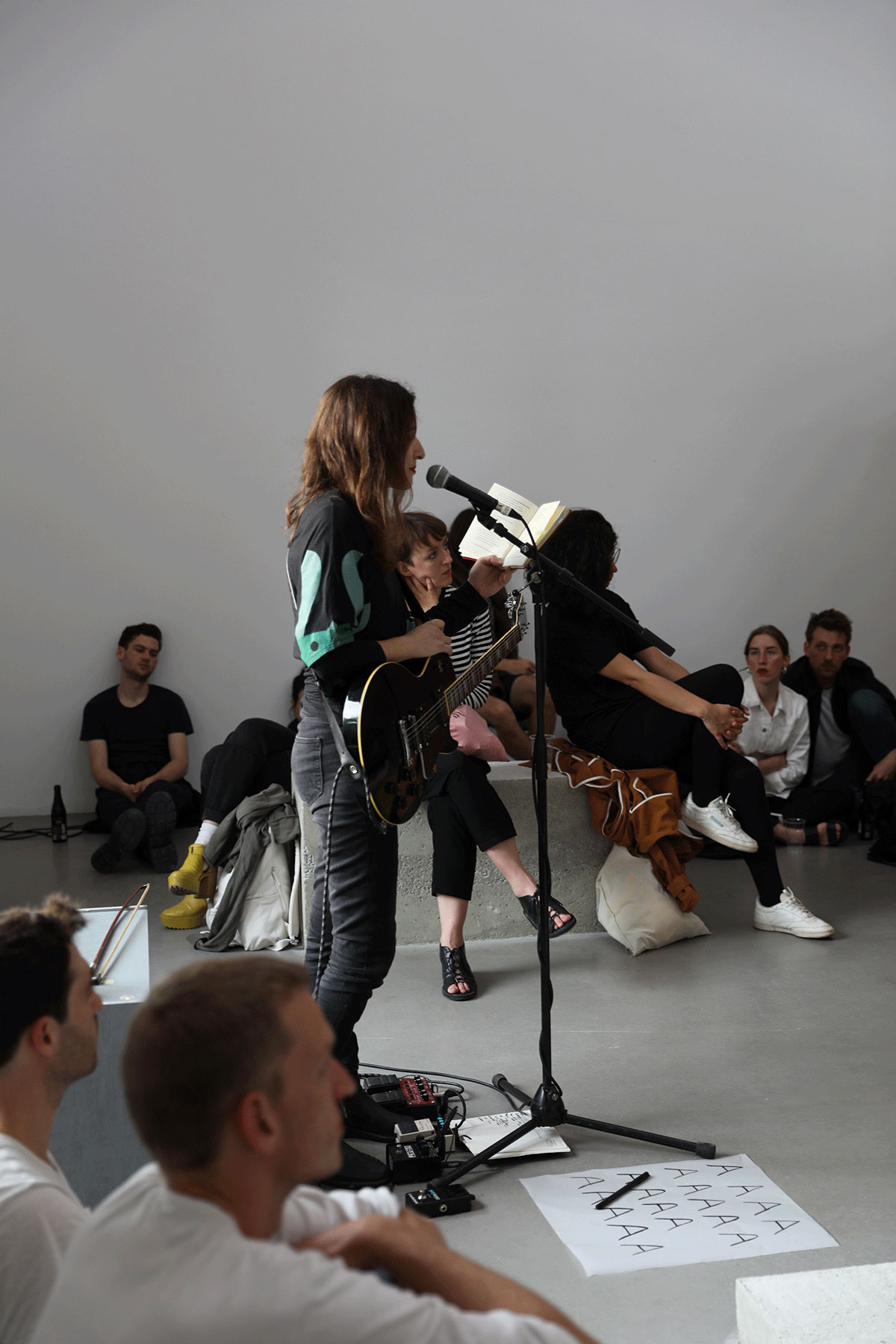
Minimaximum Concert, Portikus

Minimaximum Concert, Portikus

Minimaximum Concert, Portikus

Minimaximum Concert, Portikus

Dynamis workshop, Portikus

Dynamis workshop, Portikus

Dynamis workshop, Portikus


GEORGIA SAGRI GEORGIA SAGRI

at Kunstverein Braunschweig, Germany (2/12/17 - 11/2/18)
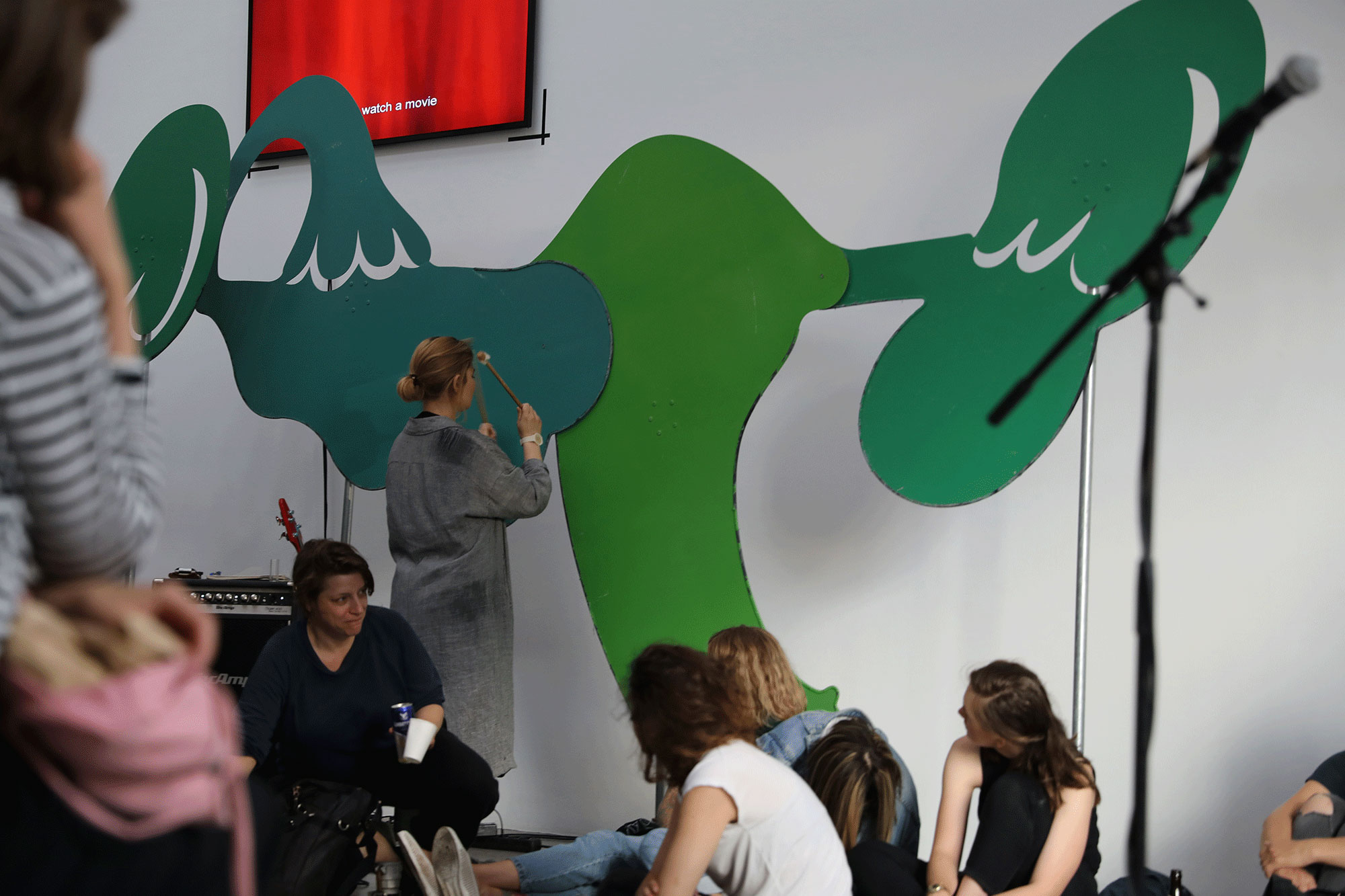

The exhibition Georgia Sagri Georgia Sagri goes beyond a display of the artist’s works (b. 1979, Athens, Greece). The sculptures exist for the duration of the exhibition as guests, independent units within the building, without simply adjusting to the space. The exhibition consists of seven large sculptures from the last eight years of Georgia Sagri’s multidisciplinary practice. Some are manifested or announced with the dispersed looking like outdoor signs, destabilizing the sense of reading not only as knowledge, but also as declaration. Curated by Christina Lenhert.

GEORGIA SAGRI GEORGIA SAGRI. ©Georgia Sagri

GEORGIA SAGRI GEORGIA SAGRI. ©Georgia Sagri

GEORGIA SAGRI GEORGIA SAGRI, installation view, photo by Stathis Mamalakis. ©Georgia Sagri

GEORGIA SAGRI GEORGIA SAGRI, installation view, photo by Stathis Mamalakis. ©Georgia Sagri

GEORGIA SAGRI GEORGIA SAGRI, installation view, photo by Stathis Mamalakis. ©Georgia Sagri

Do Jaguar (2009) photo by Stathis Mamalakis. ©Georgia Sagri

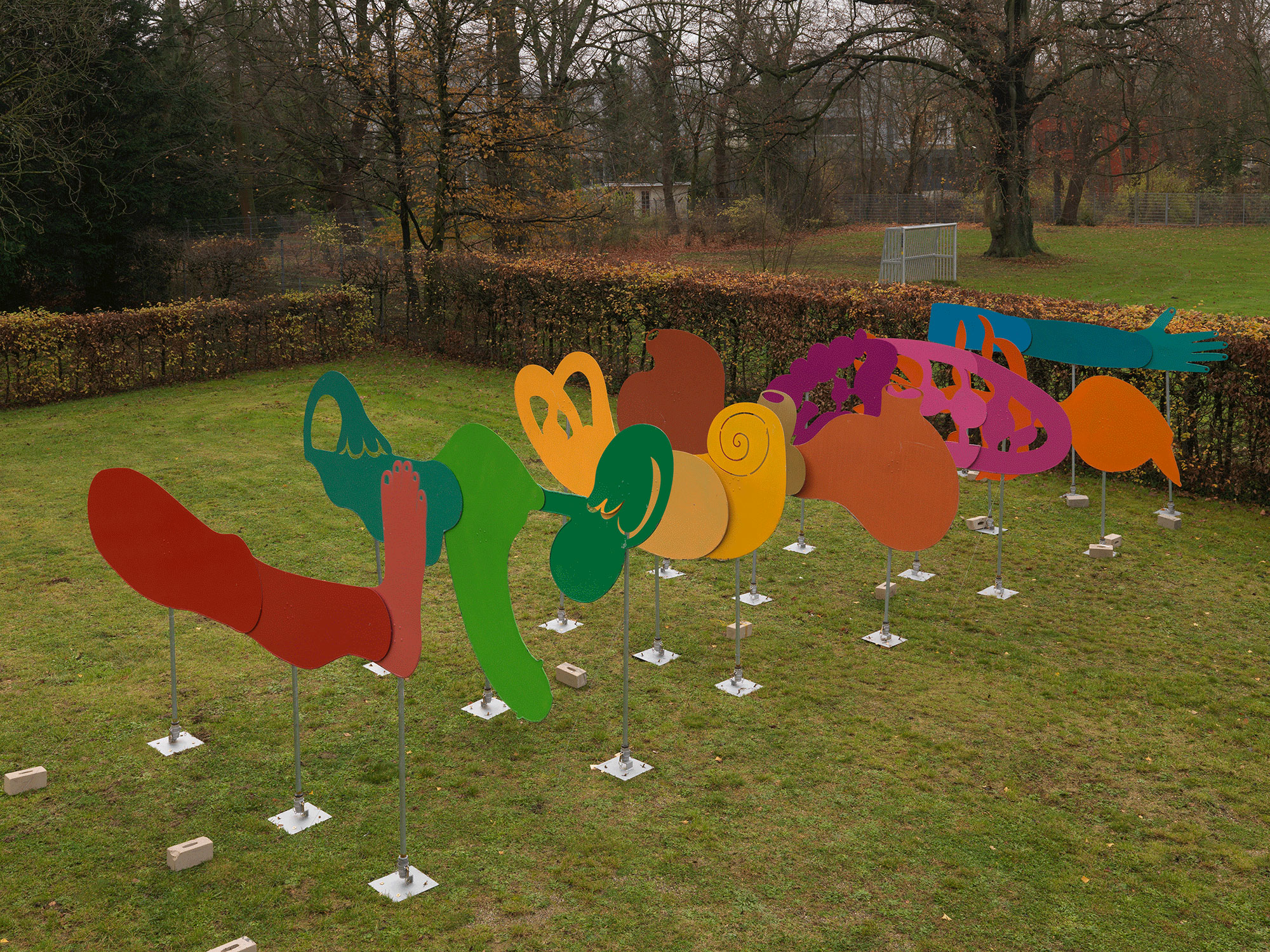
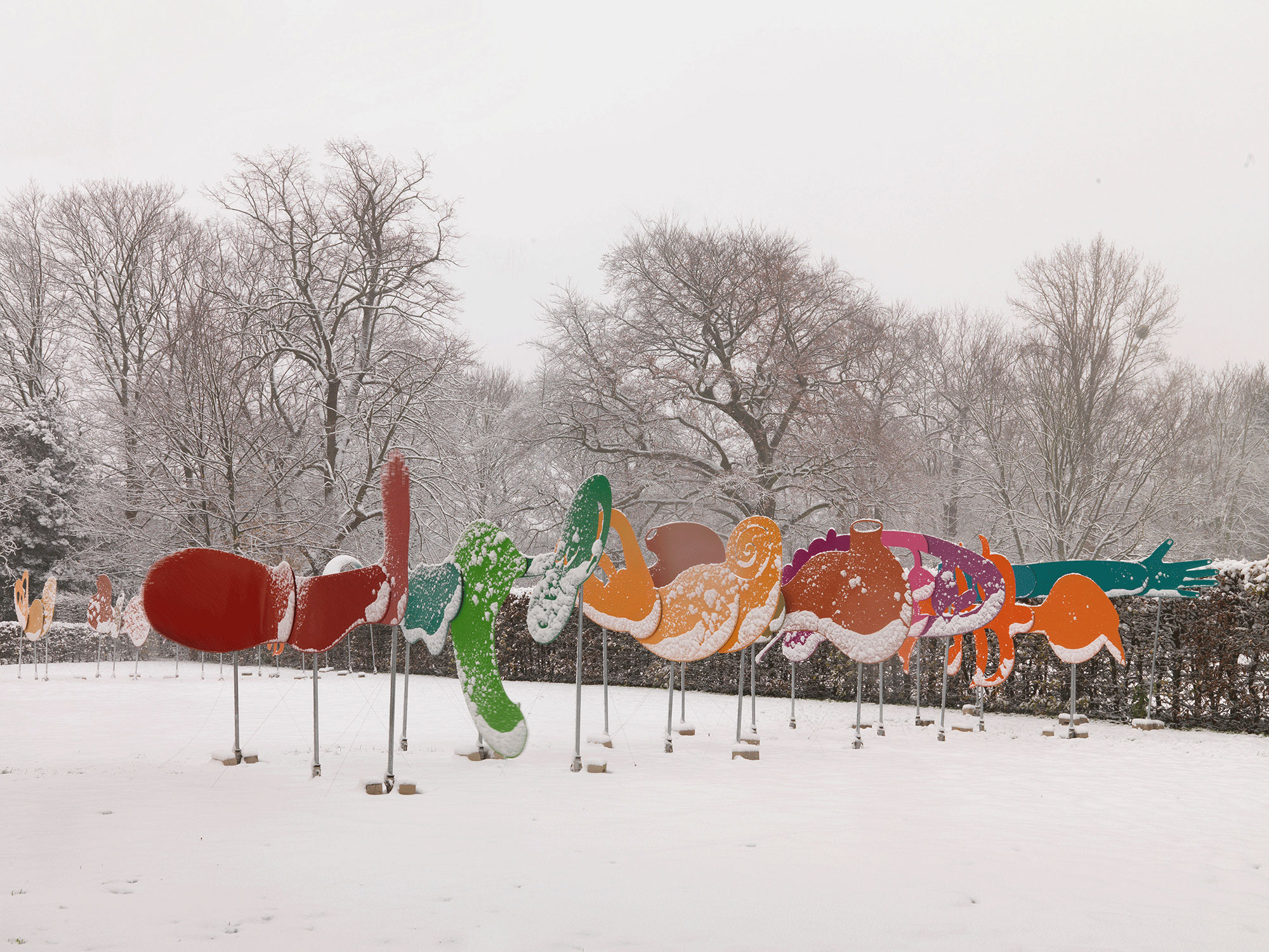
Dynamis/Soma in orgasm as brain, as breast, as ear, as hand, as heart, as leg, as sex , (2017) Aluminum, acrylic paint, various metallic parts, rubber Max. size 460 × 260 × 52 30 cm each, photo by Stathis Mamalakis. ©Georgia Sagri

GEORGIA SAGRI GEORGIA SAGRI, installation view, photo by Stathis Mamalakis. ©Georgia Sagri

GEORGIA SAGRI GEORGIA SAGRI, installation view, photo by Stathis Mamalakis. ©Georgia Sagri

GEORGIA SAGRI GEORGIA SAGRI, installation view, photo by Stathis Mamalakis. ©Georgia Sagri

GEORGIA SAGRI GEORGIA SAGRI, installation view, photo by Stathis Mamalakis. ©Georgia Sagri

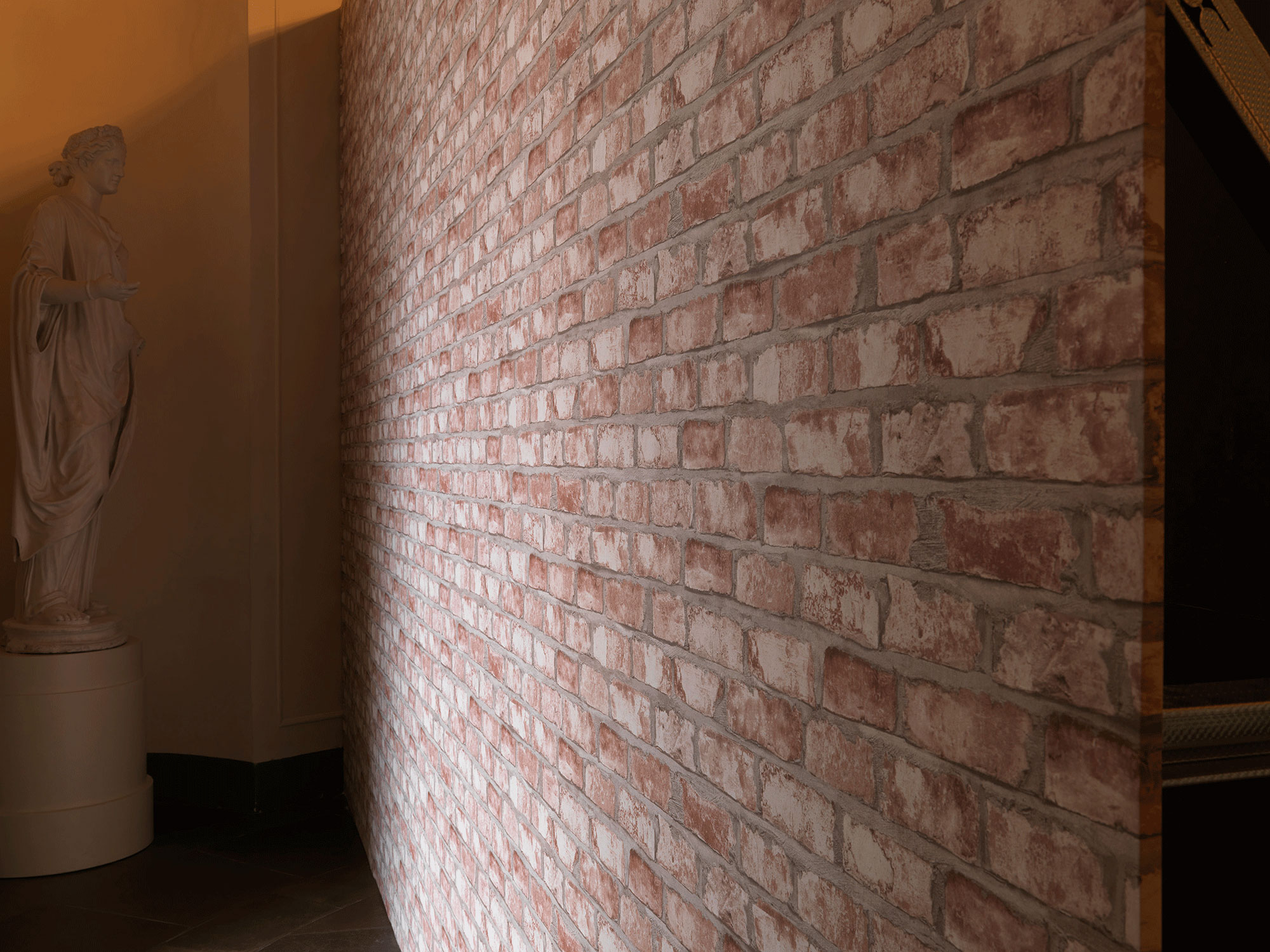
Snout is wall and wall is Snout (2014). Photo wallpaper on plaster wall 305 × 35 × 460 cm, photo by Stathis Mamalakis. ©Georgia Sagri

Dynamis/Soma in orgasm as brain, as breast, as ear, as hand, as heart, as leg, as sex (2017) Aluminum, acrylic paint, various metallic parts, rubber Max. size 460 × 260 × 52 30 cm each, photo by Stathis Mamalakis. ©Georgia Sagri

Documentary of Behavioural Currencies (2016) Plywood, shatter boards, acrylic and varnish on wood, corrugated metal sheet, fans, acrylic on plastic sheet, LED tv, HD video 10‘30‘‘ with sound looped, MP4 format on USB drive, thermal tubes, acrylic glass, oil paint on canvas, inkjet print on Tyvek paper, sand and acrylic paint on plywood, various metal components 323 × 240 × 180 cm, photo by Stahis Mamalakis. ©Georgia Sagri

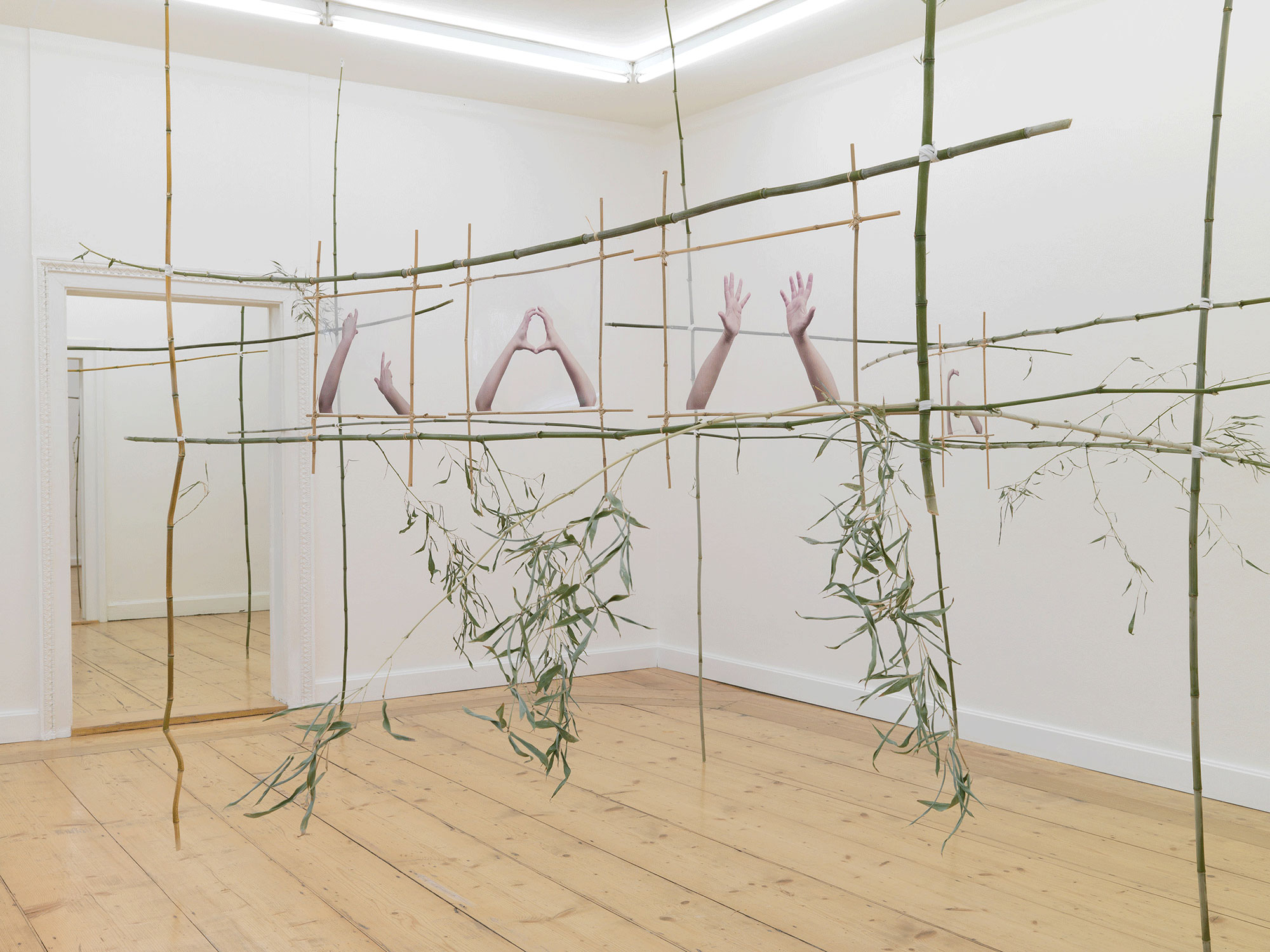
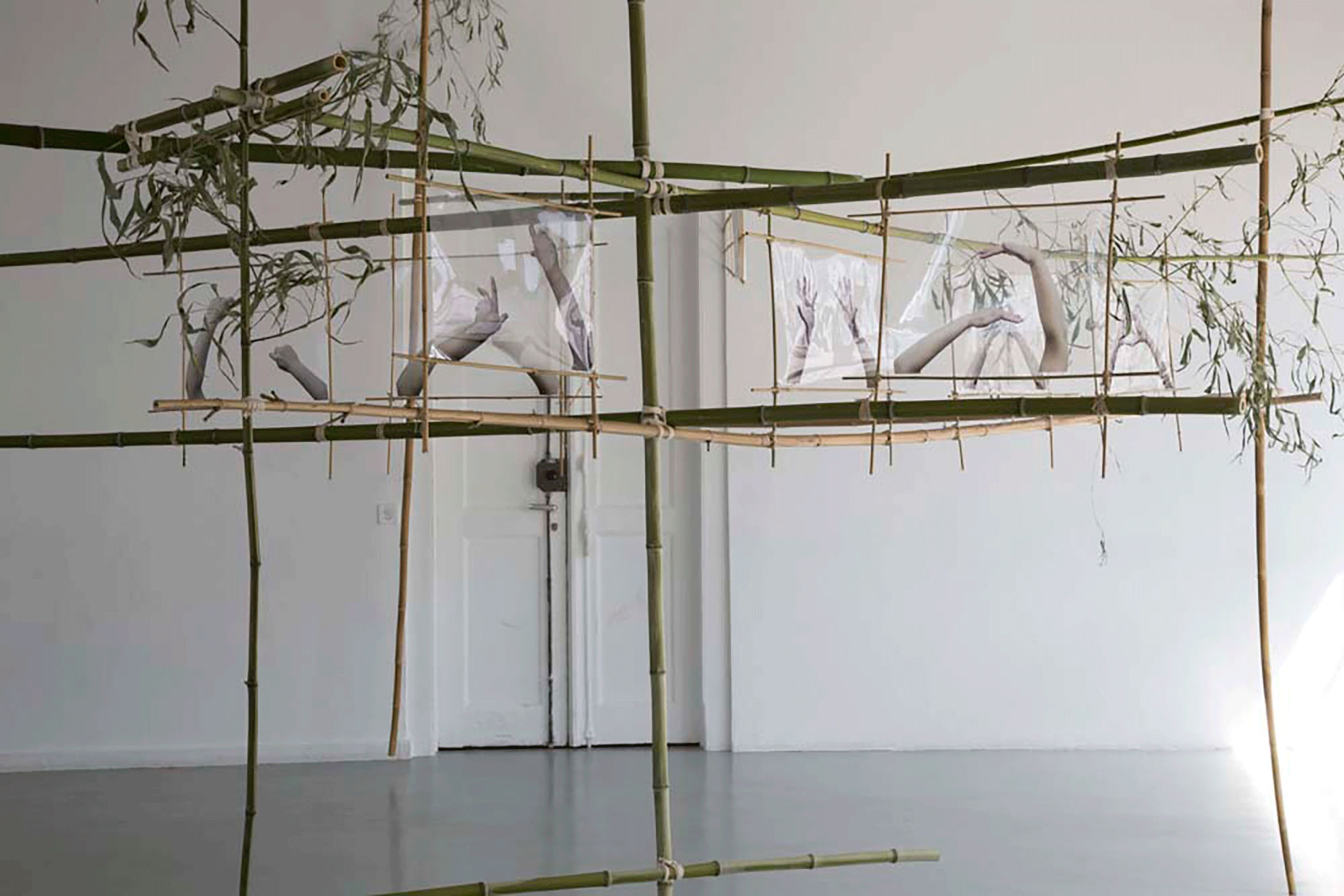
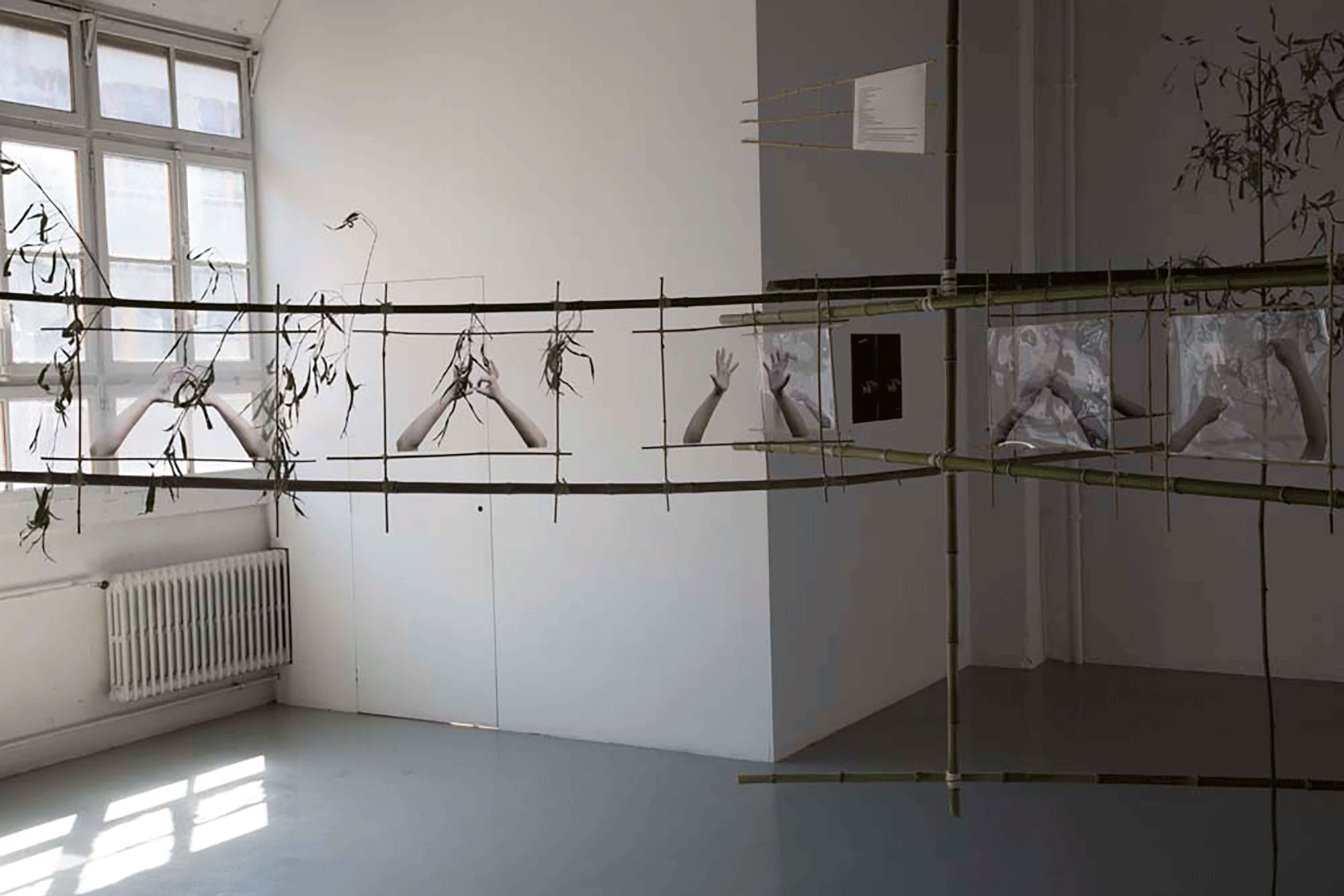
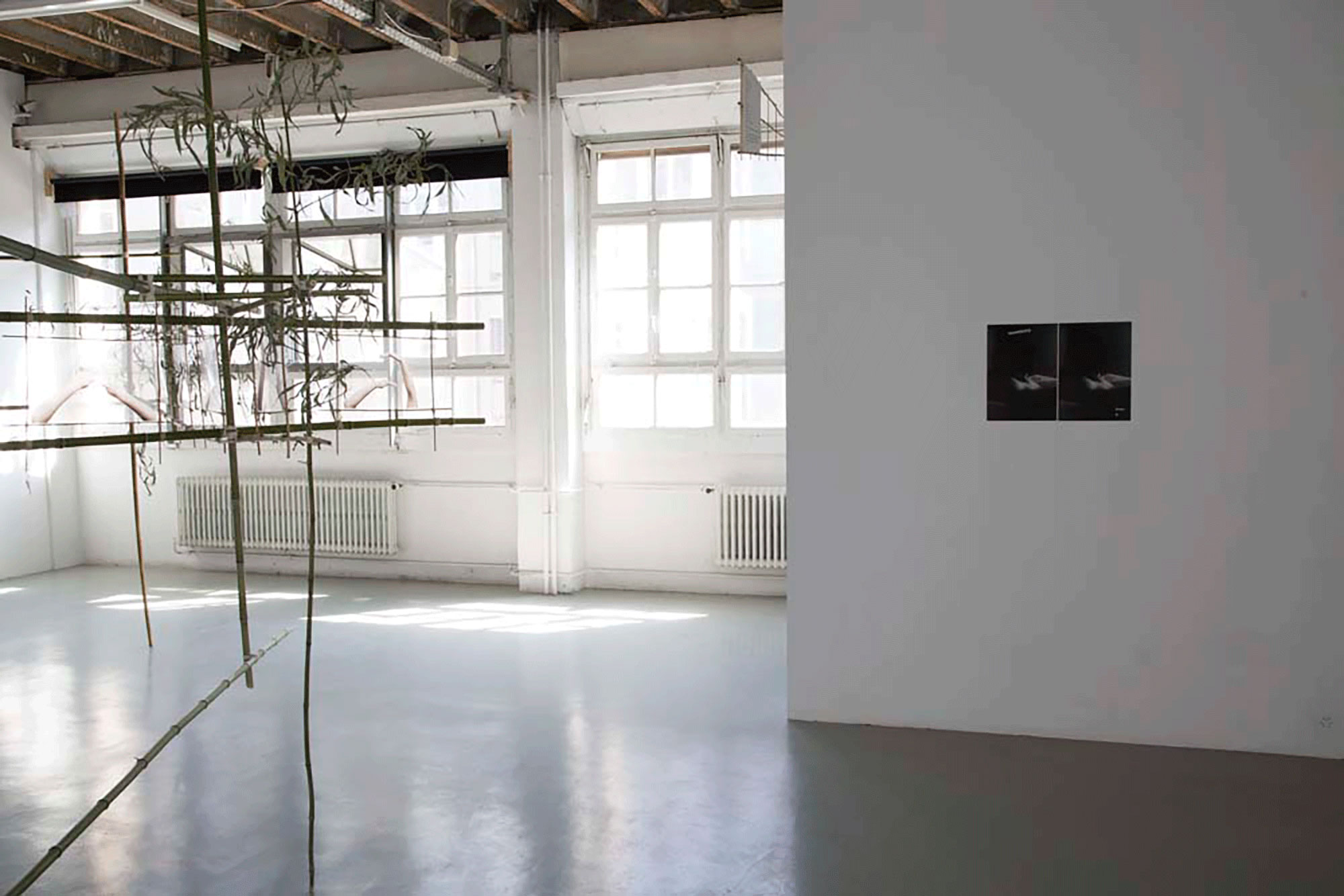
http://exhibita.ch (2015) Bamboo, fabric, rope, C-prinon transparent paper Dimensions variable, photo by Stathis Mamalakis. ©Georgia Sagri

Copypaste (2014) overall (print on fcoat hooks 150 × 90 cm, photo by Stathis Mamalakis. ©Georgia Sagri

Dynamis/Soma in orgasm as brain, as breast, as ear, as hand, as heart, as leg, as sex (2017) Aluminum, acrylic paint, various metallic parts, rubber Max. size 460 × 260 × 52 30 cm each, photo by Stathis Mamalakis. ©Georgia Sagri

GEORGIA SAGRI GEORGIA SAGRI, Photo by Stathis Mamalakis. ©Georgia Sagri

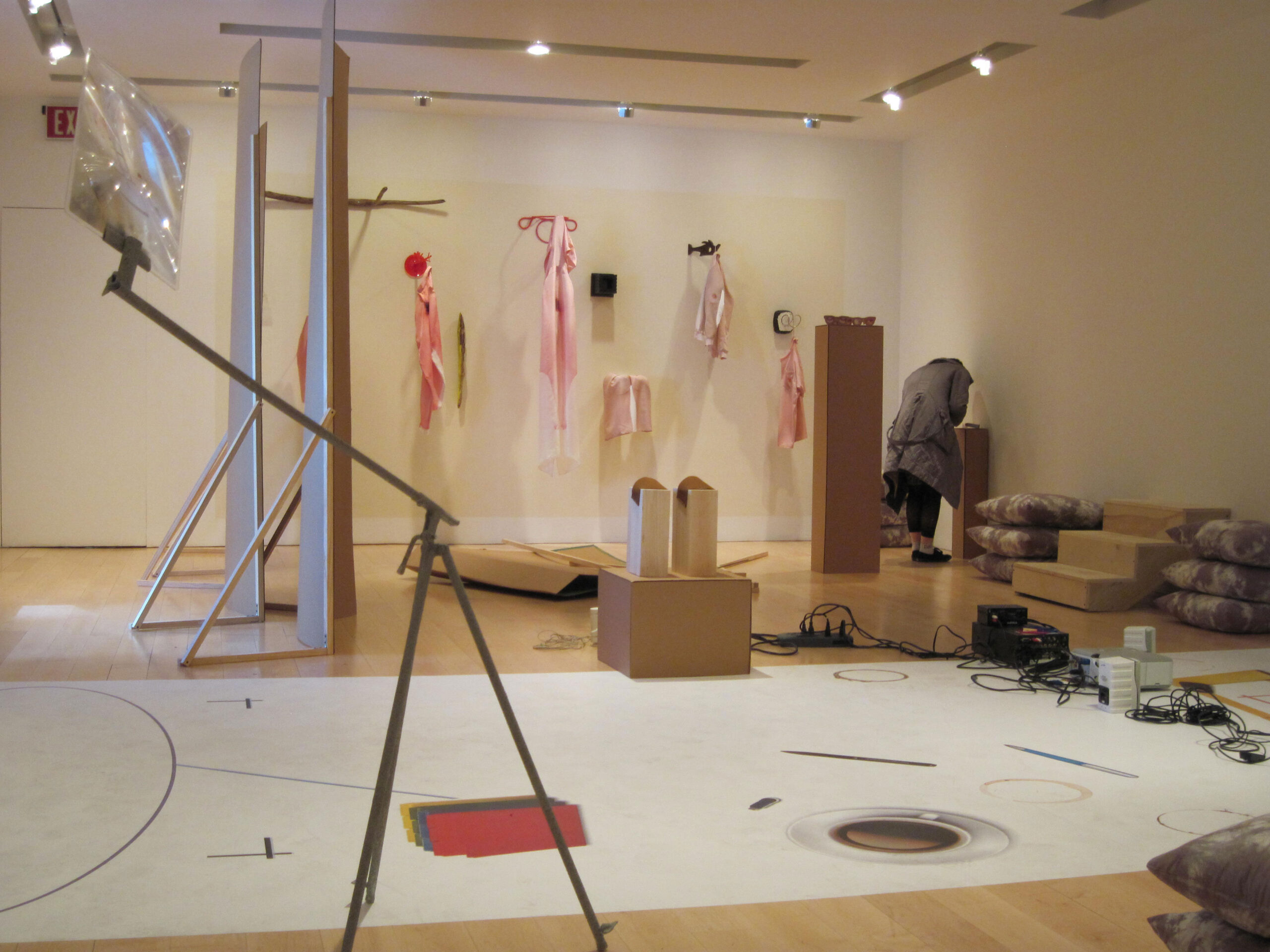
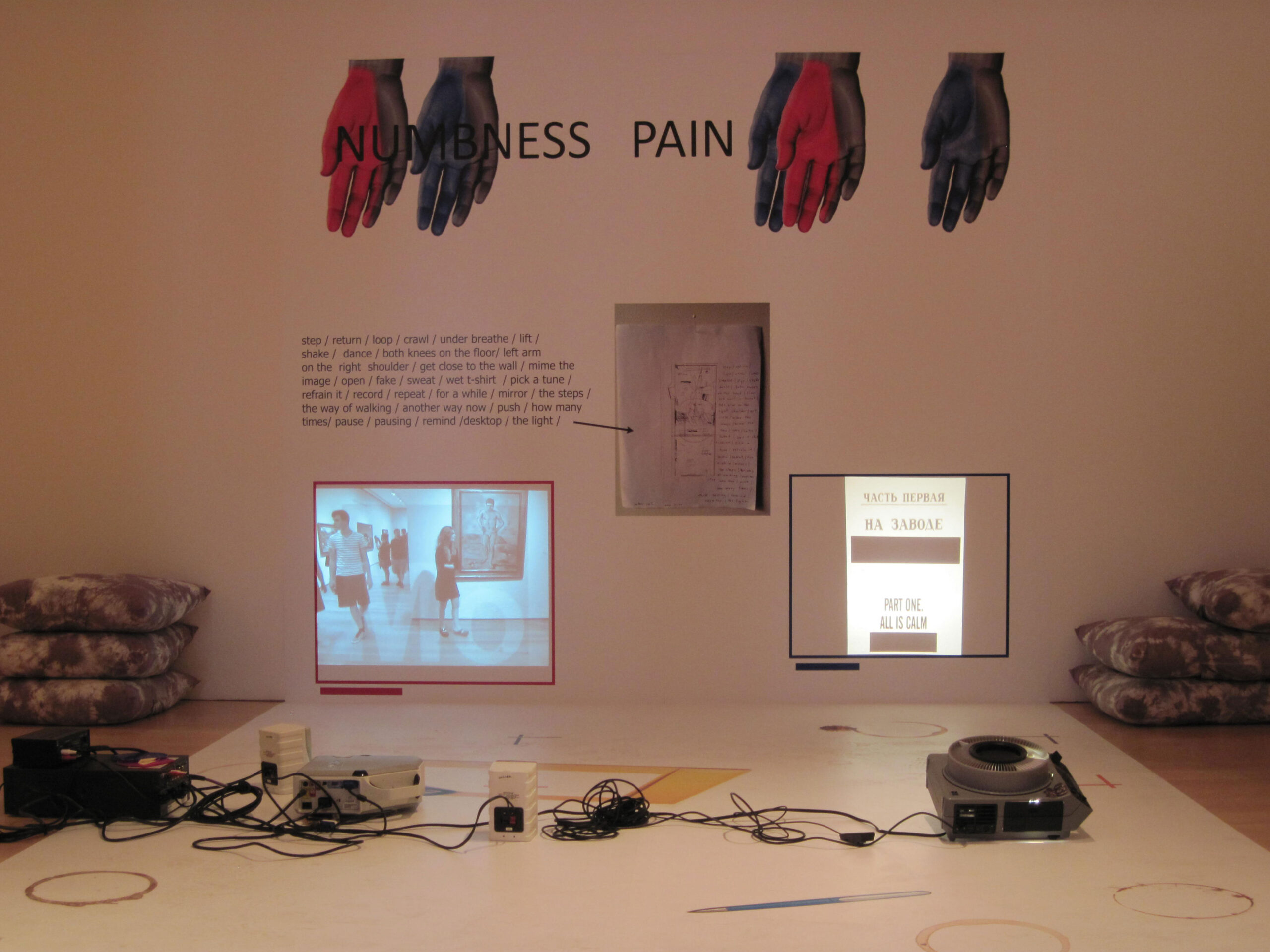
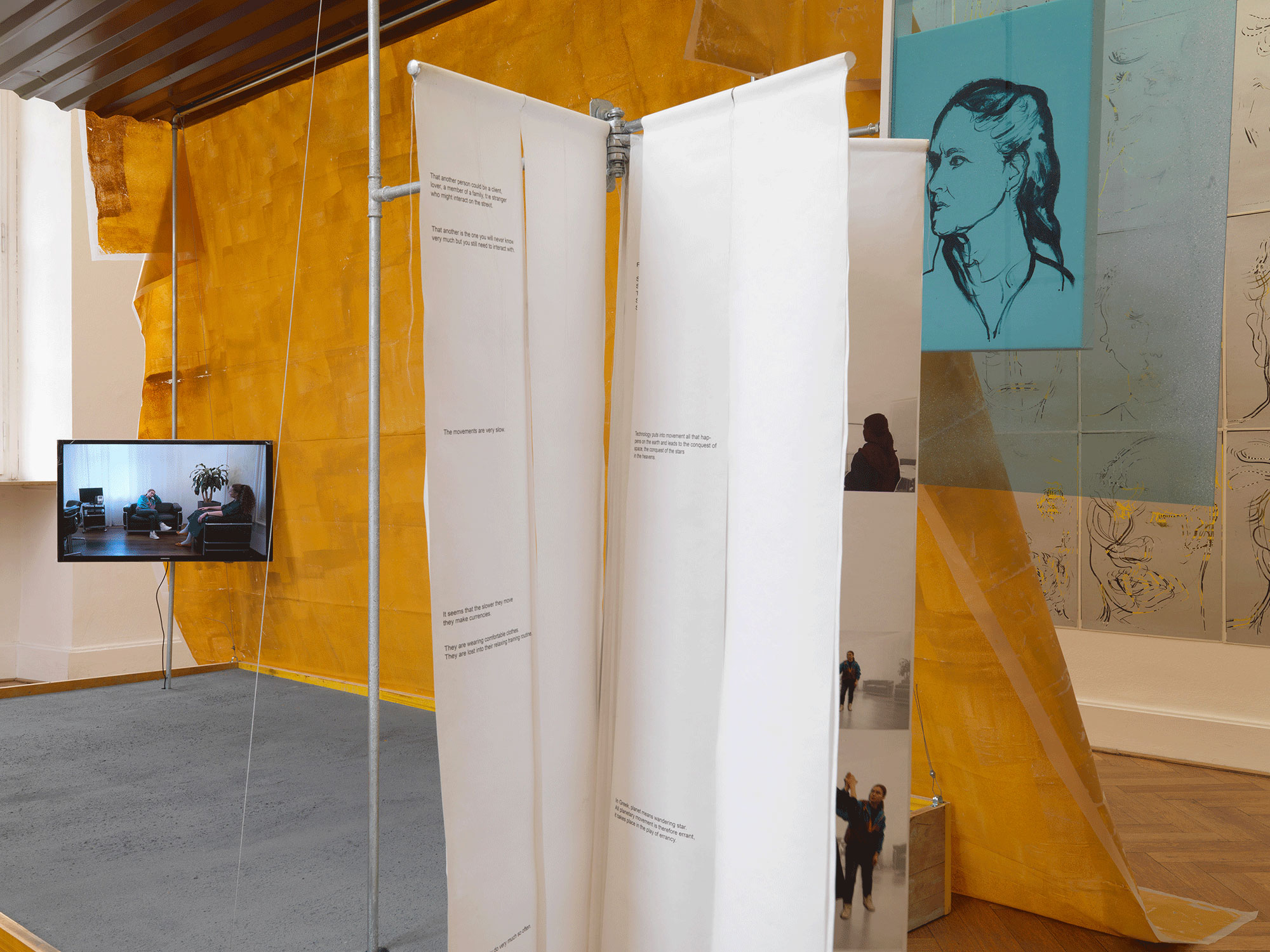
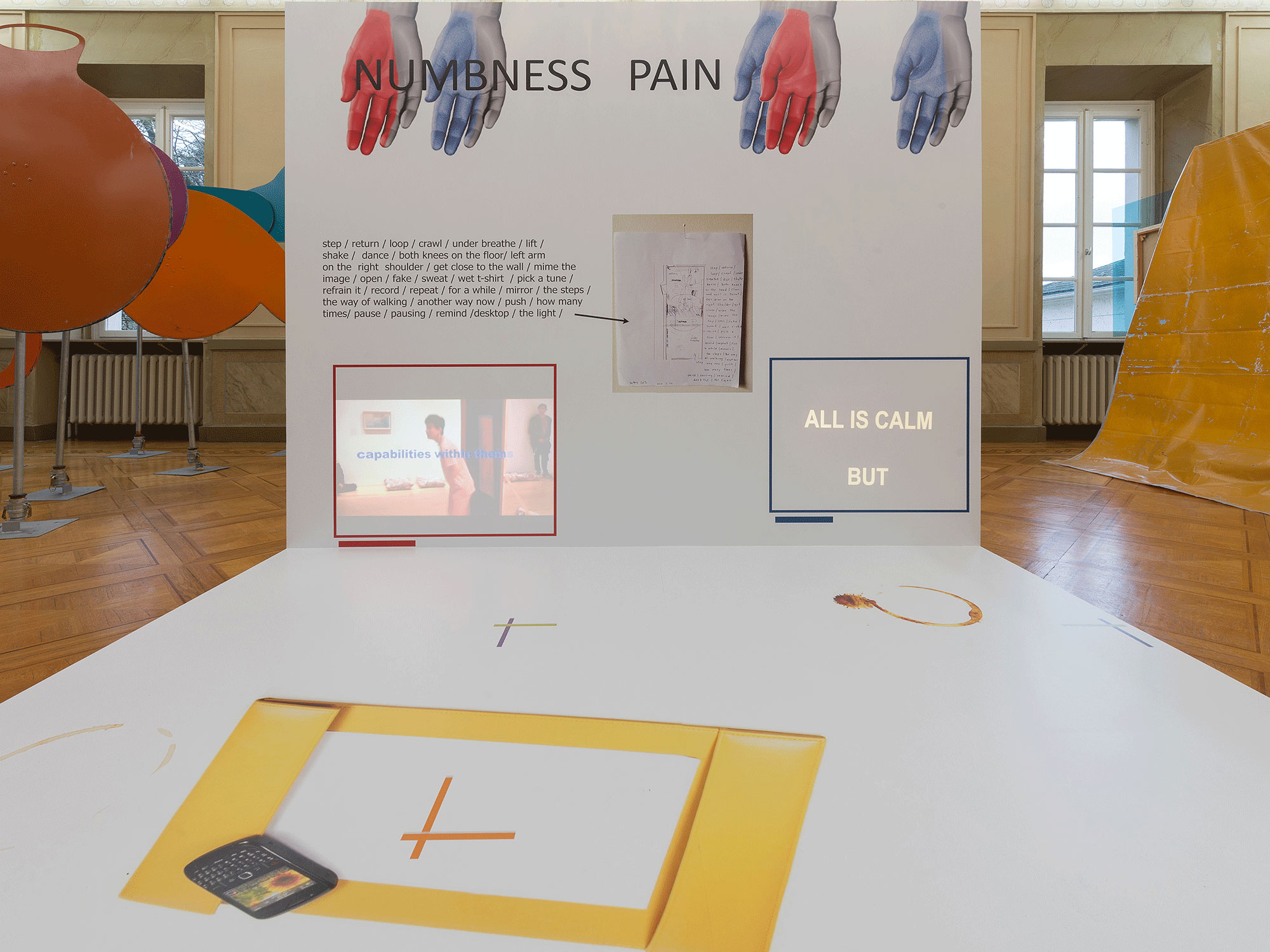
Working the No Work (Numbness Pain) ,2012 (Ed. 2017), Inkjet print on vinyl sticker, wood, HD video 25‘37‘‘, slide projector, slides, 320 × 180 × 230 cm. ©Georgia Sagri

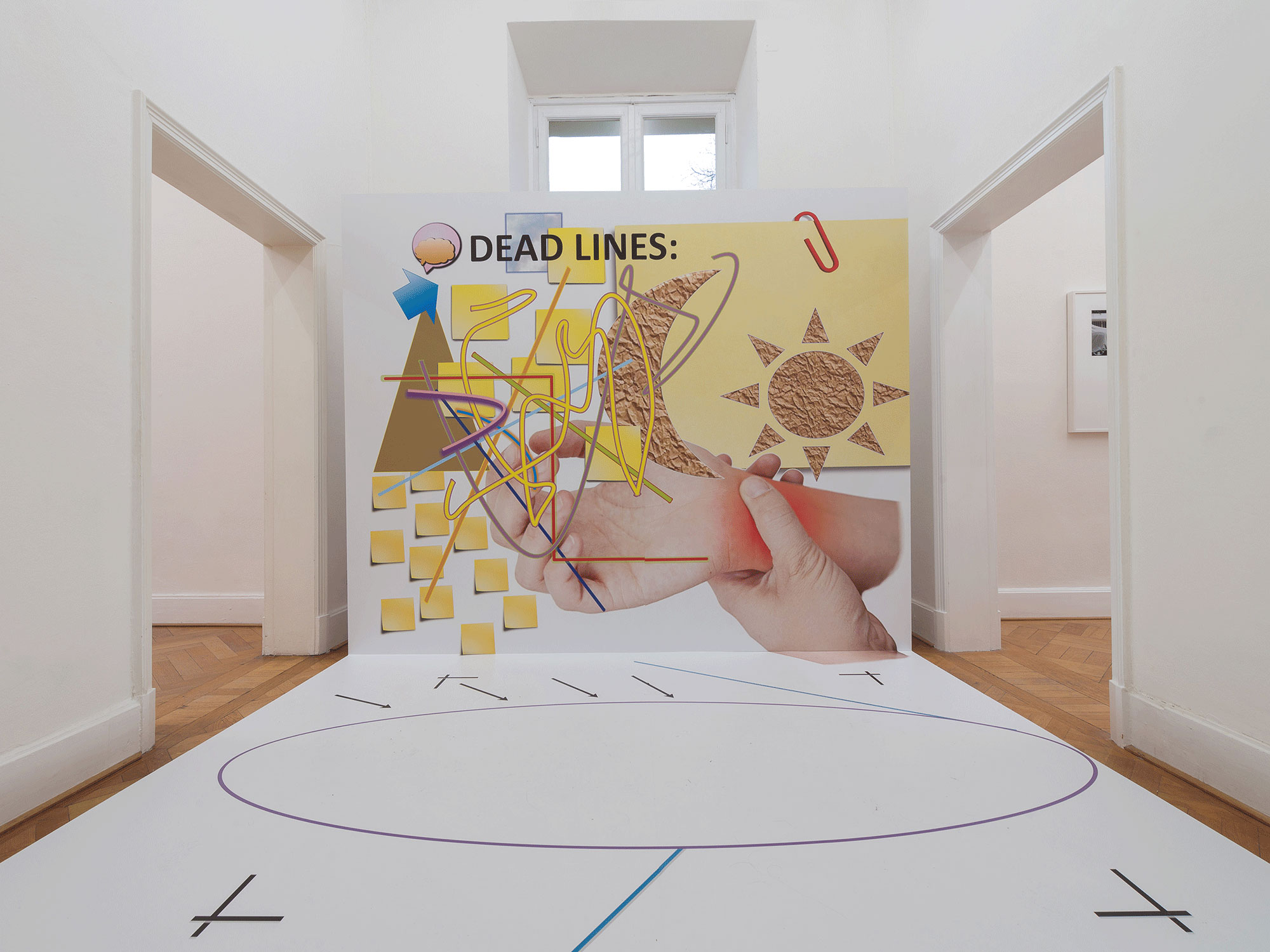
Working the No work (Deadlines), 2012 (Ed. 2017), Inkjet print on vinyl sticker, wood, 320 x 180 x 230 cm. ©Georgia Sagri

Do Jaguar

at Kunstverein Braunschweig, Germany (2/12/17)


As part of her exhibition at Kunstverein Braunschweig, Georgia Sagri presented the work Do Jaguar, first shown in New York in 2009. In a six-hour performance, she took up the gestures of a fair hostess who praised a car. On the circular platform, the artist kept repeating the 25-minute movement.

Do Jaguar, photo by Stathis Mamalakis. ©Georgia Sagri

Do Jaguar, photo by Stathis Mamalakis. ©Georgia Sagri

Do Jaguar, photo by Stathis Mamalakis. ©Georgia Sagri

Do Jaguar, photo by Stathis Mamalakis. ©Georgia Sagri

Do Jaguar, photo by Stathis Mamalakis. ©Georgia Sagri

Do Jaguar, photo by Stathis Mamalakis. ©Georgia Sagri

Do Jaguar, photo by Stathis Mamalakis. ©Georgia Sagri

Do Jaguar, photo by Stathis Mamalakis. ©Georgia Sagri

Do Jaguar, photo by Stathis Mamalakis. ©Georgia Sagri

Do Jaguar, photo by Stathis Mamalakis. ©Georgia Sagri

Against Nature

at National Gallery in Prague – Trade Fair Palace, Prague (16/12/16)


For Part II of her Live Portfolio (Part I was presented at Museum of Modern Art in New York, 2011) Georgia Sagri makes a live mix-tape of two performance pieces. The first piece, Performance, was presented in Berlin at Lars Friedrich gallery in 2012 and the second, Thank you Rodin, is a new piece created especially for the August Rodin section in the permanent collection of the National Gallery in Prague. Both pieces will implicate other works by Sagri from 2011 until the present. “It is the making of the portfolio, its format, its banality of duration by adding the real and the live, like the leaking juices of fresh fruits, sticky fingers, too much nature, smelly and weird. The sounds of pain/ the cracking of fear/ the whispers of pause/ the abominable posture/ hand/ arm/ neck. The expression of the remembering of an incident but not the incident itself. Is that possible? Squeezed among some languages you know, you pretend you know, you want to know. Scratch it, suck mediations, which that could be a type of mimesis. Doing from directions coming from elsewhere. Rather unexpected than improvised. There is no 'as if'. It is the design of the portfolio. Making portfolio and forgetting it. This was only a draft, some other things will come up and you will be noticed. The power point presentation will be totally and extremely burst with lying. ‘I wasn't expecting something different.’ Of course nothing will be placed in the correct chronological order. Are you accusing me of narcissism Apple? ‘I love my i-phone.’ The i-pad portfolio and the fingernails' pad pads on the keyboard. Work in the mid of the summer and wonder what social class is. Hot is slow. Touch, skin and the right jeans. As always at the corner with the smoke in the mouth. An electric cigarette. The taste of look. How she moves her eyes when she is trying to be convincing, and how she stretches her neck every time every time she.” (Georgia Sagri, New York, 2011)

Live Portfolio (2011-now), photo by Johana Posova. ©Georgia Sagri

Live Portfolio (2011-now), photo by Johana Posova. ©Georgia Sagri

Antigone Now

at Onassis Cultural Center, New York (15/10/16)


Georgia Sagri‘s seven-minute Antigone Model - Coda is performed in a loop for half an hour. Every repetition presents a different interpretation. Each minute of the variation represents one figure of the Antigone tragedy.

Antigone Model-Coda. ©Georgia Sagri

Antigone Model-Coda. ©Georgia Sagri

Antigone Model-Coda. ©Georgia Sagri

Antigone Model-Coda. ©Georgia Sagri

Antigone Model-Coda. ©Georgia Sagri

Antigone Model-Coda. ©Georgia Sagri

34 Exercises of Freedom, documenta 14: Public Program

at Athens and Kassel (17,18/9/16)


P. B. PRECIADO: Speaking with many of the artists working with us for the exhibition, and also with many different local groups and movements and associations and international artist people as well, I wanted them to come and exercise freedom with us in a place that is marked by a history of dictartorship and oppression. I didn’t want any kind of hierarchy among the participants. And I didn’t want to have keynote speakers like sociologists and historians, and then an artist, and maybe at night a party. Rather, everything was an unconventional mix. And you said, “I want to do a twenty-four-hour performance.”
GEORGIA: And you replied, “How are we going to do that?” The twenty-four-hour performance piece titled Attempt.Come. wasn’t only an exercise in regard to premise of endurance but a way to acquire experience for the piece that I will present during documenta 14 in June. Askisi is the Greek word for “exercise,” but implies something beyond. How to acquire intelligence through honing. I’m saying to some of the students and participants in the piece I’m going to do: imagine that there is a war, with thought on one side and action on the other. One side thinks it is more important to think than to act. The other side thinks you need to act first and then think. So we are kind of like little sensitive animals, in the center of the war, and because we exercise, because we are in the process of askisi, we are able to manipulate this process of the fight in a context a-day-by day practicing, where we open up space for those who don’t want to participate in the either/or. This is for me freedom. You need to acquire intelligence of not going to the totalities, the extremes. Not to the extreme of thought nor to the extreme of action—so this is Askisi, the day-to-day practice.

Attempt. Come, photo by Stathis Mamalakis. ©Georgia Sagri

Attempt. Come, photo by Stathis Mamalakis. ©Georgia Sagri

Attempt. Come, photo by Stathis Mamalakis. ©Georgia Sagri

Attempt. Come, photo by Stathis Mamalakis. ©Georgia Sagri

Attempt. Come, photo by Stathis Mamalakis. ©Georgia Sagri

Attempt. Come, photo by Stathis Mamalakis. ©Georgia Sagri

Attempt. Come, photo by Stathis Mamalakis. ©Georgia Sagri

Attempt. Come, photo by Stathis Mamalakis. ©Georgia Sagri

Attempt. Come, photo by Stathis Mamalakis. ©Georgia Sagri

Attempt. Come, photo by Stathis Mamalakis. ©Georgia Sagri

Attempt. Come, photo by Stathis Mamalakis. ©Georgia Sagri

Manifesta 11 – What People Do for Money

at Zurich, Switzerland (11/6–18/9/16)


Invited to participate in an exhibition titled What People Do for Money and in accordance with a long tradition of institutional critique, Sagri invited a “real worker,” the Swiss banker Josephin Varnholt, to produce her sculpture Documentary of Behavioural Currencies (2016) with the intention of defying the hierarchy between the “model” and the “genius master.” Functioning like a modernized version of portrait painting, the sitter became the artist’s partner in a conversation where they used private sign language. This private body language is the supportive device of the parrhesiastic disclosure: Sagri exposes the Western—and in fact both populist and elitist—institutional framework of the art system’s “exhibitionary complex.” This term refers to Tony Bennett’s concept where he discusses the institutions of confinement, such as prisons (which are Foucault's focus), behaving analogously to institutions of exhibition, such as museums. To live in a post-disciplinary society means exercising power/ knowledge through automated protocols of professional conduct, which replicate biased distinctions while securing and legitimizing the institutional power of the market. While exposing institutional power, and at the same time insinuating the pivotal role of private investment in the art world, Sagri exposes the ways in which global markets continue to lower wages while accumulating capital for very few others, an injustice profoundly documented in Thomas Piketty’s book, Capital in the Twenty-First Century. Sagri’s work tells us that class divisions are in fact maintained from within a system that purportedly opposes them. - Sotirios Bahtsetzis.


Manifesta 11, The European Biennal of Contemporary Art, was curated by Christian Jankowsky

Documentary of Behavioural Currencies, photo by Flavio Karrer. © Georgia Sagri

Documentary of Behavioural Currencies, photo by Flavio Karrer. © Georgia Sagri

Documentary of Behavioural Currencies, photo by Flavio Karrer. © Georgia Sagri

Documentary of Behavioural Currencies, photo by Flavio Karrer. © Georgia Sagri

Documentary of Behavioural Currencies, photo by Flavio Karrer. © Georgia Sagri

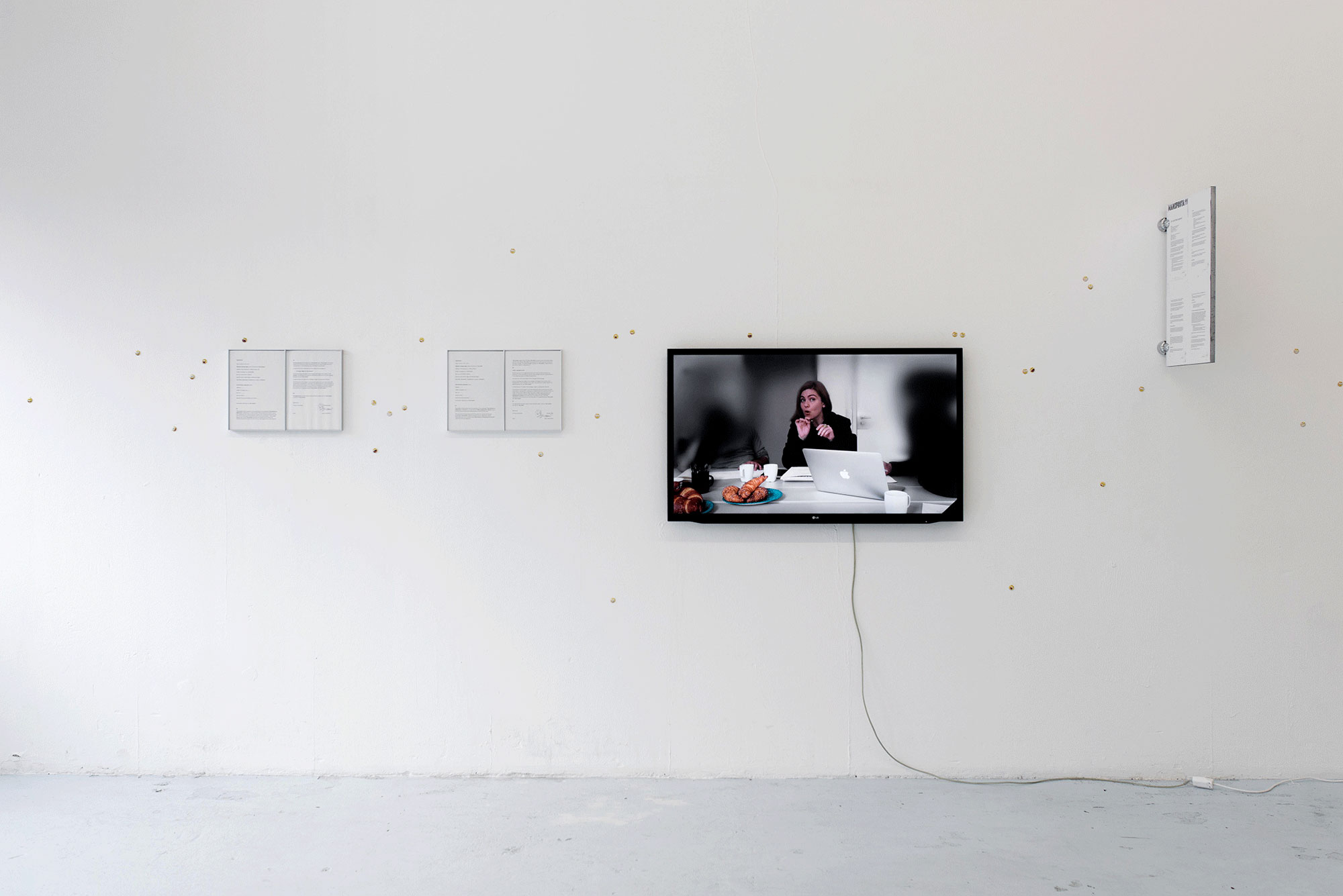
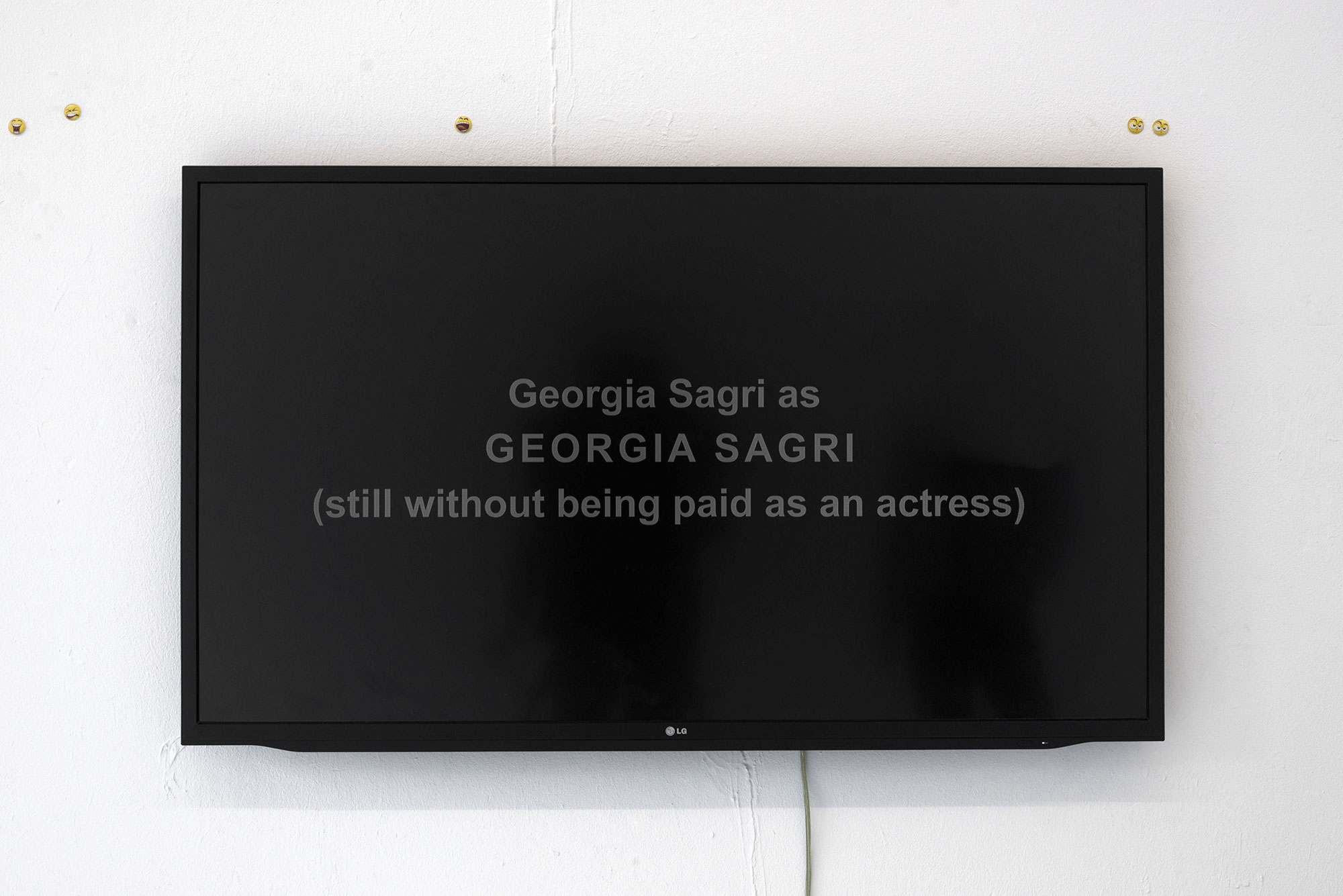
Documentary of Behavioural Currencies | Georgia Sagri as Georgia Sagri (still without being paid as an actress)

at UPSTATE, Zurich (11/6–18/9/16)


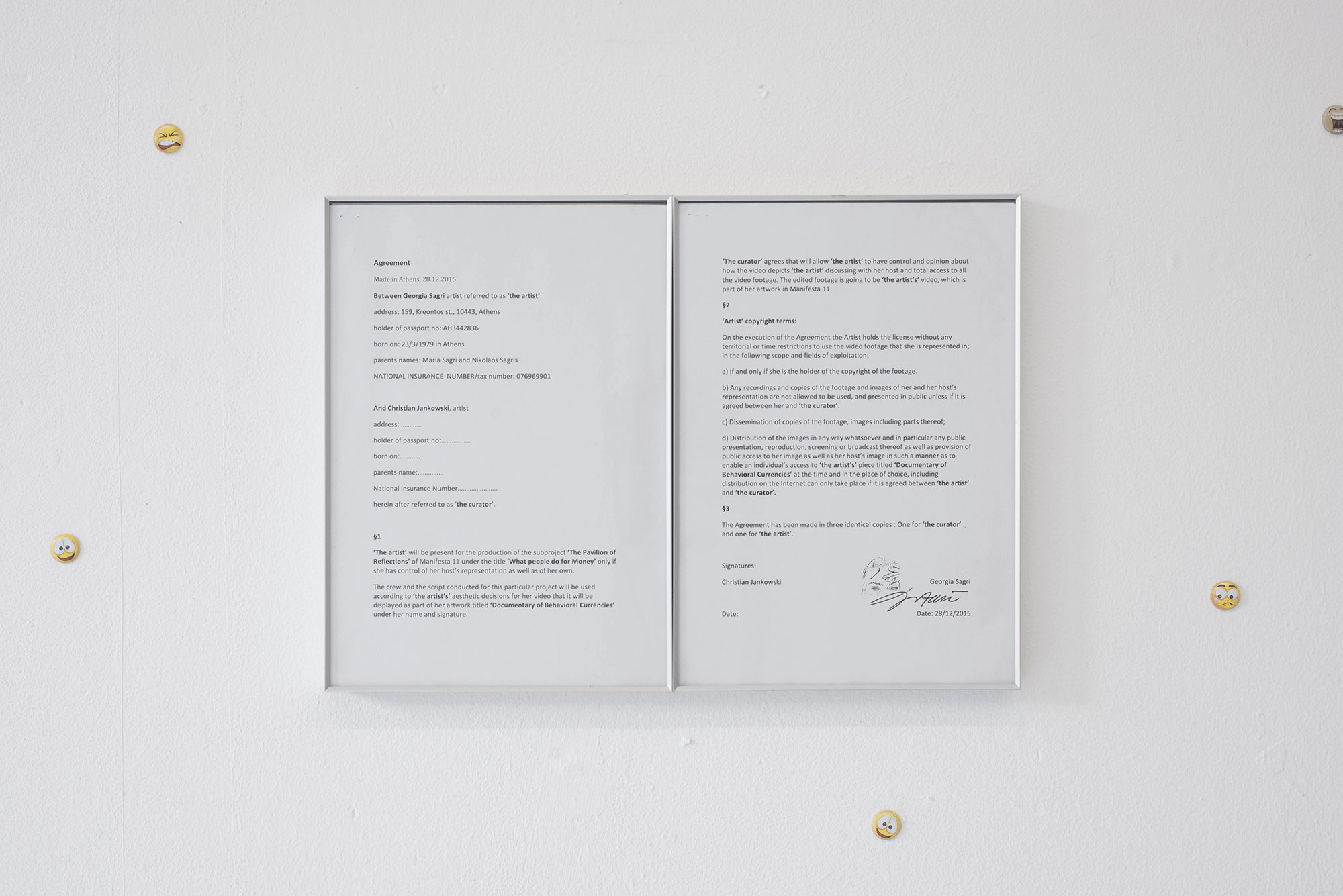
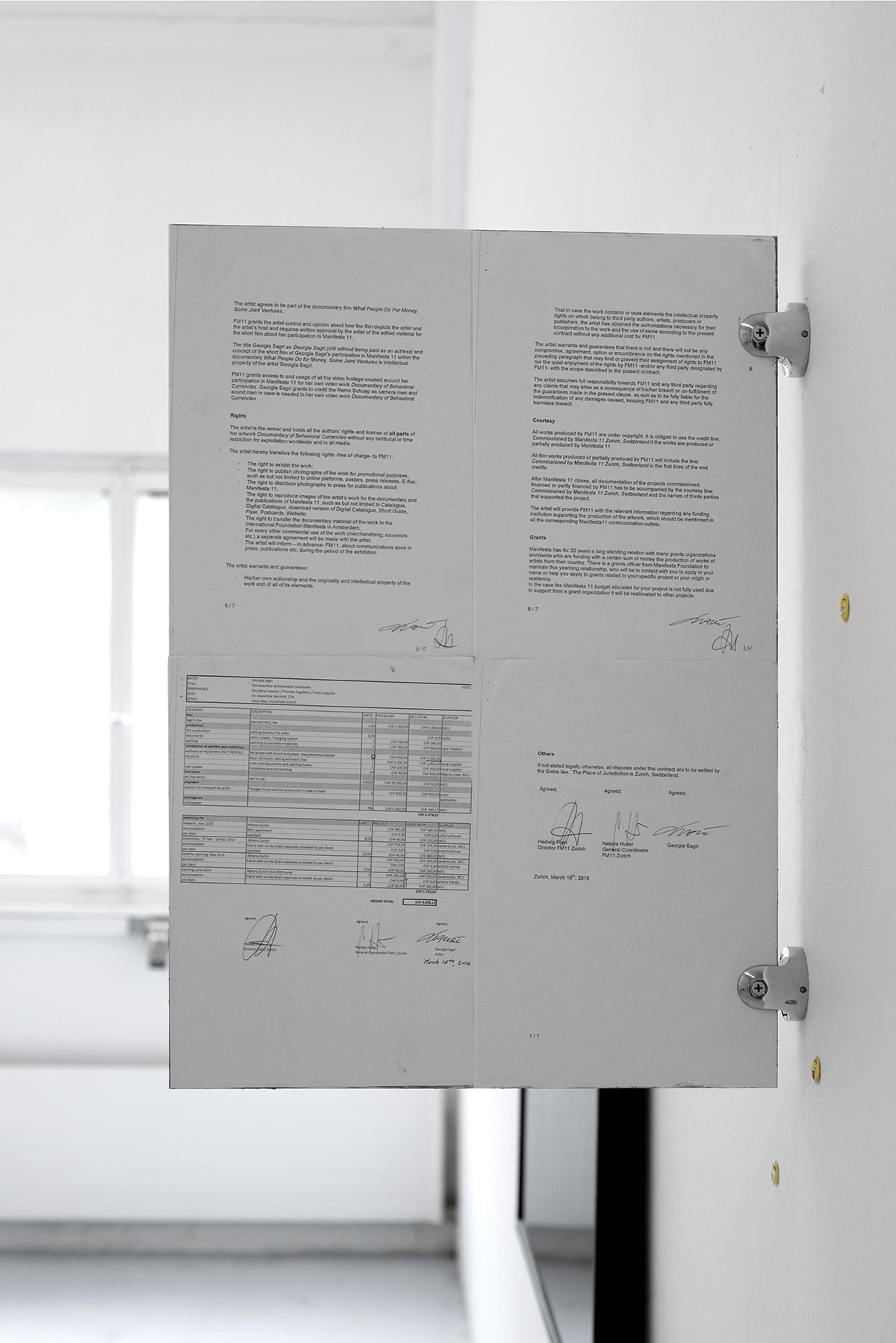
In the parameters of her participation in M11 artist Georgia Sagri, treated the curatorial and organizational frame of Manifesta as a terrain of negotiations, regarding what the artists is "supposed to do", and what is "assumed to be doing". The artist situated an economy for her work equal to the rest of the participating artists as well as she negotiated and succeeded to split the filming crew which was imposed by the M11 to film her and her working process in two parts. The first part was not to allow filming for the publicity of the organization, but to use the crew only for the two days to film her video piece. While for the second part, the artist used the crew to film herself, negotiating with two of the employees of M11. By this tactic she turned the a priori "role" of the artist that the organization imposes, into an open query on her process being not only focused in matters of display and representation but also authorship and censorship. The work was ultimately censored by M11 and the artist decided to present it together with three other works (related to the whole) as a solo exhibition at the Upstate an artists' run space in Zurich. The solo exhibition was under the same title as all of her work in M11, Documentary of Behavioral Currencies.

Documentary of Behavioural Currencies; Georgia Sagri as Georgia Sagri (still without being paid as an actress), photo by Marc Asekhame. ©Georgia Sagri

Documentary of Behavioural Currencies; Georgia Sagri as Georgia Sagri (still without being paid as an actress), photo by Marc Asekhame. ©Georgia Sagri

Documentary of Behavioural Currencies; Georgia Sagri as Georgia Sagri (still without being paid as an actress), photo by Marc Asekhame. ©Georgia Sagri

Documentary of Behavioural Currencies; Georgia Sagri as Georgia Sagri (still without being paid as an actress), photo by Marc Asekhame. ©Georgia Sagri

Documentary of Behavioural Currencies; Georgia Sagri as Georgia Sagri (still without being paid as an actress), photo by Marc Asekhame. ©Georgia Sagri

Documentary of Behavioural Currencies; Georgia Sagri as Georgia Sagri (still without being paid as an actress), photo by Marc Asekhame. ©Georgia Sagri

Documentary of Behavioural Currencies; Georgia Sagri as Georgia Sagri (still without being paid as an actress), photo by Marc Asekhame. ©Georgia Sagri

Documentary of Behavioural Currencies; Georgia Sagri as Georgia Sagri (still without being paid as an actress), photo by Marc Asekhame. ©Georgia Sagri

Documentary of Behavioural Currencies; Georgia Sagri as Georgia Sagri (still without being paid as an actress), photo by Marc Asekhame. ©Georgia Sagri

SALTWATER: A Theory of Thought Forms -14th Istanbul Biennial

at Istanbul, Turkey (5/9 - 1/11/15)


There are collisions between art and life, knots that tie them together. Sometimes, simply the act of locating works of the symbolic order, such as artworks, in places where events have occurred that have entered into our imaginary systems through stories, history and myth, transforms them, and they assume a ritualistic and magical life. Their context triggers a short circuit that shakes our pacified categories and distinctions such as lack/presence, real/imaginary or present/past. Such shaking initiates their ability to operate, to have agency and transform the world. Acknowledging anthropologist Marilyn Strathern as her inspiration, Donna Haraway (whom I in turn acknowledge) wrote, ‘It matters what matters we use to think other matters with; it matters what stories we tell to tell other stories with; it matters what knots knot knots, what thoughts think thoughts, what ties tie ties.’ Some stories end storytelling, they foreclose the imagination, they bring no transformations, no worlds. So what stories can we tell each other in order for other stories to be told, like the branching of a tree? SALTWATER: A Theory of Thought Forms hovers around a material – salt water – and the contrasting image-forms of knots and waves. (...) Theosophists such as Mme Blavatsky and Besant trained their ability to perceive the patterns and waves that permeate the universe (our heartbeat is a wave, our breathing is a wave, too). They reintroduced Yoga, and had faith in the broad ability of each and everyone of us to perceive the invisible realm; this was the age of Nikola Tesla’s experiments with radio transmissions (1893), Guglielmo Marconi’s patented invention of the radio (1896), and Wilhelm Conrad Roentgen’s discovery of the electromagnetic radiation waves we call X-rays (1895). There is a relation between these ideas and today’s attempts by some artists and cultural practitioners to understand hidden power structures and become emancipated from the invisible code of digital society (Ed Atkins). It is this form of new realism (not representational realism but a concrete appearance and emergence of the hidden manipulations of our lives by individuals and corporations) that inspires some of the artworks (Susan Philipsz, Irena Haiduk, Cevdet Erek, Georgia Sagri, Ania Soliman, Zeyno Pekünlü, as well as Lea Porsager’s hand-made copies of the gouaches in Besant and Leadbeater’s book) and essays (Alexander Provan, Beatriz Colomina) in SALTWATER: A Theory of Thought Forms.


The Biennial was curated by Carolyn Christov Bakariev


How can religion, including that of cyberspace be liberated from protocols in an egalitarian way? People from all religions sang in unison, forming otherworldly sounds-music from the stars. There are parts of bodies on cloth : there are shadows of parts of bodies: there is a film of them singing. _Georgia Sagri, 2015


my first science fiction book, Religion; was created with the alliance of KW Institute of Contemporary art, Foreign Affairs Festival, in Berlin and Istanbul Biennial, 2015.

my first science fiction book, Religion, photo by Stathis Mamalakis. ©Georgia Sagri

my first science fiction book, Religion, photo by Stathis Mamalakis. ©Georgia Sagri

my first science fiction book, Religion, photo by Stathis Mamalakis. ©Georgia Sagri

my first science fiction book, Religion, photo by Stathis Mamalakis. ©Georgia Sagri

my first science fiction book, Religion, photo by Stathis Mamalakis. ©Georgia Sagri

my first science fiction book, Religion, photo by Stathis Mamalakis. ©Georgia Sagri

my first science fiction book, Religion, photo by Stathis Mamalakis. ©Georgia Sagri

Foreign Affairs Festival

at KW Institute for Contemporary Art (4/7/15)


Together with 17 musicians based in Berlin from various religious backgrounds – Sufis, Jews, Christians, Muslims – artist Georgia Sagri composes a new musical and movement performance employing imitation and repetition of familiar beliefs’ movements on a path towards a future unified belief system. For Sagri, the performance is treated as a science fiction book in which monotheistic ceremonies become subjects of a “meta-religion”, which can perhaps only through their unification as gestures propose a new approach to faith and in extent to religion. This eight-hour piece, performed by the artist and her musical collaborators, visualizes the possibility of a non-individualistic approach to religion and defines the “materials” of faith by detaching them from their original significance, constantly deconstructing and exposing their micro-movements and transitions. On the project's website sfbreligion.com visitors could view the performance online and share their comments as it unfolded.


my first science fiction book, Religion; was created with the alliance of KW Institute of Contemporary art, Foreign Affairs Festival, in Berlin and Istanbul Biennial, 2015.


my first science fiction book, Religion, photo by Stathis Mamalakis. ©Georgia Sagri

my first science fiction book, Religion, photo by Stathis Mamalakis. ©Georgia Sagri

my first science fiction book, Religion, photo by Stathis Mamalakis. ©Georgia Sagri

my first science fiction book, Religion, photo by Stathis Mamalakis. ©Georgia Sagri

my first science fiction book, Religion, photo by Stathis Mamalakis. ©Georgia Sagri

my first science fiction book, Religion, photo by Stathis Mamalakis. ©Georgia Sagri

Exhibita.ch / EAT THE TOOL

at Fordé, Geneva, Switzerland and online at exhibita.ch (19/4 - 17/5/15)


There is an old story that gets told in North America about an Eskimo who has thirty-six different words for snow. It probably isn’t true. But I am more interested in what the story is about than whether or not it is true. What are people trying to communicate when they tell this story? What do we talk about when we talk about Eskimo snow argot? What are we saying about language and about how it relates to every day behaviors? The simple response would be, presumably, that Eskimos have a great deal more experience of snow than non-Eskimos do, and so they have developed a highly sensitive faculty of taste in the matter of snow; they can distinguish between different kinds of snow with a specificity that boggles our own less-experienced minds. Because we lack this language to describe winter precipitation, each of our experiences of snow are, pardon me, rolled up into one word: snow. Even as we understand that there is a big difference between a few, small, gently sifting flakes and driving streams of sleet and large casual floaters that vanish before the dawn.


We understand these differences, but when we try to remember them, we find that we don’t have the tools. Or we have to supplement endlessly the one tool we have; “It was snowing, and the snow was x, y & z.” This, rather than saying simply “It was x-ing;” where ‘x’ is one of these other, more specific terms for snow, the way that ‘broil’ is more specific than ‘cook.’ As a result, our vision of the past doesn’t account for a great deal of our experience and much of our life-with-snow goes unrecognized and unrecorded, which is almost the same thing.


I’ve been thinking about this lately because I’ve been losing my languages. I wake up and go down to the workshop and reach for my oldest words, my tools, and they are not there. The equipment with which I have hitherto constructed my habitat is vanishing, has vanished. It would be easy enough to leave the matter there: I’m losing my language! Sighs! Signs! Moody Possibility!


But that wouldn’t help me much, and moreover, it would risk making a metaphysics of language such that in mourning my language, I would also, in some sense, be mourning metaphysics. This was the sort of thing people did a lot when I was growing up: mourning metaphysics in the guise of investigating language. Very intense, very precious; often very remarkable. Sometimes I like to think my generation is more practical. We’ve had to be, I think, because it turns out there is such a thing as objective conditions after all. What words exist in Greek that don’t exist in English? Once I have those, I will make up words in English that correspond to the missing Greek words. Part of me feels that this trans-linguistic exchange might be the only way to defeat nationalism once and for all. Just, you know, get it over with and make whatever language we are living in as big and as beautiful as possible. Consolidate all the inventories, and give similar terms more specific meanings, until we can all remember everything forever and by its own name.


Stephen Squibb as Georgia Sagri

Exhibita.ch/EAT THE TOOL, 2015, photo by Stathis Mamalakis. ©Georgia Sagri

Exhibita.ch/EAT THE TOOL, 2015, photo by Stathis Mamalakis. ©Georgia Sagri

Exhibita.ch/EAT THE TOOL, 2015, photo by Stathis Mamalakis. ©Georgia Sagri

Exhibita.ch/EAT THE TOOL, 2015, photo by Stathis Mamalakis. ©Georgia Sagri

Exhibita.ch/EAT THE TOOL, 2015, photo by Stathis Mamalakis. ©Georgia Sagri

GEORGIA SAGRI: DAILY BREAD

at Mathew Gallery, New York and online on dailybread.nyc, supported by Issue Project Room, New York (8 - 22/3/15)


On view Sunday, March 8th through Sunday, March 22, ISSUE Project Room presented Georgia Sagri’s Daily Bread, a streaming online exhibition and series of public and private performances conveying states of loss, mourning and offering. Commissioned as part of ISSUE’s Artist-In-Residence program, the exhibition reflects Sagri’s travels researching the social organization of Gamelan orchestras and artists' initiatives in Indonesia. For the purpose of the exhibition seven sculptures are made, cooked and prepared in manners resembling offertory traditions, each one facing a webcam, suggesting that they are there to transmit their elements. A website named Daily Bread allowed free and open access to the seven live streams. Georgia Sagri performed throughout the run of the installation, in both live readings and voice-over; sometimes public, sometimes private, with musical accompaniment by Hunter Hunt-Hendrix. The exhibition had no opening. Daily Bread streamed 24/7 with online appearances by the artist broadcast in indicated streaming hours. Viewers were welcome to visit the exhibition during open public performances at Mathew NYC, 47 Canal Street, 2nd floor, NYC.


...In some places it is an offense to tip or bargain but when you enter a temple you leave behind all the coins you have in your pockets. If you had to tip or bargain perhaps you wouldn’t have coins in your pockets so you weren’t able to leave them in the temple. Is the one action connected to the other? Is this creating another idea about economy? Sometimes people if they don’t have coins they leave behind whatever they have in their hands; half eaten sandwiches, semi consumed beverages, paper foils and they light incense to give food to the winds. What kind of sentiment makes someone to even want to feed the winds? Is it a sentiment of acceptance for all those unknown elements, messages, particles, cells and dusts, that cannot be seen or prove their existence by been seen? Is the lighting of a candle the determination of something told? Is the light of a candle the visual proof of a message being heard? What are the similarities between the offer and the waste? What do we offer and what do we waste? Is the repression of temporalities that make visible an unknown that cannot been seen and cannot been named the state of a society that understands life only as constant naming, frame, control, knowing and beginning? How do we understand death? Do we struggle for representation or existence? How can we live without wanting to exist? How can we live without the feeling of being able to live? In some places it is more important to dress your dead relatives than those who are alive... — G.S 2014-15

Daily Bread installation view. ©Georgia Sagri

Daily Bread installation view. ©Georgia Sagri

Daily Bread installation view. ©Georgia Sagri

Daily Bread installation view. ©Georgia Sagri

Daily Bread installation view. ©Georgia Sagri

Daily Bread installation view. ©Georgia Sagri

Daily Bread installation view. ©Georgia Sagri

Daily Bread installation view. ©Georgia Sagri

Daily Bread installation view. ©Georgia Sagri

Daily Bread installation view. ©Georgia Sagri

Daily Bread installation view. ©Georgia Sagri

Daily Bread installation view. ©Georgia Sagri

Daily Bread installation view. ©Georgia Sagri

Moved by Surprise, Speak by Surprise

at Emily Harvey Foundation, New York (28/3/18)
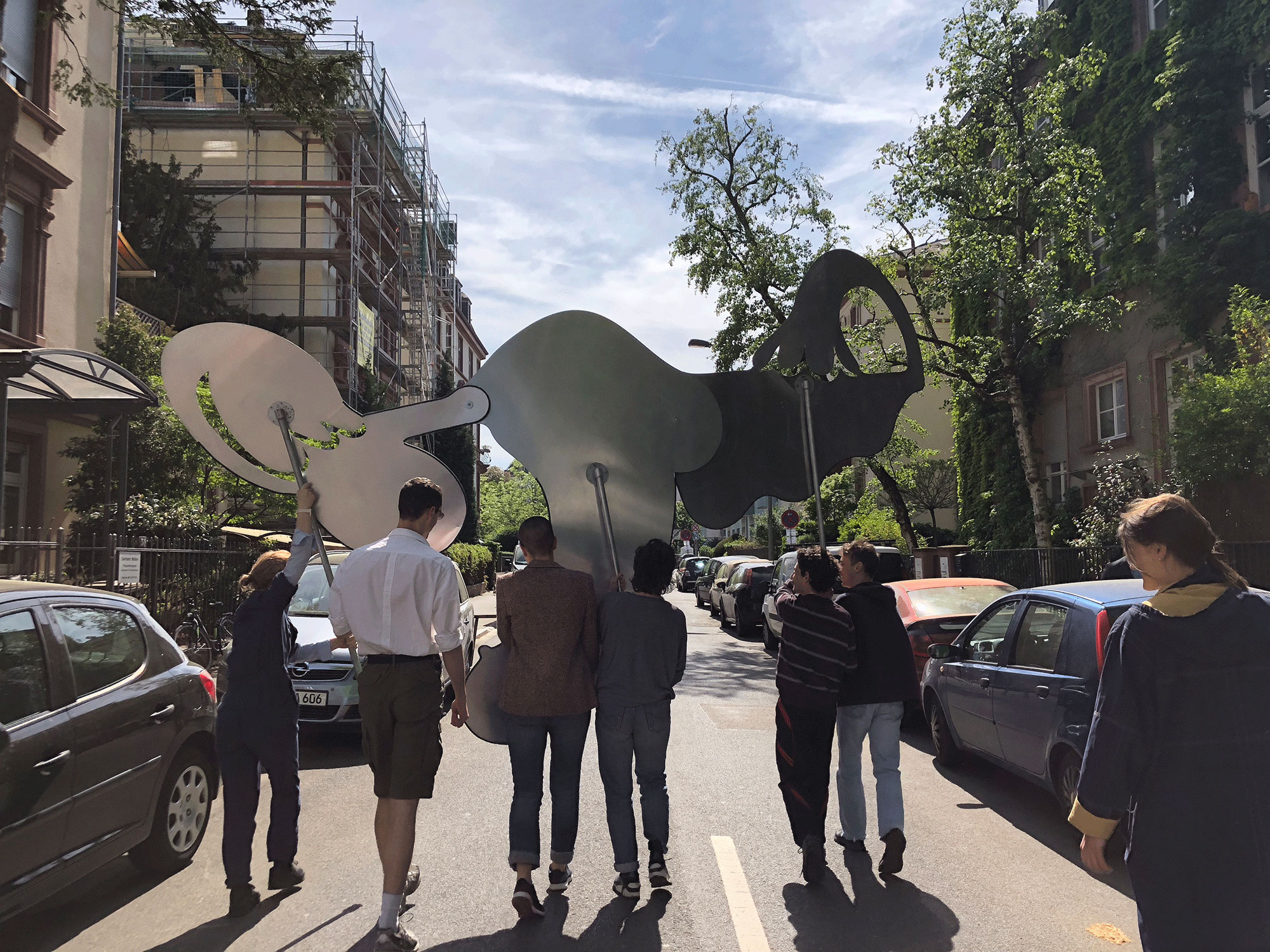

Georgia Sagri’s Moved by Surprise, Speak by Surprise intends to explore how personal experiences are documented in the materiality of the archive, and whether individual narratives survive the historical rigor that we attribute to collections of documents. If the performance reaches its momentum, it creates a limbo in which the artist describes a past event in its actuality, while she shapes, within the collective, a new element of the archive that is created during the performance. Remembering a work by Ben Patterson in which Sagri took part in 1998 at the School of the Art in Athens, the artist becomes the carrier of information which temporally and geographically has traveled through the body. The making of Moved by Surprise, Speak by Surprise at the Emily Harvey Foundation (EHF)—which, in 2016, hosted the memorial for Patterson—reveals a segment of the charged history of the building at 537 Broadway, extending the past into the present, and connecting the EHF in New York to the School of the Arts in Athens.Curated by Alice Centamore.

Moved by Surprise, Speak by Surprise, photo by Scott Walden. ©Georgia Sagri

Moved by Surprise, Speak by Surprise, photo by Scott Walden. ©Georgia Sagri

Moved by Surprise, Speak by Surprise, photo by Scott Walden. ©Georgia Sagri

GEORGIA SAGRI – Gardens

at Andreas Melas & Helena Papadopoulos Gallery, Athens (19/1 - 8/3/12)


For her first exhibition with Andreas Melas & Helena Papadopoulos, Georgia Sagri constructs a flexible arrangement of Gardens where plants grow, plastic and ceramic objects appear, actions are traced and replicated by the artist in her performance that will take place at the gallery, on three consecutive evenings. A double no or a double yes, a strategy of reappropriation- homeopathic, synchronic, interminable. The Gardens, modular wooden boxes with aromatic plants, scattered sculptures and annexed benches, reference a site of enclosure, a stage where actor and viewer are subsumed under narrative structures already formed. Yet, Sagri, in an attempt to override the tragic fall of social and political fantasies offers French philosopher’s Alain Badiou’s event of love -“romance as the material and embodied practice of producing wonder”- as a possible space for the production of truth. Gardens includes an installation, a performance/loop, a PowerPoint presentation, a series of photographs and drawings and a collection of texts by the artist. Georgia Sagri also led a workshop on performance art, in collaboration with the Institute of Experimental Arts on January 22, 23 and 24 from 6-10pm, in the gallery offices on the 1st floor.

Georgia Sagri, Gardens, at Andreas Melas & Helena Papadopoulos Gallery, 2012 ©Georgia Sagri

Georgia Sagri, Gardens, at Andreas Melas & Helena Papadopoulos Gallery, 2012 ©Georgia Sagri

Georgia Sagri, Gardens, at Andreas Melas & Helena Papadopoulos Gallery, 2012 ©Georgia Sagri

Georgia Sagri, Gardens, at Andreas Melas & Helena Papadopoulos Gallery, 2012 ©Georgia Sagri

Georgia Sagri, Gardens, at Andreas Melas & Helena Papadopoulos Gallery, 2012 ©Georgia Sagri

Georgia Sagri, Gardens, at Andreas Melas & Helena Papadopoulos Gallery, 2012 ©Georgia Sagri

Georgia Sagri, Gardens, at Andreas Melas & Helena Papadopoulos Gallery, 2012 ©Georgia Sagri

Georgia Sagri, Gardens, at Andreas Melas & Helena Papadopoulos Gallery, 2012 ©Georgia Sagri

Antigone Model

at Real Fine Arts, New York

Antigone Model, photo by Ben Morgan-Cleveland. ©Georgia Sagri

Antigone Model, photo by Frederic Detjens. ©Georgia Sagri

Antigone Model, photo by Ben Morgan-Cleveland. ©Georgia Sagri

Dynamis

at documenta 14, Athens and Kassel (7-12/6/17)
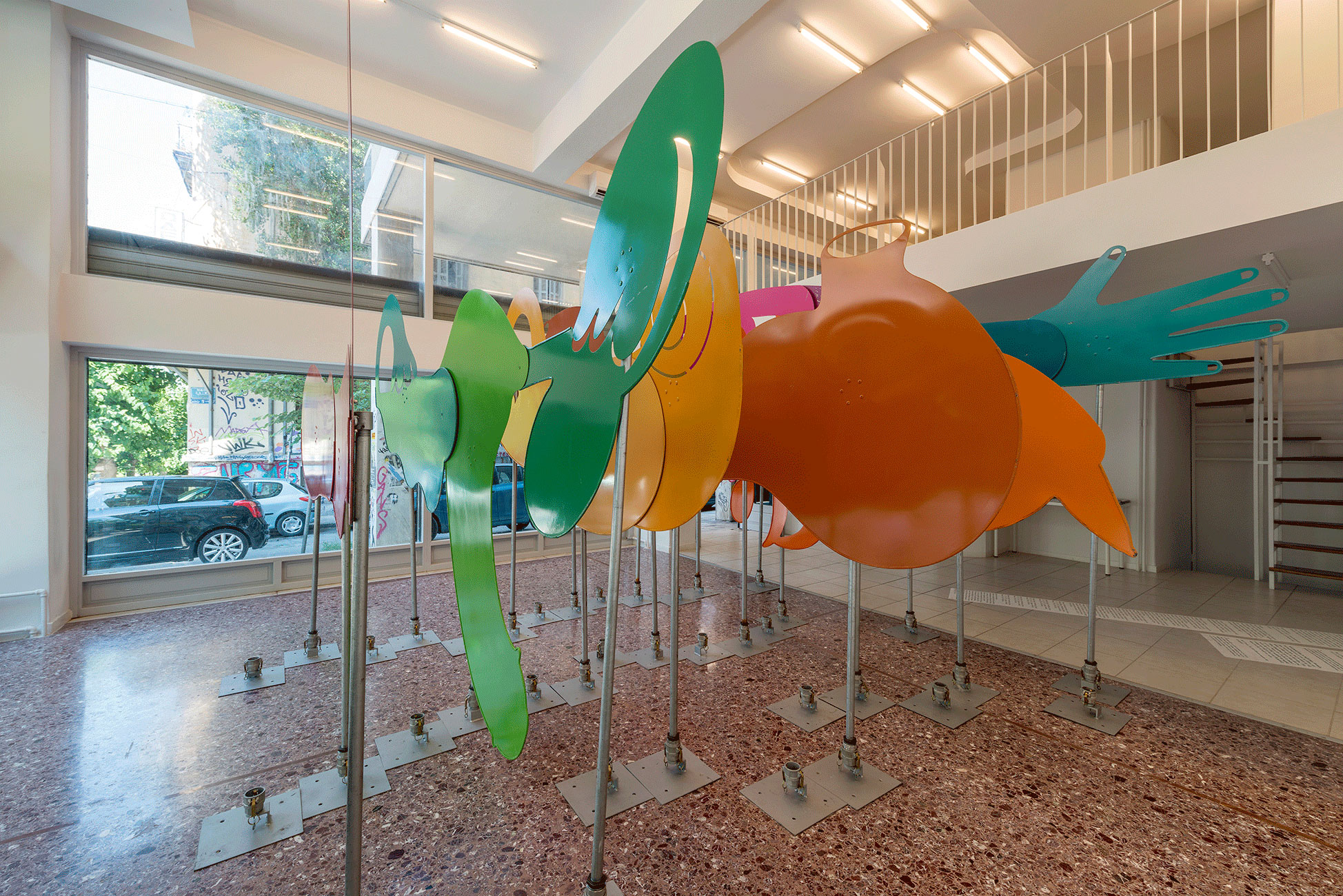

Twenty-eight sculptures and ten breathing scores for various public spaces in Athens and Kassel made of aluminum, acrylic paint, glass, rubber and various metallic parts. Performance and demonstration of “Soma in Orgasm,” June 7–12, 2017, simultaneously and in continuum in Athens and Kassel. The map of Dynamis was distributed in Tositsa 5, Athens, at the Glas-Pavillons at Kurt-Schumacher-Straße, Kassel and online.

Dynamis, photo by Panos Kokkinias. ©Georgia Sagri

Dynamis, photo by Panos Kokkinias. ©Georgia Sagri

Dynamis, photo by Panos Kokkinias.©Georgia Sagri

Dynamis, photo by Panos Kokkinias ©Georgia Sagri

Dynamis, photo by Panos Kokkinias, Courtesy of the artist ©

Dynamis, photo by Panos Kokkinias, Courtesy of the artist ©

Dynamis, photo by Panos Kokkinias. ©Georgia Sagri

Dynamis, photo by Panos Kokkinias. ©Georgia Sagri

Dynamis, photo by Panos Kokkinias. ©Georgia Sagri

Dynamis, photo by Christian Küster. ©Georgia Sagri

Dynamis, photo by Christian Küster. ©Georgia Sagri

Dynamis, photo by Christian Küster. ©Georgia Sagri

Dynamis, photo by Christian Küster. ©Georgia Sagri

Dynamis, photo by Christian Küster. ©Georgia Sagri

Dynamis, photo by Christian Küster. ©Georgia Sagri

Dynamis, photo by Christian Küster. ©Georgia Sagri

Dynamis, photo by Panos Kokkinias. ©Georgia Sagri

Dynamis, photo by Panos Kokkinias. ©Georgia Sagri

Dynamis, photo by Panos Kokkinias. ©Georgia Sagri

Dynamis, photo by Panos Kokkinias. ©Georgia Sagri

Dynamis, photo by Panos Kokkinias. ©Georgia Sagri

Dynamis, photo by Panos Kokkinias. ©Georgia Sagri

Dynamis, photo by Panos Kokkinias. ©Georgia Sagri

Dynamis, photo by Panos Kokkinias. ©Georgia Sagri

Georgia Sagri – Mona Lisa Effect

at Kunsthalle Basel (13/4 - 08/6/14)


The “Mona Lisa effect” is a term describing an optical and psychological effect produced by the famous painting by Leonardo da Vinci, now in the collection of the Louvre. Testifying to Leonardo’s mastery, the smiling Mona Lisa seems to follow us with her gaze as we move about the gallery – if we can move at all. For the painting itself, protected by bulletproof glass, two barriers and museum attendants, seems to have the power to transfix visitors in whatever spot they manage to find among the crowd, where their movements are limited to raising their arms and taking pictures.


Under the title “Mona Lisa Effect”, Georgia Sagri’s exhibition addresses the physical and political phenomenon of movement both inside and outside the gallery space, through a series of performative, rhetorical and technological devices that organize the exhibition space. This “movement” can further be understood as our natural human disposition (and right) to move, to gather and disperse, to convene and reconvene. In Sagri’s reading of the Mona Lisa effect, the gaze emanating from the masterpiece thus becomes a metaphor of the ever-surveying, ever-inspecting gaze of authority – the diffused political power that permeates human lives in contemporary society. This “soft” omnipresence of power has long since become an integral dimension of our lives as citizens: being a citizen today equals being subject to biopolitics, the form of power that impacts all aspects of human life, as the private and public sphere meld into an inseparable whole.

Mona Lisa Effect, photo by Gina Folly. ©Georgia Sagri

Mona Lisa Effect, photo by Gina Folly. ©Georgia Sagri

Mona Lisa Effect, photo by Gina Folly. ©Georgia Sagri

Mona Lisa Effect, photo by Gina Folly. ©Georgia Sagri

Mona Lisa Effect, photo by Gina Folly. ©Georgia Sagri

Mona Lisa Effect, photo by Gina Folly. ©Georgia Sagri

Mona Lisa Effect, photo by Gina Folly. ©Georgia Sagri

Mona Lisa Effect, photo by Gina Folly. ©Georgia Sagri

Mona Lisa Effect, photo by Gina Folly. ©Georgia Sagri

Mona Lisa Effect, photo by Gina Folly. ©Georgia Sagri

Mona Lisa Effect, photo by Gina Folly. ©Georgia Sagri


The Eccentrics

at Sculpture Center, New York (24/1- 4/4/16)


Georgia Sagri, for her new performance piece becomes a sort of news tamer in Sunday Stroll Undone and Redone (2016), calling for empathy as she reorders and reanimates news items and images within the elaborate installation that shares the same title. Sagri's work suggests a process of activating history, the past and the future as an ongoing playful present.

Sunday Stroll Undone and Redone, photo by Kyle Knodell, Ivana Larossa. ©Georgia Sagri

Sunday Stroll Undone and Redone, photo by Kyle Knodell, Ivana Larossa. ©Georgia Sagri

Sunday Stroll Undone and Redone, photo by Kyle Knodell, Ivana Larossa. ©Georgia Sagri

Sunday Stroll Undone and Redone, photo by Kyle Knodell, Ivana Larossa. ©Georgia Sagri

Sunday Stroll Undone and Redone, photo by Kyle Knodell, Ivana Larossa. ©Georgia Sagri

Sunday Stroll Undone and Redone, photo by Kyle Knodell, Ivana Larossa. ©Georgia Sagri

Sunday Stroll Undone and Redone, photo by Kyle Knodell, Ivana Larossa. ©Georgia Sagri

Sunday Stroll Undone

accompanied by Hunter Hunt Hendrix, curated by Monika Szczukowska, Junkier Sztuki and Nika Kowska, Krakow, Poland

Sunday Stroll Undone, Performance, Krakow, Poland, ©Georgia Sagri

Sunday Stroll Undone, Performance, Krakow, Poland, ©Georgia Sagri

Works